view
簪 [Kanzashi / Ornamental Hairpin] (Hiroshi Shimizu, 1941)
Aug
10
1941
view
簪 [Kanzashi / Ornamental Hairpin] (Hiroshi Shimizu, 1941)
Mar
3
melon
A traditional Japanese room with tatami mats. Boys at a table eat melon slices. A woman makes a phone call. The view through the window reveals a gnarly tree and a mountain in the background. DP: Suketarō Inokai.
view
簪 [Kanzashi / Ornamental Hairpin] (Hiroshi Shimizu, 1941)
Jul
24
relaxation
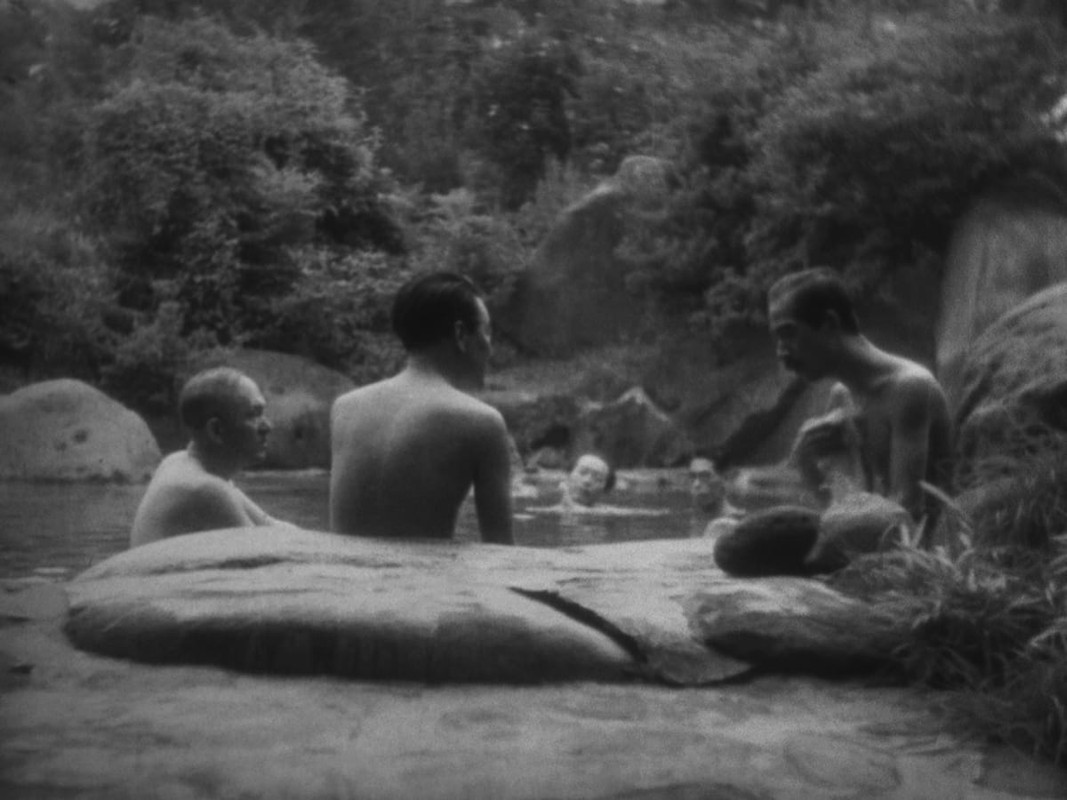
Men relaxing at a roten-buro, an outdoor onsen. DP: Suketarō Inokai.
Someone goes to a spa, beach, or retreat*
“There’s something almost poetic about finding a hairpin in the bath. It’s like the sole of my foot has been pierced by poetry.”
Relaxing at an onsen, a young man steps on the titular kanzashi. Now injured with too much time on his hands, he and his fellow nosy patrons start speculating about its owner. Then a telegram announces her arrival.
view
楢山節考 [Narayama-bushi kō / The Ballad of Narayama] (Keisuke Kinoshita, 1958)
Dec
11
International Mountain Day
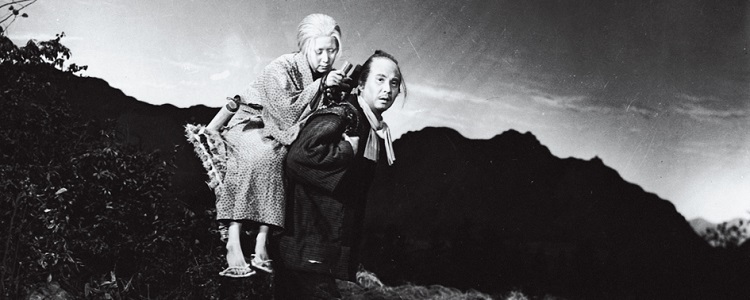
Tatsuhei (Teiji Takahashi) with his mother Orin (Kinuyo Tanaka) in a bamboo carrier on his back. She's combing his hair. Around them the mountain range. DP: Hiroshi Kusuda.
“This winter… I'm going to the mountain. My mother went to the mountain, as did the mother-in-law of our home. So I have to go too.”
– Orin
In Keisuke Kinoshita's highly stylised 楢山節考, the arguably cruel (and most likely fictional) practice – of 姥捨て [ubasute, abandoning an old woman] – is superbly abstracted. Narration, dramatic lighting, colour filters and very obviously a soundstage underline that what we're watching is not a film, but a kabuki play.
.png)
.png)