view
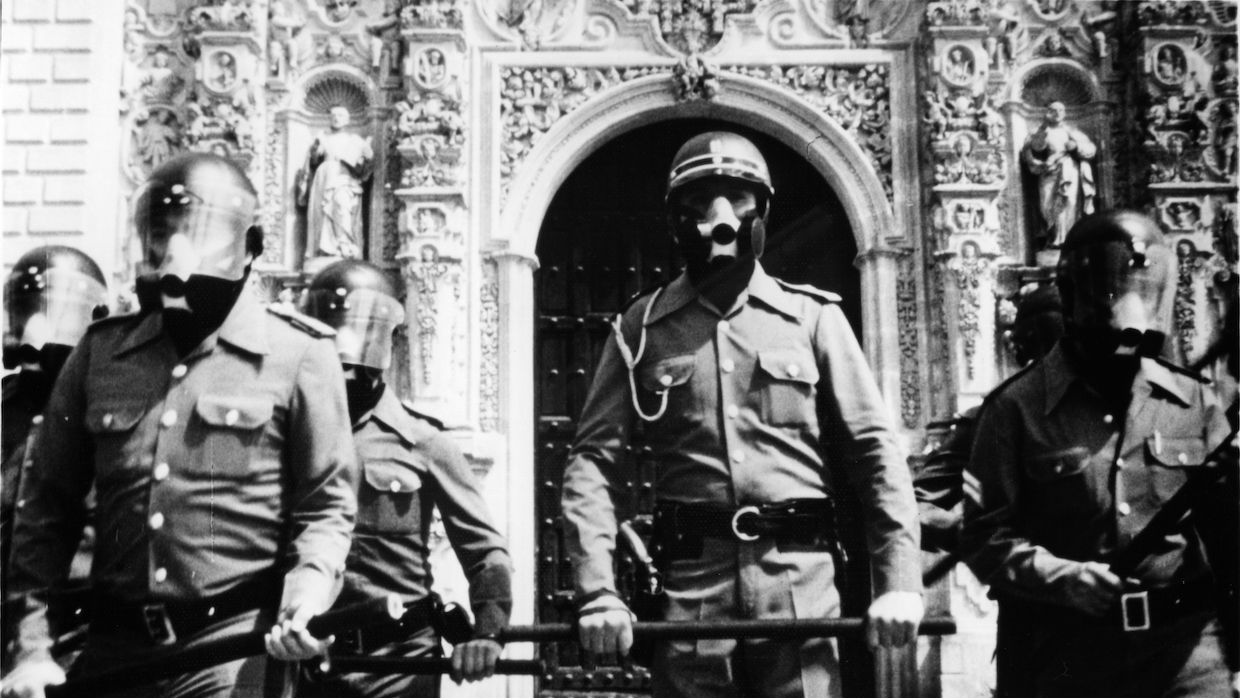
El año de la peste [The Year of the Plague] (Felipe Cazals, 1979)
Jan
12
Armed police wearing gas masks in front of the Palacio Nacional, Mexico City. DP: Xavier Cruz.
“It has been a good day for everyone, even for God. No sign of rain. No evidence of disease or blood.”
view
Sep
16
El Grito de Independencia
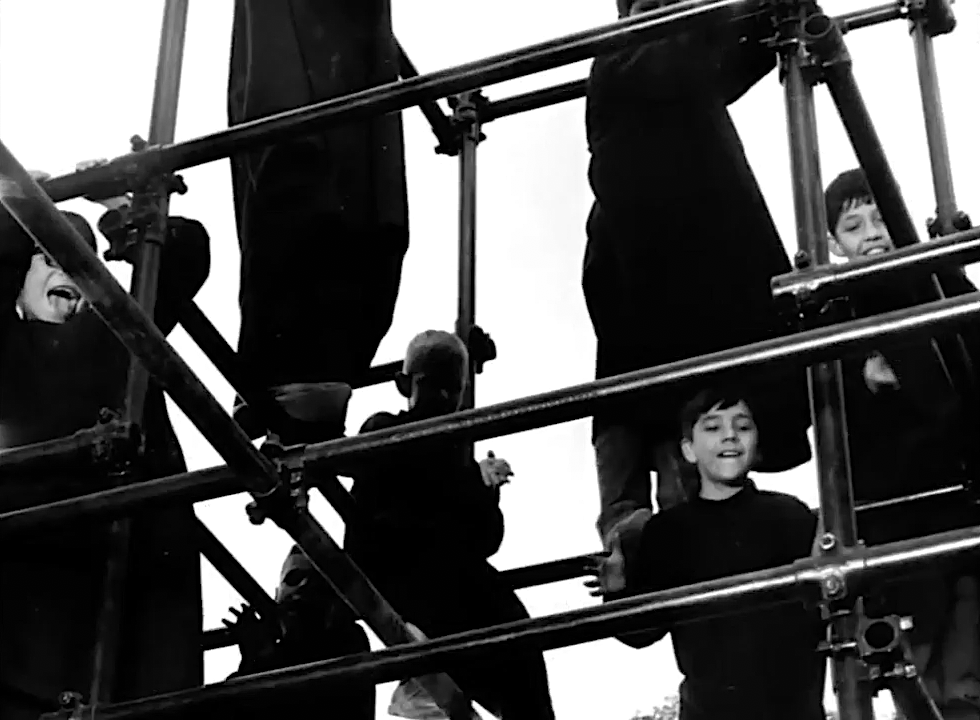
Grinning seminary boys hang from monkey bars. DPs: Salvador Gijón, Rubén Gámez & Segismundo Pérez de Pedro 'Segis'.
El Grito de Independencia: ¡Viva México!
“¡Mexicanos!
¡Vivan los héroes que nos dieron patria!
¡Viva Hidalgo!
¡Viva Morelos!
¡Viva Josefa Ortiz de Domínguez!
¡Viva Allende!
¡Vivan Aldama y Matamoros!
¡Viva la independencia nacional!
¡Viva México! ¡Viva México! ¡Viva México!”
Accompanied by Juan Rulfo's poem, Gámez explores Mexico's identity, and loss thereof. Crying out for the Mexican with Coca-Cola in the blood.
view
Yanco (Servando González + Mohy Quandour, 1961)
Apr
21
Fiddlers Frolic
Juanito (Ricardo Ancona), seen in silhouette, playing his violin in the chinampas. DP: Álex Phillips Jr..
In Mayan worldview, mortals move along the horizontal, gods along the vertical plane. A boy travels both worlds, united by music and wonder.
Juanito, a #Mixquic boy with hypersensitive hearing, finds solace from the hustle of #MexicoCity in the silence of the chinampas – the pre-Hispanic man-made agricultural plots in lake #Xochimilco. There he plays his cardboard fiddle for the nature around him, until the sound from a real violin reaches him. The violinist, an old hermit who lives on one of the chinampas, takes the boy in and teaches him how to master Yanco, his hand-built instrument. When the man dies, the boy goes out at night to be able to play Yanco. In a changing world where the living and the dead used to naturally cross paths, the strings stir different to some.
The #Nahuatl film Yanco is a small cinematic miracle that begs for a beautiful restoration akin to how Govindan Aravindan's കുമ്മാട്ടി [Kummatty] (1979) opened up the world to indigenous filmmaking.