view
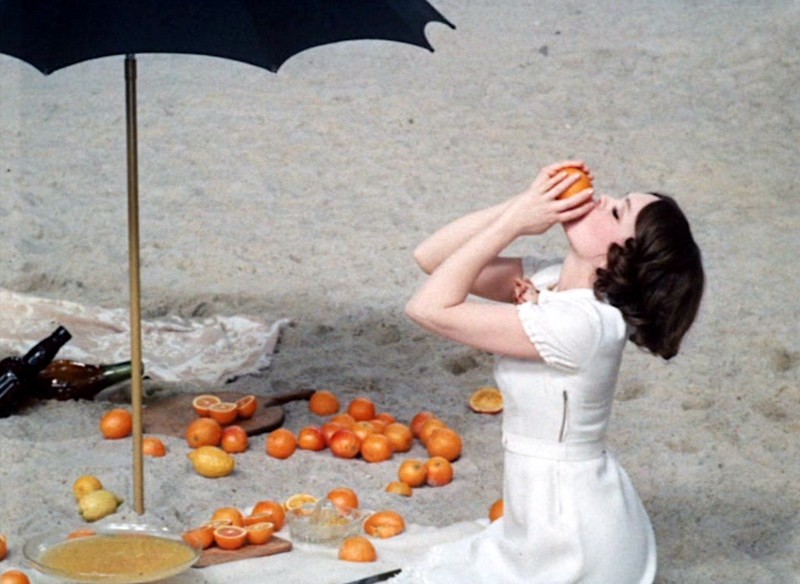
Ovoce stromů rajských jíme [We Eat the Fruit of the Trees of Paradise] (Věra Chytilová, 1970)
Aug
6
orange
Eva (Jitka Novákova) devouring oranges under a black umbrella (via). DP: Jaroslav Kučera.
Orange, food or fashion*
“Tell me the truth!”
– choir
view
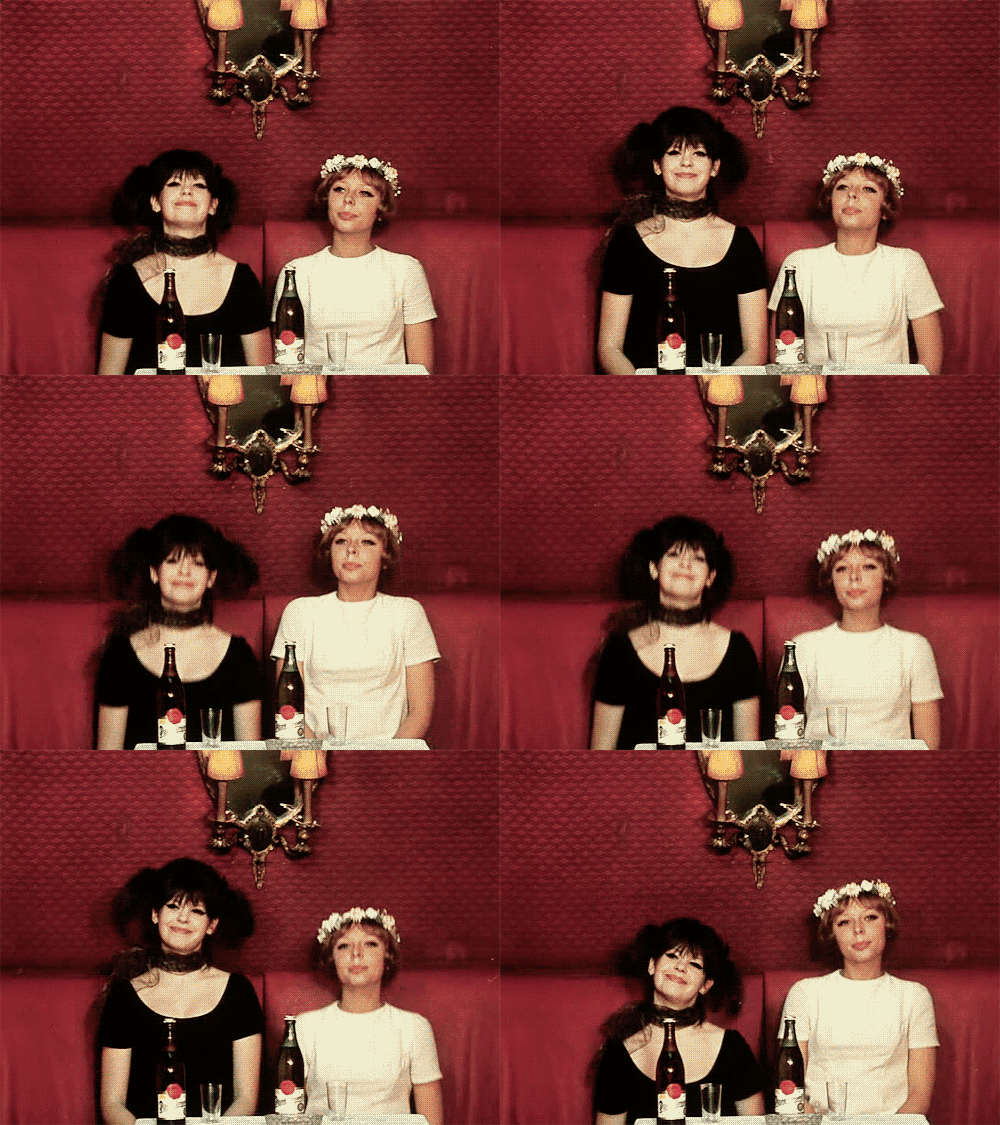
Sedmikrásky [Daisies] (Věra Chytilová, 1966)
Jul
25
a girls' night out
Marie I and Marie II (Jitka Cerhová and Ivana Karbanová respectively) having a heck of a time. DP: Jaroslav Kučera.
A girls' night out: women having fun on their own[???]*
Marie II: “But I'm happy.”
Marie I: “I'm so happy, too.”
Two young women called Marie pull destructive, anarchist pranks.
view
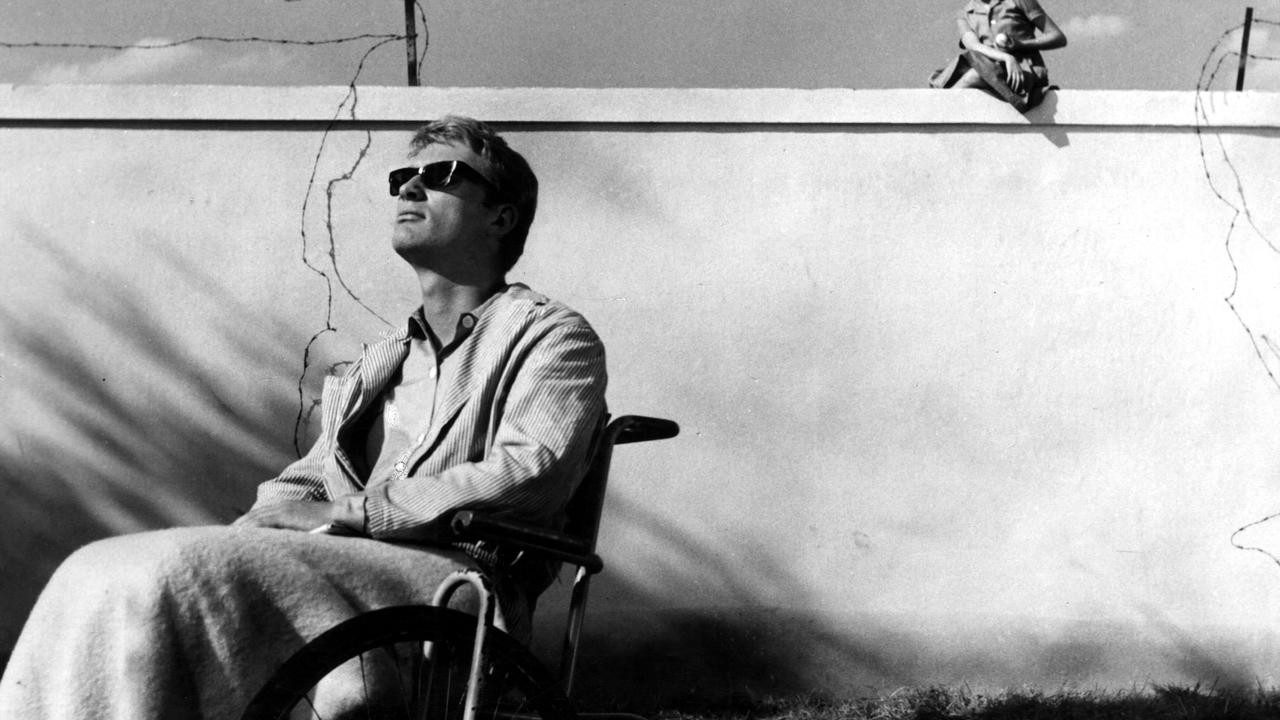
Vysoká zeď [The High Wall] (Karel Kachyňa, 1964)
Jul
23
The young man (Vít Olmer) rests in the sun with Jitka (Radka Dulíková) observing him. DP: Josef Vaniš.
Someone is in an ambulance or hospital*
“We still remember our high wall. Even the day we first climbed it, filled with curiosity. The sadness of the discoveries of those years seemed devastating to us. Then we wondered how we could have forgotten it so suddenly.”
– prologue
It's summer in Prague. Jitka, a girl on the cusp of womanhood, follows a stray cat and finds a tall hospital wall. Behind it, a young man in a wheelchair rests. The girl and the man connect.
view
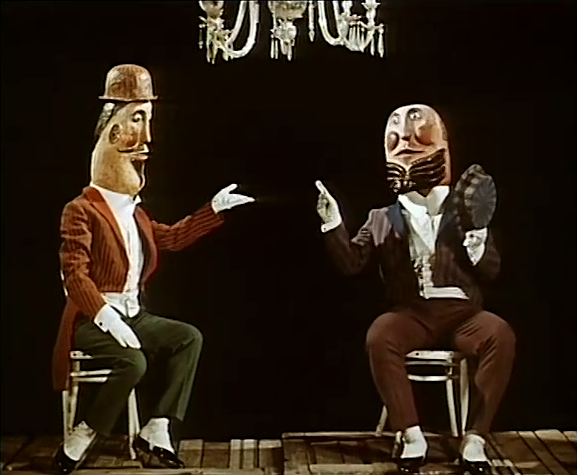
Poslední trik pana Schwarcewalldea a pana Edgara [The Last Trick of Mr. Schwarcewallde and Mr. Edgar] (Jan Švankmajer, 1964)
Jun
26
National Handshake Day
Mr Schwarcewallde and Mr Edgar on stage. Both are puppeteers in Edwardian costumes and oversized papier-mâché heads. DP: Svatopluk Malý.
Two illusionists compete with increasingly incredible tricks, sealed with a hefty handshake.
view
Krakatit (Otakar Vávra, 1948)
Apr
26
International Chernobyl Disaster Remembrance Day
A man on a darkened, concrete runway, running towards a man-made structure, a mirage. DP: Václav Hanuš.
With the experience of yet another world war, and two devastating applications of science biggest terror, Karel Čapek's 1922 novel Krakatit [“Krakatoa”] anticipated and moulded the decades to come.
And R.U.R. is now, just around the corner.
view
Baron Prášil [The Fabulous Baron Munchausen] (Karel Zeman, 1962)
Mar
14
Under the Skin – 2013
A weird of quirky sci-fi film on the date Under the Skin (2013) was released in the UK.
“I cast my hat out into the universe, let it greet those who are on their way from Earth. From this day forward, the Moon is no longer a dream.”
– Cyrano de Bergerac
view
Případ pro začínajícího kata [Case for a Rookie Hangman] (Pavel Juráček, 1970)
Jan
30
doors
A man named Gulliver (Lubomír Kostelka) accidentally runs over a rabbit, who is dressed to the nines and carries a pocket watch. Slowly, the man finds himself in a sort of Wonderland.
view
Kinoautomat: Člověk a jeho dům [Kinoautomat / One Man and His House] (Ján Roháč, Radúz Činčera + Vladimír Svitáček, 1967)
Jan
10
Representation of the People Act 1918
The audience about to vote for one of two scenes, with two presenters on stage.. DP: Jaromír Šofr.
Made for the Czechoslovak Pavilion at #Expo67 in #Montréal, Kinoautomat was the world's first interactive film. During nine moments in the story, a moderator would appear on the stage, and ask the audience where the story should go now. Depending on the votes, one of two reels would play.
“The Kinoautomat in the Czechoslovak Pavilion is a guaranteed hit of the World Exposition, and the Czechs should build a monument to the man who conceived the idea, Radúz Činčera.”
– The New Yorker
view
Sedmi kontinent [Sedmý kontinent / The Seventh Continent] (Dušan Vukotić, 1966)
Dec
13
Francis Drake's circumnavigation
The first two children to set sail, with Iris Vrus on the right, and possibly Tomislav Pasarić on the left. DP: Karol Krška.
view
Slnko v sieti [The Sun in a Net] (Štefan Uher, 1963)
May
9
lunch
An old man, enclosed in a simple, wooden window frame, eating his lunch. DP: Stanislav Szomolányi.