view
Wholly Communion (Peter Whitehead, 1966)
Jun
11
1965
Allen Ginsberg reciting in front of an enraptured audience at the Royal Albert Hall. DP: Peter Whitehead.
“Love! Love!”
– anonymous poet interrupting Harry Fainlight
view
Hail the New Puritan (Charles Atlas, 1987)
Sep
22
Fall
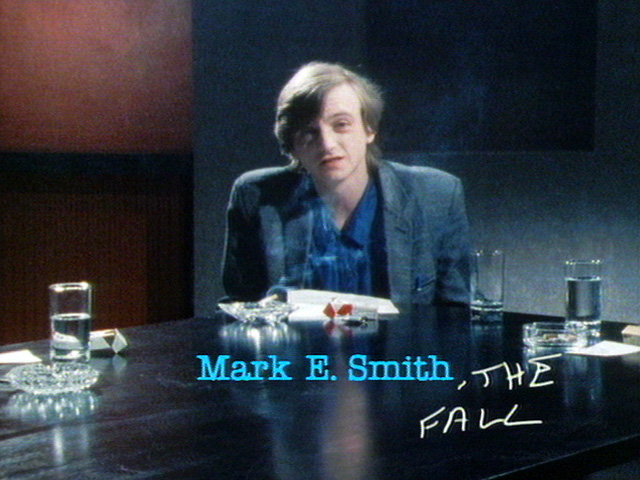
As it says on the tin, it's Mark E. Smith of The Fall (via). DP: John Simmons.
The Northern Hemisphere welcomes the autumn equinox
“Those flowers, take them away;
they’re only funeral decorations.
This is The Fall and this is a drudge nation.
Your decadent sins will wreak discipline.
You puritan, you shook me.
I wash every day.”
A fictional day in the life of choreographer Michael Clark, company, and friends in preparation of the dance piece New Puritans.
view
The Black Tower (John Smith, 1985—1987)
Aug
22
black
Black: a building or structure*
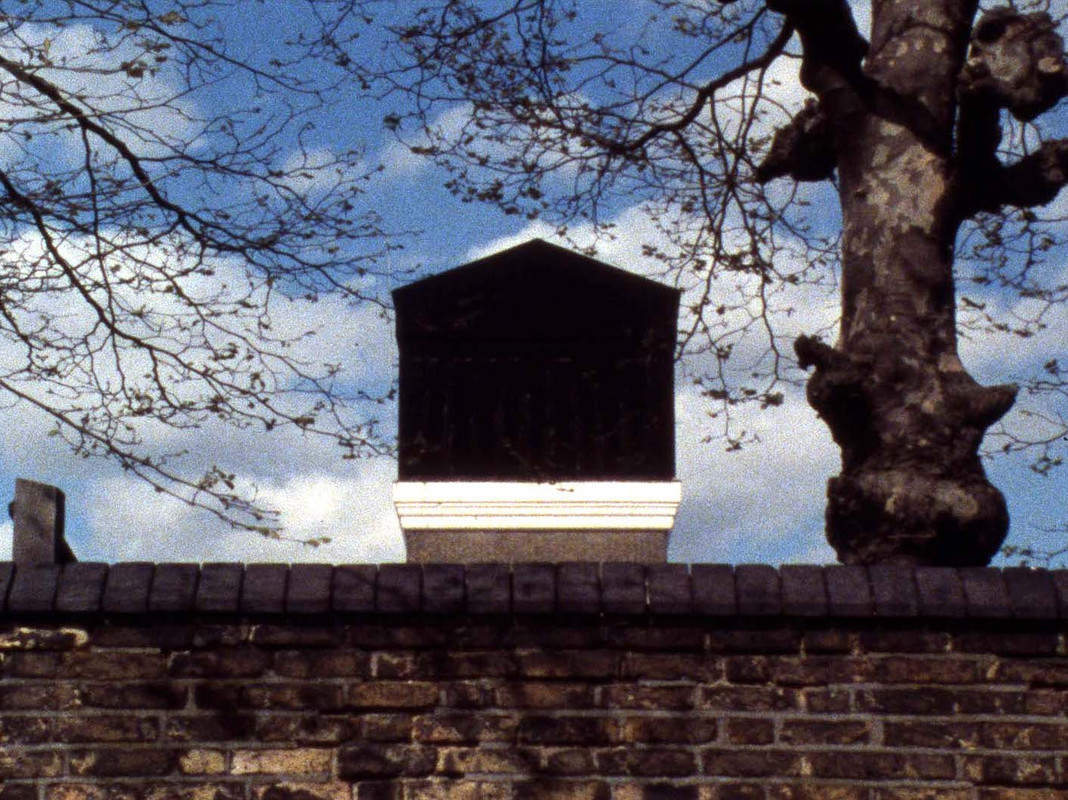
“I first noticed it in Spring last year. […] It was from [my home] that I first saw it—its crest protruding over the roofs on the other side of the road. Surprised that I hadn’t noticed it before, I wondered what it was and then forgot about it for several weeks.”
– narrator
The black tower was a real structure, first noticed by filmmaker John Smith when he moved to East London. The building, actually the upper part of a hospital's water tower, was painted pitch black, and on sunny days appeared to be a cutout in the sky. By framing the shots in such a way that only part of the surroundings is visible, and editing them in a narrative framework, Smith creates a new context suggesting movement. This style of montage called creative geography, or artificial landscape, was developed by Lev Kuleshov and enables filmmakers to expand existing material and narrative into something that usually is only available to prose poetry.
view
The Moon Over the Alley (Joseph Despins, 1976)
Mar
21
End Racism Day
Ronnie Gusset (Patrick Murray), Sherry (Bill Williams), and Belinda (Sharon Forester) at a kitchen table, chatting and laughing. DP: Peter Hannan.
Today marks the anniversary of the Sharpeville massacre (1960), when police butchered dozens of people gathered to protest the pass law, one of Apartheid's many cruel segregation measurements.
“In a short while you'll see that the moon won't be so bright as it is. Clouds will cover it… it'll get broken up there. I hope it won't break us.”
– Sybil
The multicultural residents of a Notting Hill boarding house go about their day – listening to the radio, humming, singing – with the local council's imminent demolition of their home looming over them.
A kitchen sink drama, yes. But also a catchy musical, written by no other than Galt MacDermot, who brought the world the musical Hair (1967) and the blaxploitation neo-noir Cotton Comes to Harlem (1970).
view
The Party's Over (Guy Hamilton, 1965)
Feb
13
party
The party crowd staggers its way home at dawn across Albert Bridge. DP: Mike Pratt.
– Let's keep this party going till Sunday.
– Why Sunday?
– The Hindus say the world comes to an end on Sunday.
– But, how will we know when it happens?
– Graves will gape and the shrouded dead will run gibbering and shrieking in the streets.
– Sounds like any other Sunday.
*which isn't until March 4 this year.