“I first noticed it in Spring last year. […] It was from [my home] that I first saw it—its crest protruding over the roofs on the other side of the road. Surprised that I hadn’t noticed it before, I wondered what it was and then forgot about it for several weeks.” The Black Tower (John Smith, 1985—1987)
Aug
22
black
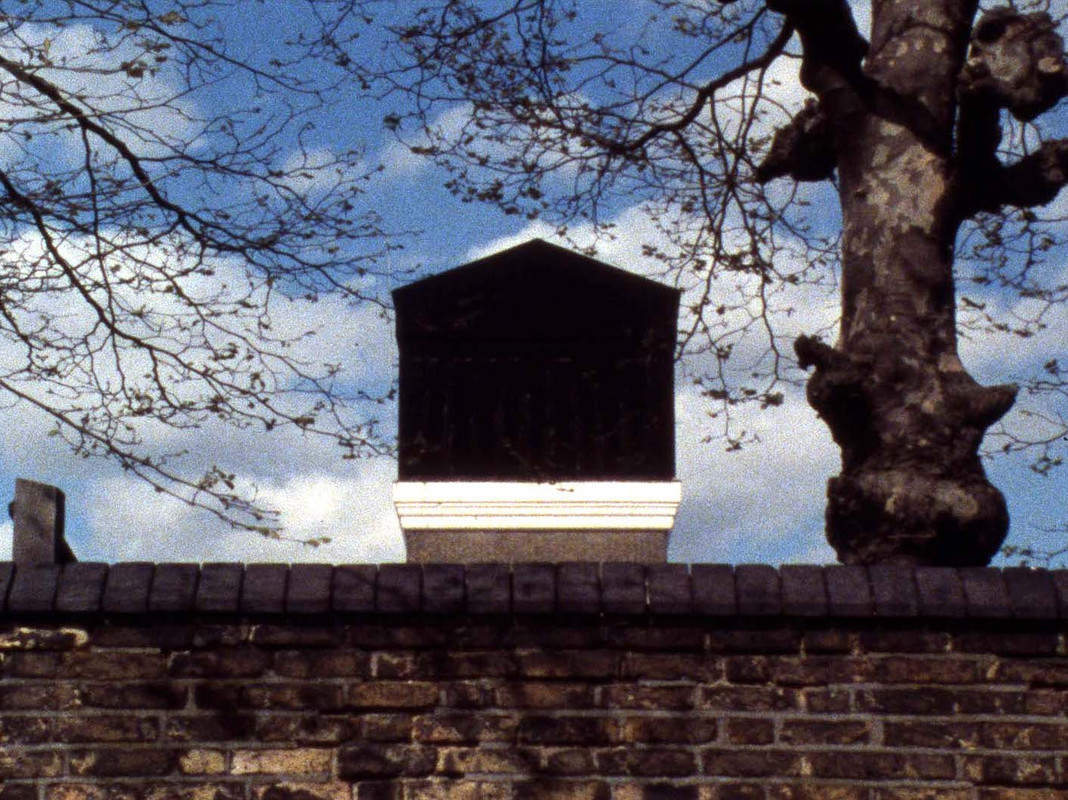
The black tower, visible from behind a brick wall (via)..
Black: a building or structure*
– narrator
A man becomes aware of a formerly unnoticed black tower. Surely it's nothing, yet as the weeks pass, its looming presence takes over.
The black tower was a real structure, first noticed by filmmaker John Smith when he moved to East London. The building, actually the upper part of a hospital's water tower, was painted pitch black, and on sunny days appeared to be a cutout in the sky. By framing the shots in such a way that only part of the surroundings is visible, and editing them in a narrative framework, Smith creates a new context suggesting movement. This style of montage called creative geography, or artificial landscape, was developed by Lev Kuleshov and enables filmmakers to expand existing material and narrative into something that usually is only available to prose poetry.
* the Bales 2025 Film Challenge for August is not date-related but lists, for the most part, the colours of the rainbow.
1980s
آداب بهاری [Adab-e Bahari / Rites of Spring] (Ali Asghar Agahbanaei, 1982)
Aug
11
spring
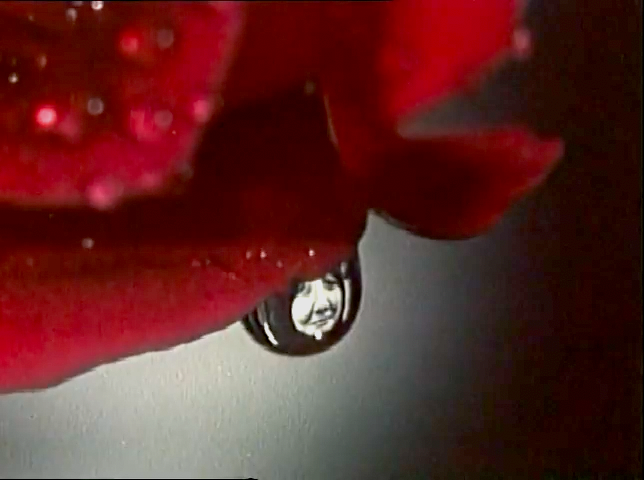
In a dewdrop hanging from a rose, the face of a smiling woman appears.
Dita e Verës, a pagan spring celebration from Albania, celebrated in March: a spring scene*
The restless anticipation of spring. Iran as it was before and after the 1979 toppling of the Shah. While the snow melts away, the Revolution takes place, and fresh buds appear on the rose bushes. A poem.
* the Bales 2025 Film Challenge for August is not date-related.
L'argent [Money] (Robert Bresson, 1983)
Jul
22
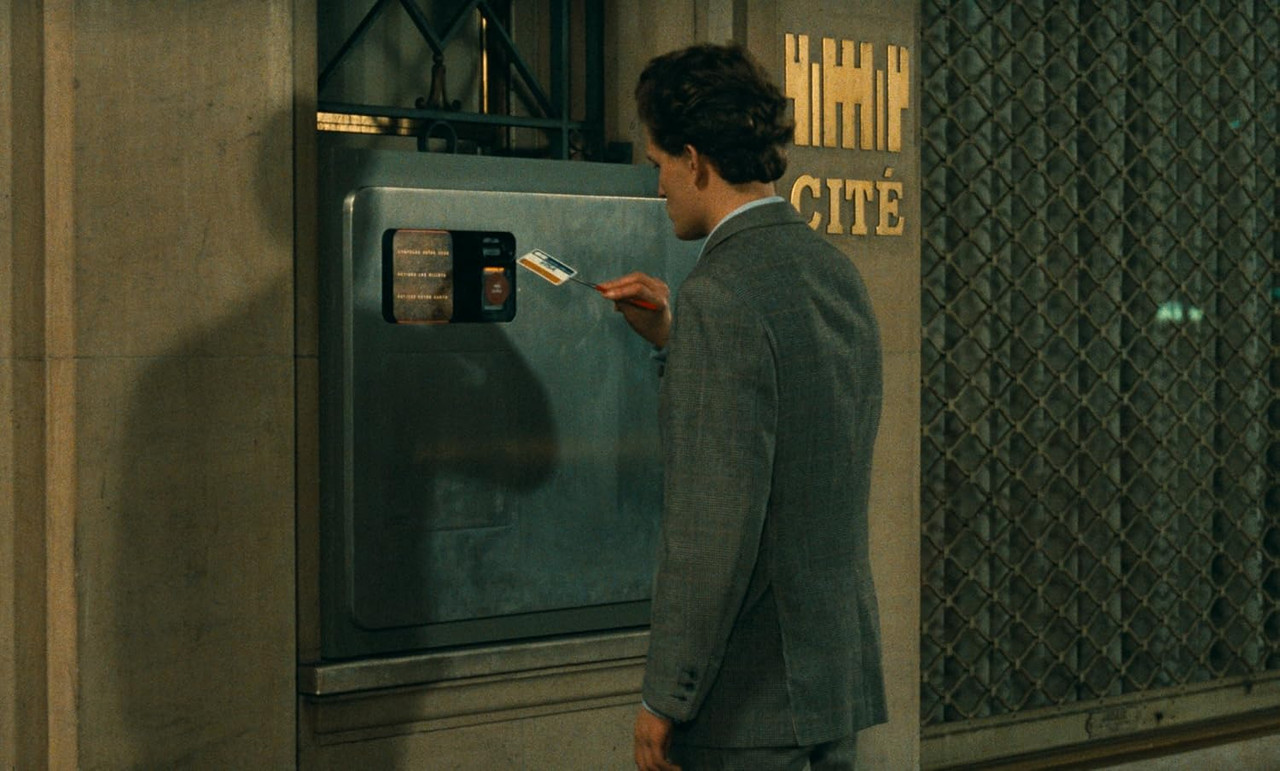
A man at an ATM holds on to a Visa credit card with tweezers. DPs: Pasqualino De Santis & Emmanuel Machuel.
Everything's expensive: someone is a at bank or ATM*
* the Bales 2025 Film Challenge for July is, for unknown reasons, mostly not date-related and follows some sort of vacation narrative.
“It appears obvious that the territory is the sum of all the maps, the result of an infinite addition. Or a contrary, the territory is what is left when we remove all the sets of lines, drawings, traces and colors which are covering it. Its existence becomes doubtful.” Zig-Zag – le jeu de l'oie (Une fiction didactique à propos de la cartographie) [Snakes and Ladders] (Raúl Ruiz, 1980)
Jul
5
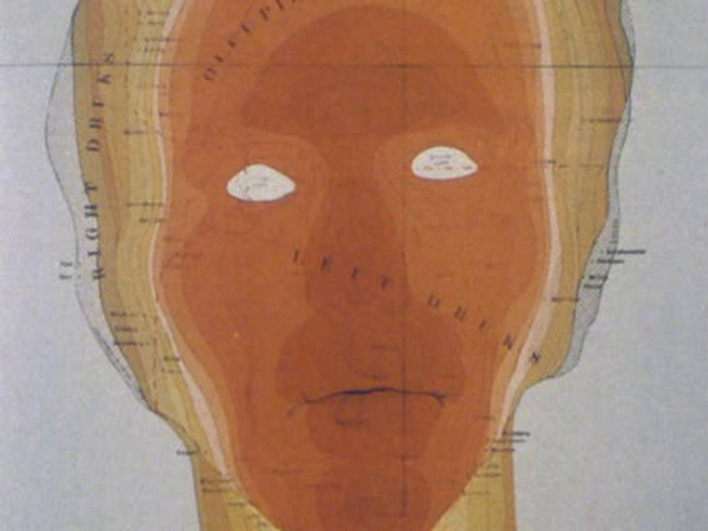
An anthropomorphic map with contour lines sketching out a man's head (via). DP: Alain Montrobert.
Traveling to my vacation destination, a map or globe*
– H., via
A man, H., joins two others playing jeu de l'oie (Game of the Goose), a board game associated with labyrinths and pilgrimage. While the three play, the game opens up maps and new roads to explore.
Following my own Bales' rules, I cannot pick a title twice. See Zig-Zag as an avatar of Raúl Ruiz's O Território [The Territory] from 1981.
* the Bales 2025 Film Challenge for July is, for unknown reasons, mostly not date-related and follows some sort of vacation narrative.
Лісова пісня. Мавка [Lisova pisnya. Mavka / A Story of the Forest: Mavka] (Yuri Ilyenko, 1981)
Jun
7
National Trails Day

Mavka (Lyudmila Efimenko) and the Spirit of the Forest (Boris Khmelnitskiy). DP: Yuri Ilyenko.
A movie that takes place in nature for National Trails Day (USA)
Mavka, a forest nymph, falls in love with mortal Lukash, who in his turn is punished by the Spirit of the Forest for marrying another mortal instead. Curse upon curse, Lukash is turned into a wolf, and Mavka into a weeping willow.
The colours, mood and impact of the four seasons on mortal and sprite alike is there, not only made visible by Ilyenko's ethereal, spiralling camera, but somewhere blooming deep inside us, observing.
ビリィ★ザ★キッドの新しい夜明け [Birī za kiddo no atarashii yoake / The New Morning of Billy the Kid] (Naoto Yamakawa, 1986)
May
31
National Utah Day
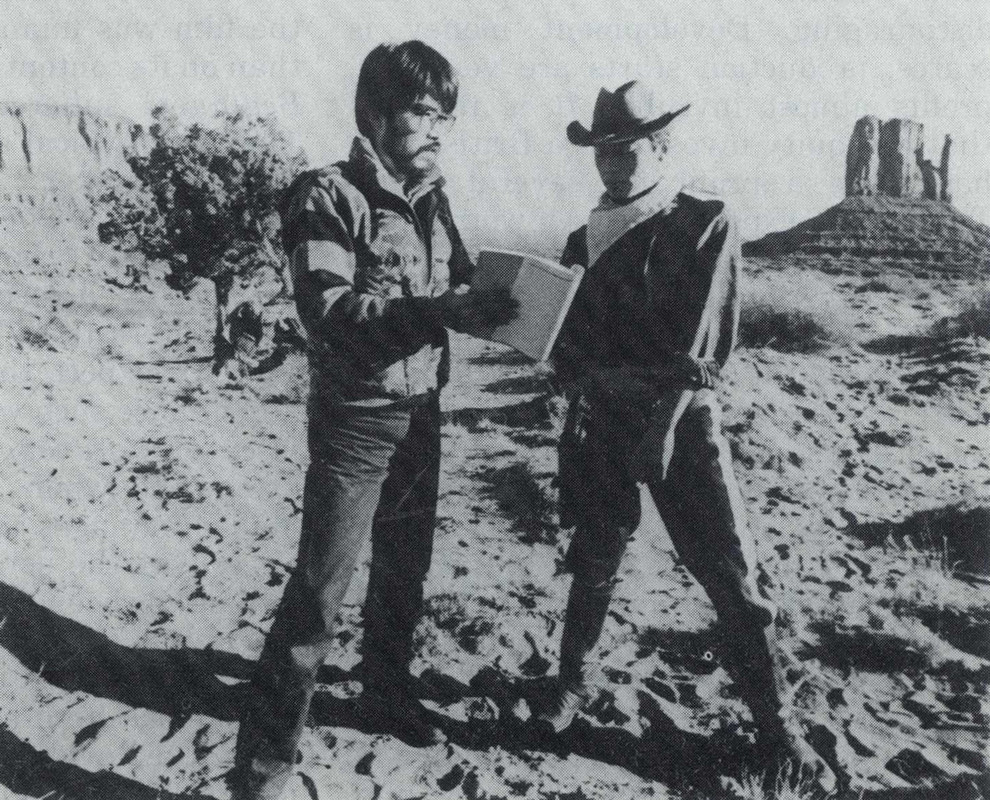
Director Naoto Yamakawa directing Billy the Kid (Hiroshi Mikami) on site in Utah (via) DP: Kenji Takama.
An actor, director or character from Utah – National Utah Day (USA)
Billy the Kid steps out of a huge poster of Monument Valley right into a Tokyo bar and becomes its bar keeper. Together with a samurai, a WW2 G.I, Marx-Engels (not a typo), the Japanese weather service number 177 and others, he keeps the tavern safe from various thugs roaming the streets.
“The fear in her eyes and the knife in the chest. That's my last memory of my mother. That's why I had to go to prison for four years, even though she survived.”Angst [Fear] (Gerald Kargl, 1983)
May
23
National Title Track Day
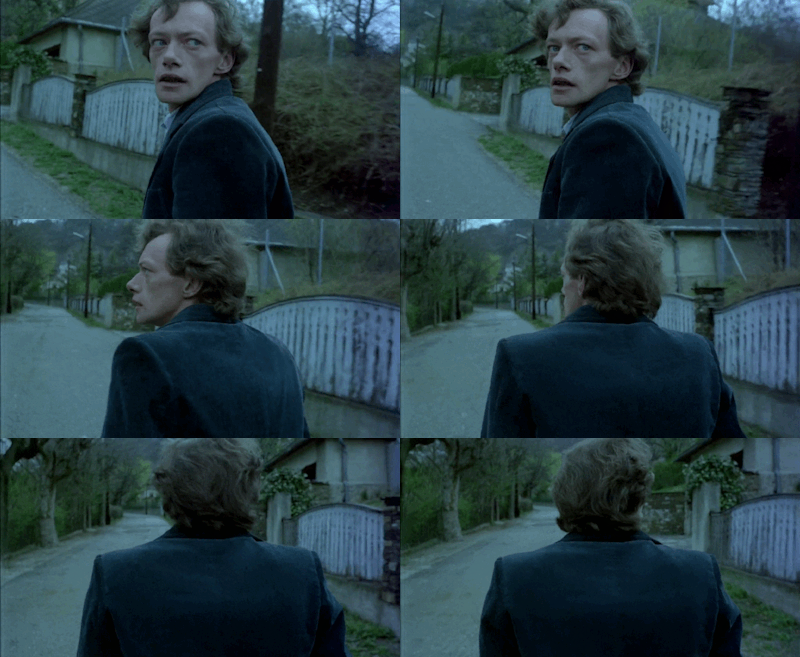

1: K. Out. Out. DP: Zbigniew Rybczynski.
2: Klaus Schulze at work in 1983 (via)
A killer title track for National Title Track Day (USA)
– opening lines
What stabs you harder in the chest than Klaus Schulze's synth-driven killing spree?
Anayurt Oteli [Motherland Hotel] (Ömer Kavur, 1987)
May
14
Receptionist Day
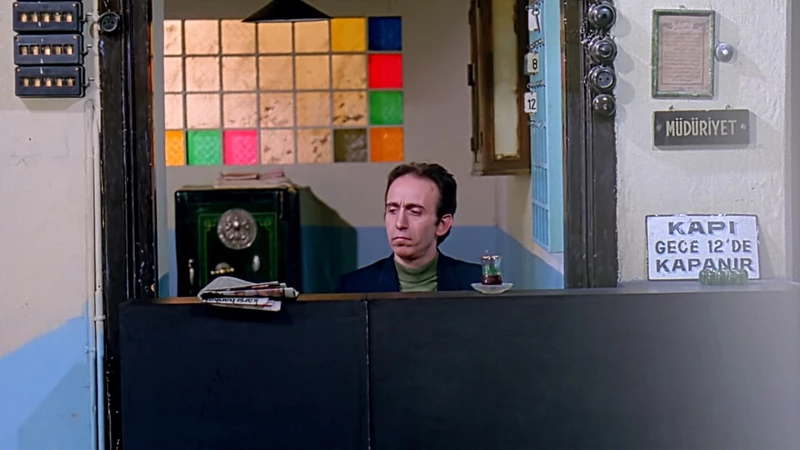
Receptionist Zebercet. DP: Orhan Oğuz.
A receptionist or secretary for Receptionist Day
The proprietor and receptionist of a small hotel welcomes a new guest. The woman, her name she doesn't tell, stays for only one night with the promise to return the following week. The receptionist waits.
Παραγγελιά! [Parangelia! / Request for a Song] (Pavlos Tasios, 1980)
May
13
Top Gun Day

A man dances the Zeibekiko, with another close to him. DPs: Sakis Maniatis & Kostas Papagiannakis.
Testosterone! for Top Gun Day (USA)
The Ζεϊμπέκικο (Zeibekiko) is a Greek dance, improvised by one man, alone. It's a dance that shows the performer's manliness, both his pride and his sorrows. Out of respect for the dancer, the others sit down, watch, and relate to him.
When the police enters the establishment – and this is 1973, the colonels ruled the naton – and interrupt the dancer, his older brother steps in.
“Everything comes from the Great Book of Nature. Human attainments are an already printed book.”アントニー・ガウディー [Antonio Gaudí] (Hiroshi Teshigahara, 1984)
May
12
National Anthony Day

A woman in shorts and T-shirt lounges on the serpentine mosaic bench in Parc Güell, which blues compliment her outfit. Planned as a housing development project, the park is a welcome break from the busy city for all Catalans, regardless of class. DPs: Junichi Segawa, Ryu Segawa & Yoshikazu Yanagida.
An actor, director or character named Anthony for National Anthony Day (USA).
– Antoni Gaudí