Suspense (1913)
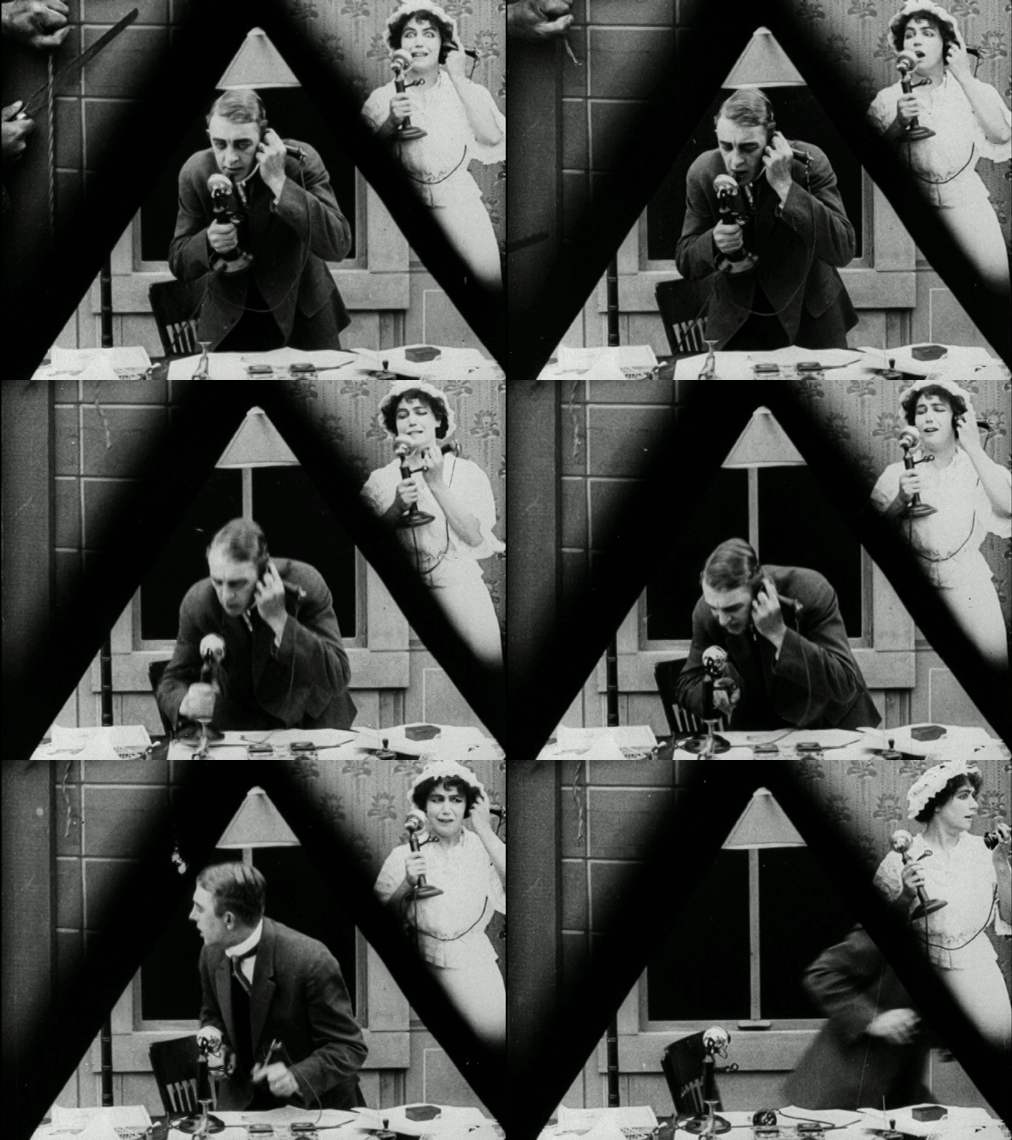
Triangular split-screen in Suspense (1913). While the Wife (Lois Weber) is on the phone with her Husband (Val Paul), unbeknownst to them the Tramp (Sam Kaufman) cuts the telephone wire.
June 11: say Hi! on #SayHiDay
Suspense (Phillips Smalley & LoisWeber, 1913)
Now he's in the…
Suspense is not only the title of this short silent thriller, but also the state of mind the viewer is put into as soon as the film opens. Using POV (point-of-view) shots and breaking the fourth wall, the imminent threat – a vagrant trespassing and creeping up to a lone woman and her newborn child – creeps up on us. We know we're safe, on the other side of the screen, but the Tramp (a particularly haunting Sam Kaufman) looks us right in the eye. He passes us on the stairs, but he's going around us so he must be, hopefully, aware of our presence.
Meanwhile, we also see something that only cinema and books can give: multiple happenings at once. The Wife (Lois Weber) calls her Husband (Val Paul) on the phone. Suddenly the screen splits into three: in the middle, the Husband on call, listening to his Wife on the right who's begging him to hurry home. On the left, the Tramp. Unlike us, he cannot see the conversation promising a happy end. But instead that bringing some relief to the viewer, he cuts the phone cable. While we see that happen, we have no way to tell the Husband to make haste, or the Wife that the Tramp's getting closer.
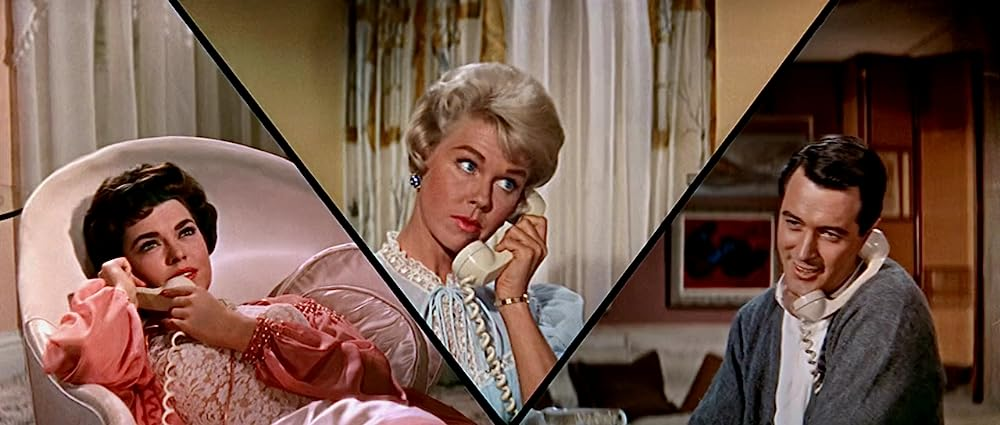
What's striking too is the omnipresence of modernity: the couple's home and Husband's office have telephones and therefore electricity, and the Husband speeds off in an automobile. The cinematography for the telephone and car chase scenes are filmed and edited with great knowledge of the technical possibilities of the medium; split-screen (only gathering popularity much later, see Pillow Talk (1959), and the usage of the Entfesselte Kamera [unchained camera], the latter a mid 1920s German invention.
A similar, triangular split-screen scene from Michael Gordon's Pillow Talk (1959) with (LtR) Eileen (Valerie Allen), Jan Morrow (Doris Day), and Brad Allen (Rock Hudson) on the party line. With Ms Day's character centred, we know that she's the one to identify with in this particular scene. DP: Arthur E. Arling.
With that, Suspense not only preceded Italian futurist cinema, but also the usage of suspense as a cinematic technique. Now go and watch, and remember
it's only a movie it's only a movie it's only a movie
#Bales2023FilmChallenge #PhillipsSmalley #LoisWeber #SamKaufman #USA #ShortFilm #SilentFilm #drama #suspense #crime #thriller #HomeInvasion #1910s ★★★★☆