“Strange things are happening today.” Au secours ! [Help!] (Abel Gance, 1924)
Oct
18
Au secours !

A rather tall ghost struts along a nonplussed Max. DPs: Émile Pierre, André-Wladimir Reybas & Georges Specht.
A [favourite] horror comedy*. This post goes out to Max Linder, who – together with his wife Hélène “Ninette” Peters – took his own life 100 years ago, on October 31, 1925.
Max (Max Linder) bets that he can spend one whole hour in a haunted castle without calling for help. In face of all the (in camera!) terrors, Max faces his fears with ease. Until, just minutes before the clock strikes midnight, the phone rings.
– title card
And there was this other bet. One between Linder and director Abel Gance. Linder bet that Gance would not be able to shoot a movie in only three days. With ghosts, skeletons, and wildlife galore, the result is a delightful Grand Guignol à la Max.
* the Bales 2025 Film Challenge for October is horror-themed as opposed to date-based, and is all about favourites. Expect non-horror and films I believe to be relevant instead.
France
“Here lies
Pierre MOLINIER
born on 13 April 1900 died around 1950
he was a man without morals
he was proud of it and gloried in it
No need to pray for him.”Satan bouche un coin (Jean-Pierre Bouyxou + Raphaël Marongiu, 1968)
Oct
10
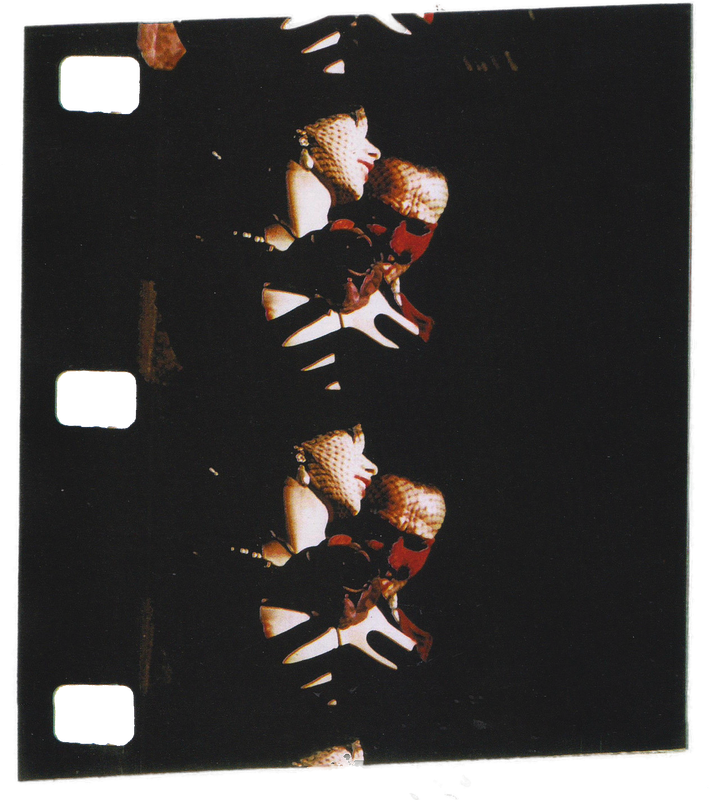
In an autoerotic display, Androgyne (Pierre Molinier) fondles a woman (Janine Delannoy) wearing one of his masks that echoes Molinier's deceased sister (via). DPs: Jean-Pierre Bouyxou, Raphaël Marongiu & Loïc Picard.
A [favourite] color [horror] film*
– Pierre Molinier, mock-epitaph (via, NSFW as goes without saying)
* the Bales 2025 Film Challenge for October is horror-themed as opposed to date-based, and is all about favourites. Expect non-horror and films I believe to be relevant instead.
“Blood of Christ. Demon. A curse upon this man. A curse that he will never forget me. Blood of my body. Until the grave. A curse that he will never forget me.” Il demonio [The Demon] (Brunello Rondi, 1963)
Oct
6
exorcism
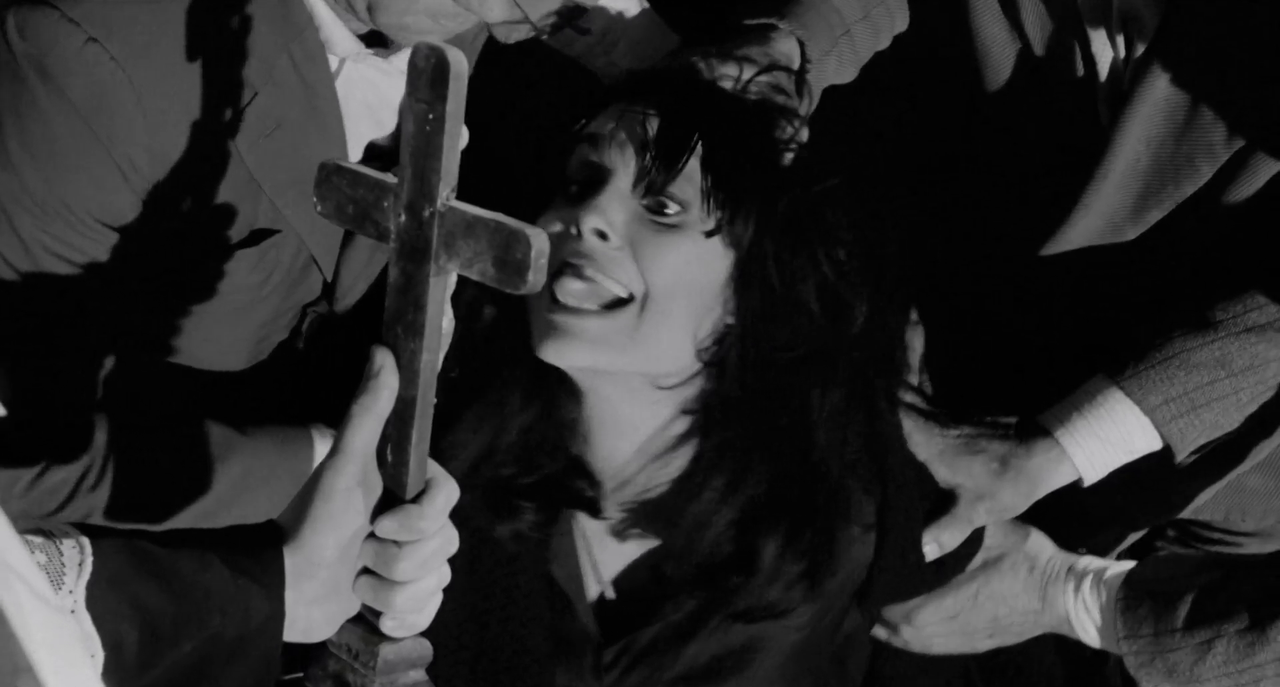
While several men hold her down, Purif (Daliah Lavi) sticks out her tongue to the crucifix held up to her. DP: Carlo Bellero.
[A favourite] exorcism film*
– Purificazione
When a rejected young woman puts a curse on her heart's desire, the locals see nothing less than witchcraft. It is decided that Purif must be possessed, and exorcised.
* the Bales 2025 Film Challenge for October is horror-themed as opposed to date-based, and is all about favourites. Expect non-horror and films I believe to be relevant instead.
“In all my years of practice, I've never seen anything so sweet. A rosebud.”Sweet Movie (Dušan Makavejev, 1974)
Sep
13
International Chocolate Day
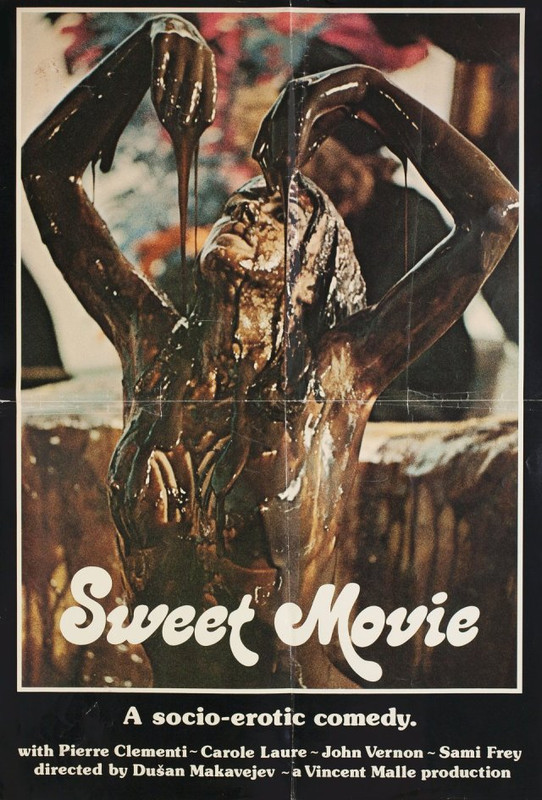
The most virgin, Miss 1984 (Carole Laure), bathing in chocolate. DP: Pierre Lhomme.
Chocolate for International Chocolate Day (Milton S. Hershey's birthday)
– Dr. Mittelfinger
Miss Canada, winner of the “most virgin” contest, escapes her rich, milk tycoon husband into a world of anarchy, lust, and sugar.
Petit à petit [Little by Little] (Jean Rouch, 1970)
Sep
3
Skyscraper Day
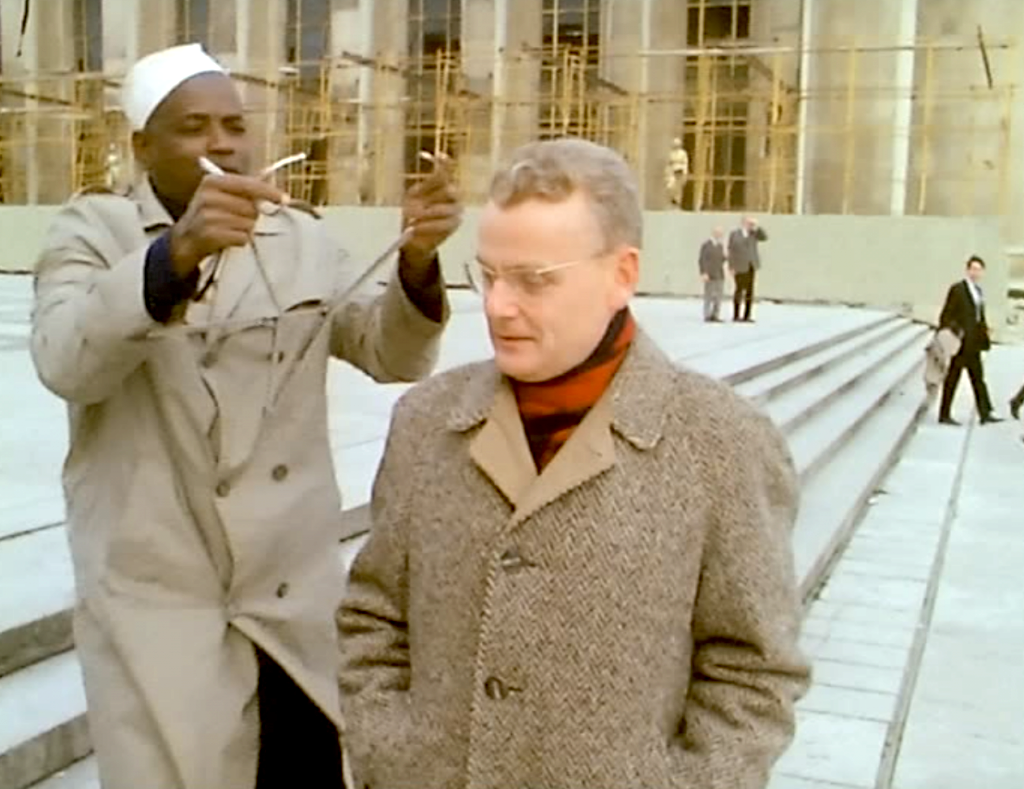
Damouré (Damouré Zika) measures a Parisian with craniology callipers. No skyscraper in this still, but there's scaffolding. DP: Jean Rouch.
A skyscraper for Skyscraper Day (USA)
In the sequel to Rouch's Jaguar (1967), Damouré wants a high rise for his Niger business with “as many floors as he has wives”. He decides to travel to Paris to learn about the construction of such building, and what made Paris to the Paris of today. While there, he gets distracted by the peculiarities of the French natives. Worried about Damouré's increasingly puzzling postcards, his company sends out Lam (Lam Ibrahim Dia) to bring him home.
Mon oncle (Jacques Tati, 1958)
Aug
29
.png)
Mr Hulot and three women enjoy an outdoor lunch in Villa Arpel's concrete backyard. A woman in furs laughs heartily, head thrown back, with Hulot looking into her open mouth, halting a woman reaching for a carafe mid-movement. The third woman, in an avant-garde Eastmancolor-red poncho, calmly smokes through her cigarette holder. DP: Jean Bourgoin.
– A house like yours must be such a job!
– Oh, a leaf! Ah, yes it's a chore.
– Admit it, you love it.
Mon oncle (Jacques Tati, 1958) / Koolhaas Houselife (Ila Bêka + Louise Lemoine, 2008)
Aug
29
grey
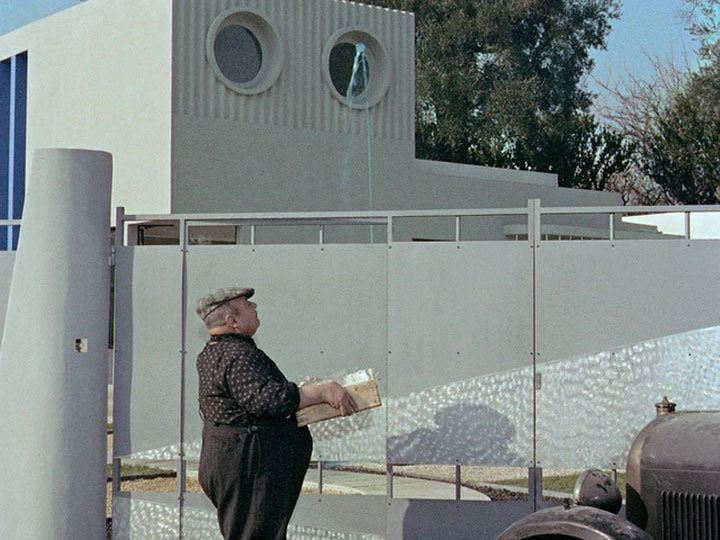
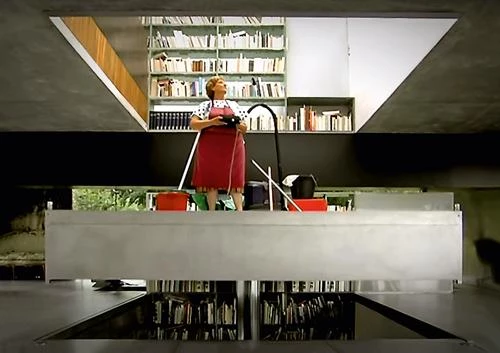
A delivery man in front of the gates of Villa Arpel (via), and custodian Guadalupe Acedo working the lift in Maison à Bordeaux. DP of Mon Oncle: Jean Bourgoin.
[A favourite] colour: grey*
Approaching the 60s, Mr Hulot finally switches from black-and-white to colour. Suddenly, we see that his suit is a beigeish grey and so is the Arpels' house, that modernist masterpiece designed by Tati. The beloved luddite struggles with hypermodern people and their hypermodern constructs, much alike the future Hulot from Playtime (1967).
In similar absurd fashion, Guadalupe Acedo, cleaning lady, works her way through Rem Koolhaas' Maison à Bordeaux (1998) in Bêka and Lemoine's Koolhaas Houselife (2008). Too steep are the stairs, too leaky everything else. Levelheaded, she does her thing; a small beacon of romantic practicality in a world of absurd efficiency.
* the Bales 2025 Film Challenge for August is not date-related but lists, for the most part, the colours of the rainbow.
“It is vital to be photogenic from head to foot. After that you are allowed to display some measure of talent.”
Les Vampires [The Vampires or, The Arch Criminals of Paris] (Louis Feuillade, 1915/1916)
Aug
24
black
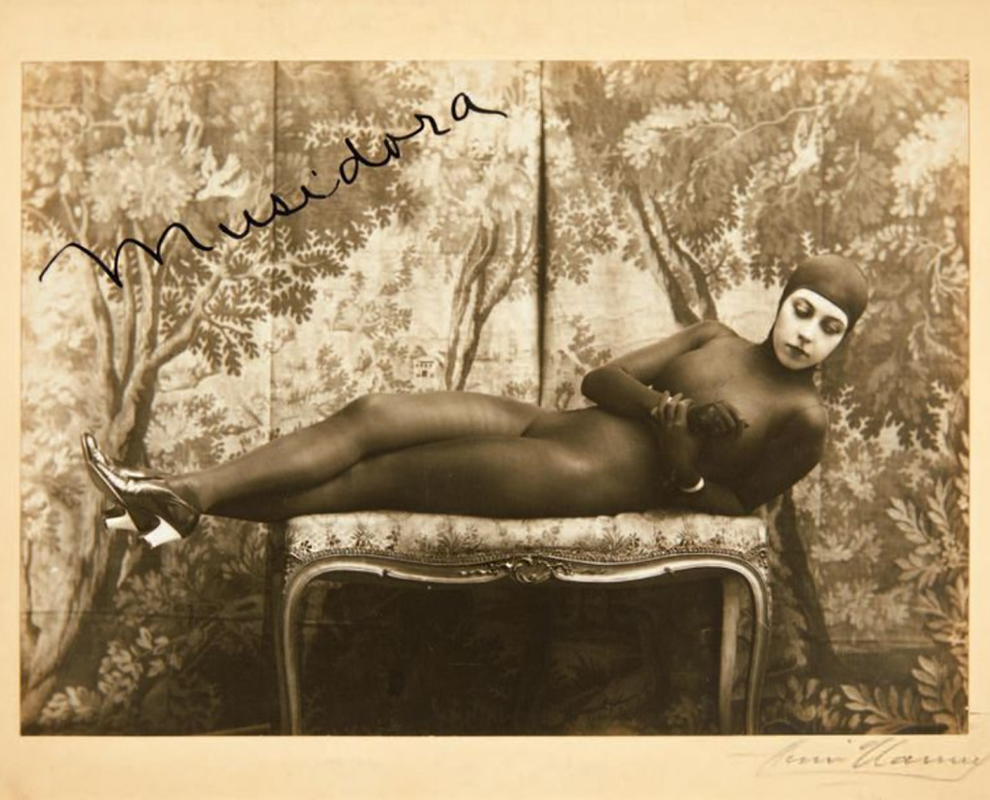
A signed promotional photograph of Irma Vep (Musidora) in her iconic black catsuit. DPs: Georges Guérin & Manichoux.
Black, in food or fashion*
– Musidora
Possibly the first, and definitely the most, iconic catsuit in cinema is worn by Musidora as Irma Vep in Les Vampires. Skintight and scandalous, Musidora's screen presence in the serial further cemented the popularity of the vamp and set the scene for many man-eaters to come.
* the Bales 2025 Film Challenge for August is not date-related but lists, for the most part, the colours of the rainbow.
“Is it the form of the clouds, or the tints of the sky, or the colours of the surrounding objects which are so changeable, which have troubled my thoughts as they passed before my eyes? Who can tell?” Le Horla [The Horla] (Jean-Daniel Pollet, 1966)
Aug
19
violet
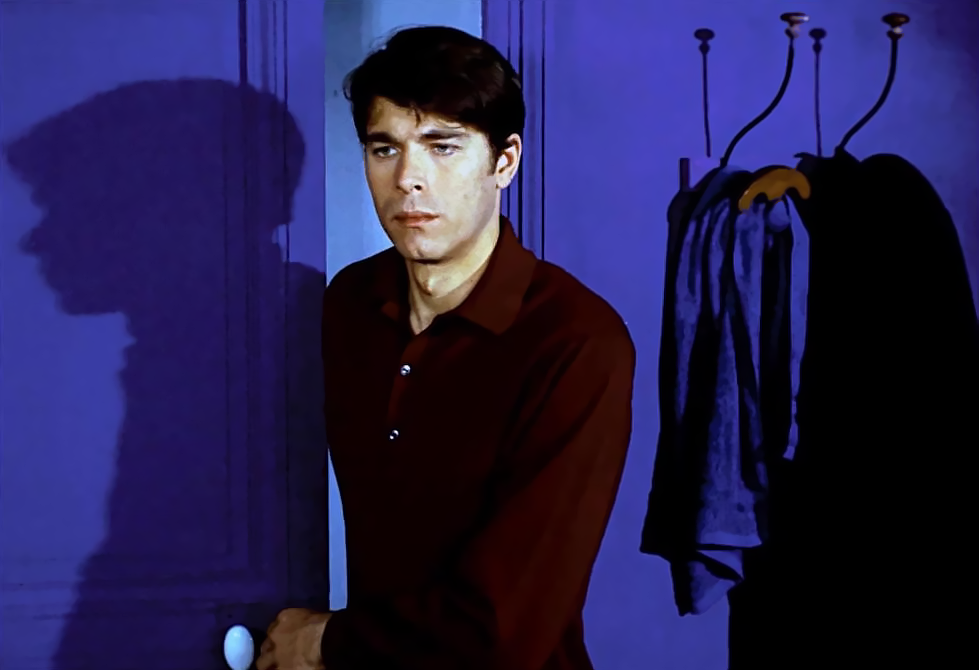
The narrator enters a violet-blue room via a lavender-purple corridor (via). DP: Jean-Jacques Rochut.
Violet: a building or structure *
– Guy de Maupassant, Le Horla, 1887 (via)
Objects and rooms have distinct colours ranging from the deepest blues and violets to a pale lavender, a muted silver and shocks of yellow. The usage of colour in Le Horla is striking throughout and reminds me of how Van Gogh's paintings became increasingly colourful as his madness enveloped him.
* the Bales 2025 Film Challenge for August is not date-related but lists, for the most part, the colours of the rainbow.
“Pray for me. I forgive the evil done me.”
Procès de Jeanne d'Arc [The Trial of Joan of Arc] (Robert Bresson, 1962)
Aug
17
forgiveness
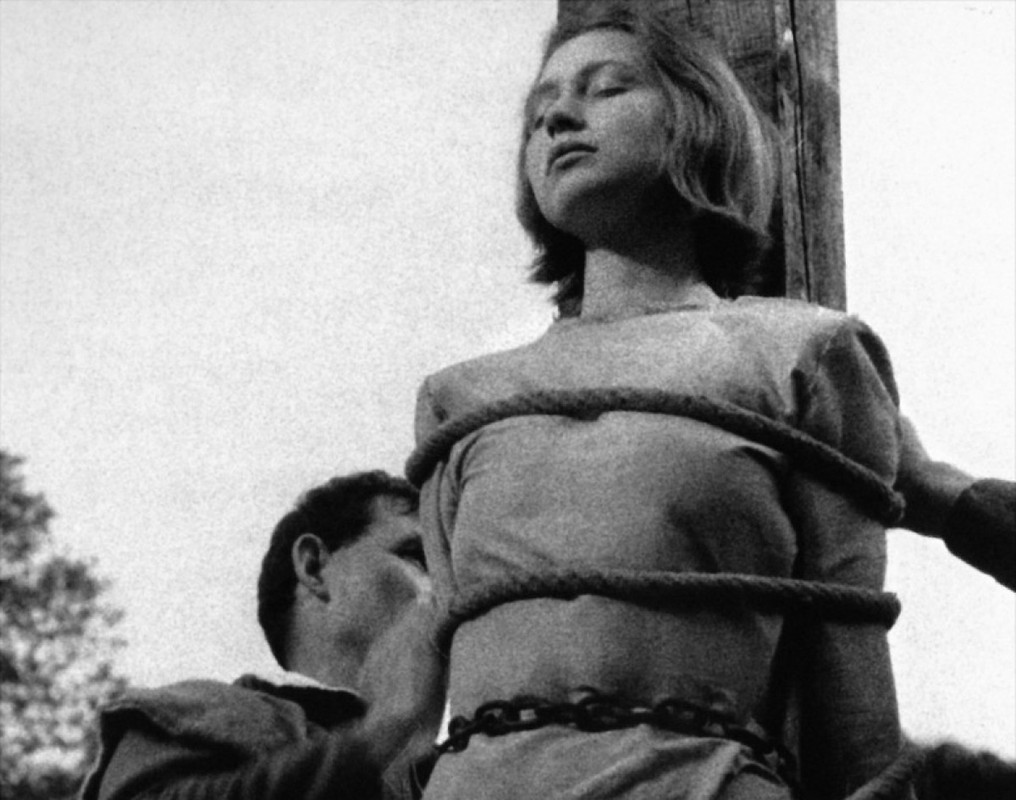
Jeanne (Florence Delay) bound to the stake. DP: Léonce-Henri Burel.
Holi: someone is forgiven (forgiveness being an important aspect of Holi)*
– Jeanne d'Arc
Jeanne trusts her delusions to forgive the people who brought her to justice.
* the Bales 2025 Film Challenge for August is not date-related but lists, for the most part, the colours of the rainbow.