“[Kuhle Wampe] gives witness to the true face of a struggling, suffering nation. Made by four thousand unemployed people, it never aims to be a work of art but simply aims to portray […] workers whose youthful energy is going to waste.” Kuhle Wampe oder: Wem gehört die Welt? [Kuhle Wampe or Who Owns the World?] (Slatan Dudow, 1932)
Feb
28
unemployment
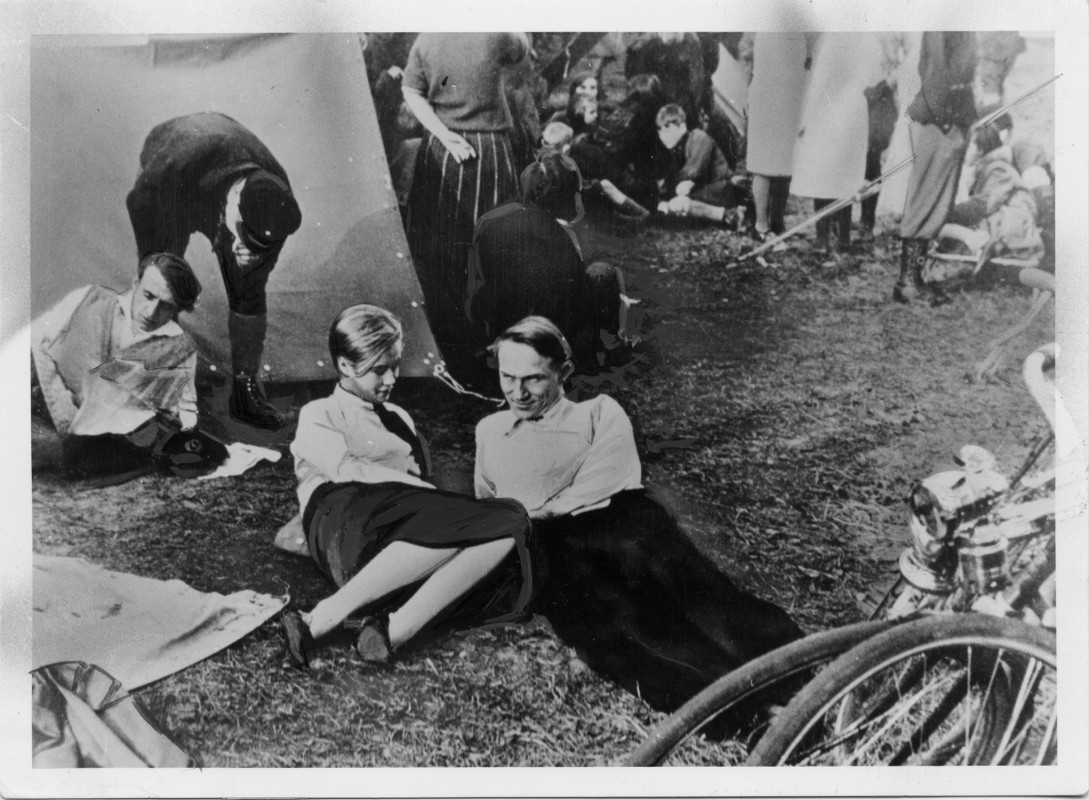
The unemployed at Kuhle Wampe, with Hertha Thiele's Anni front and center. People's states vary between still clinging on to better times up to destitute. DP: Günther Krampf.
Someone quits something or is unemployed: the abdication of Pope Benedict XVI in 2013.
– Marcel Carné, via
Kuhle Wampe, Berlin slang that means something like “empty stomach”, is the name of a real-world, improvised encampment for the unemployed at Berlin's Müggelsee. Here we find a family who lost everything after the death of one of them.
This late-Weimar, brechtian film was quickly banned by the German government.
Germany
Homunculus, 4. Teil – Die Rache des Homunculus (Otto Rippert, 1917)
Feb
3
finance
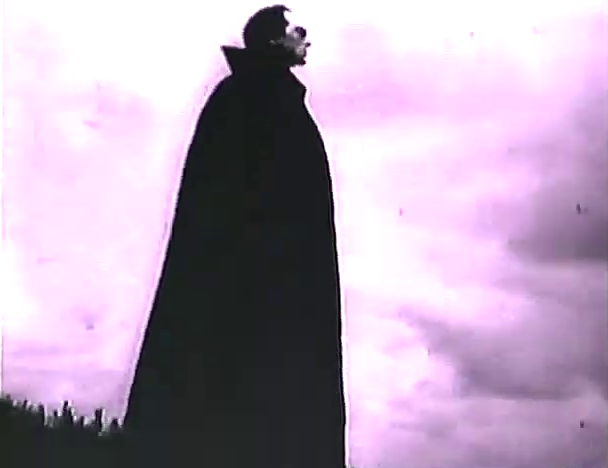
Richard Ortmann, the homunculus (Olaf Fønss). DP: Carl Hoffmann.
A film about finance because “the Commonwealth of Massachusetts issues the first paper money on February 3, 1690”. The oldest surviving paper bill in what is now the United States bears the date February 3, 1690. The first documented paper money was issued during the Tang and Song dynasties in China, starting in the vulgar year 618. Who would have thought those new colonies were not the center of world history… sigh…
In the fourth instalment of the Homunculus saga, the artificial man callously heads the nation's financial powerhouse while secretly goading the workers in revolt against the ruling class. Soulless and unable to love, he aims for the annihilation of mankind.
Some claim that Die Rache des Homunculus, “The Wrath of the Homunculus”, foreshadows Hitler. I say, beware of businessmen enthralling the working classes.
Die Nibelungen: Siegfried (Fritz Lang, 1924)
Jan
2
dragons

Siegfried (Paul Richter), seen from the back, bathing in the blood of the slain dragon. On his left shoulder blade, a linden leaf. DPs: Carl Hoffmann, Günther Rittau & Walter Ruttmann.
Dragons or lizards, January's soul symbol.
Alan “How long will I live?” Cesare “Till the break of dawn.”Das Cabinet des Dr. Caligari [The Cabinet of Dr. Caligari] (Robert Wiene, 1920)
Dec
25
Hanukkah + Christmas
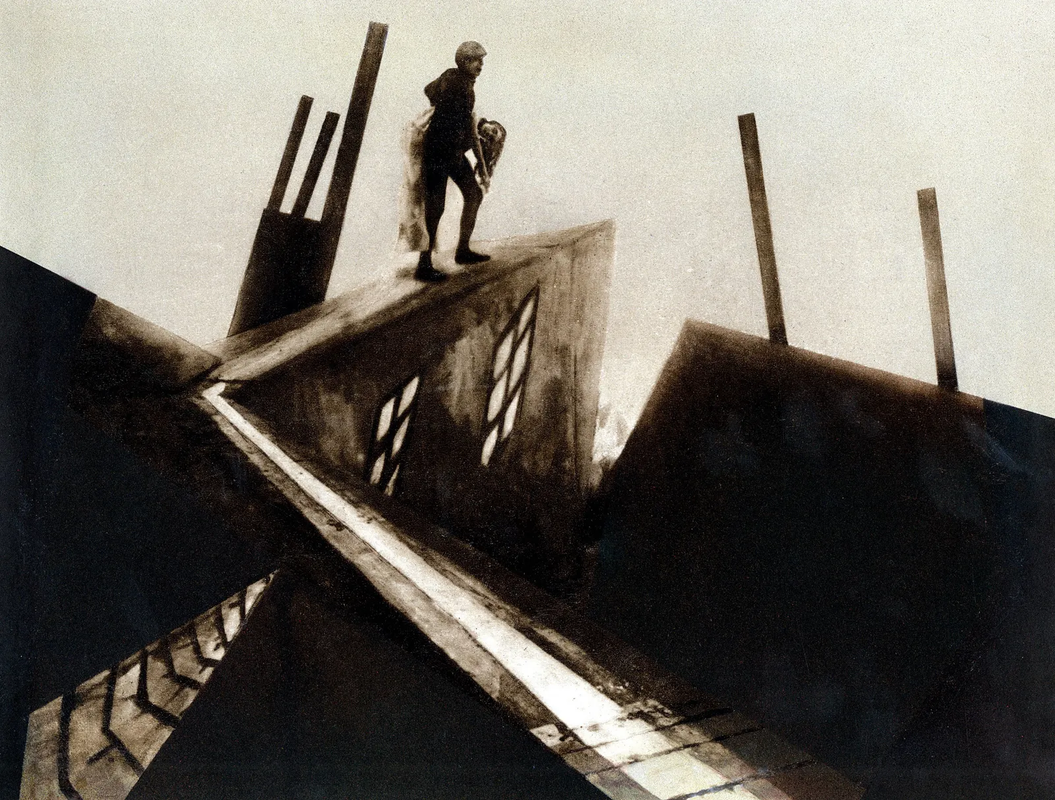

Cesare (Conrad Veidt) escapes with Jane (Lil Dagover) in his arms. Composition and distribution of light and shadow – much of which was painted directly on the set pieces – strike a strong resemblance with the oldest known survived photograph by Nicéphore Niépce from ca. 1822 – 1827. DP: Willy Hameister.
A favourite scene featuring light for Hanukkah and Christmas.
“She must have one complex mechanism!”Die Puppe [The Doll] (Ernst Lubitsch, 1919)
Dec
16
Stupid Toy Day

The doll (Ossi Oswalda) mischievously sticks out her tongue. DPs: Theodor Sparkuhl & Kurt Waschneck .
A ridiculous toy for Stupid Toy Day.
– Lancelot
“All I ask is that you step with me into the boundlessness, where constancy, quietude and peace, infinite emptiness reign.”Werckmeister harmóniák (Béla Tarr, 2000)
Sep
26
Shamu The Whale Day
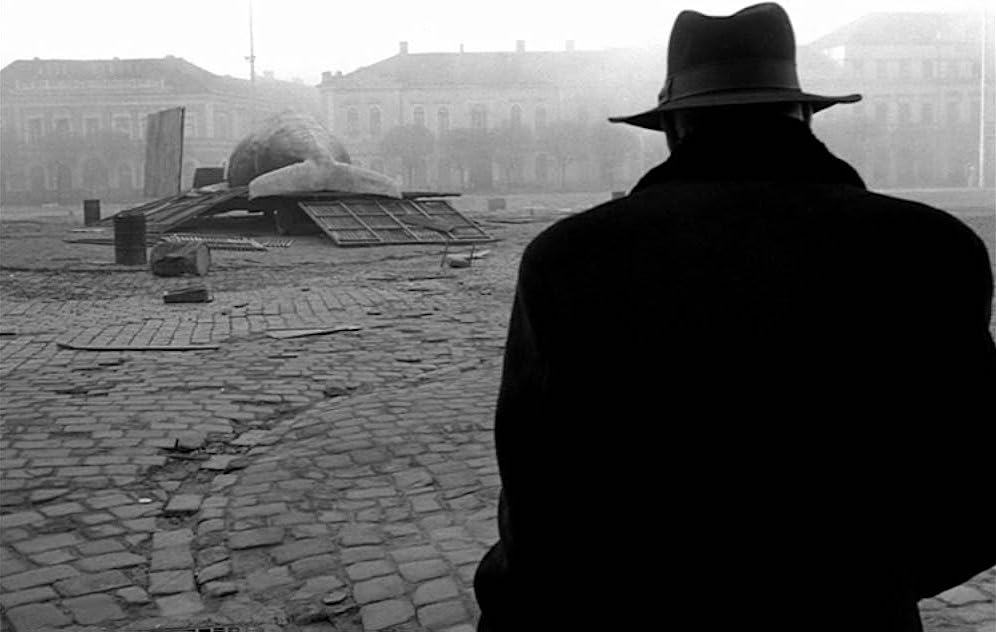
A man in a dark hat and coat approaches the whale. The huge creature lays in an enormous open wooden crate in the middle of a town square. DPs: Patrick de Ranter, Miklós Gurbán, Erwin Lanzensberger, Gábor Medvigy, Emil Novák & Rob Tregenza.
– János Valuska
Orlacs Hände [Die unheimlichen Hände des Doktor Orlac / The Hands of Orlac] (Robert Wiene, 1924)
Sep
25

Paul Orlac (Conrad Veidt) stretched out on a wooden bench in a tavern. A strange man sits on a second bench on the other side of the table. DPs: Hans Androschin & Günther Krampf.
“This is the tale of the strange adventures of the young Allan Gray, who immersed himself in the study of devil worship and vampires. Preoccupied with superstitions of centuries past, he became a dreamer for whom the line between the real and the supernatural became blurred. His aimless wanderings led him late one evening to a secluded inn by the river in a village called Courtempierre.”Vampyr, ou l'étrange aventure de David Gray (Carl Theodor Dreyer, 1932)
Sep
25
World Dream Day

Allan Grey (Julian West) sees himself in a coffin in a dream. DPs: Rudolph Maté & Louis Née.
– title card
“Just you wait, it won't be long,
The man in black will soon be here,
With his cleaver's blade so true,
He'll make mincemeat out of you!”M [M – Eine Stadt sucht einen Mörder] (Fritz Lang, 1931)
Sep
5
Jury Rights Day
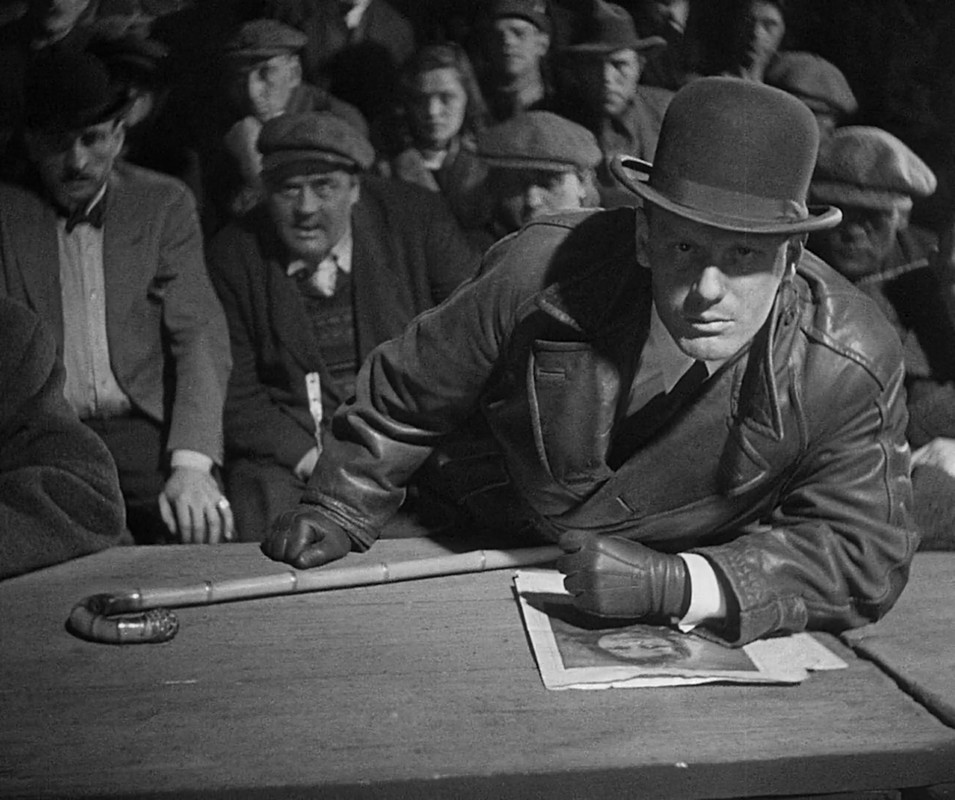
Schränker (Gustaf Gründgens) and his kangaroo court. Under his clenched fist a photograph of one of the murdered girls. DP: Fritz Arno Wagner.
– children singing
“Now I may die content, for I have seen great love.”Michael [Mikaël / Chained: The Story of the Third Sex / Heart's Desire] (Carl Theodor Dreyer, 1924)
Aug
3
National Michael Day

Art critic Switt (Robert Garrison) with muse Michael (Walter Slezak). DPs: Karl Freund & Rudolph Maté.
Considered one of the earliest positive cinematic depictions of (male) homosexuality, Carl Theodor Dreyer's Michael tells the story of lonely artist Zoret (director Benjamin Christensen), his bright young muse and model Michael (Walter Slezak), and the more mature art critic Switt (Robert Garrison). Though it's mostly suggested – there's a female temptress (Nora Gregor) assuming a heterosexual perspective – its motif of the spoken and unspoken relationship between the men is definitely one of love, much in the same way Charles Vidor's Gilda (1946) is.
– opening title card
Michael is the second book adaption of Herman Bang's Mikaël (1902) after Vingarne [The Wings] (Mauritz Stiller, 1916).