view
みな殺しの霊歌 [Minagoroshi no reika / I, the Executioner] (Tai Katō, 1968)
Oct
26
A claustrophobically framed black-and-white shot of a man (Makoto Satō) handling chopsticks close to his face. DP: Keiji Maruyama.
view
心中天網島 [Shinjū: Ten no Amijima / Double Suicide] (Masahiro Shinoda, 1969)
Oct
10
International Stage Management Day
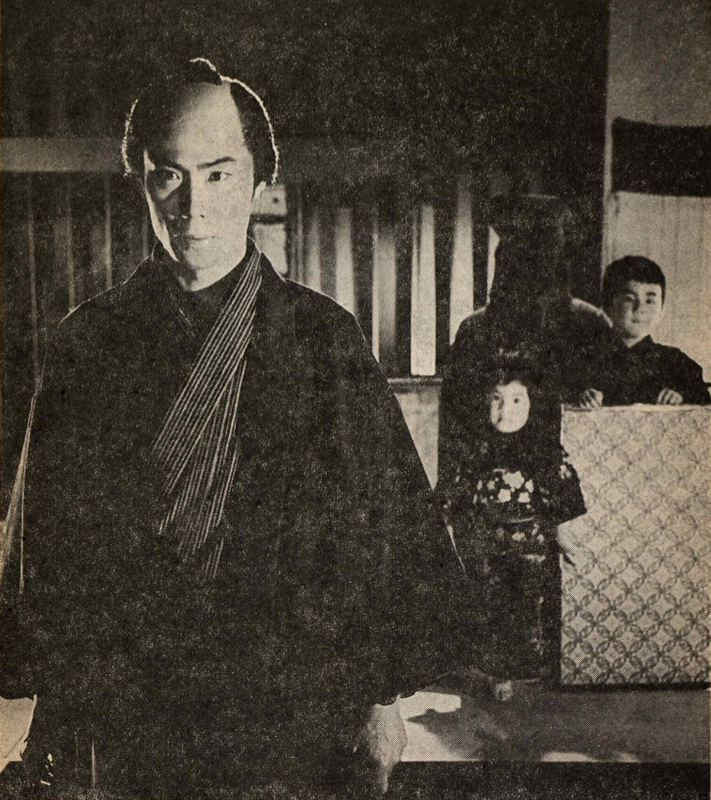
Jihei (Kichiemon Nakamura ) and his children with a stagehand visible between them. DP: Tōichirō Narushima.
心中天網島 is based on a 1721 文楽 [#bunraku] puppet theatre play]. As traditional in this style of theatre, the puppeteers are in full view of the audience wearing all-black cloaks. 心中天網島 does the same, but substitutes the puppets with flesh and blood actors.
view
鉄輪 [Kanawa / The Iron Crown] (Kaneto Shindō, 1972)
Sep
20
fried eggs
Meg Flower as the young woman eats a fried egg straight from a spatula. She's naked. DP: Kiyomi Kuroda.
view
狂つた一頁 [Kurutta ippēji / A Page of Madness] (Teinosuke Kinugasa, 1926)
Sep
12
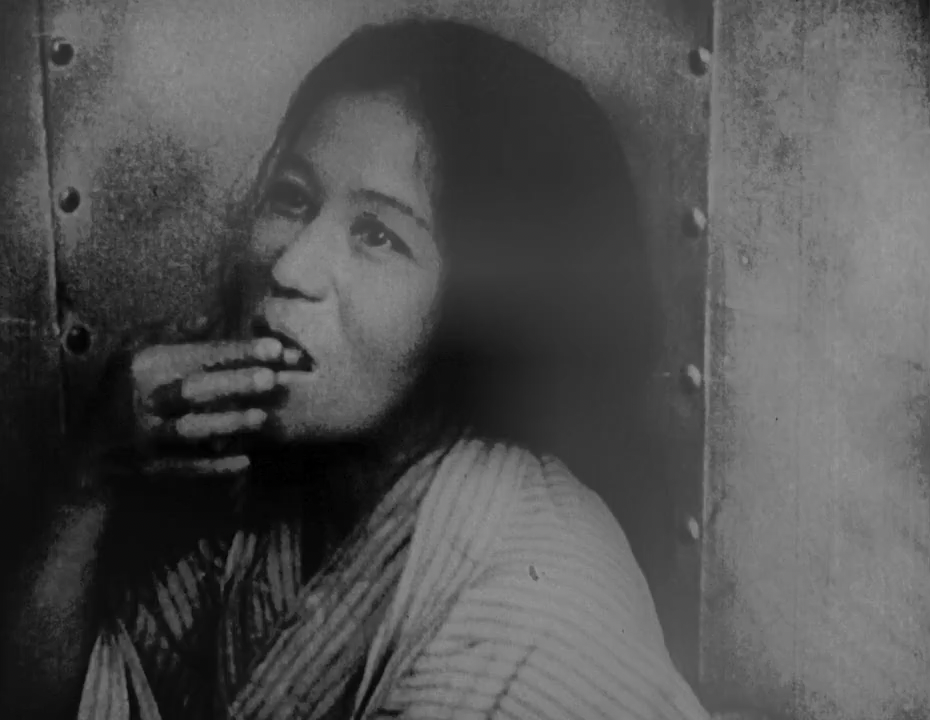
The servant's wife (Yoshie Nakagawa) eating. She looks up at someone offscreen, and smiles. DP: Kōhei Sugiyama.
view
0課の女 赤い手錠 [Zeroka no onna: Akai wappa / Zero Woman: Red Handcuffs] (Yukio Noda, 1974)
Sep
12
National Police Woman Day
Rei (Miki Sugimoto) wielding the red chain of her handcuffs. DP: Yoshio Nakajima.
Rei (Miki Sugimoto) is a member of Division Zero, a top secret division of #Tokyo's police department. Hired to investigate a high-profile #kidnapping, she infiltrates the gang and kills them off with her signature blood-red handcuffs.
0課の女 赤い手錠 is the first of no less than 9 instalments. Based on Tōru Shinohara's #manga 0課の女 [Zero-ka no Onna] who may be better known for his さそり [Sasori / Scorpion], which in its turn was adapted into the popular Female Prisoner Scorpion series of WiP films.
view
ねこぢる草 [Nekojiru-sō / Cat Soup] (Tatsuo Satō, 2001)
Aug
30
National Grief Awareness Day
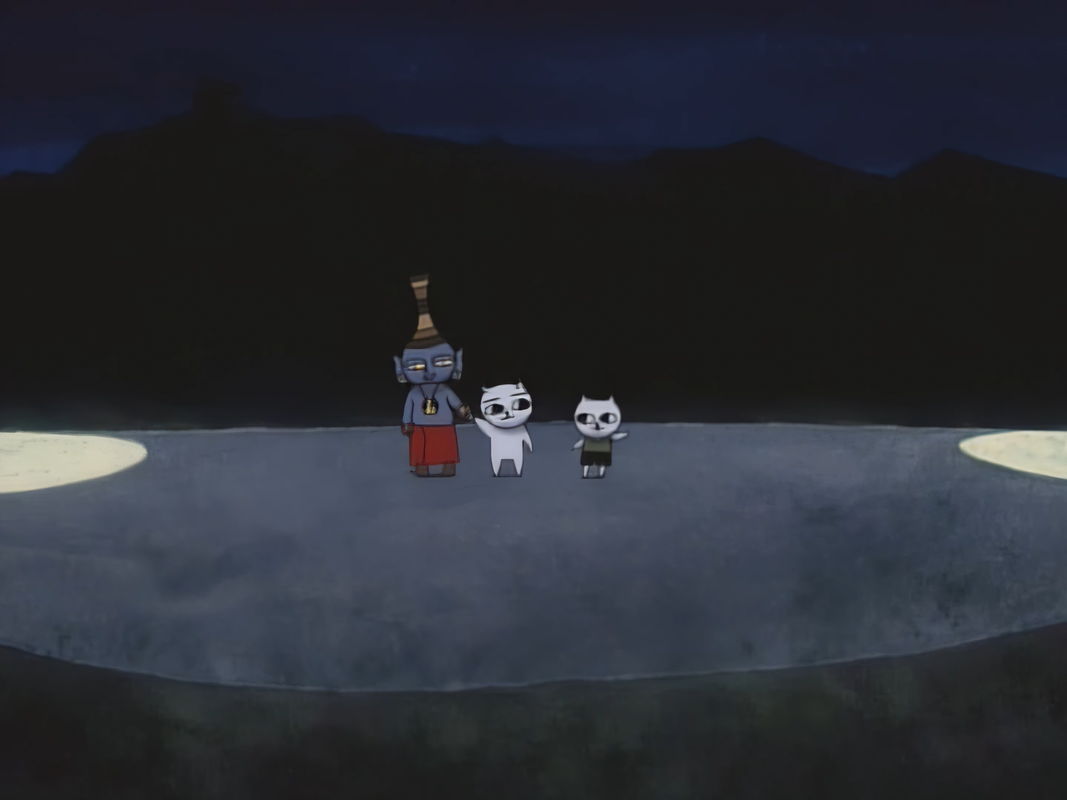
Nyāko taken away by Jizō with little brother Nyatta telling Nyāko to come back home. DP: Masaru Takase.
Nyatta is not ready to have Jizō take away his big sister Nyāko to Ne-no-kuni, the land of the dead. The kitten grabs his sister's paw, resulting in her soul being ripped in two and leaving Nyāko in a state of limbo. The cats' mother then sends the two off on a mission to buy fried #tofu. Maybe now Nyatta can find a way to put Nyāko's divided soul back together. But first, there's a circus to visit!
ねこぢる草 is based on works by mangaka Nekojiru / ねこぢる (1967—1998) whose trademark crudely drawn #cats caused a ripple in Japan's underground #manga circuit. Nyatta and Nyāko continued their surreal adventures by way of widower Yamano Hajime after Nekojiru's tragic suicide in 1998.
view
新宿泥棒日記 [Shinjuku Dorobō Nikki / Diary of a Shinjuku Thief] (Nagisa Ōshima, 1969)
Aug
14
Love Your Bookshop Day
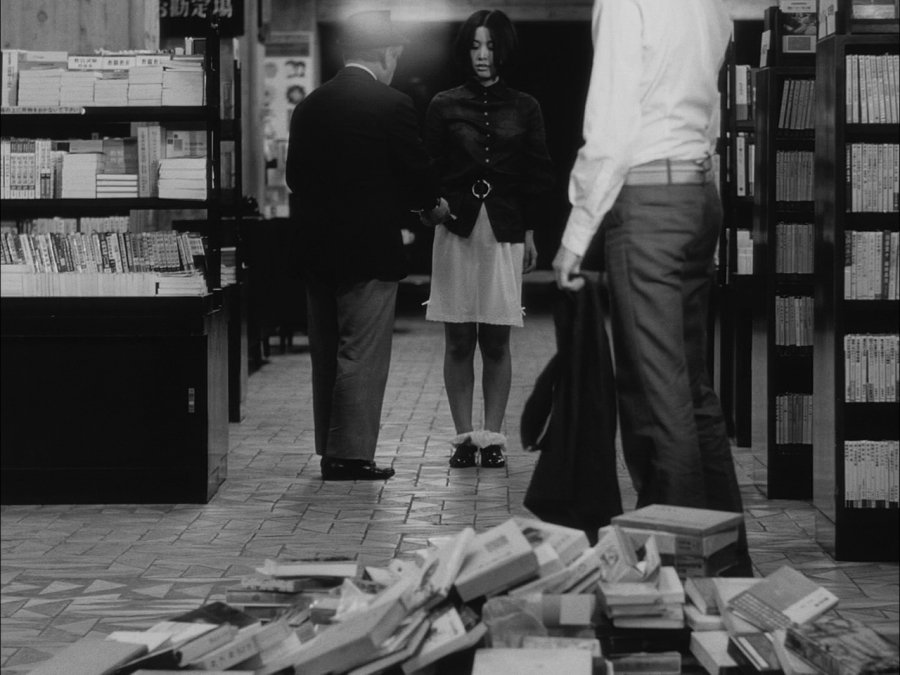
Umeko (Rie Yokoyama) in a bookstore. In the foreground a large messy pile of books. DPs: Seizō Sengen & Yasuhiro Yoshioka.
Umeko (Rie Yokoyama) believes to have caught Torio redhanded (Tadanori Yokoo, whose character has been renamed “Birdey” in the English translation), shoplifting from her bookstore. Torio however is a performance actor – and real-world Art Theatre Guild performer – and the act of stealing is part of his research. The young people's encounter sets something in motion. Together them embark on committing crimes in #Tokyo's labyrinthine #Shinjuku neighbourhood and find their mirror images in a #kabuki play.
新宿泥棒日記 is a playful, dangerous exploration of youth and rebellion in a rapidly shifting Japan.
view
刺青 [Irezumi / The Tattoo] (Yasuzō Masumura, 1966)
Jul
18
Otsuya (Ayako Wakao) and one of her samurai clients share sake and a small meal. Beautifully framed by cinematographer Kazuo Miyagawa there's all we need to see – Otsuya's facial expressions and the fiery, protective 籠目 (kagome, litt. eye) pattern – with not much more on display. DP: Kazuo Miyagawa.
view
刺青 [Irezumi] (Yasuzō Masumura, 1966)
Jul
17
National Tattoo Day
view
Blue (Derek Jarman, 1993)
Jul
13
Oxymoron Day
Not a screenshot from the film, but a pure representation of International Klein Blue.
Synchronous to the screening of a film that wasn't, Derek Jarman's Blue was broadcast on radio and television. Those who tuned into the radio could request a special card printed in that most spectral of colours, International Klein Blue, a blue that according to its creator Yves Klein, has “a quality close to pure space” and “immaterial values beyond what can be seen or touched”.
“You say to the boy 'Open your eyes'. When he opens his eyes and sees the light, you make him cry out, saying 'Oh, Blue, come forth! Oh, Blue, arise! Oh, Blue, ascend! Oh, Blue, come in!'.”
– Nigel Terry
Submerged in #blue, seeing through what was left of Jarman's eyes, we live through the artist's life, and love, and loss. When you leave the theatre, put down that card, you're temporarily blinded by the physiological afterimage of a devastating disease. What remains is the voice of a filmmaker who lost his sight.