view
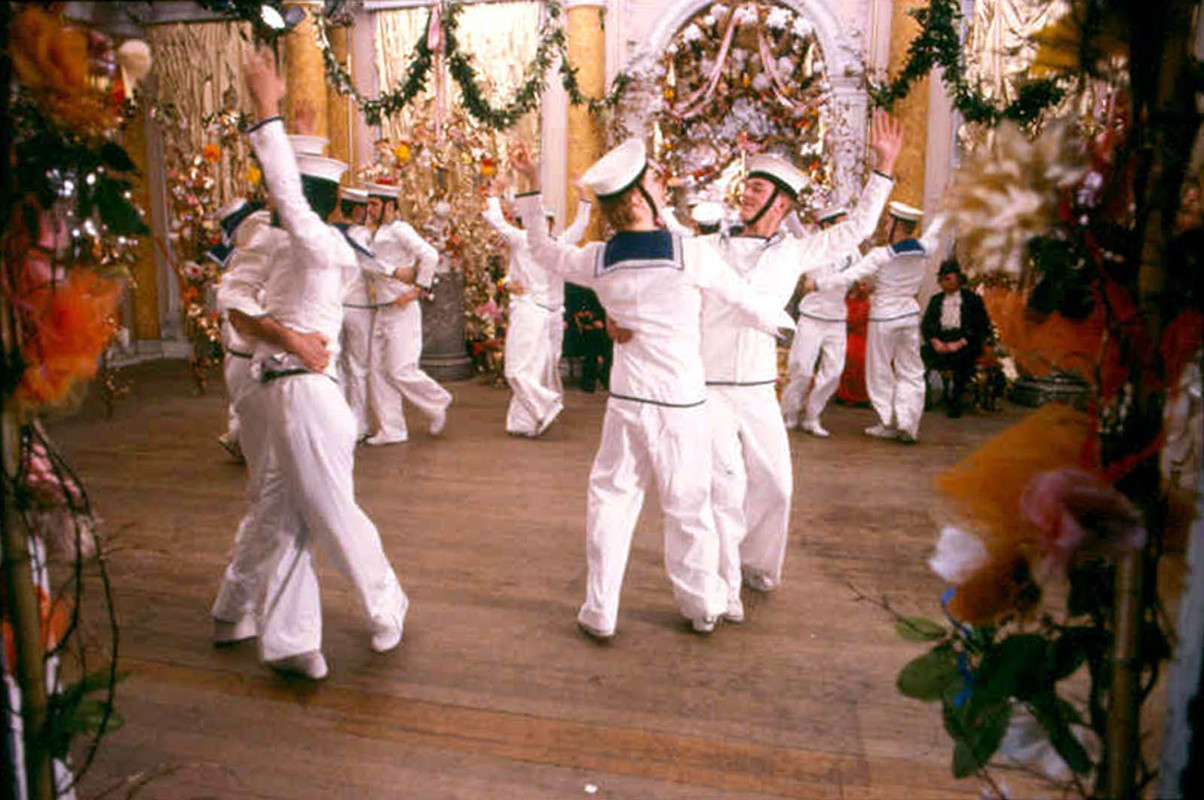
Bed Peace [John and Yoko: The Bed-In] (John Lennon + Yoko Ono, 1969)
Aug
27
white
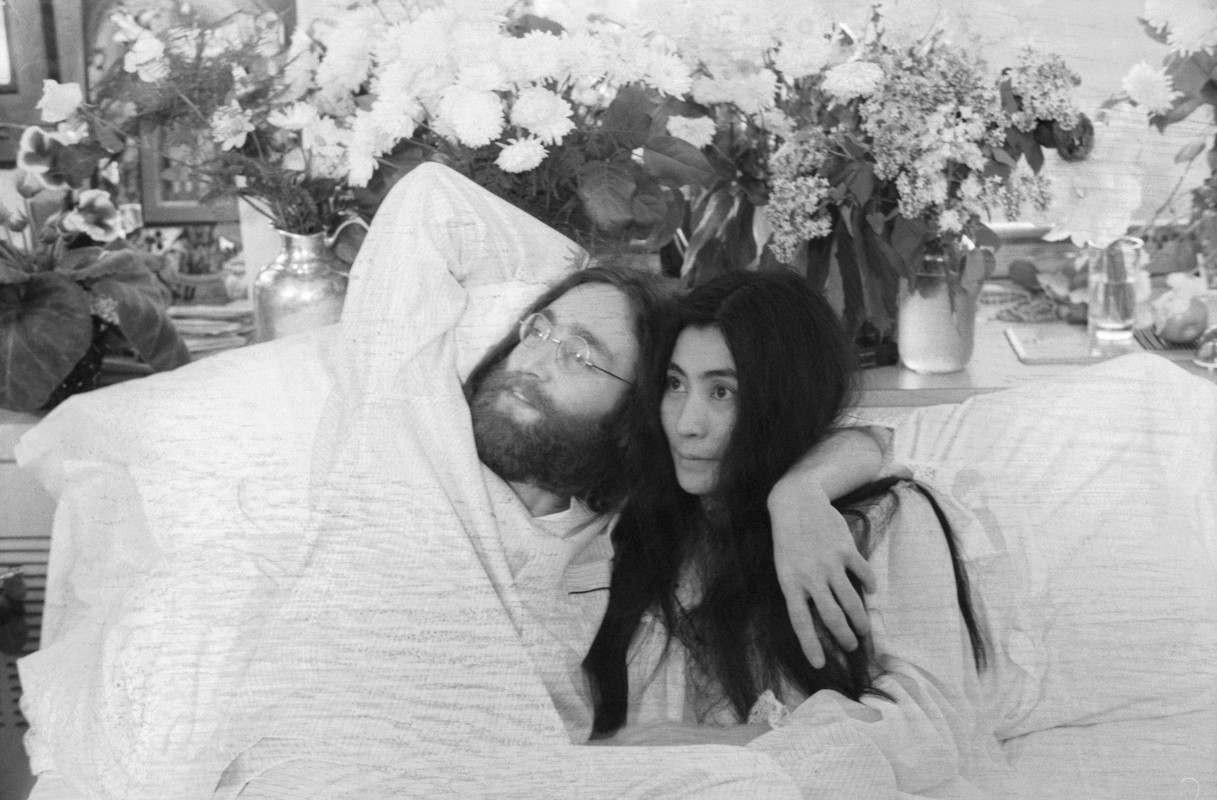
John and Yoko in their bed, dressed in all-white, framed by flowers. DP: Nicholas D. Knowland.
White, in food or fashion*
“Remember love, remember love
Love is what it takes to dream”
– Yoko Ono, Remember Love (1969)
While the press expected the newlyweds' “bed-in” to be a scandalous nude affair, the two lovers showed up in all-white – like angels, as John put it. Surrounded by journalists and friends, John and Yoko imaged peace.
view
The Black Tower (John Smith, 1985—1987)
Aug
22
black
Black: a building or structure*
“I first noticed it in Spring last year. […] It was from [my home] that I first saw it—its crest protruding over the roofs on the other side of the road. Surprised that I hadn’t noticed it before, I wondered what it was and then forgot about it for several weeks.”
– narrator
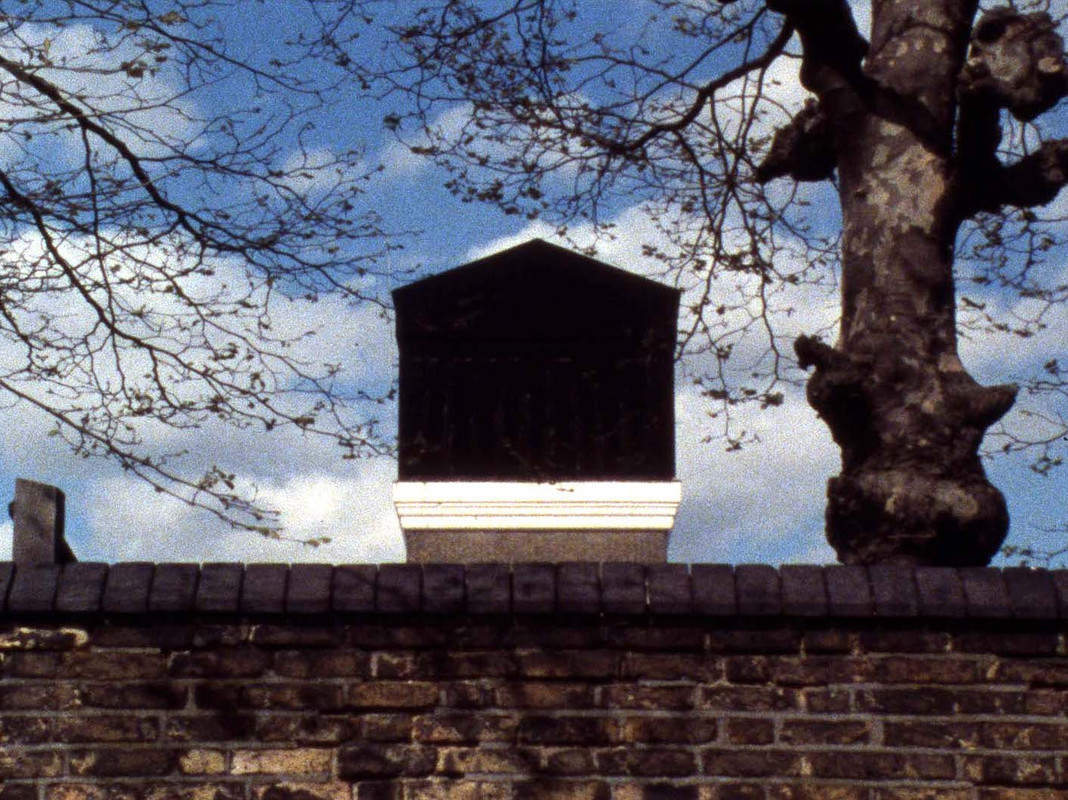
The black tower was a real structure, first noticed by filmmaker John Smith when he moved to East London. The building, actually the upper part of a hospital's water tower, was painted pitch black, and on sunny days appeared to be a cutout in the sky. By framing the shots in such a way that only part of the surroundings is visible, and editing them in a narrative framework, Smith creates a new context suggesting movement. This style of montage called creative geography, or artificial landscape, was developed by Lev Kuleshov and enables filmmakers to expand existing material and narrative into something that usually is only available to prose poetry.
view
Nineteen Eighty-Four (Rudolph Cartier, 1954)
Aug
18
indigo
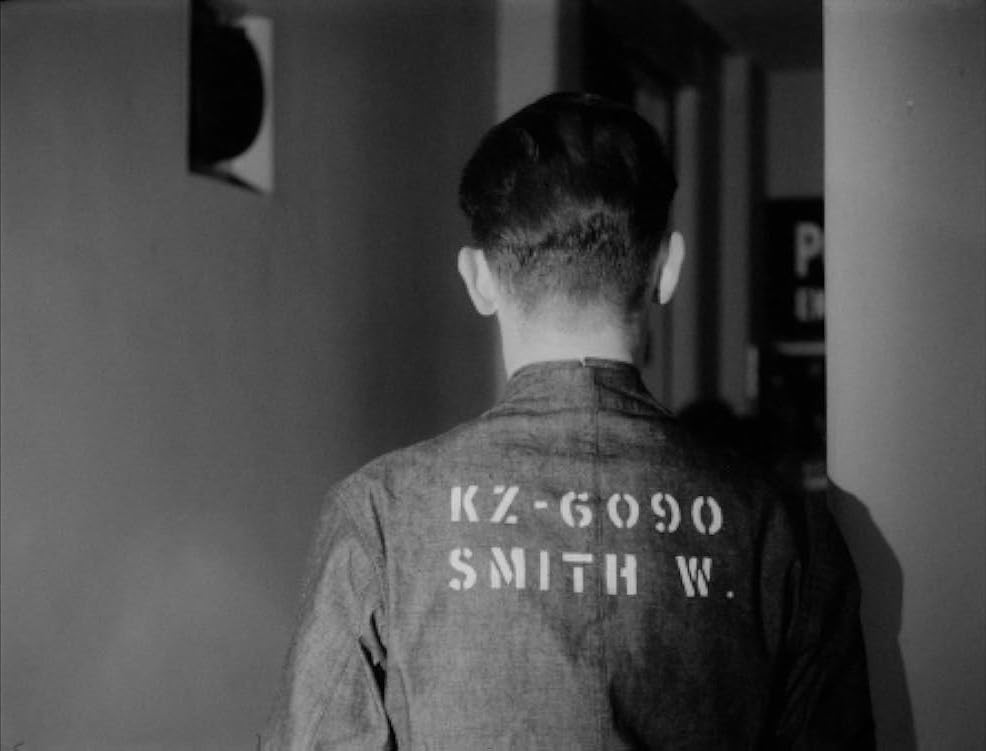
Winston Smith (Peter Cushing). We only see his frail looking back with the identifier KZ-6090, and his name SMITH W.
Indigo, in food or fashion*
“He moved over to the window: a smallish, frail figure, the meagreness of his body merely emphasized by the blue overalls which were the uniform of the party. His hair was very fair, his face naturally sanguine, his skin roughened by coarse soap and blunt razor blades and the cold of the winter that had just ended. “
– George Orwell, Nineteen Eighty-Four (1949) (via)
view
The Red Shoes (Michael Powell + Emeric Pressburger, 1948)
Aug
3
red
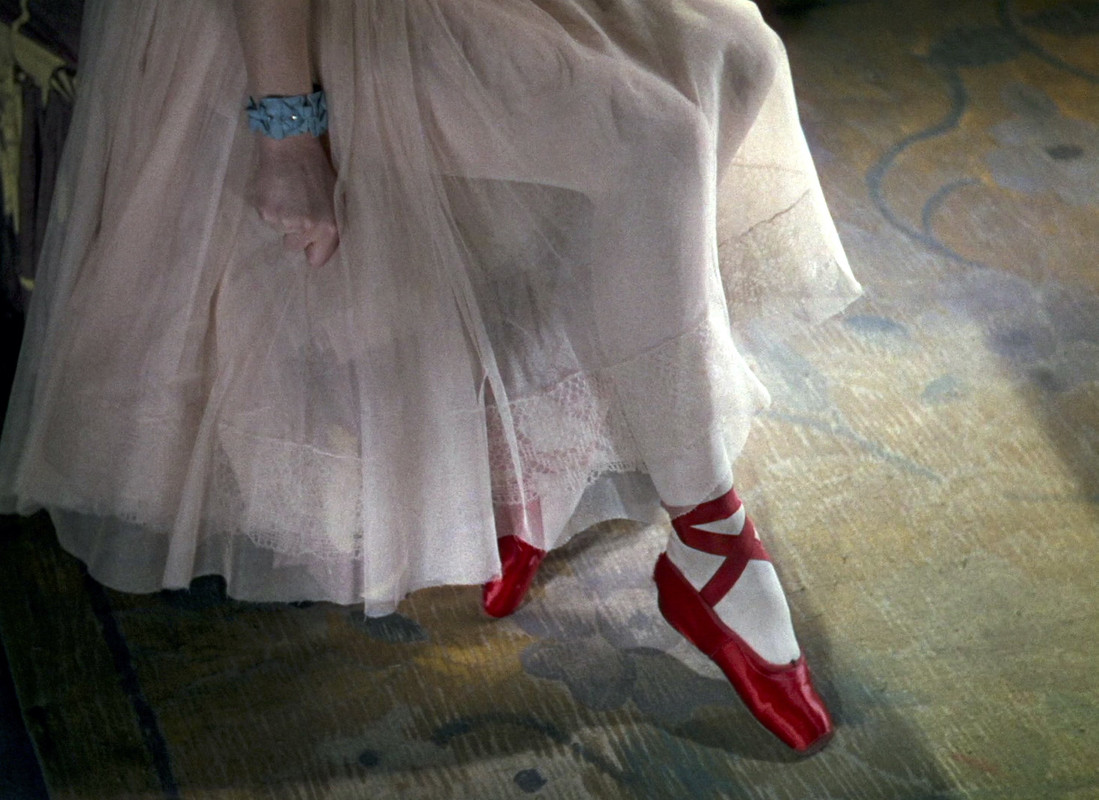
A ballerina's lower body in focus. She wears a long tulle off-white dress, slightly sheer, with her white stockings showing through slightly. Part of her right lower arm is visible, the hand clutched, a turquoise bracelet on the wrist. What stands out most are her ruby red ballet shoes that appear to move away from her. The backdrop is a dull, washed out carpet. DP: Jack Cardiff.
Red: best use of red in food or fashion*
“She looked at the red shoes, for she thought there was no harm in looking. She put them on, for she thought there was no harm in that either. But then she went to the ball and began dancing. When she tried to turn to the right, the shoes turned to the left. When she wanted to dance up the ballroom, her shoes danced down. They danced down the stairs, into the street, and out through the gate of the town. Dance she did, and dance she must, straight into the dark woods.”
– Hans Christian Andersen, De røde Skoe (1845, tranl. Jean Hersholt, 1949), via
Another one of The Archers' #Technicolor extravaganzas. This time, not to wow the worn-down post-war black-and-white audience, but as an an active storytelling instrument.
Built around Hans Christian Andersen's haunting tale De røde Skoe (1845).
view
The Tempest (Derek Jarman, 1979)
Jul
28
Local nightlife: people dancing or at a show*
“Don't know why
There's no sun up in the sky
Stormy weather
Since my man and I ain't together
Keeps raining all of the time
Oh, yeah
Life is bad
Gloom and misery everywhere
Stormy weather, stormy weather
And I just can get my poor self together
Oh, I'm weary all of the time
The time, so weary all of the time
When he went away
The blues walked in and met me
Oh, yeah if he stays away
Old rocking chair's gonna get me
All I do is pray
The Lord will let me
Walk in the sun once more
Oh, I can't go on, can't go on, can't go on
Everything I have is gone
Stormy weather, stormy weather
Since my man and I, me and my daddy ain't together
Keeps raining all of the time
Oh, oh, keeps raining all of the time
Oh, yeah, yeah, yeah raining all of the time
Stormy stormy
Stormy weather
Yeah”
– Elisabeth Welch, Stormy Weather (Harold Arlen & Ted Koehler, 1933)
view
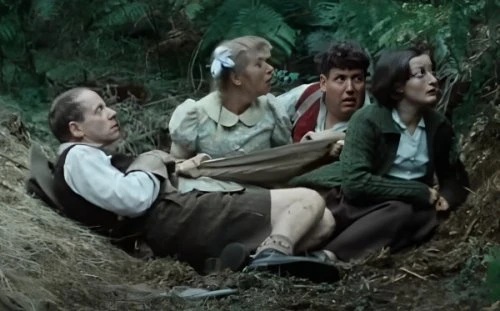
Blue Remembered Hills (Brian Gibson, 1979)
Jun
16
Youth Day
The children playing in the Forest of Dean. From left to right: Raymond (John Bird), Angela (Helen Mirren), Willie (Colin Welland), and Audrey (Janine Duvitski). DP: Nat Crosby.
A [favourite] child character for Youth Day (ZA)
“Into my heart an air that kills
From yon far country blows:
What are those blue remembered hills,
What spires, what farms are those?
That is the land of lost content,
I see it shining plain,
The happy highways where I went
And cannot come again.”
– narrator, after A.E. Housman's A Shropshire Lad
A group of children plays. It's sunny and lovely in the Forest of Dean, a day to remember for as long as one lives. The war, the second one, is one of the adults' plays and far away from the children's much simpler life. It seeps through, though. You may run around, imagining being a fighter bomber, putt-putt-putting while you do so. And your uncle, your uncle!, is a parachutist! And maybe your dad is missing and your mum is doing something that involves bed sheets, and the other kids are mean about that. That too. That too is the cruelty of blue remembered hills.
view
The Diary of an Unknown Soldier (Peter Watkins, 1959)
Jun
14
Army Day
That glance. Any soldier at any time. DP: Peter Watkins.
A [favourite] soldier in film for Army Day (USA). I can not in all seriousness link to any official website in fear of throwing up, so please follow along here
“That’s how I will probably die, left like a poor old rag on the battlefield. When you know this is going to happen to you, your body suddenly becomes something terribly precious to you. This flesh, soft and warm is yours; a personal belonging not to be discarded like an awful piece of meat. You find yourself thinking about this, realizing what a wonderful thing your body is, and what an awful and wrong thing it is to maltreat it.”
Watkins takes the anonymous slaughter of the masses on the battlefield inside, into the body and mind of a young soldier.
view
Jubilee (Derek Jarman, 1978)
May
24
Tiara Day
Bod (Jenny Runacre), wears a Crown Jewel-ish affair. Amyl Nitrate (Jordan) clutches her pearls. DP: Peter Middleton.
“Rule Britannia, Britannia, Britannia…”
– Amyl Nitrite
Queen Elizabeth I (Jenny Runacre) requests Her court occultist John Dee (Richard O'Brien) to show Her Majesty the future of Her kingdom, baroness Thatcher's rotten England, ruled over by a gang of nihilist women.
view
Thirteen to Centaurus (Peter Potter, 1965)
May
4
Star Wars Day
Dr Francis (Donald Houston) and Abel (James Hunter). DP: tbd.
“Our grandfathers always lived on Earth, and we are the first people ever to undertake such a journey. You can be proud that you’re here. Your grandfather, who volunteered to come, was a great man, and we’ve got to do everything to make sure that the Station keeps running.”
– Dr Francis (from Thirteen to Centaurus, J.G. Ballard, 1962)
A ship travels the universe, on its way to Centaurus. On board is a group of people, fourteen in total, one of them a teenager named Abel. His recurring nightmare about a glowing disc prompts to sessions with the on-board psychologist, and the only one with knowledge of Earth, Dr Francis.
view
The Angelic Conversation (Derek Jarman, 1985)
Apr
23
William Shakespeare — 1564
Two men in tender embrace. DPs: Derek Jarman & James Mackay.
A Shakespearean play or quote for the Bard's (assumed) birthday (1564).
Sweet love, renew thy force; be it not said
Thy edge should blunter be than appetite,
Which but to-day by feeding is allay’d,
To-morrow sharpen’d in his former might:
So, love, be thou; although to-day thou fill
Thy hungry eyes even till they wink with fullness,
To-morrow see again, and do not kill
The spirit of love with a perpetual dulness.
Let this sad interim like the ocean be
Which parts the shore, where two contracted new
Come daily to the banks, that, when they see
Return of love, more blest may be the view;
Or call it winter, which, being full of care,
Makes summer’s welcome thrice more wish’d, more rare.
Accompanied by Coil's brooding lust and Judi Dench's solemn recital of 14 of Shakespeare's sonnets, men cross dreamlike landscapes and dark desires.