“Again he shook his head. The world's gone mad, he thought. The dead walk about and I think nothing of it. The return of corpses has become trivial in import. How quickly one accepts the incredible if only one sees it enough!” Soy leyenda (Mario Gómez Martín, 1967)
Oct
3
zombies
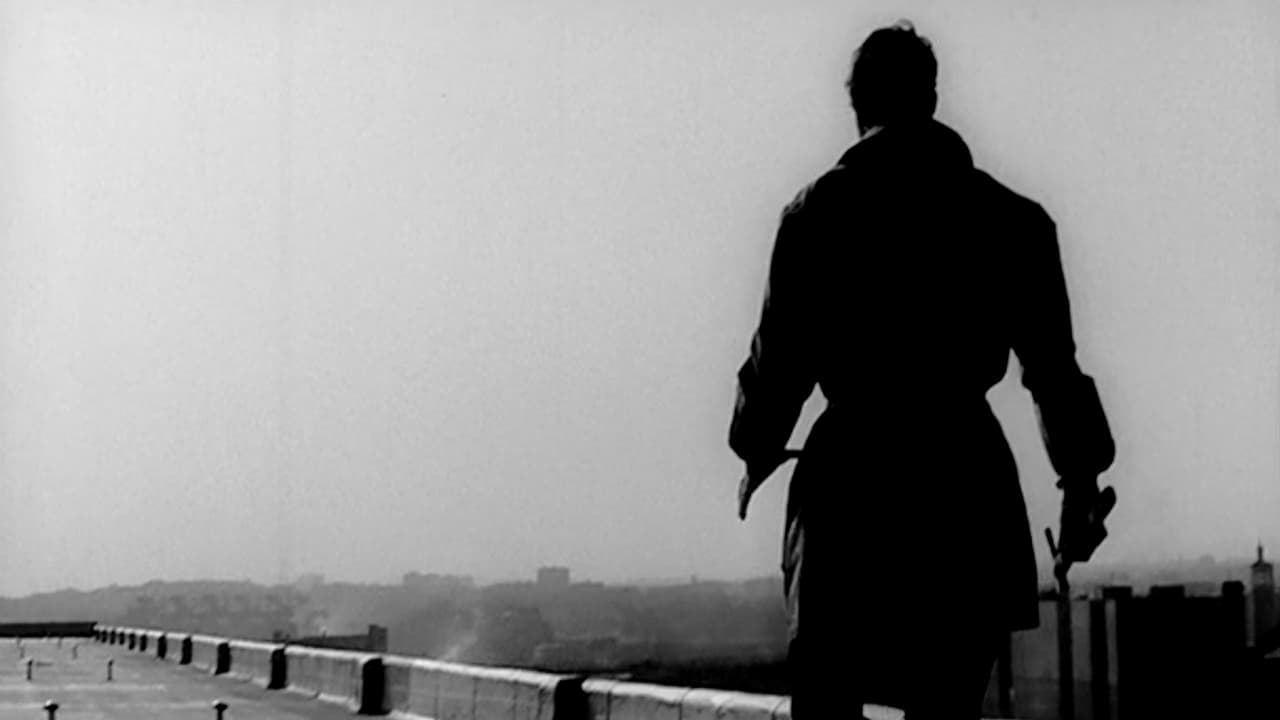
Robert Neville (Moisés Menéndez) looking out over an empty rooftop. DP: Jesús Ocaña.
(A favourite) zombie movie*
Now, settima. Of all the zombie movies in the world you had to pick a vampire story? Why yes. Yes I did.
– Richard Matheson, I Am Legend (1954)
Just like my actual favourite zombie film, that one from 1968, Soy leyenda is based on Richard Matheson's post-apocalyptic horror novel I Am Legend (1954). The story describes a world where the living have become undead vampire-like creatures. A lone man tries to rationalise that new world through reason and science, and legend.
In the man's mind, the undead become the familiar, the vampire. In our mind, watching this, we believe to see the foreshadowing of the popculture zombie. The abandoned well-known landscapes, the ceaseless repetition of what the old life had instilled, the normalcy of the grotesque. Oh how familiar they have become.
* the Bales 2025 Film Challenge for October is horror-themed as opposed to date-based, and is all about favourites. Expect non-horror and films I believe to be relevant instead.
BookAdaptation
“You are one of us now. The Queen of the Night will bear you up on her black wings.” Vampyros Lesbos (Jesús Franco, 1971)
Oct
2
Dracula
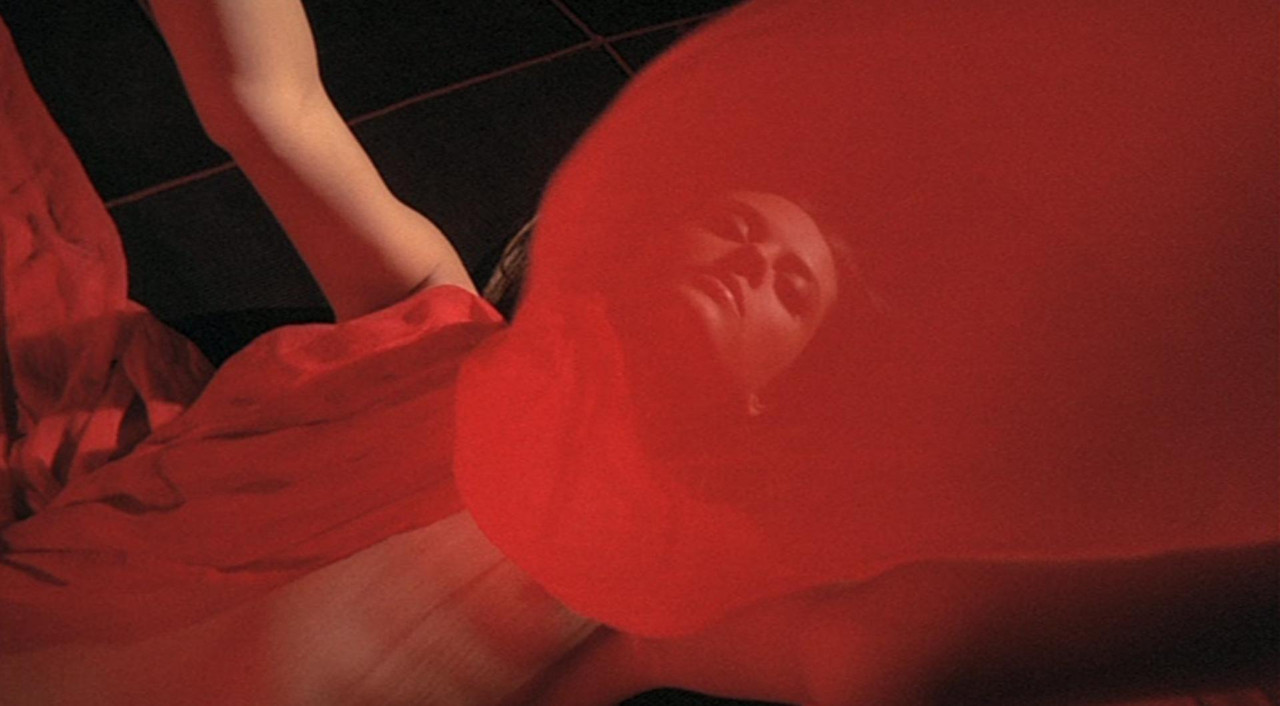
The Countess (Soledad Miranda, sigh…) in a blood curling striptease (via). DP: Manuel Merino.
A favourite Dracula movie. As my very most favourite Dracula movie has been claimed, I go with its nearest competitor that somehow also features my favourite Jesus*
Linda (Ewa Strömberg) has been summoned by Countess Nadine Carody (Soledad Miranda) to handle a real estate inheritance from a certain Count Dracula. Spellbound, she finds herself on a small island, and helpless in the Countess' embrace.
– Countess Nadine Carody
A film that can easily hold up against Jean Rollins' dreamy vampire erotica, this love letter to Soledad Miranda's brooding torment is a delight to watch and a pinnacle in Jess Franco's filmography. Its influence on neo-Giallo Amer and Dario Argento – particularly his Suspiria – is evident, and that in itself should give you enough clues of how much of an essential chapter Vampyros Lesbos is in adult European filmmaking.
* the Bales 2025 Film Challenge for October is horror-themed as opposed to date-based, and is all about favourites. Expect non-horror and films I believe to be relevant instead.
“There are no ghosts in daylight. You'll get used to our nights at Diodati. A little indulgence to heighten our existence on this miserable Earth. Nights of the mind, the imagination. Nothing more.”Gothic (Ken Russel, 1986)
Oct
1
Frankenstein
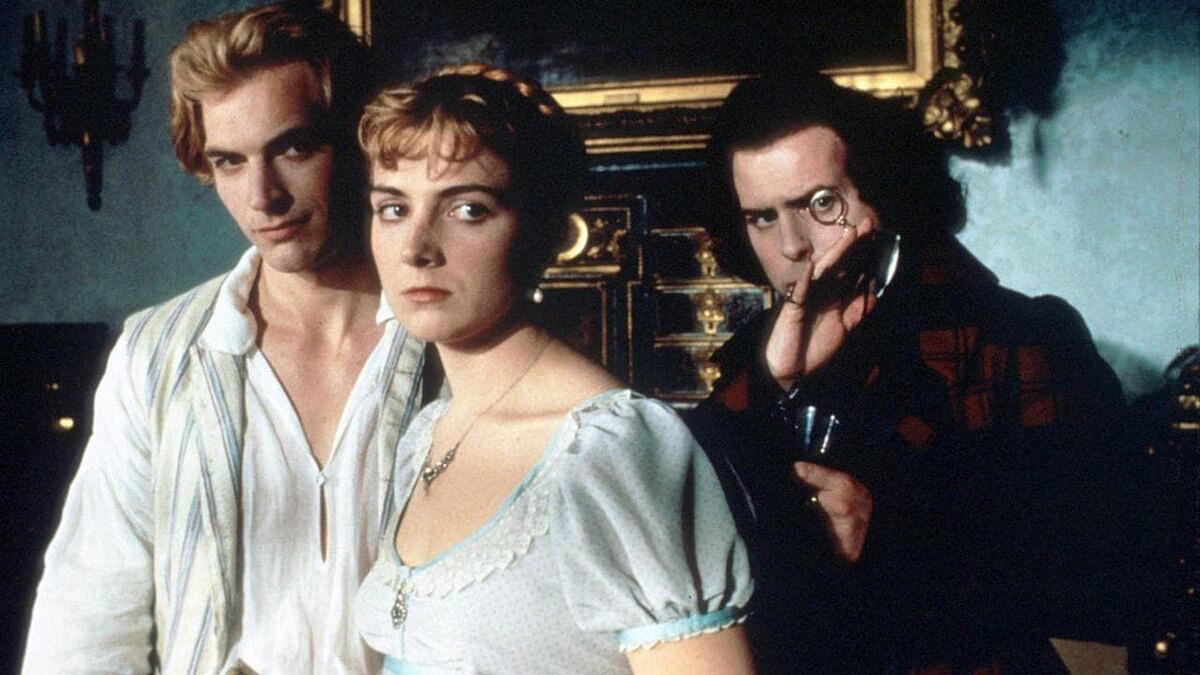
Percy Shelley (Gabriel Byrne), Mary Shelley (Natasha Richardson) and Dr Polidori (a deliriously delicious Timothy Spall). DP: Mike Southon.
A [favourite] Frankenstein film.
One wet, ungenial summer in 1816, lovers Mary Godwin and Percy Shelley, and Mary's stepsister Claire Clairmont, visited a dear friend at Villa Diodati. That friend was Lord Byron, exiled and residing in the Swiss villa with his physician Dr John Polidori
– Lord Byron
Forced indoors, over the cause of three days they turned to the occult, to laudanum, to stories from the Fantasmagoriana, and the horrors of their own. That summer, Frankenstein saw the light of day.
“This mirror reflected a painting… with words. Chinese idiograms. 'The she-crane calls in the shadow. Her cheek answers.'” Le orme [Footprints on the Moon] (Luigi Bazzoni + Mario Fanelli, 1975)
Sep
30
International Translation Day
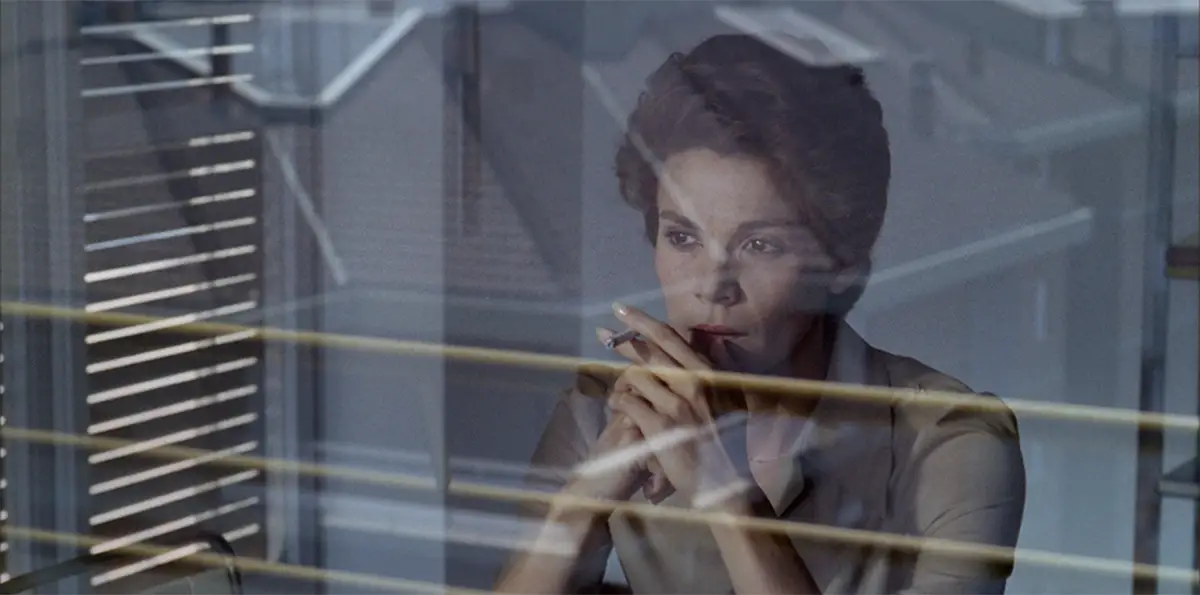
Alice reflected/reflecting in a glass pane (via). DP: Vittorio Storaro.
A translator for International Translation Day
– Alice Campos
Alice, the always fantastically brooding Florinda Bolkan, works as a translator when all of sudden she loses her job and finds herself on the small island of Garma. People tell her she has been there before, recently, but she knows this is not possible.
Some English-language posters try to sell Le orme as an action-ridden sci-fi giallo, but oh boy leave that perception behind and you're in for one unsettling treat! Le orme can be placed somewhere between Don't Look Now and that other Alice film, Chabrol's Alice ou la dernière fugue. Drifting and elegant, distant and claustrophobic.
La strega in amore [The Witch] (Damiano Damiani, 1966)
Sep
27
.png)
We, the viewer, sit at the head of a long table. Two women at the tall ends of the table stop eating to look at us. It's ominous. DP: Leonida Barboni.
ノーライフキング [No raifu kingu / No Life King] (Jun Ichikawa, 1989)
Sep
23
Nintendo – 1889
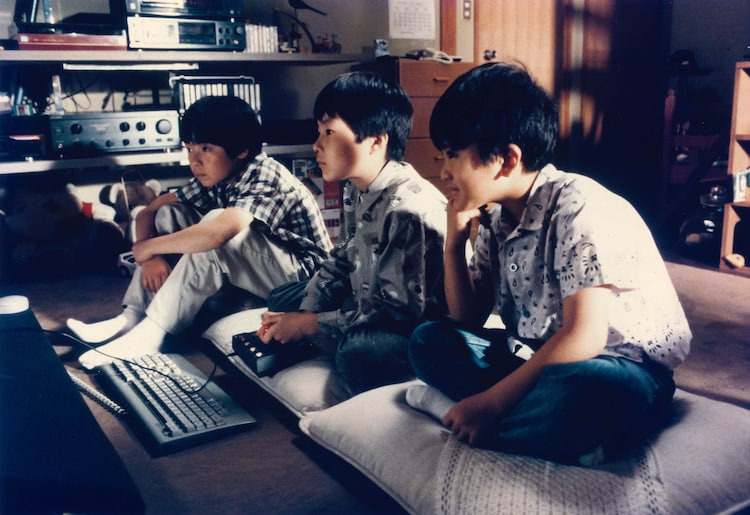
Makoto and his friends play with their video game console (via). DP: Osame Maruike.
Home video games: Nintendo was founded on this day in 1889.
It's the late 80s and Japan is in the midst of an economic and technological bubble. Like so many kids, Makoto (litt. “truth”) and his friends are obsessed with their game console. In anticipation of the release of the fourth instalment of their favourite game, rumours start doing the rounds. Some cartridges are cursed with the “No Life King”, meaning players who cannot complete the game, will die. The curse appears to spill over into the boys' real world. What if when you die in the game, you really really die…?
ტარიელ მკლავაძის მკვლელობის საქმე [Tariel Mklavadzis mkvlelobis saqme / The Hero of Our Time] (Ivane Perestiani, 1925)
Sep
21
wine
.png)
A dark eyed woman lurks from behind a white horse, while holding a glass of wine. DP: Aleksandr Digmelov.
“Film is kijken naar mensen die kijken.”Het gangstermeisje [A Gangstergirl] (Frans Weisz, 1966)
Sep
20
Sophia Loren – 1934
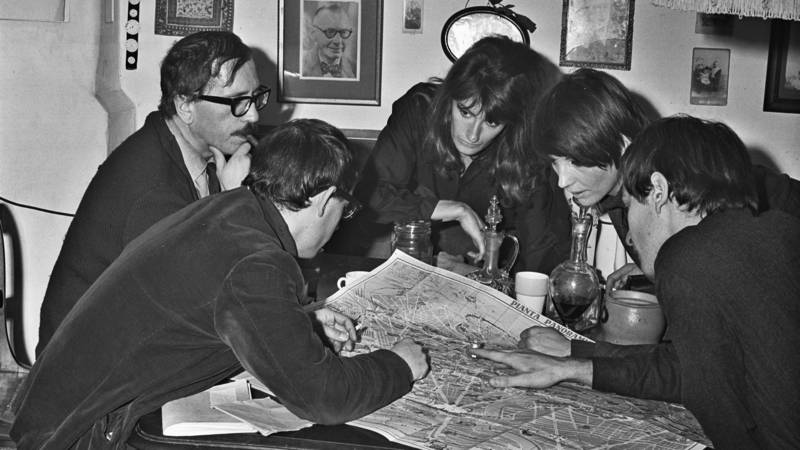
Cast and crew study a map of Rome (via). DP: Gérard Vandenberg.
Italy or Sophia Loren for La Loren's birthday (1934).
– Remco Campert, Het gangstermeisje (1965)
A writer tasked with writing a screenplay based on his novel Het gangstermeisje suffers from writer's block. Some time at his friends' house in France brings the inspiration needed but also a few twists and turns, similar to his book, leading him to Cinecittà.
Smrt si říká Engelchen [Death Is Called Engelchen] (Ján Kadár + Elmar Klos, 1963)
Sep
19
ER – 1994
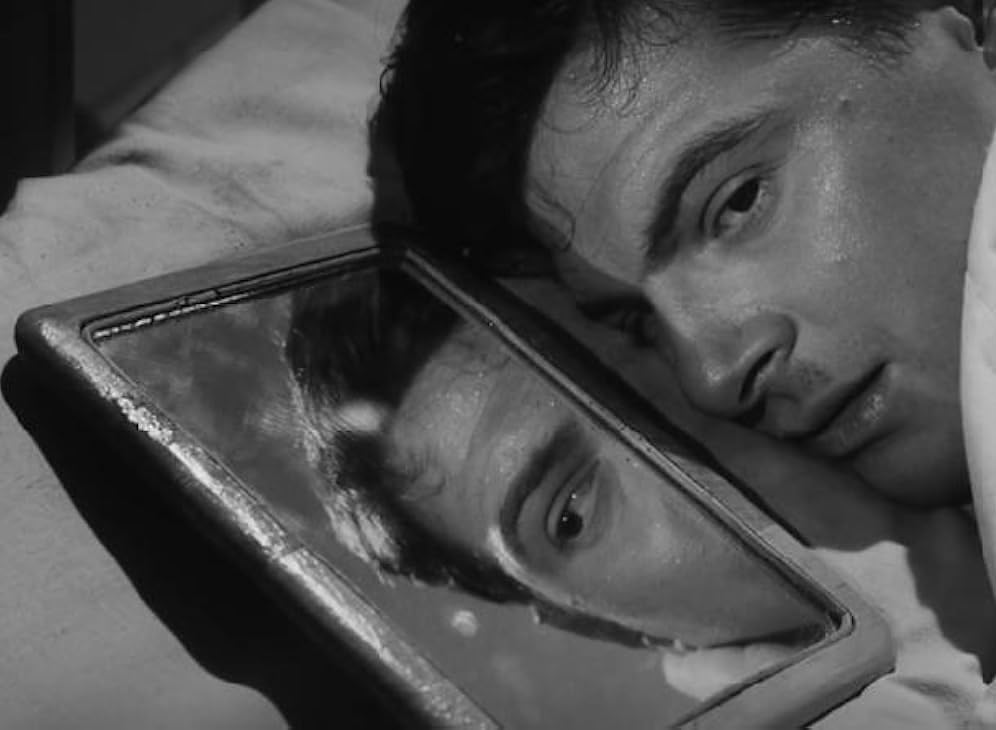
Pavel (Jan Kačer) recovering face-down in his hospital bed. DP: RudolfMilič.
An emergency room: ER debuts on this date in 1994.
A paralysed Czechoslovak partisan recovering from a shot in the back in an emergency ward, feverishly remembers the events that brought him to that moment. He particularly remembers Engelchen, the SS Sturmbannführer who killed his best friend and massacred the local villagers.
“These people have faith in me, and I have faith in their faith.”
Guide [The Guide] (Vijay Anand, 1965)
Aug
20
fasting
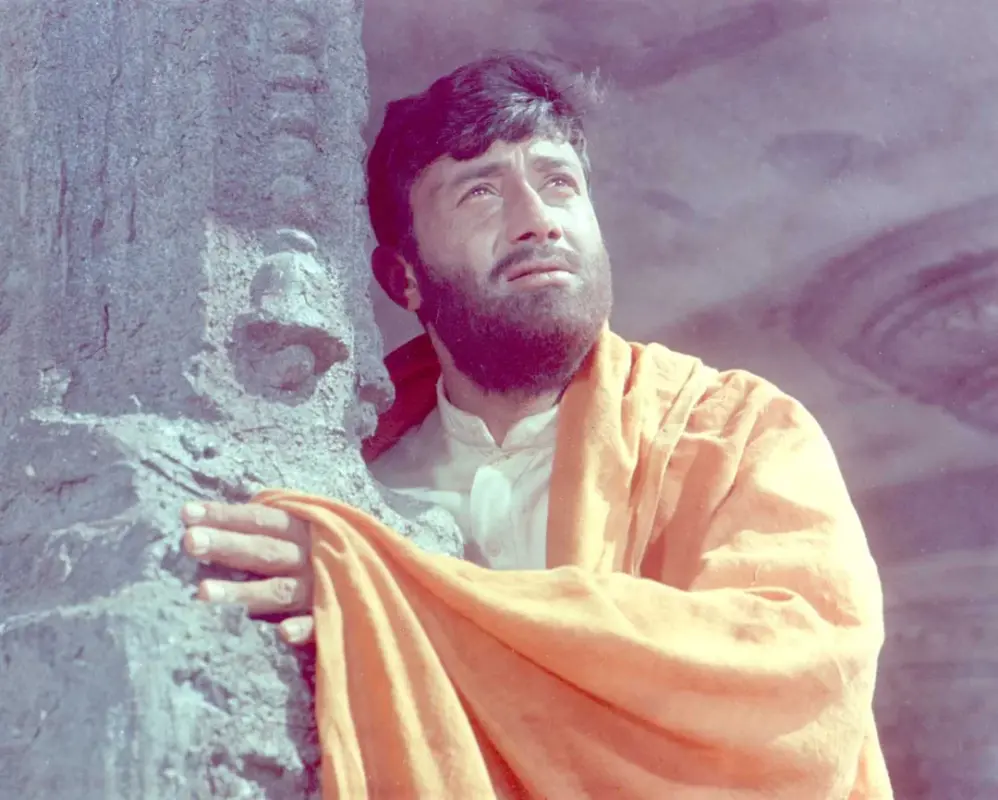
A scruffy looking Raju (Dev Anand) wearing the orange shawl of a holy man. DP: Fali Mistry.
Ramadan [on the ninth month of the Islamic calendar, not mid-August]: someone atones or fasts*
– Swami Ji
Due to a simple misunderstanding, a farmer mistakes tour guide Raju for a holy man. When drought hits the land, the village fool tells the townspeople that Raju, now known as Swami Ji, will fast for twelve days to bring the rain. During his reluctant fast, Raju undergoes a spiritual transformation.
* the Bales 2025 Film Challenge for August is not date-related but lists, for the most part, the colours of the rainbow.