“Is it the form of the clouds, or the tints of the sky, or the colours of the surrounding objects which are so changeable, which have troubled my thoughts as they passed before my eyes? Who can tell?” Le Horla [The Horla] (Jean-Daniel Pollet, 1966)
Aug
19
violet
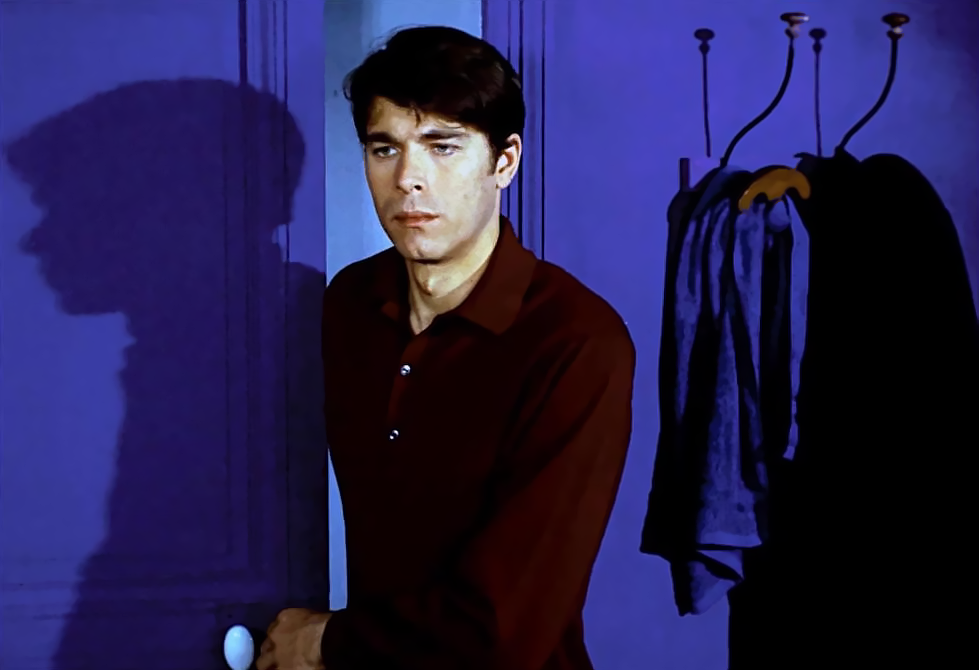
The narrator enters a violet-blue room via a lavender-purple corridor (via). DP: Jean-Jacques Rochut.
Violet: a building or structure *
– Guy de Maupassant, Le Horla, 1887 (via)
Objects and rooms have distinct colours ranging from the deepest blues and violets to a pale lavender, a muted silver and shocks of yellow. The usage of colour in Le Horla is striking throughout and reminds me of how Van Gogh's paintings became increasingly colourful as his madness enveloped him.
* the Bales 2025 Film Challenge for August is not date-related but lists, for the most part, the colours of the rainbow.
BookAdaptation
“He moved over to the window: a smallish, frail figure, the meagreness of his body merely emphasized by the blue overalls which were the uniform of the party. His hair was very fair, his face naturally sanguine, his skin roughened by coarse soap and blunt razor blades and the cold of the winter that had just ended. “Nineteen Eighty-Four (Rudolph Cartier, 1954)
Aug
18
indigo
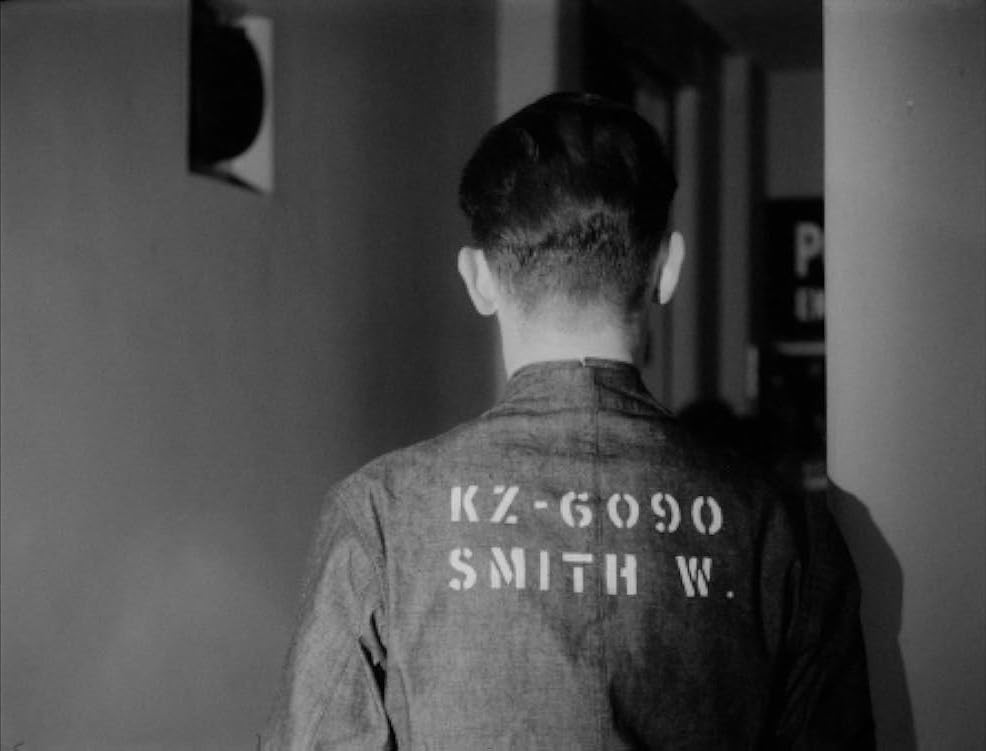
Winston Smith (Peter Cushing). We only see his frail looking back with the identifier KZ-6090, and his name SMITH W.
Indigo, in food or fashion*
– George Orwell, Nineteen Eighty-Four (1949) (via)
* the Bales 2025 Film Challenge for August is not date-related but lists, for the most part, the colours of the rainbow.
“The painter takes his time. He doesn't like her dress. He doesn't like her gloves. One day he asks her if she dares pose for him – all in pink. She dares! And the king, enraptured by her pose, offers her a palace!” Lola Montès (Max Ophüls, 1955)
Aug
14
Bavaria
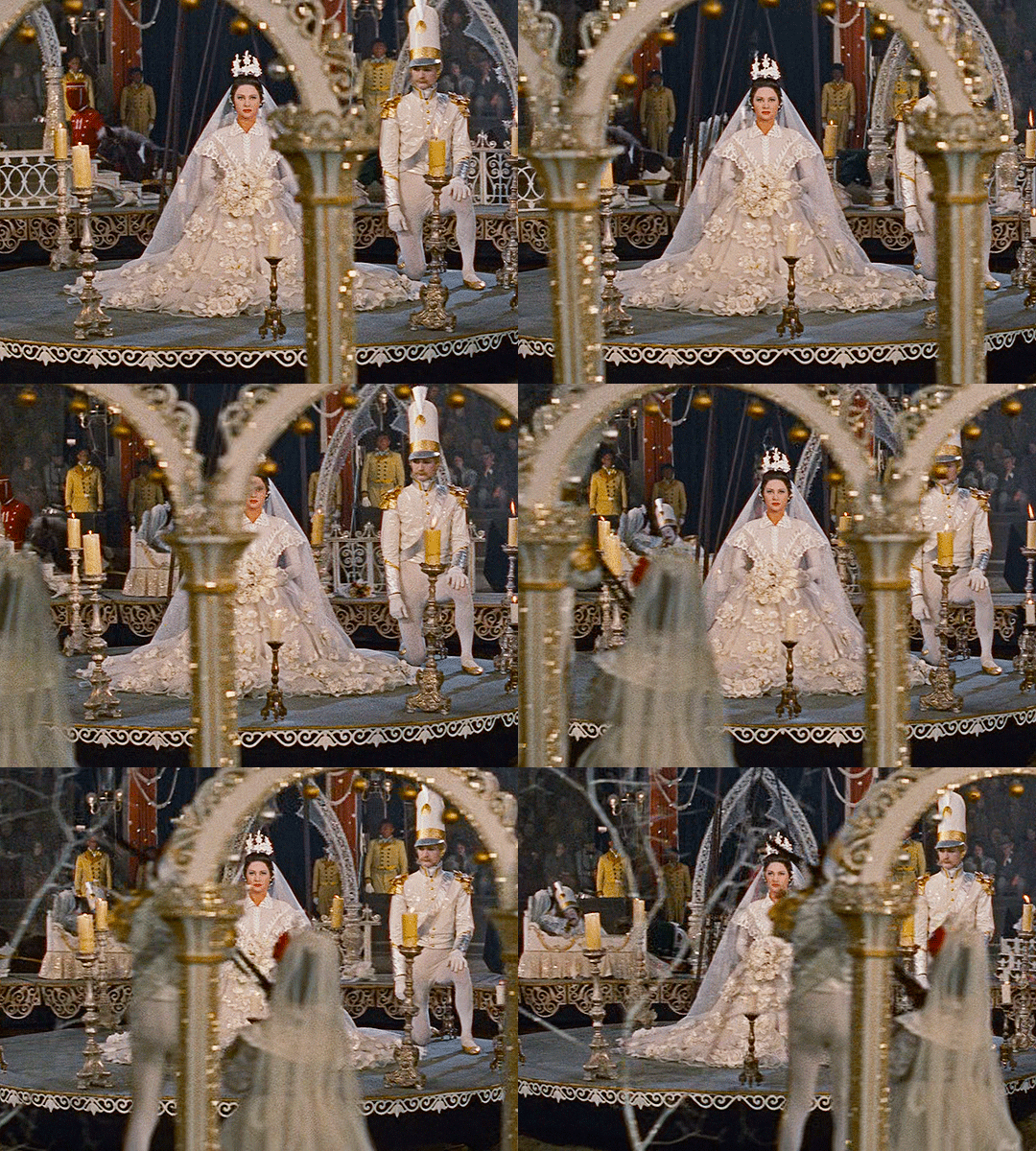
The crowned royal mistress on display in glorious Eastmancolor (via). DP: Christian Matras.
Celebrating Oktoberfest [in September/October] and the Bavarian royals [rip]: a royal character or family*
– circus master
Maria Dolores Porriz y Montez, Countess von Landsfeld, Lola Montès for short, now a circus attraction, once the mistress to Ludwig I, King of Bavaria. While her fellow circus performers play Lola's former lovers, the ringmaster tells her story.
* the Bales 2025 Film Challenge for August is not date-related but lists, for the most part, the colours of the rainbow.
“Eh, i sogni a volte insegnano male, Dùnya, perché la verità intera non è mai in un solo sogno, la verità intera è in molti sogni.” Il fiore delle mille e una notte [Arabian Nights] (Pier Paolo Pasolini, 1974)
Aug
13
cerulean
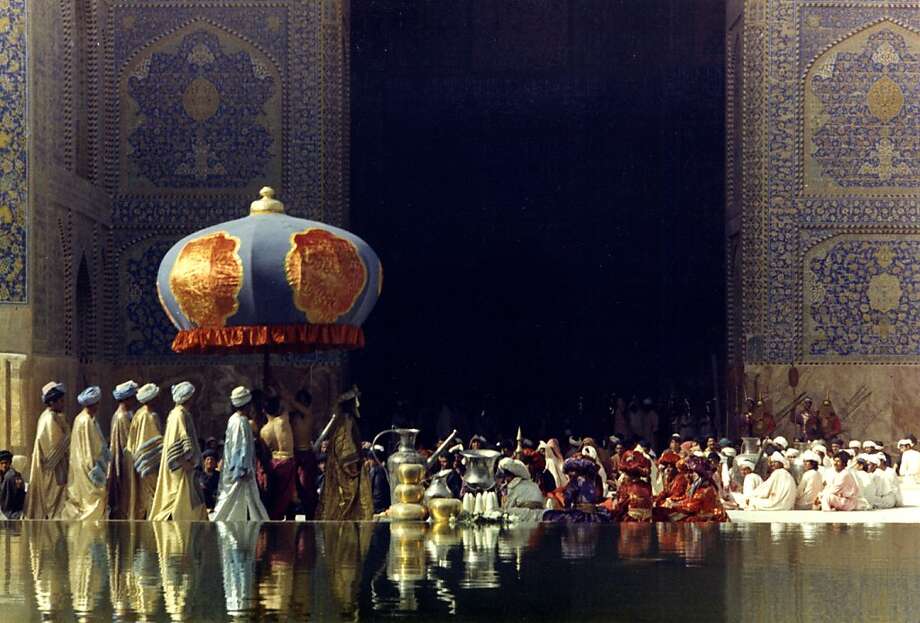
The entrance of the Shah Mosque as seen in the film. The seven colours of the tile work are reflected in the extras' costumes. DP: Giuseppe Ruzzolini.
Cerulean, or blue: a building or structure*
One of the many exotic locations is the مسجد شاه, [Masjed-e Shah, or Shah Mosque] in Iran with its otherworldly blue and blue-adjacent tiles.
* the Bales 2025 Film Challenge for August is not date-related but lists, for the most part, the colours of the rainbow.
“She looked at the red shoes, for she thought there was no harm in looking. She put them on, for she thought there was no harm in that either. But then she went to the ball and began dancing. When she tried to turn to the right, the shoes turned to the left. When she wanted to dance up the ballroom, her shoes danced down. They danced down the stairs, into the street, and out through the gate of the town. Dance she did, and dance she must, straight into the dark woods.” The Red Shoes (Michael Powell + Emeric Pressburger, 1948)
Aug
3
red
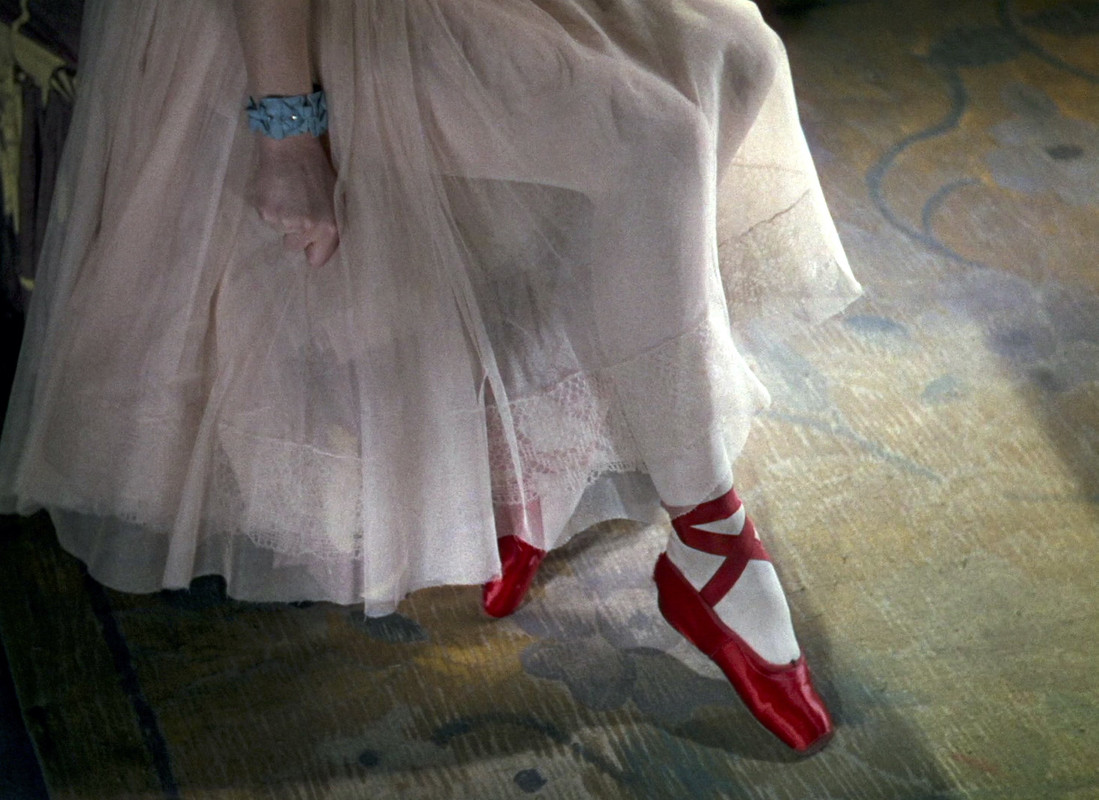
A ballerina's lower body in focus. She wears a long tulle off-white dress, slightly sheer, with her white stockings showing through slightly. Part of her right lower arm is visible, the hand clutched, a turquoise bracelet on the wrist. What stands out most are her ruby red ballet shoes that appear to move away from her. The backdrop is a dull, washed out carpet. DP: Jack Cardiff.
Red: best use of red in food or fashion*
– Hans Christian Andersen, De røde Skoe (1845, tranl. Jean Hersholt, 1949), via
Another one of The Archers' #Technicolor extravaganzas. This time, not to wow the worn-down post-war black-and-white audience, but as an an active storytelling instrument.
Built around Hans Christian Andersen's haunting tale De røde Skoe (1845).
* the Bales 2025 Film Challenge for August is not date-related but lists, for the most part, the colours of the rainbow.
“I guess we like each other a lot, huh?”Sommaren med Monika [Summer with Monika] (Ingmar Bergman, 1953)
Jul
27
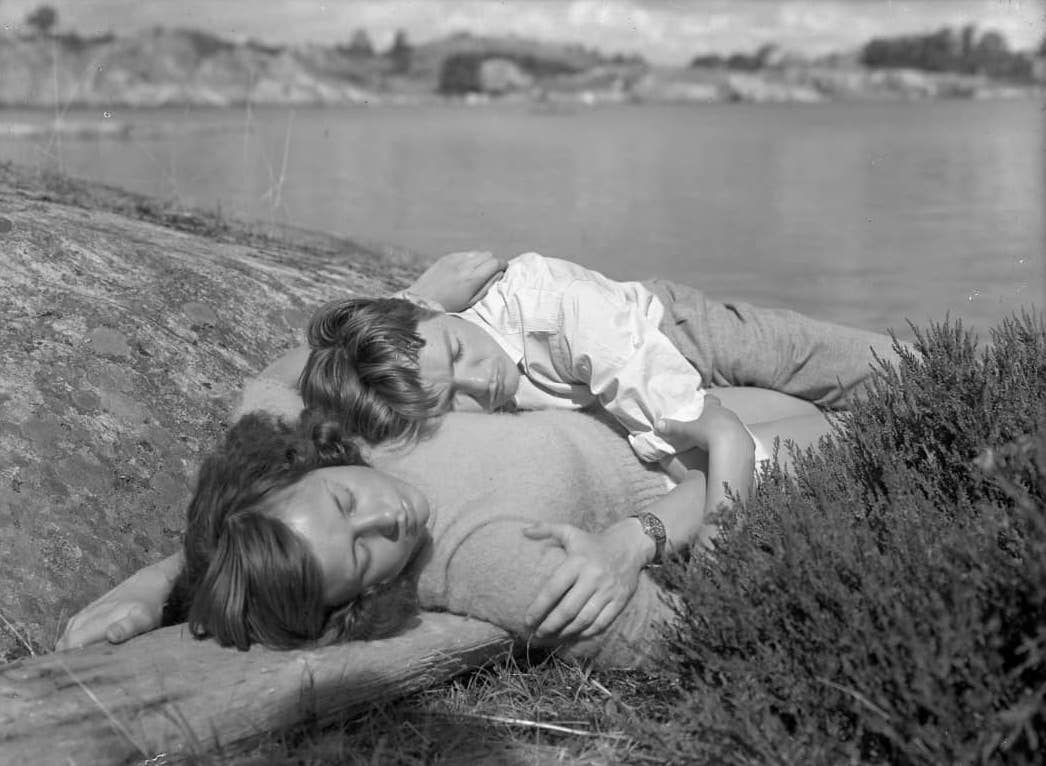
Monika (Harriet Andersson) and Harry (Lars Ekborg) rest in each other's arms. DP: Gunnar Fischer, still photography by Louis Huch.
Someone naps or sleeps*
– Monika Eriksson
* the Bales 2025 Film Challenge for July is, for unknown reasons, mostly not date-related and follows some sort of vacation narrative.
“There’s something almost poetic about finding a hairpin in the bath. It’s like the sole of my foot has been pierced by poetry.” 簪 [Kanzashi / Ornamental Hairpin] (Hiroshi Shimizu, 1941)
Jul
24
relaxation
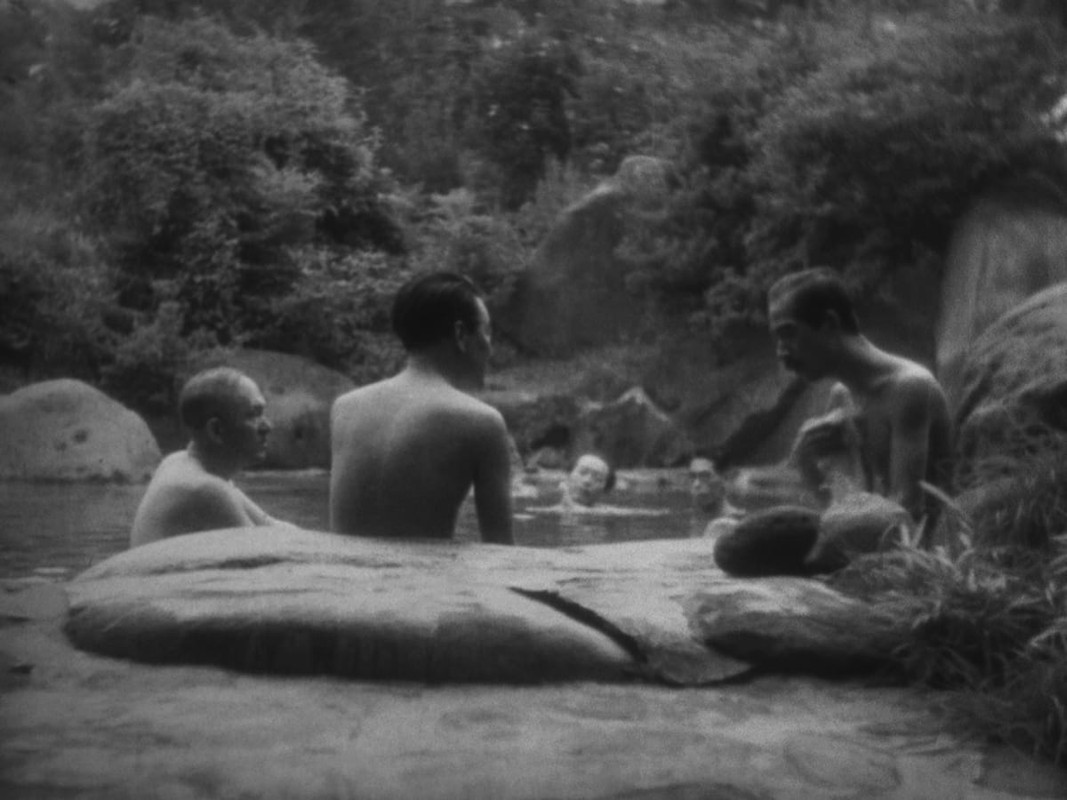
Men relaxing at a roten-buro, an outdoor onsen. DP: Suketarō Inokai.
Someone goes to a spa, beach, or retreat*
– Nanmura, via
Relaxing at an onsen, a young man steps on the titular kanzashi. Now injured with too much time on his hands, he and his fellow nosy patrons start speculating about its owner. Then a telegram announces her arrival.
* the Bales 2025 Film Challenge for July is, for unknown reasons, mostly not date-related and follows some sort of vacation narrative.
L'argent [Money] (Robert Bresson, 1983)
Jul
22
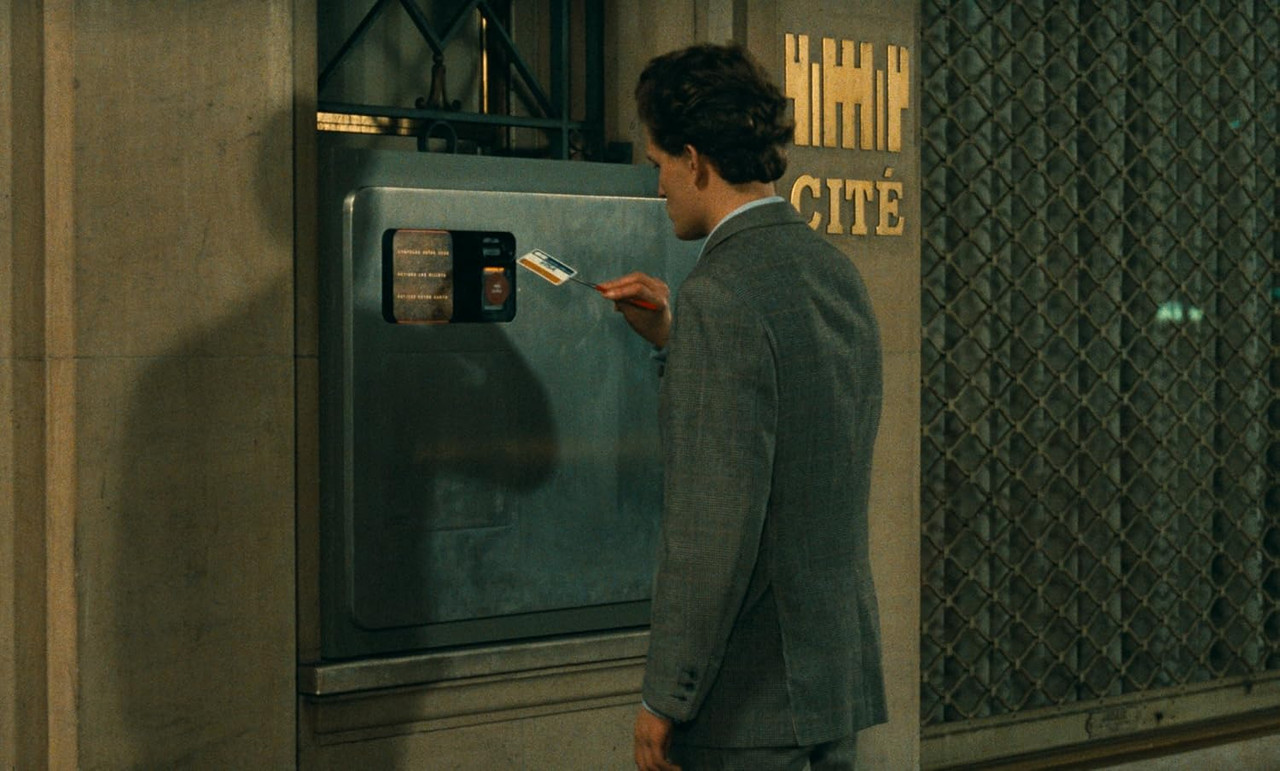
A man at an ATM holds on to a Visa credit card with tweezers. DPs: Pasqualino De Santis & Emmanuel Machuel.
Everything's expensive: someone is a at bank or ATM*
* the Bales 2025 Film Challenge for July is, for unknown reasons, mostly not date-related and follows some sort of vacation narrative.
L'ingorgo [Traffic Jam] (Luigi Comencini, 1979)
Jul
12
.png)
Two middle-aged men in a car, each very much enjoying a small meal. We see them through the windshield with behind them numerous other cars stuck in traffic. DP: Ennio Guarnieri.
– Why do you always wear those dark glasses? – A souvenir of unrequited love for my homeland.Popiół i diament [Ashes and Diamonds] (Andrzej Wajda, 1958)
Jun
27
National Sunglasses Day
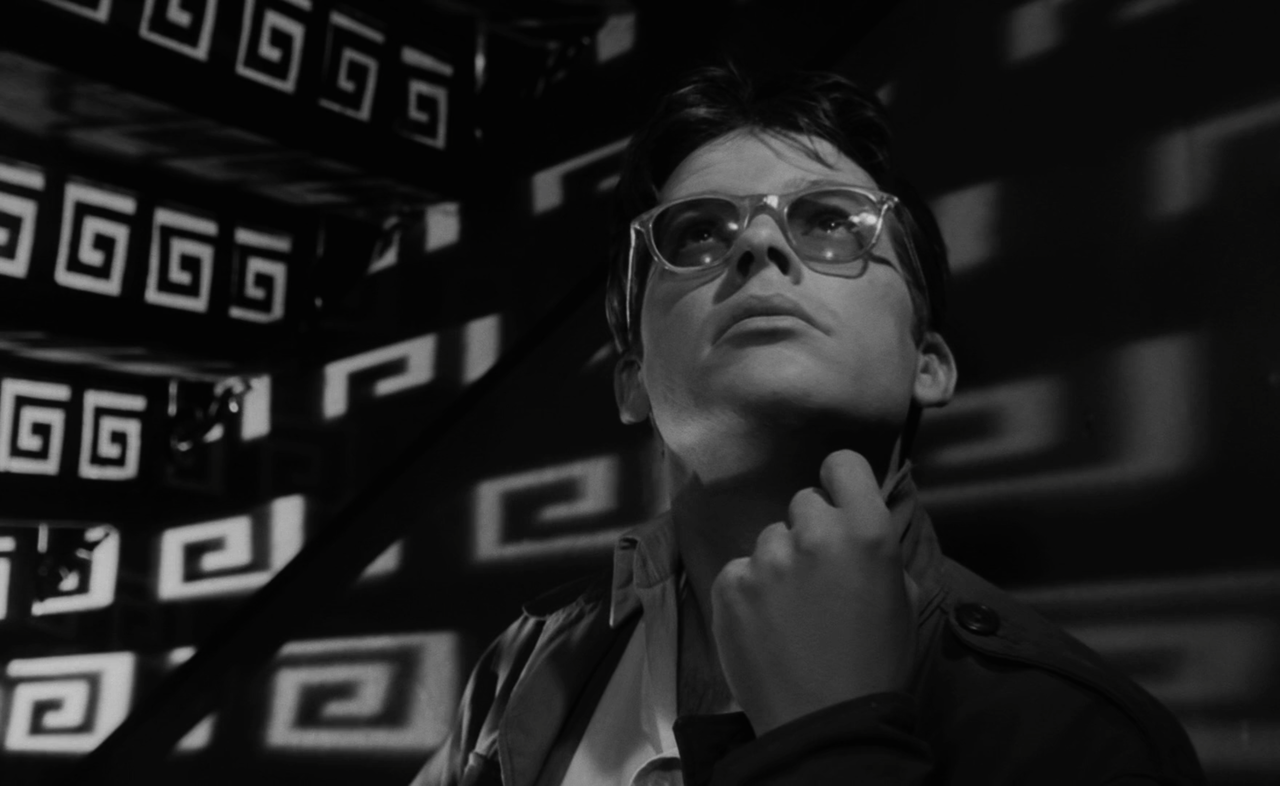
Maciek Chelmicki (Zbigniew Cybulski) wearing his sunglasses in a dark, almost German Expressionist space, embellished with meandros. DP: Jerzy Wójcik.
[The best] sunglasses in film for National Sunglasses Day (USA)
According to IMDb, the sale of sunglasses in Poland went through the roof after this film was released and Cybulski became his country's very own James Dean.