view
Canon City (Crane Wilbur, 1948)
Dec
30
1947
A calendar page. It's December 30, 1947. DP: John Alton.
“We're not here to play dominoes.”
view
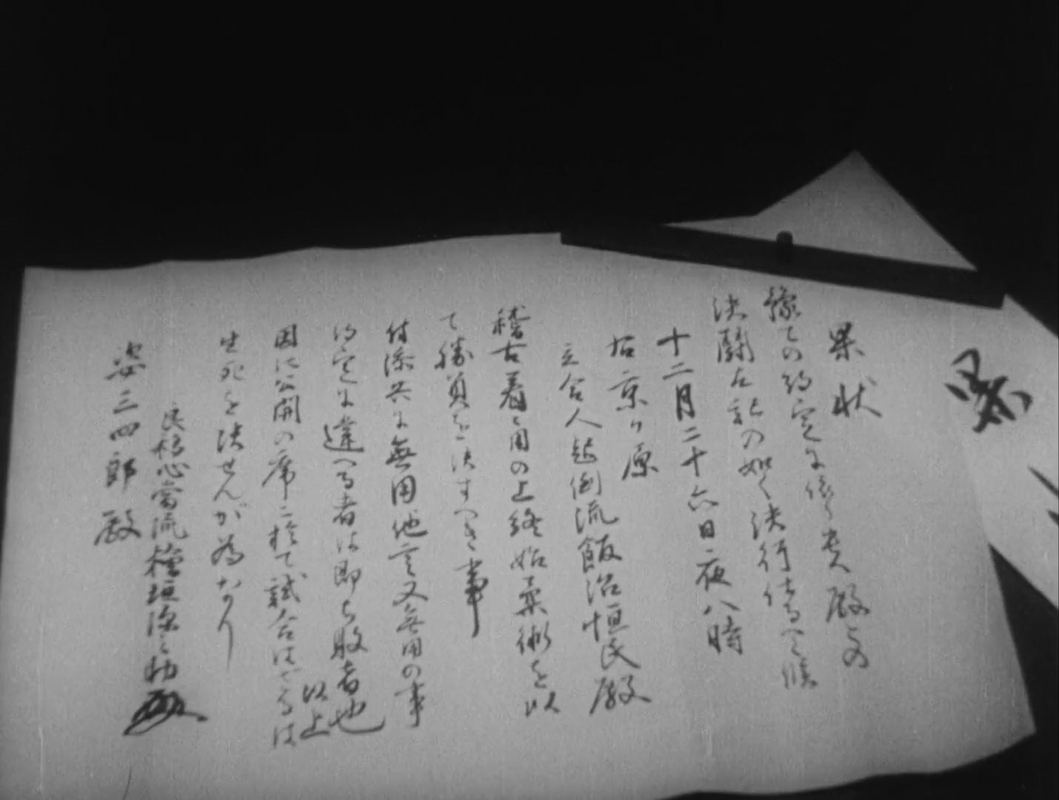
姿三四郎 [Sugata Sanshirō / Judo Saga] (Akira Kurosawa, 1943)
Dec
26
8 p.m.
A letter beckoning to come to Ukyō-ku, on December 26, at 8 o'clock. DP: Akira Mimura.
“On the night of December 26, at 8:00 on Ukyō-ku.”
view
La Terra Trema [The Earth Will Tremble] (Luchino Visconti, 1948)
Dec
8
Féte des Lumiéres
“In Sicily, Italian is not the language of the poor.”
– title card
view
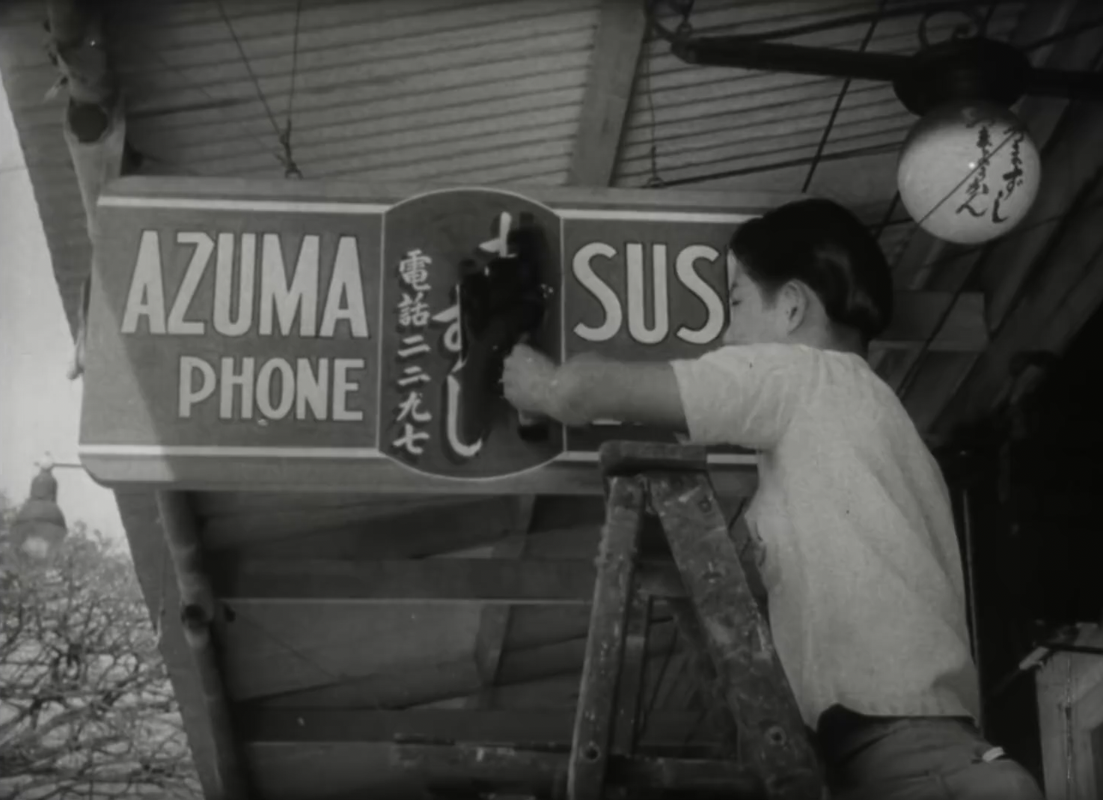
December 7th (John Ford + Gregg Toland, 1943)
Dec
7
1941
A Japanese person paints over the Japanese characters on their store's sign. AZUMA PHONE and SUS[HI obscured] can stay. DP: Gregg Toland.
“If that's Americanism, it's very hyphenated.”
– narrator
view
Careful, Soft Shoulders [Lady in a Quandry] (Oliver H.P. Garrett, 1942)
Dec
7
1941
Thomas Aldrich (James Ellison) and Connie Mathers (Virginia Bruce). DP: Charles G. Clarke.
view
Panique [Panic] (Julien Duvivier, 1946)
Nov
7
A child probes her dinner with a fork larger than her head while another one is all neat and proper. In the midst of them, as serious table settings require, a large man. His napkin tucked in at the neck, he leans over the first child with something to say. DP: Nicolas Hayer.
“Dead meat always attracts flies.”
– Monsieur Hire
view
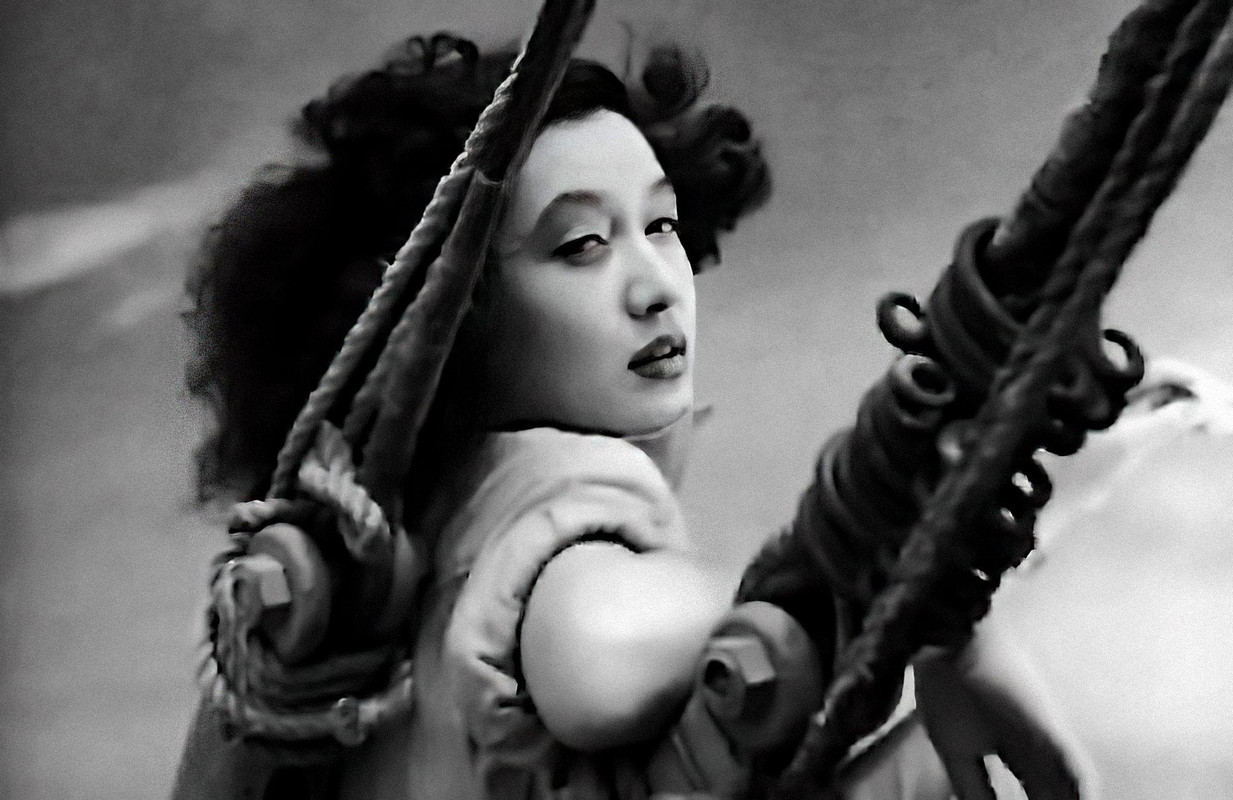
颱風圏の女 [Taifuken no onna / The Woman in the Typhoon Area] (Hideo Ōba, 1948)
Aug
23
* International Talk like a Pirate Day takes place on September 19.
view
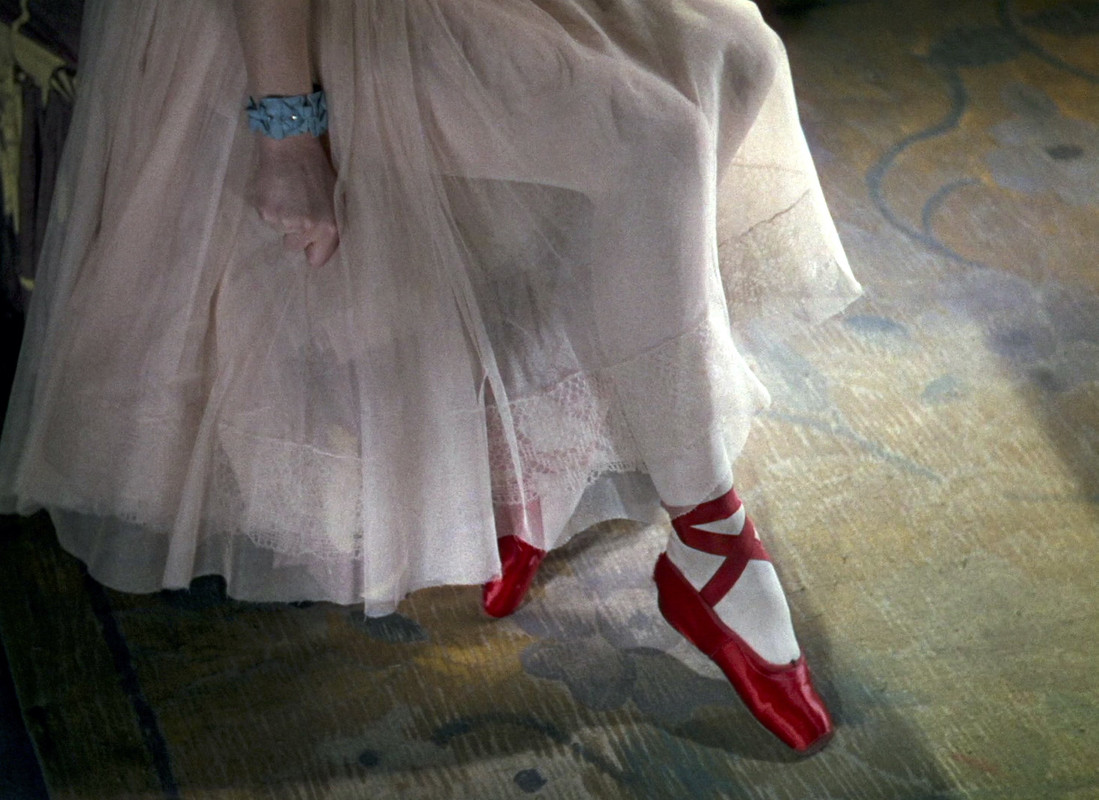
The Red Shoes (Michael Powell + Emeric Pressburger, 1948)
Aug
3
red
A ballerina's lower body in focus. She wears a long tulle off-white dress, slightly sheer, with her white stockings showing through slightly. Part of her right lower arm is visible, the hand clutched, a turquoise bracelet on the wrist. What stands out most are her ruby red ballet shoes that appear to move away from her. The backdrop is a dull, washed out carpet. DP: Jack Cardiff.
Red: best use of red in food or fashion*
“She looked at the red shoes, for she thought there was no harm in looking. She put them on, for she thought there was no harm in that either. But then she went to the ball and began dancing. When she tried to turn to the right, the shoes turned to the left. When she wanted to dance up the ballroom, her shoes danced down. They danced down the stairs, into the street, and out through the gate of the town. Dance she did, and dance she must, straight into the dark woods.”
– Hans Christian Andersen, De røde Skoe (1845, tranl. Jean Hersholt, 1949), via
Another one of The Archers' #Technicolor extravaganzas. This time, not to wow the worn-down post-war black-and-white audience, but as an an active storytelling instrument.
Built around Hans Christian Andersen's haunting tale De røde Skoe (1845).
view
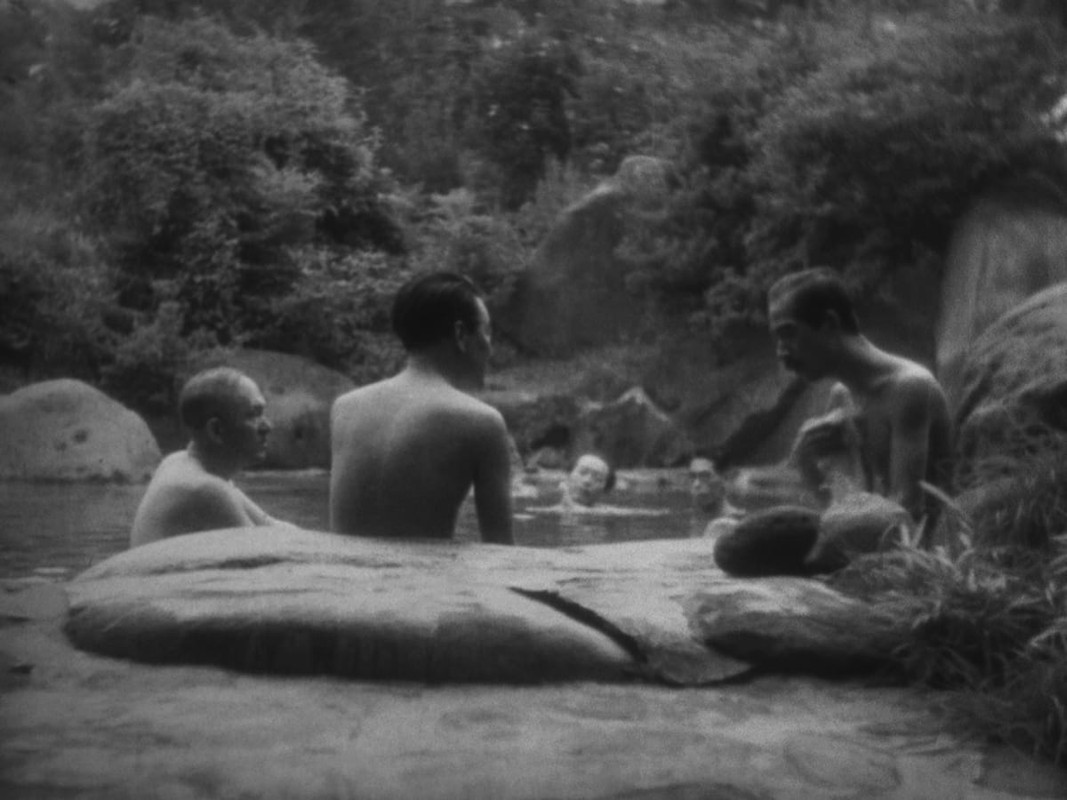
簪 [Kanzashi / Ornamental Hairpin] (Hiroshi Shimizu, 1941)
Jul
24
relaxation
Men relaxing at a roten-buro, an outdoor onsen. DP: Suketarō Inokai.
Someone goes to a spa, beach, or retreat*
“There’s something almost poetic about finding a hairpin in the bath. It’s like the sole of my foot has been pierced by poetry.”
Relaxing at an onsen, a young man steps on the titular kanzashi. Now injured with too much time on his hands, he and his fellow nosy patrons start speculating about its owner. Then a telegram announces her arrival.
view
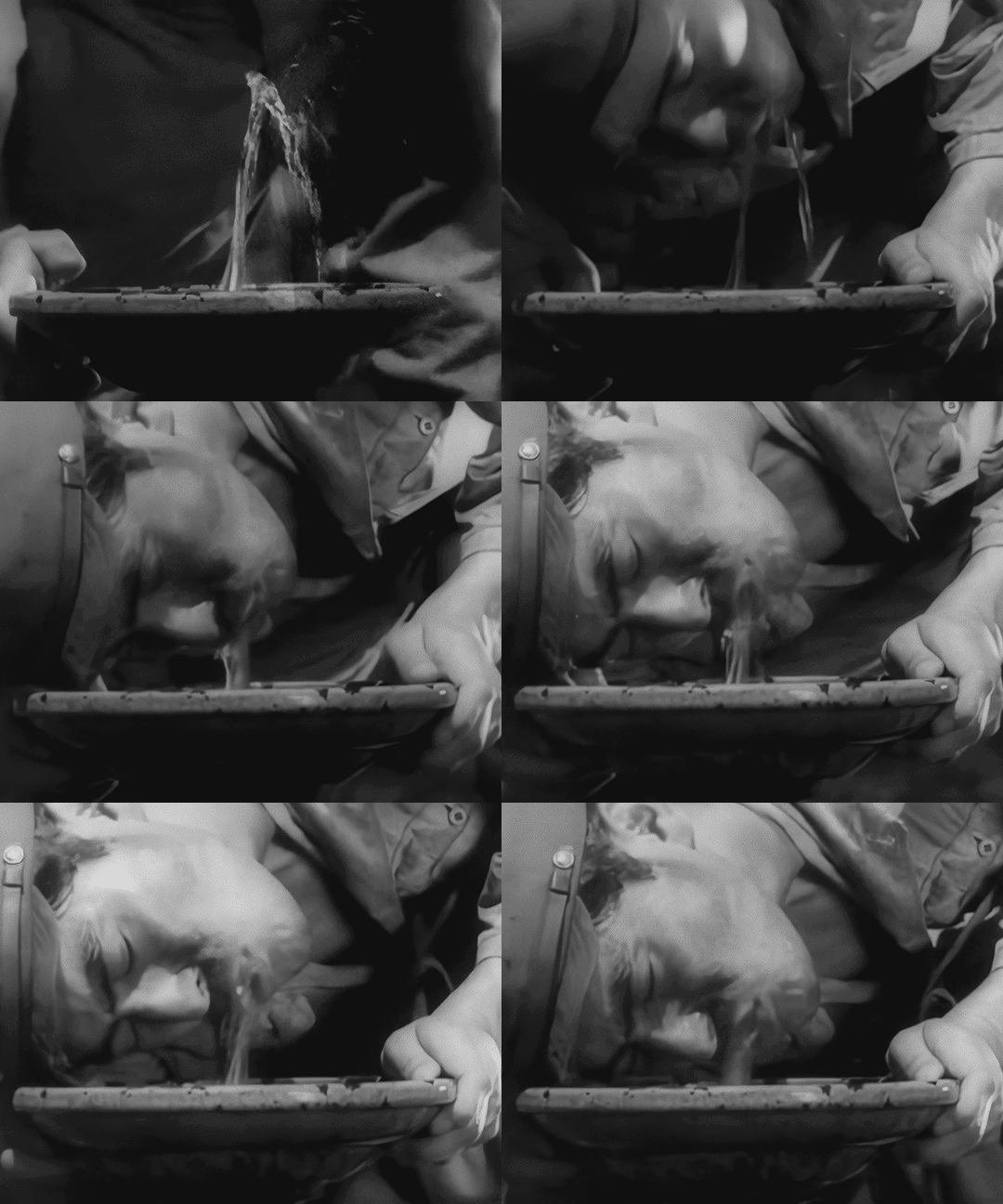
野良犬 [Nora inu / Stray Dog] (Akira Kurosawa, 1949)
Jul
14
Someone enjoys a drink or beverage*
“On the bus, the air was so thick, he felt woozy. A wailing infant shook with tears and the woman beside him reeked with the stink of cheap perfume.”
– narrator
On a sweltering summer day, Detective's Murakami's Colt gets stolen on a crowded bus. He must delve deep into the sticky sweaty seedy underbelly of Tokyo to retrieve it.

.jpg)

.png)