settima

drama

3. November 1918 [Third of November 1918] (Edwin Zbonek, 1965)

Nov

3

1918

3. November 1918 (1965)

A calendar page for November 3, 1918. It's a Sunday. DP: Rudolf Sandtner.

Takes place on November 2 and 3.


I pugni in tasca [Fists in the Pocket] (Marco Bellocchio, 1965)

Nov

3

I pugni in tasca (1965)

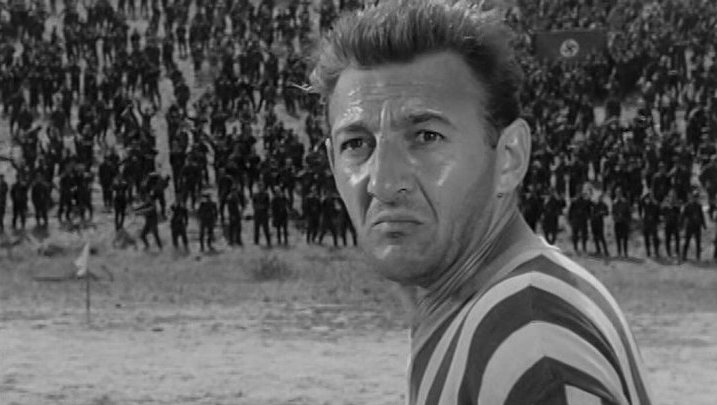
Alessandro (Lou Castel). DP: Alberto Marrama.

“I'm a volcano of ideas.”

– Alessandro

المخدوعون [Al-makhdu'un / The Dupes] (Tawfiq Saleh, 1972)

Nov

2

النَّكْبَة

Al-makhdu'un (1972)

The three men on top of the water truck (via). DP: Bahgat Heidar.

Starting over*

“A man with no country, will have no grave in the Earth, I forbid you to leave.”

– opening quote (via)

A few years after the start of the Nakba, three generations hope to make a new life for themselves. In the steel belly of a water truck, the men travel Palestine into Iraq, then crossing the desert towards the promised land, Kuwait.


* the Bales 2025 Film Challenge for November is, again, not date-based, but follows a sloppy schmaltzy all-American Thanksgiving-y narrative. Trying to make it work my way.

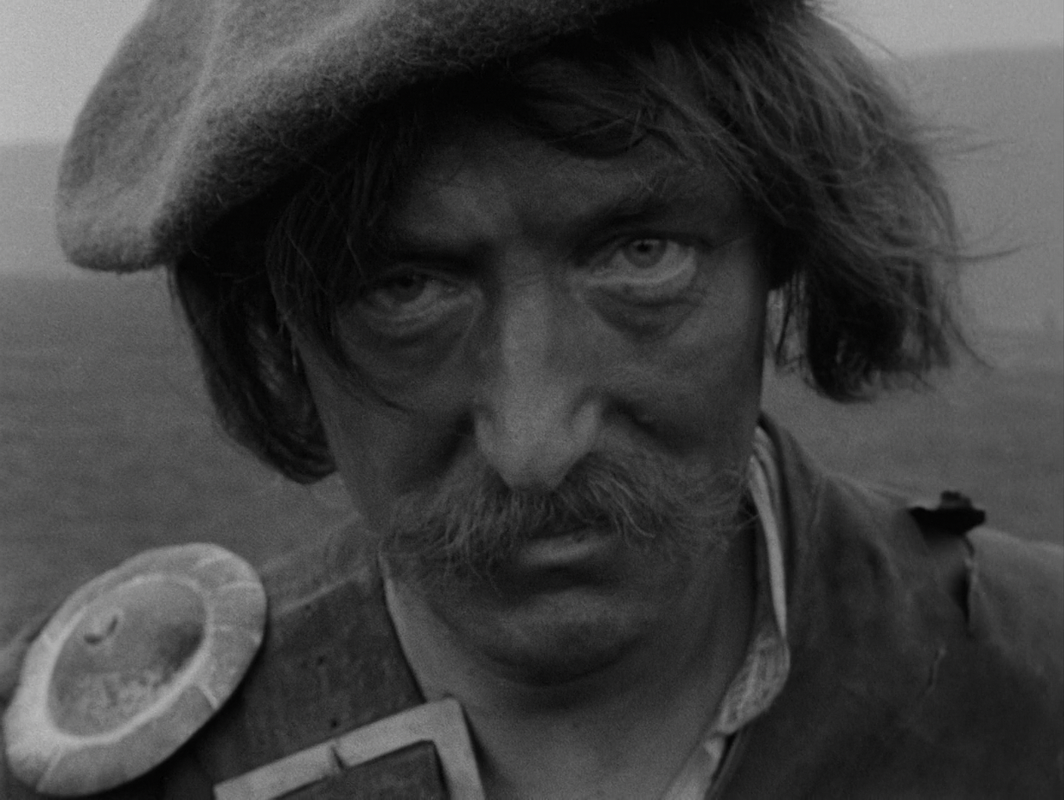
Bübchen (Roland Klick, 1968)

Nov

1

autumn

Bübchen (1968)

Lobby card. Achim (Alexander Kekulé) at a dreary, autumn-y scrapyard surrounded by several serious looking men in trenchcoats. Bübchen is an endearing term for a little boy (via (spoilers)). DP: Robert van Ackeren.

A movie that feels like autumn*


A family of four share the same house and live their own lives. When the parents attend a company party, the neighbour's teenage daughter reluctantly babysits the children then promptly runs off with her secret boyfriend. Left to his own devices, the bored 10-year old Achim plays a game with his little sister

“Junge, du bist ja ganz woanders!”

I Initially nomintad the RAF critique Deutschland im Herbst (1978) for today's challenge, when I realised that Bübchen too is about Germany's youth's antics and the society that planted its seeds. Here again, a repressed community dutifully finds a way to bury the terror into the fabric of mundanity. You'll find it again in Michael Haneke's Das weiße Band (2009), now foretelling the German youth that came to embrace Nazism.


Eternal return, ad nauseam.


* the Bales 2025 Film Challenge for November is, again, not date-based, but follows a sloppy schmaltzy all-American Thanksgiving-y narrative. Trying to make it work my way.

Il caso Mattei [The Mattei Affair] (Francesco Rosi, 1972)

Oct

27

1962

Il caso Mattei (1972)

A group of well-dressed men, somewhere in a field, with Enrico Mattei (Gian Maria Volontè) in the centre. DP: Pasqualino De Santis.

“IF they want to kill me, let them do it.”

– Enrico Mattei

The Friends of Eddie Coyle (Peter Yates, 1973)

Oct

26

1972

The Friends of Eddie Coyle (1973)

Eddie Coyle (Robert Mitchum) and Dillon (Peter Boyle) at the Boston Bruins game. DP: Victor J. Kemper.

A key scene takes place at an NHL game between the Chicago Blackhawks and the Boston Bruins at the Boston Garden. Bobby Orr and Eddie Johnston are seen playing for the Bruins, and Keith Magnuson, Tony Esposito, Bill White, Pat Stapleton, and Cliff Koroll are seen playing for the Blackhawks. The real game took place on October 26, 1972, and Chicago won 6-3 (via).


Fury (Fritz Lang, 1936)

Oct

26

1936

Fury (1936)

A distraught Joe Wilson (Spencer Tracy ) in the sheriff's office. DP: Joseph Ruttenberg.


Killer's Kiss (Stanley Kubrick, 1955)

Oct

25

Fri

Killer's Kiss (1955)

An already worn-out poster for “another great bout” between Davey Gordon and Kid Rodriguez. DP: Stanley Kubrick.

“It's crazy how you can get yourself in a mess sometimes and not even be able to think about it with any sense, and yet, not be able to think about anything else. You get so you're no good for anything or anybody. Maybe it begins by taking life too serious. Anyway, I think that's the way it began for me, just before my fight with Rodriguez three days ago…”

– Davy Gordon

Nosferatu: Phantom der Nacht [Nosferatu the Vampyre] (Werner Herzog, 1979)

Oct

22

eternal returns

Nosferatu (1979)

Adjani, Kinski, and Herzog on set. DP: Jörg Schmidt-Reitwein.

[A favourite] horror remake*

“I never thought I could be friends with a German again. But here I am… Werner is somehow like Murnau brought back to life.”

Lotte Eisner visiting the set of Herzog's Nosferatu (via)

Coming back to Murnau's expressionist masterpiece was Herzog's bridge between the films made by the grandfathers of German cinema and his era. Herzog, born in 1942 Munich, noted this void created by that philistine regime and felt that, by picking up the thread cut a quarter of a century earlier, German culture could see a restoration to its (non-nationalistic) greatness. Thus a menagerie of rats and actors was released in a reluctant, bourgeois Dutch town.


But that's a story for another generation to draw upon.


* the Bales 2025 Film Challenge for October is horror-themed as opposed to date-based, and is all about favourites. Expect non-horror and films I believe to be relevant instead.

La chute de la maison Usher [The Fall of the House of Usher] (Jean Epstein, 1928)

Oct

21

La chute de la maison Usher (1928)

A rapid tracking shot along a dark corridor. Dead leaves follow the camera (via). DPs: Georges Lucas & Jean Lucas.

A favourite horror film adapted from a book or short story*

“Everything in this masterpiece contributes to its unity: the absolute mastery of editing and rhythm; slow motion, superimpositions, tracking shots, the mobile camera all play their roles and never gratuitously. The photographic quality, worthy of the most learned German operators, the lighting of the sets which envelops them in mystery, the sets themselves, neither realistic nor stylized, but as if sketched; the acting neither realistic nor expressionist, and yet adapted to the fantastic, to the violence; to the pauses; to the blur.”

Henri Langlois, via


* the Bales 2025 Film Challenge for October is horror-themed as opposed to date-based, and is all about favourites. Expect non-horror and films I believe to be relevant instead.