view
少年 [Shōnen / Boy] (Nagisa Ōshima, 1969)
Dec
17
Freebie: National Insurance Awareness Day
The boy waiting next to a buzy road. DPs: Seizō Sengen & Yasuhiro Yoshioka.
Freebie: National Insurance Awareness Day (USA) redux.
A boy (Bin Amatsu), helps out his father and stepmother's insurance money scam by pretending to be injured in traffic.
view
Ánimas Trujano (El hombre importante) [The Important Man] (Ismael Rodríguez, 1961)
Dec
16
Underdog Day
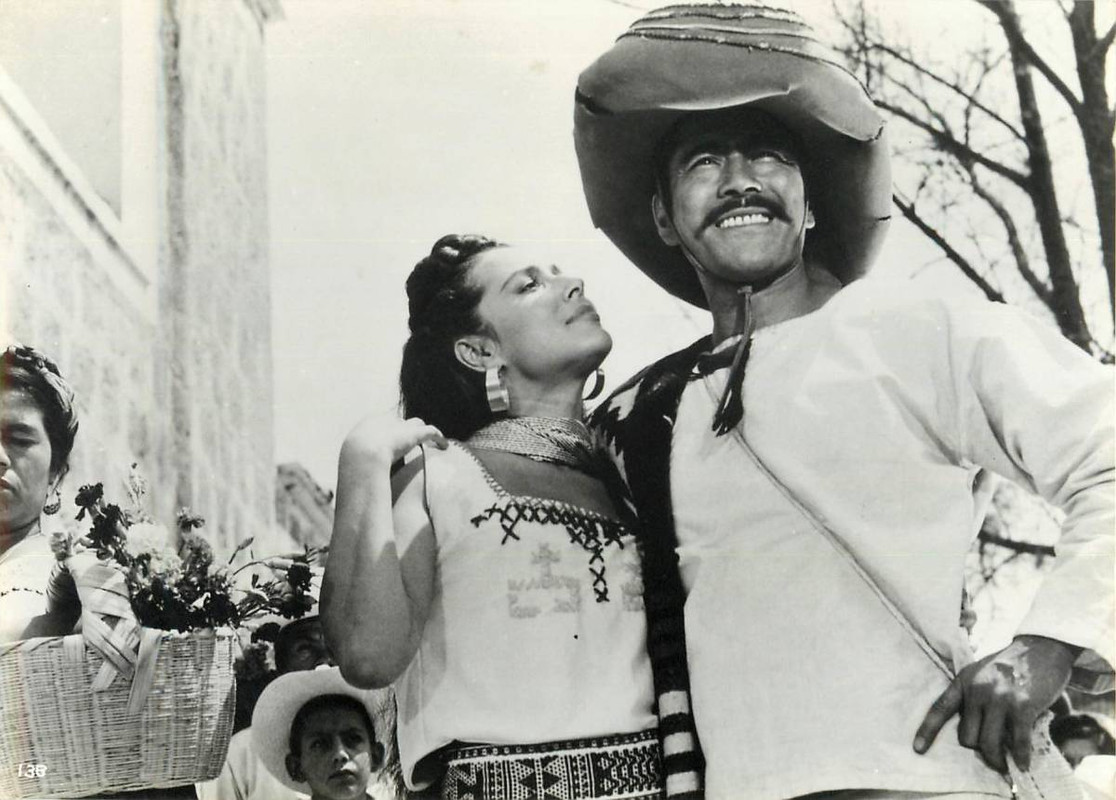
Now very important Ánimas Trujano [Toshirō Mifune] holding his Juana (Columba Domínguez). DP: Gabriel Figueroa.
Underdog Ánimas Trujano is dead set on becoming his town's next mayordomio, the wealthy, respected man in charge of funding one of Oaxaca's major religious festivals. He does find a way, a terrible one, and does get the respect and riches he wishes for. But even with all the money and praise in the world, Ánimas' continuous down his well-trodden path of gambling away the riches bestowed, and cheating on his long-suffering wife.
It took me a moment to get comfortable with the casting of Japanese movie legend Toshirō Mifune as the titular important man (also see Noé Murayama in Rodríguez's Los hermanos Del Hierro from 1961, but from that moment on, Ánimas Trujano feels as universal as any great cinematic experience should be.
view
La perle [The Pearl] (Henri d'Ursel, 1929)
Dec
15
National Wear Your Pearls Day
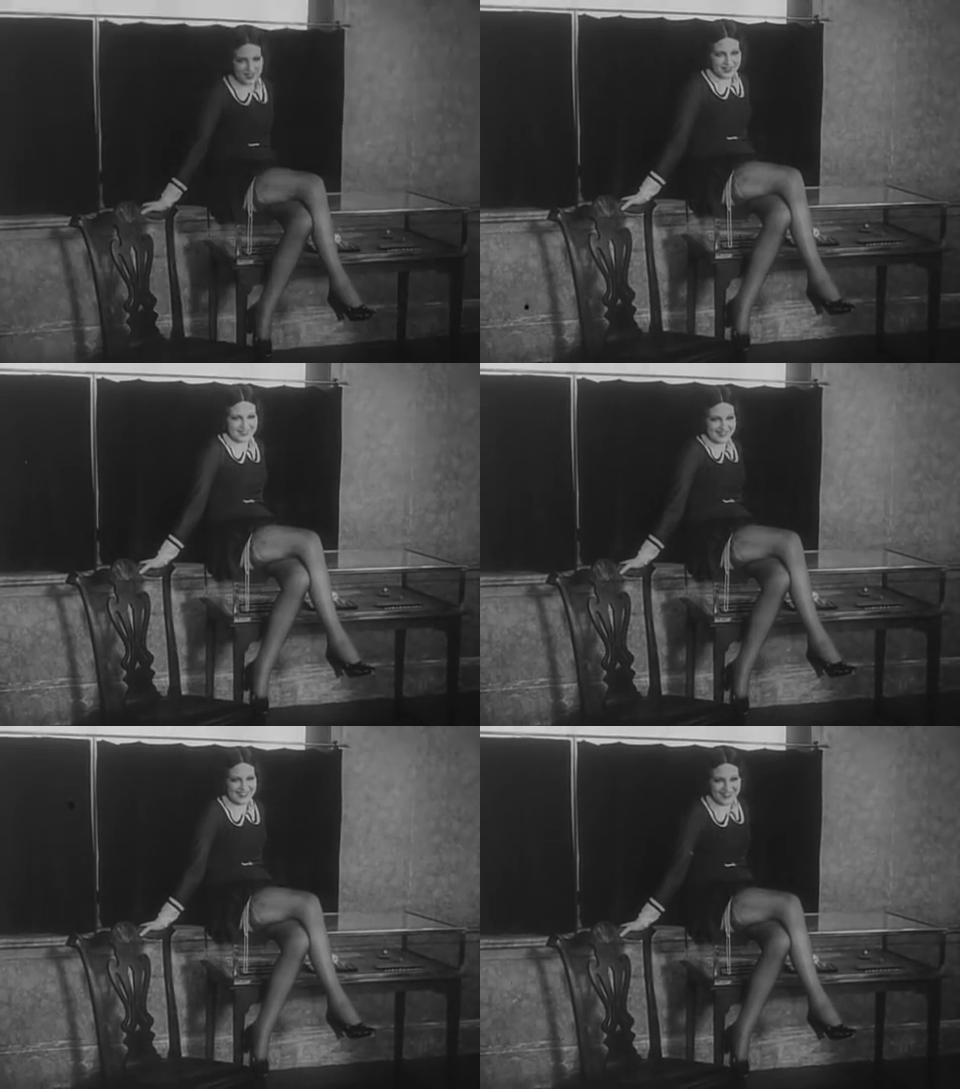
A giddy Kissa Kouprine as the jewellery salesgirl. A pearl necklace jauntily dangles from her suspender. DP: Marc Bujard.
view
Crisis: Behind a Presidential Commitment (Robert Drew, 1963)
Dec
14
Alabama Day
Bobby on the phone, seen from the back. DP: Gregory Shuker.
In what he dubbed “Stand in the Schoolhouse Door”, George Wallace, Alabama governor, blocked Black students from walking into the University so he could uphold his inaugural promise of “segregation now, segregation tomorrow, segregation forever”. This prompted a national crisis, resulting in the President issuing Executive Order 11111, making the #NationalGuard step in.
“Come Senators, Congressmen,
Please heed the call,
Don't stand in the doorway,
Don't block up the hall”
view
Punishment Park (Peter Watkins, 1971)
Dec
13
U.S. National Guard Birthday
A European camera crew follows a diverse group of American minor dissidents – pacifists, feminists, communists – who are given the choice to spend decades in federal prison, or three days in Bear Mountain Punishment Park, chased by National Guardsmen and law enforcement officers. If they manage to capture the American flag, they're free to go.
“America is as psychotic as it is powerful and violence is the only goddamn thing that will command your attention.”
– Defendant Lee Robert Brown
While the washed-out 16mm footage and references to #Nixon may tell you otherwise, Punishment Park remains a gut-punching portrait of a timeless America.
view
Ascenseur pour l'échafaud [Elevator to the Gallows] (Louis Malle, 1958)
Dec
13
croissants
Mr Tavernier (Maurice Ronet) taking a bite out of a croissant while dialling a number in a lively French café. A blonde behind him shows an interest. DP: Henri Decaë.
“Have you seen Mr Tavernier tonight?”
view
Garlic Is as Good as Ten Mothers (Les Blank, 1980)
Dec
12
National 12 Hour Fresh Breath Day
Three representatives of the garlic festival. Their tees read: THE GARLIC TO SHARE WITH A FRIEND, MINE DOESN'T STINK, and WE LEAVE YOU BREATHLESS. DP: Les Blank.
“When he shows the 1978 film Always for Pleasure, about the food, music and indigenous culture of New Orleans, [Les Blank] has been known to whip up a pot of red beans and rice in the back of the theatre. [cont. below]
“Can you smell the garlic?”
– Alice Waters. During screenings, the audience would reply with “YES!”
“At presentations […] Blank can occasionally be spied tossing several heads of garlic into a toaster oven so that the aroma wafts over the audience at just the right mouth-watering moment.” (via)
view
楢山節考 [Narayama-bushi kō / The Ballad of Narayama] (Keisuke Kinoshita, 1958)
Dec
11
International Mountain Day
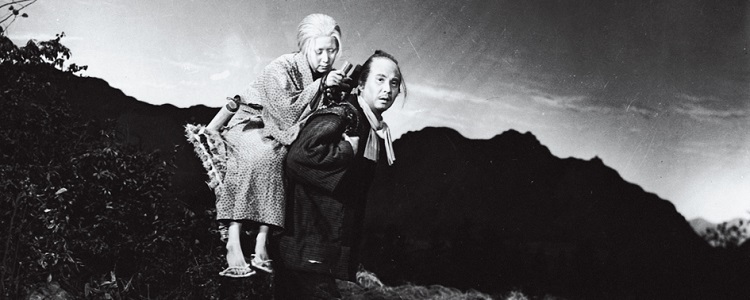
Tatsuhei (Teiji Takahashi) with his mother Orin (Kinuyo Tanaka) in a bamboo carrier on his back. She's combing his hair. Around them the mountain range. DP: Hiroshi Kusuda.
“This winter… I'm going to the mountain. My mother went to the mountain, as did the mother-in-law of our home. So I have to go too.”
– Orin
In Keisuke Kinoshita's highly stylised 楢山節考, the arguably cruel (and most likely fictional) practice – of 姥捨て [ubasute, abandoning an old woman] – is superbly abstracted. Narration, dramatic lighting, colour filters and very obviously a soundstage underline that what we're watching is not a film, but a kabuki play.
view
Laura (Otto Preminger + Rouben Mamoulian, 1944)
Dec
11
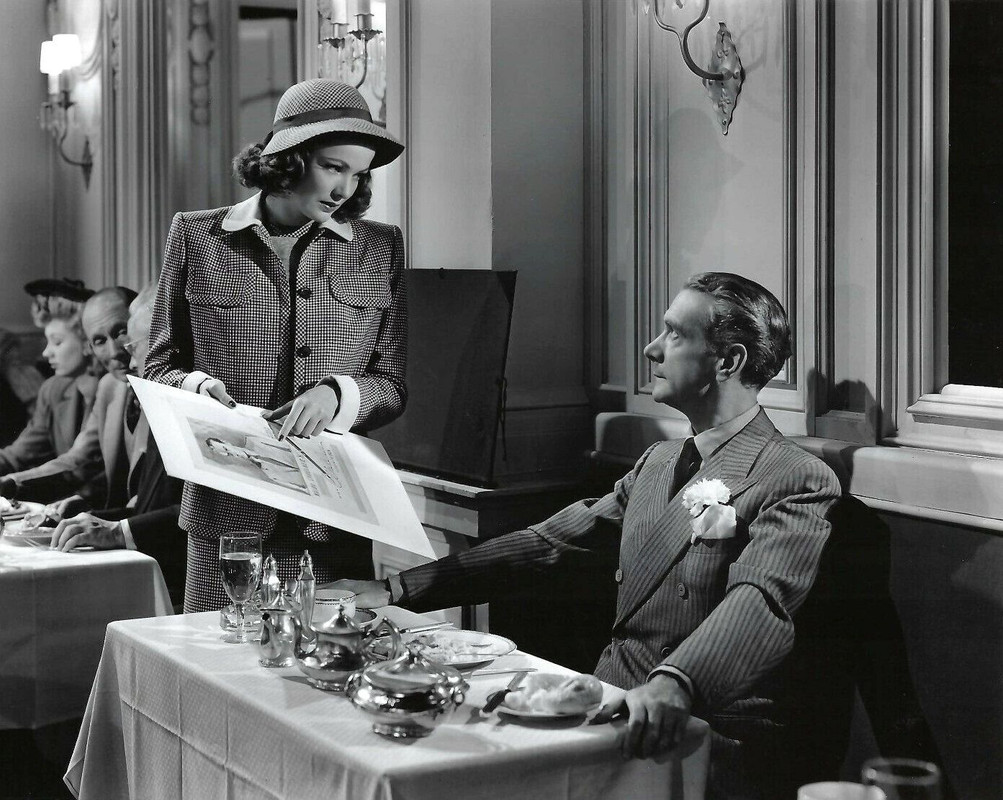
Laura Hunt (Gene Tierney) interrupts arsine newspaper columnist Waldo Lydecker (a delicious Clifton Webb) with her designs during his lunch. DPs: Joseph LaShelle & Lucien Ballard.
“I don't use a pen. I write with a goose quill dipped in venom.”
– Waldo Lydecker
view
Nostalghia [Nostalgia] (Andrei Tarkovsky, 1983)
Dec
10
Worldwide Candle Lighting Day
Hands shield something on stone steps. In the next shot, with the hands withdrawn, we see a small, lit candle. DP: Giuseppe Lanci.
“Feelings unspoken are unforgettable.”
– Andrei Gorchakov