view
The Year of the Sex Olympics (Michael Elliott, 1968)
Sep
7
ESPN – 1979
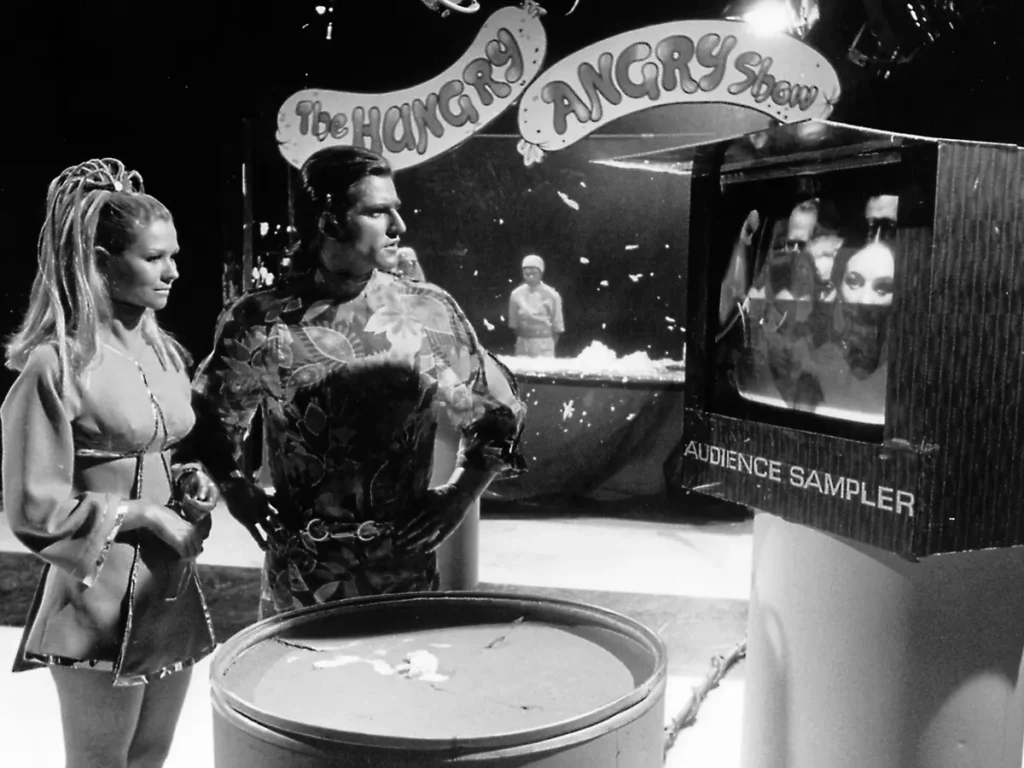
The people of a suspiciously 60s looking future critically watch the audience of a reality TV show called The Hungry Angry Show.
Sports watching on TV for ESPN's debut.
“Sex is not to do. Sex is to watch.”
– Nat Mender
All that's on TV is pornography and violence. Welcome to the Year of the Sex Olympics.
view
Bed Peace [John and Yoko: The Bed-In] (John Lennon + Yoko Ono, 1969)
Aug
27
white
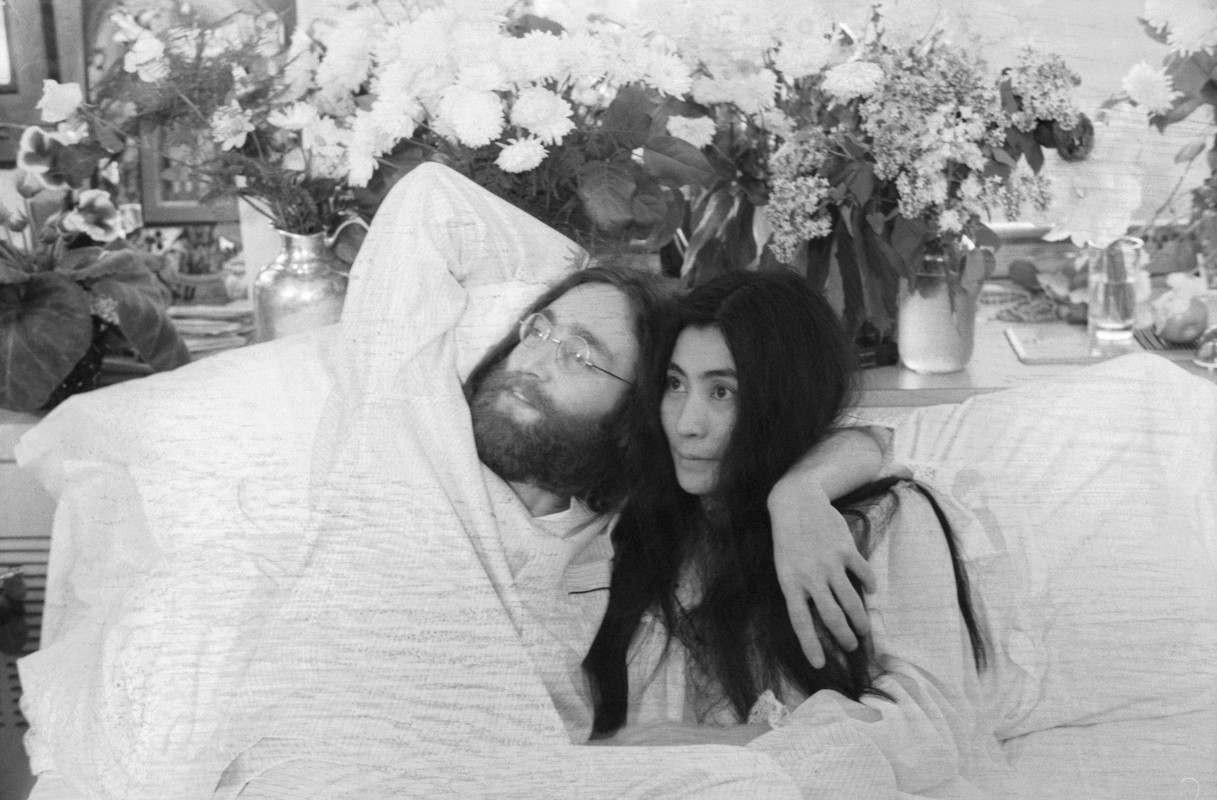
John and Yoko in their bed, dressed in all-white, framed by flowers. DP: Nicholas D. Knowland.
White, in food or fashion*
“Remember love, remember love
Love is what it takes to dream”
– Yoko Ono, Remember Love (1969)
While the press expected the newlyweds' “bed-in” to be a scandalous nude affair, the two lovers showed up in all-white – like angels, as John put it. Surrounded by journalists and friends, John and Yoko imaged peace.
view
Guide [The Guide] (Vijay Anand, 1965)
Aug
20
fasting
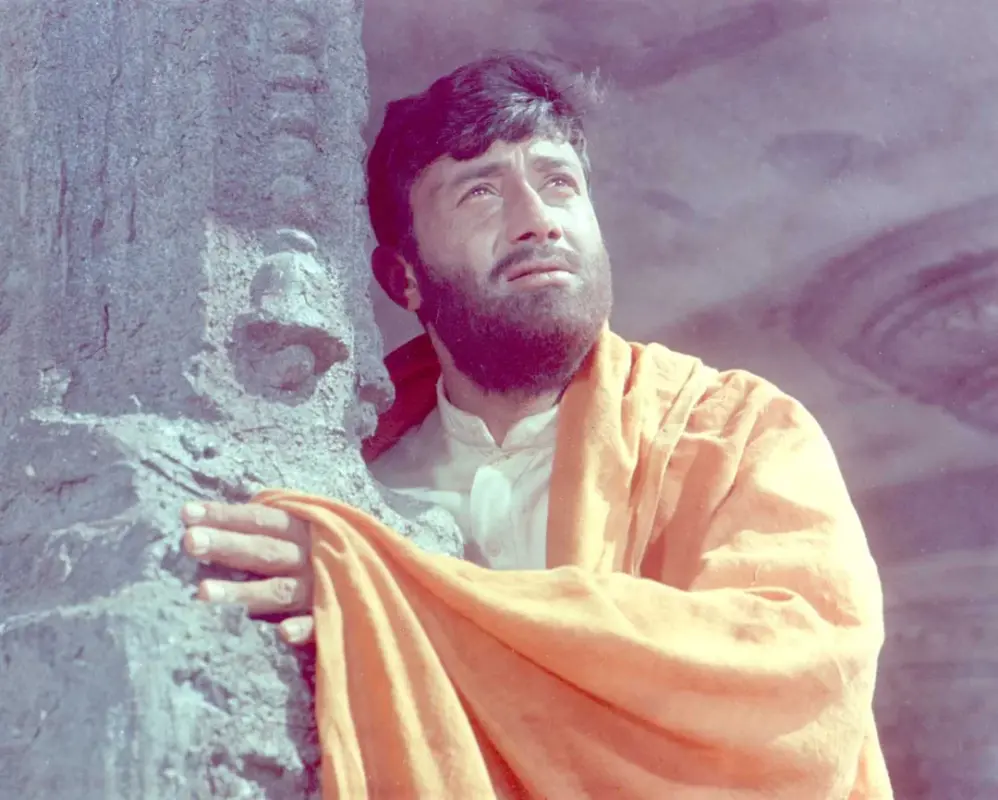
A scruffy looking Raju (Dev Anand) wearing the orange shawl of a holy man. DP: Fali Mistry.
Ramadan [on the ninth month of the Islamic calendar, not mid-August]: someone atones or fasts*
“These people have faith in me, and I have faith in their faith.”
– Swami Ji
view
Le Horla [The Horla] (Jean-Daniel Pollet, 1966)
Aug
19
violet
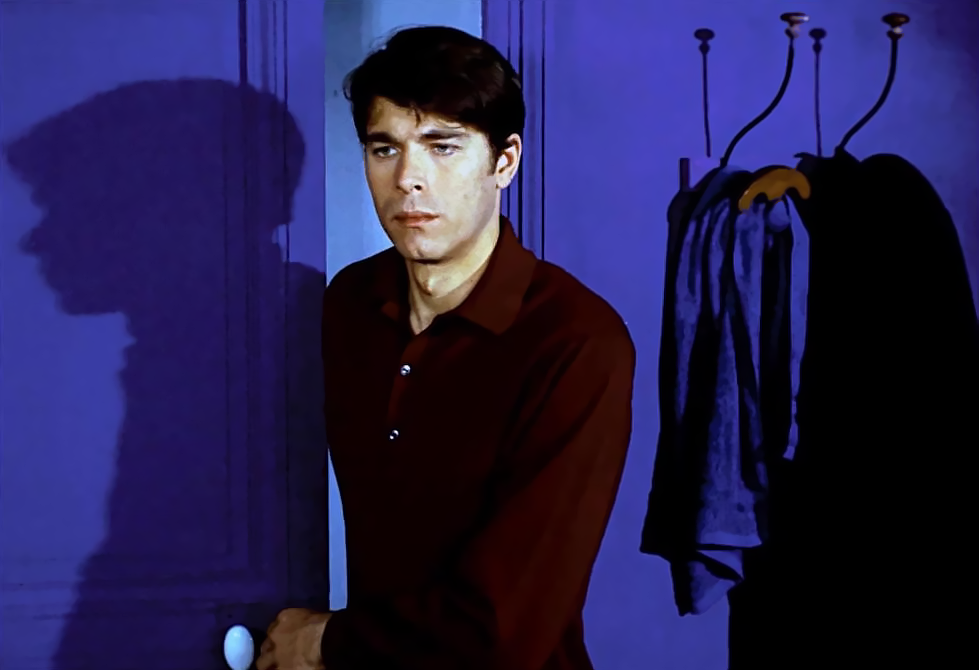
The narrator enters a violet-blue room via a lavender-purple corridor (via). DP: Jean-Jacques Rochut.
Violet: a building or structure *
“Is it the form of the clouds, or the tints of the sky, or the colours of the surrounding objects which are so changeable, which have troubled my thoughts as they passed before my eyes? Who can tell?”
– Guy de Maupassant, Le Horla, 1887 (via)
Objects and rooms have distinct colours ranging from the deepest blues and violets to a pale lavender, a muted silver and shocks of yellow. The usage of colour in Le Horla is striking throughout and reminds me of how Van Gogh's paintings became increasingly colourful as his madness enveloped him.
view
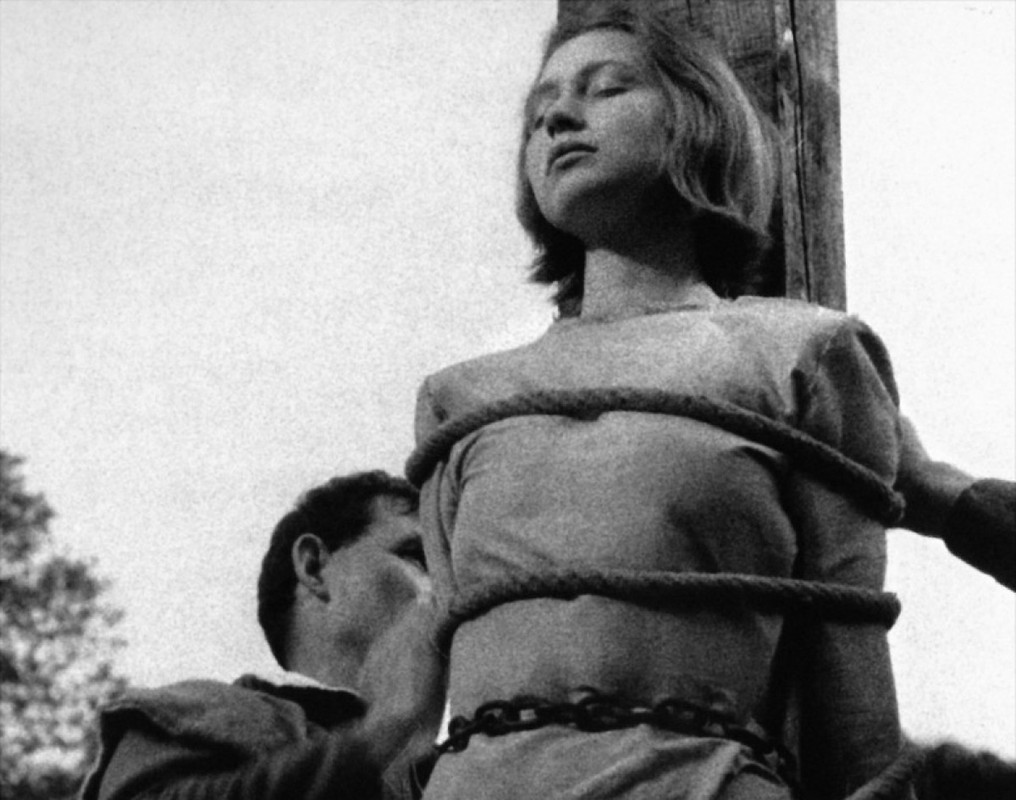
Procès de Jeanne d'Arc [The Trial of Joan of Arc] (Robert Bresson, 1962)
Aug
17
forgiveness
Jeanne (Florence Delay) bound to the stake. DP: Léonce-Henri Burel.
Holi: someone is forgiven (forgiveness being an important aspect of Holi)*
“Pray for me. I forgive the evil done me.”
– Jeanne d'Arc
Jeanne trusts her delusions to forgive the people who brought her to justice.
view
La carrière de Suzanne [Suzanne's Career] (Éric Rohmer, 1963)
Aug
13
thé
A woman reaches for a silver teapot. We only see her hand. DP: Daniel Lacambre.
“I know. I know you. I know you very well.”
– Suzanne
view
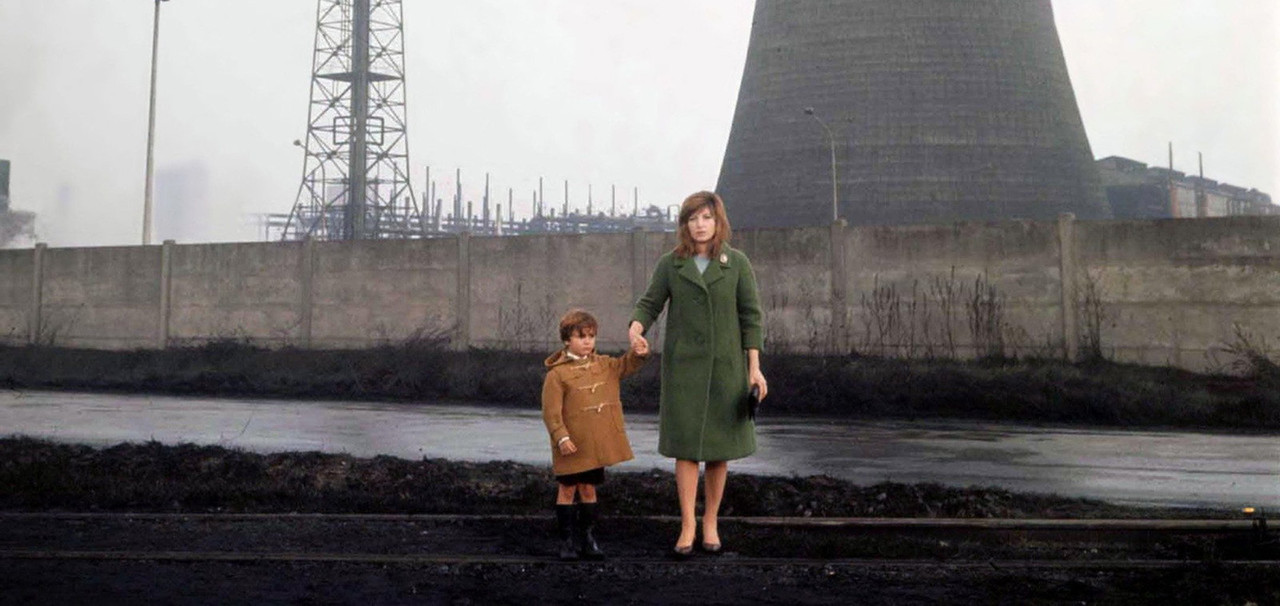
Il deserto rosso [Red Desert] (Michelangelo Antonioni, 1964)
Aug
12
green
Valerio (Valerio Bartoleschi) and his mother Giuliana (Monica Vitti) in an arid industrial landscape. Giuliana wears a brilliant green coat, its shade between pea and moss, depending on the drabness of her surroundings. DP: Carlo Di Palma.
Green, in food or fashion*
“She'd discovered a small beach far from town, with crystal-clear water and pink sand. She loved that spot. The colors of nature were so beautiful, and there was no noise. She'd leave only when the sun did too.”
– Giuliana
Antonioni's first film in colour beautifully utilises Vitti's brilliance – of her auburn hair, her porcelain teint, her vivid costumes (by Paola Carloni) – against the drab landscape.
view
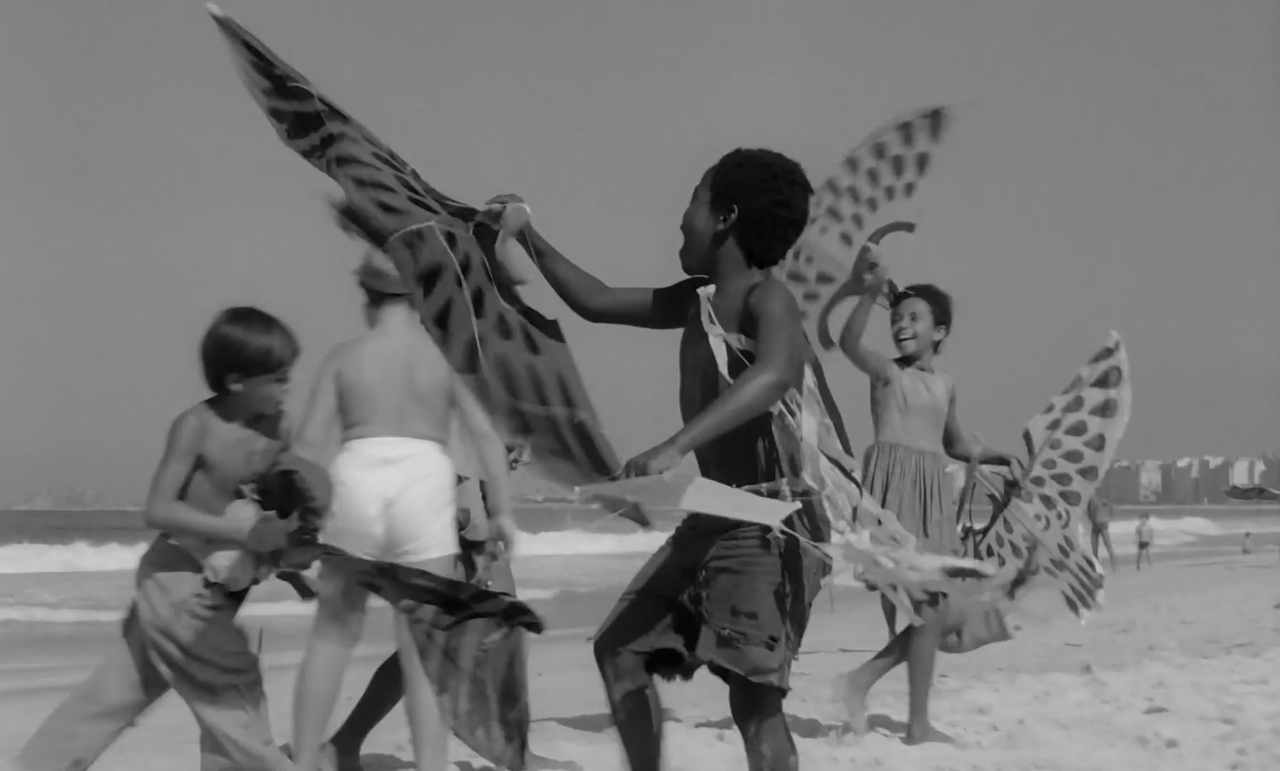
Mitt hem är Copacabana [My Home Is Copacabana] (Arne Sucksdorff, 1965)
Aug
2
The favela children on the beach, playing with kites and mingling with the rich kids. DP: Arne Sucksdorff.
Favela kids steal kites and sell them on in this Copacabana-set Nordic drama.
view
Paparazzi (Jacques Rozier, 1963/1964)
Jul
29
A character has a camera or takes photos*
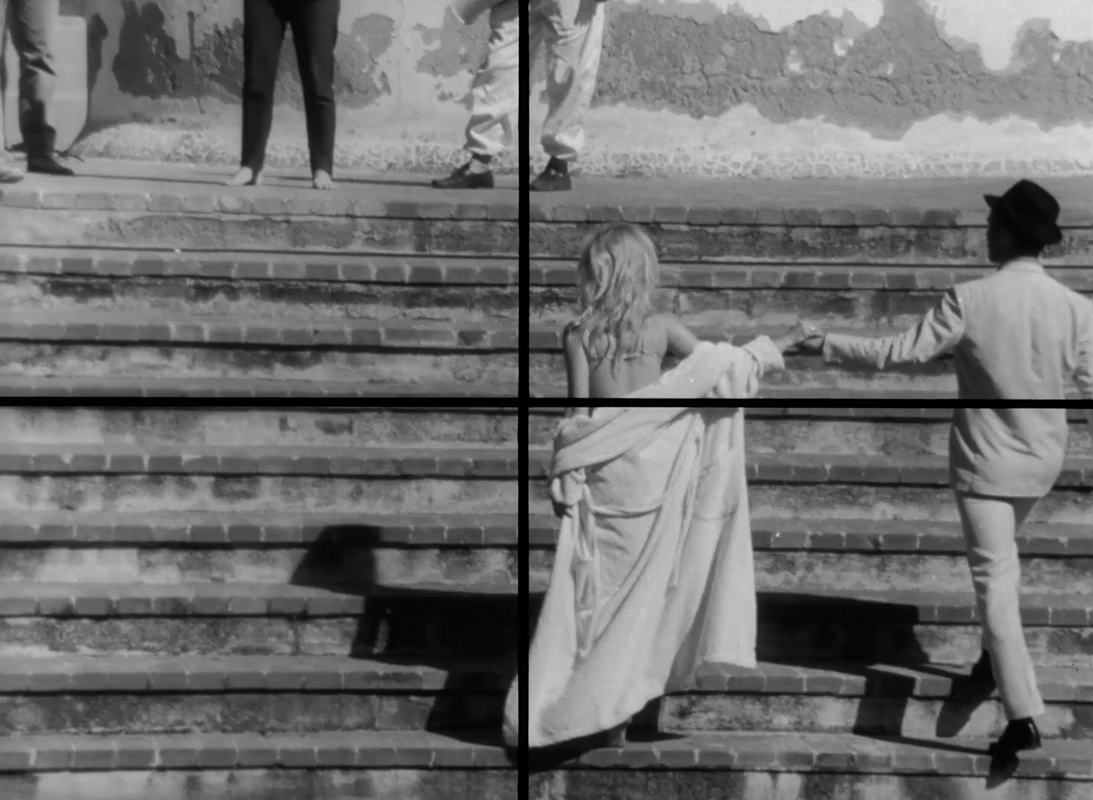
It buzzes on the set of Le mépris. These mosquitos, the Italians say paparazzi, swarm La Bardot, make it merely impossible for anyone – themselves included – to do their job. But Bardot knows them, too well, and gives them what they want, when she wants it.
view
La boulangère de Monceau [The Bakery Girl of Monceau] (Éric Rohmer, 1963)
Jul
28
un gâteau
A young woman in an apron grabs a French cookie. DPs: Bruno Barbey & Jean-Michel Meurice.
.png)
.png)