view
KIPHO [Du musst zur KIPHO] (Julius Pinschewer, 1925)
Sep
25
1925
A very modern dressed woman with a small film camera. Superimposed but suggested she's filming it, a large teddybear – a bear is #Berlin's official mascot – to remind viewers that the Kino und Photoausstellung [“Film and Photo Fair”) takes place in the German capital. DP: Guido Seeber.
view
…und deine Liebe auch [And Your Love Too] (Frank Vogel, 1962)
Aug
13
1961
Eva (Kati Székely). Someone offscreen lits her cigarette. DP: Günter Ost.
Three people must decide what to do on August 13, 1961, the day the Berlin Wall goes up.
view
München-Berlin Wanderung [Walking from Munich to Berlin] (Oskar Fischinger, 1927)
Nov
20
A bunch of Buben take a moment to pose between troublemaking. DP: Oskar Fischinger.
A journey or road trip*
* the Bales 2025 Film Challenge for November is, again, not date-based, but follows a sloppy schmaltzy all-American Thanksgiving-y narrative. Trying to make it work my way.
view
Taxi zum Klo (Frank Ripploh, 1980)
Sep
2
Christa McAuliffe 1948 – 1986
Frank (Frank Ripploh) teaching kids about the human body on an anatomy dummy. DP: Horst Schier.
A teacher for what would have been Christa McAuliffe's birthday.
“Ich mag Männer, bin 30 Jahre alt, von Beruf Lehrer.”
– Frank Ripploh
Frank Ripploh is a sexual ethics and biology teacher by day, and hedonistic gay man and aspiring pornographer by night. When Frank Ripploh, the man, publicly came out in 1978 in the tabloid Stern, he lost his teaching job and did become that filmmaker. Taxi zum Klo – litt. taxi to the john/loo – is his story. A frank pre-AIDS pre-Internet pre-victimhood depiction of male gay culture in West Germany. Maybe raw, possibly misogynist, definitely true to life.
view
Menschen am Sonntag [People on Sunday, a Film Without Actors] (Robert Siodmak, Edgar G. Ulmer, Rochus Gliese, Curt Siodmak + Fred Zinnemann, 1929)
Jul
31
Someone goes to work*
“Du, Wolf, nächsten Sonntag — ?”
– title card
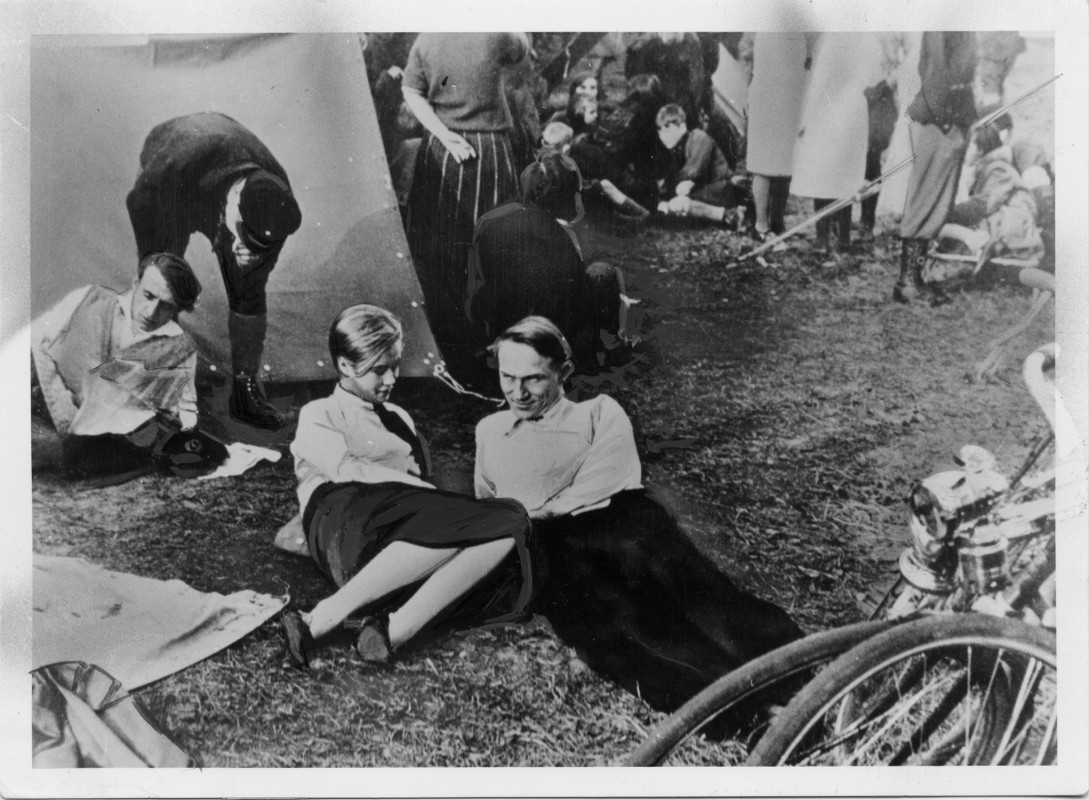
Berliners rest on Sunday, we still do. People lounge in the many parks, and on the shores of the city's many lakes. And then, it's Monday.
Released in 1929, according to Atlas Film, who restored this important Weimar classic long before Criterion put their grubby hands on it.
view
Bildnis einer Trinkerin – Aller jamais retour [Portrait of a Female Drunkard. Ticket of No Return] (Ulrike Ottinger, 1979)
Jul
15
Sie, German for “she/her”, hungover in her fabulous yellow nappa leather outfit (via). DP: Ulrike Ottinger.
Someone is hungover*
“Ein Psychogramm zweier ungewöhnlicher, aber auch extrem unterschiedlicher Frauen. Die eine, reich, exzentrisch, ihre Gefühle maskenhaft verbergend, trinkt sich bewusst zu Tode. Sie ist der Fall, der in der Statistik nicht erscheint, weil entweder zu Hause unter Valium gehalten oder unter Verschluss in einer Privatklinik. Die andere ist arm und trinkt sich unbewusst zu Tode. Sie erscheint in der normalen Statistik als Typ der haltlosen Trinkerin”
– U.O., via
view
Die endlose Nacht [The Endless Night] (Will Tremper, 1963)
Jul
6
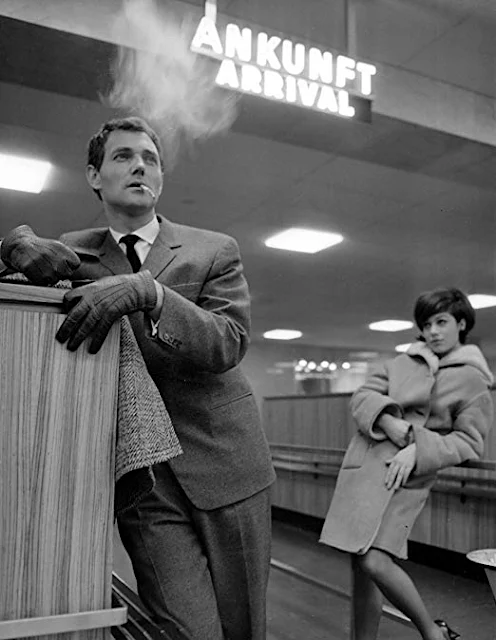
The bold and the beautiful stuck at Tempelhof. And yes, one could smoke there. DP: Hans Jura.
(People at) an airport*
It's foggy at Flughafen Berlin-Tempelhof, the Allies' airbridge to the West, and all the planes into and out of West Berlin are grounded. In any other metropolis this could mean taking a train, enjoy the city's nightlife or maybe just a bed for the night. In post-Wall bureaucracy-happy West Berlin, this means endless waits with strangers. And so, with nowhere to go, a Polish jazz band mingles with British spouses, a lonely South African farmer, a model and her beau.
view
Ich bin meine eigene Frau [I Am My Own Woman] (Rosa von Praunheim, 1992)
May
16
Honor Our LGBT Elders Day
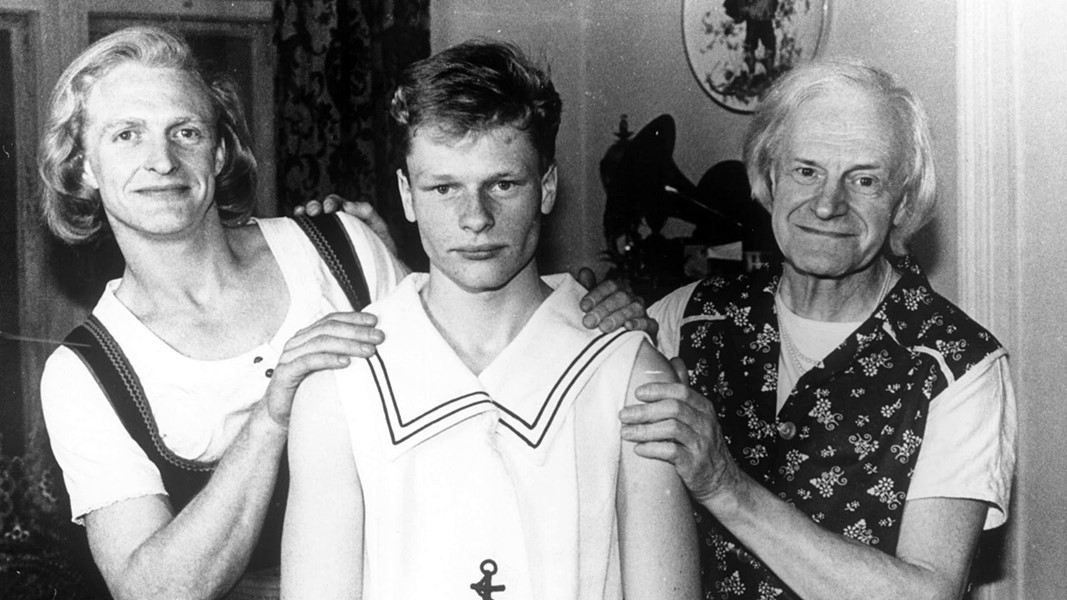
Ichgola Androgyn, Jens Taschner, and Charlotte von Mahlsdorf as Charlotte von Mahlsdorf. DP: Lorenz Haarmann.
“Ich bin meine eigene Frau” (“I am my own woman/wife”)
– Charlotte von Mahlsdorf, in response to her mother's request to settle and get married
view
Kuhle Wampe oder: Wem gehört die Welt? [Kuhle Wampe or Who Owns the World?] (Slatan Dudow, 1932)
Feb
28
unemployment
The unemployed at Kuhle Wampe, with Hertha Thiele's Anni front and center. People's states vary between still clinging on to better times up to destitute. DP: Günther Krampf.
“[Kuhle Wampe] gives witness to the true face of a struggling, suffering nation. Made by four thousand unemployed people, it never aims to be a work of art but simply aims to portray […] workers whose youthful energy is going to waste.”
– Marcel Carné, via
view
Nasser Asphalt [Wet Asphalt] (Frank Wisbar, 1958)
Dec
20
National Greg Day
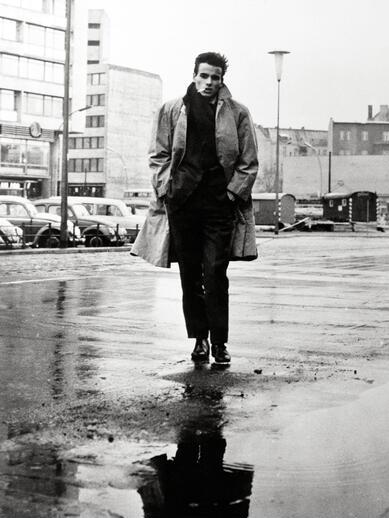
“Sie können sich einen anderen Beruf aussuchen. Sie sind ein toter Mann.”


.png)