documentary
view
“Anderntags hat man sofort getauft, weil jede Mutter lieber ein «Gotteskindli» auf die Arme nahm.”
Wir Bergler in den Bergen sind eigentlich nicht schuld, daß wir da sind [We Who Dwell in the Mountains Cannot Be Blamed for Being There] (Fredi M. Murer, 1974)
Nov
17
.jpg)
A mountain man smokes his pipe, accompanied by a sow and a toddler in a wooden playpen. The Alps are all around them (via). DP: Iwan P. Schumacher.
A movie set in the woods or mountains*
– Gisler-Arnold Babette, midwife (via)
Murer describes the people from Switzerland's gorges in three movements, along the lines of a symphony
* the Bales 2025 Film Challenge for November is, again, not date-based, but follows a sloppy schmaltzy all-American Thanksgiving-y narrative. Trying to make it work my way.
view
we are not what we seem
The White Rose [The White Rose: Jay DeFeo’s Painting Removed by Angelic Hosts] (Bruce Conner, 1967)
Nov
9
1965

Workmen during the dismantling of The Rose in Jay DeFeo's studio on Fillmore Street, San Francisco on November 9, 1965. Screenshot taken from a clip made available by the Paula Cooper Gallery on Vimeo. DP: Bruce Conner..
– words inscribed in the bottom of DeFeo's painter's stool
view
“Let's face it; the future as a Rolling Stone is very uncertain.”
Charlie Is My Darling [Rolling With The Stones] (Peter Whitehead, 1966)
Sep
28
Ben E. King – 1938
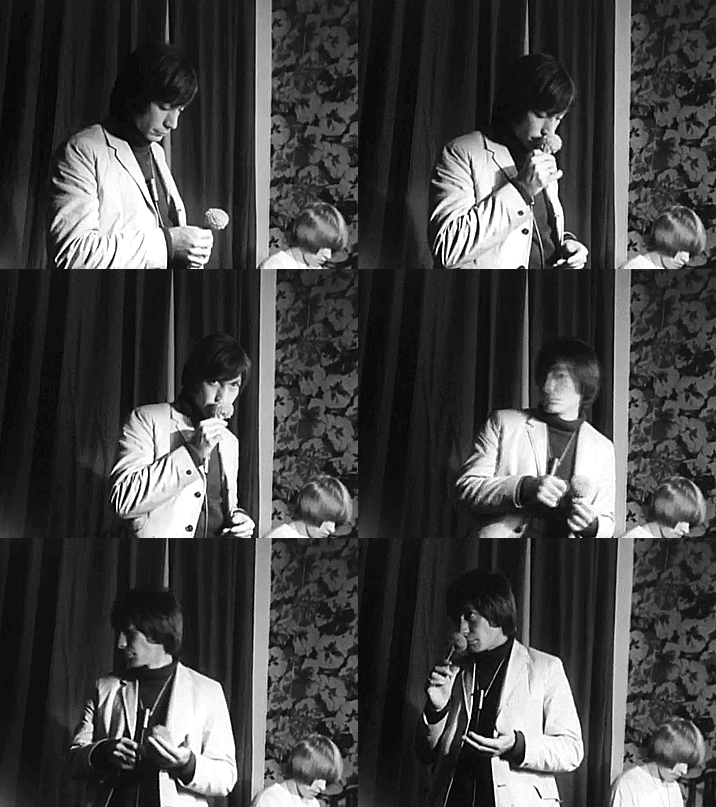
Charlie sheepishly smells a carnation (via), Brian can be seen in the background. DP: Peter Whitehead.
Soul or rhythm and blues for Ben E. King's birthday.
– Brian Jones
While then-manager Oldham's dream of an all-Stones A Clockwork Orange never manifested, there was an attempt to counter The Beatles' A Hard Day's Night (1964). That too, failed. Instead, Charlie became a cinéma vérité roadmovie of the Stones' touring Ireland in 1965. Whitehead's camera is there for Charlie.
view
Snow (Geoffrey Jones, 1963)
Sep
27
Stockton and Darlington Railway – 1825
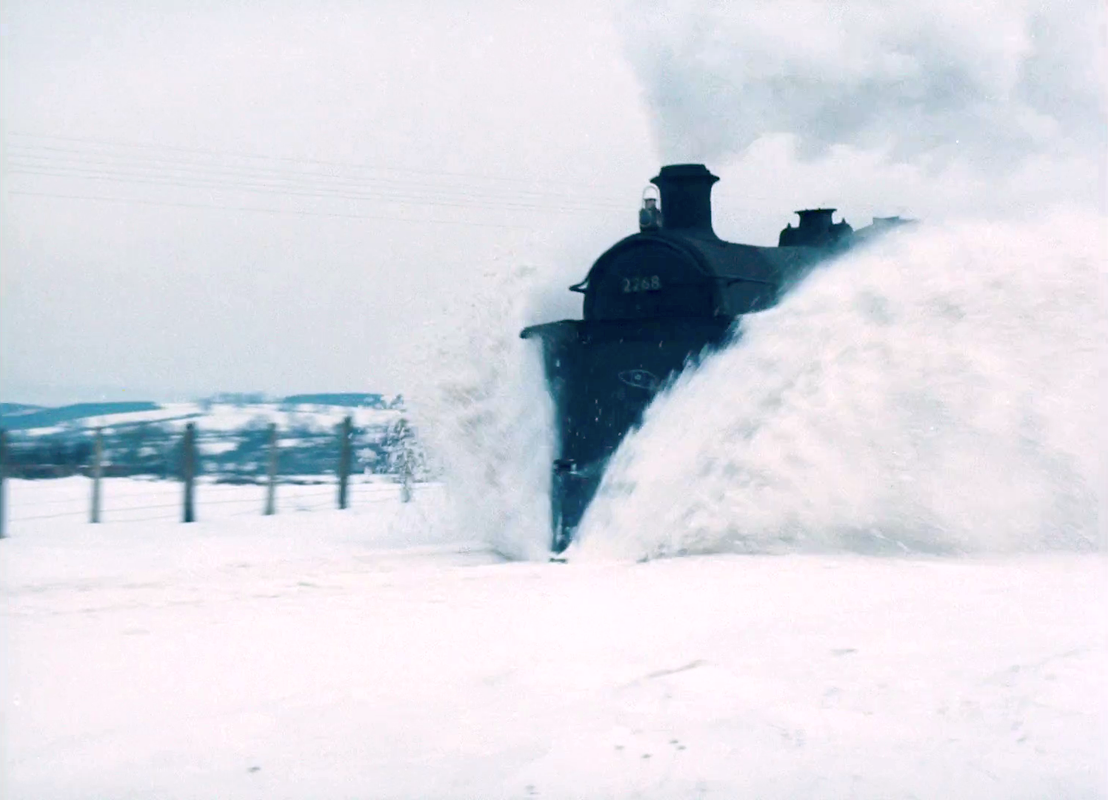
A steam locomotive ploughing through the snow using her cowcatcher. DP: Wolfgang Suschitzky.
A steam locomotive to celebrate the opening of the Stockton and Darlington Railway in 1825, the world's first public railway to use steam locomotives.
The Big Freeze of 1963 was one of the coldest winters recorded in British history. It was during this winter that filmmaker Geoffrey Jones was commissioned by British Transport Films to make a documentary about the British Railways Board. With the freeze setting in, Jones ran the footage in preparation of post-production, and was struck by the blackness of the locomotives against the white of the many feet of snow. This smaller experimental project became Snow. Accompanied by a stretched out version of the jazz tune Teen Beat, and BBC Radiophonic Workshop's own Daphne Oram, Snow is an improbable hypnotic trip in an impossible landscape.
view
“Those flowers, take them away;
they’re only funeral decorations.
This is The Fall and this is a drudge nation.
Your decadent sins will wreak discipline.
You puritan, you shook me.
I wash every day.”
Hail the New Puritan (Charles Atlas, 1987)
Sep
22
Fall
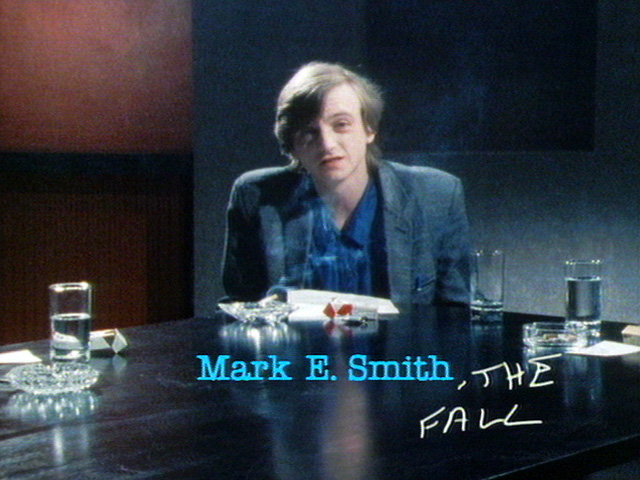
As it says on the tin, it's Mark E. Smith of The Fall (via). DP: John Simmons.
The Northern Hemisphere welcomes the autumn equinox
– The Fall, New Puritan (1979), via
A fictional day in the life of choreographer Michael Clark, company, and friends in preparation of the dance piece New Puritans.
view
“Remember love, remember love
Love is what it takes to dream”
Bed Peace [John and Yoko: The Bed-In] (John Lennon + Yoko Ono, 1969)
Aug
27
white
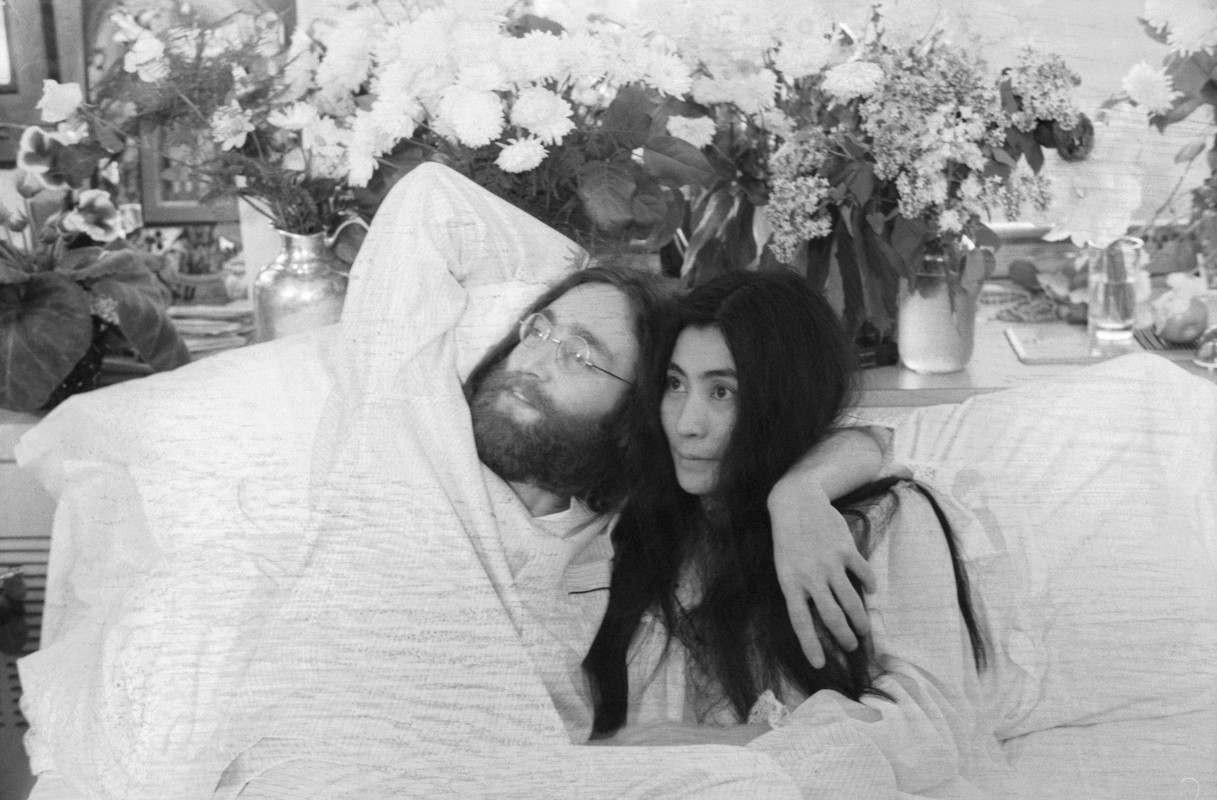
John and Yoko in their bed, dressed in all-white, framed by flowers. DP: Nicholas D. Knowland.
White, in food or fashion*
– Yoko Ono, Remember Love (1969)
While the press expected the newlyweds' “bed-in” to be a scandalous nude affair, the two lovers showed up in all-white – like angels, as John put it. Surrounded by journalists and friends, John and Yoko imaged peace.
* the Bales 2025 Film Challenge for August is not date-related but lists, for the most part, the colours of the rainbow.
view
آداب بهاری [Adab-e Bahari / Rites of Spring] (Ali Asghar Agahbanaei, 1982)
Aug
11
spring
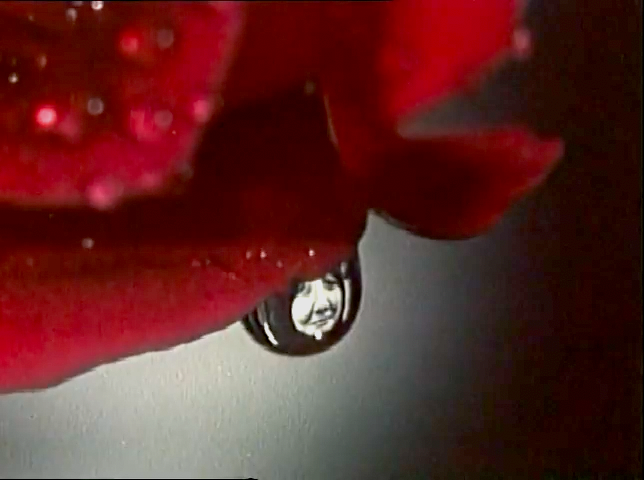
In a dewdrop hanging from a rose, the face of a smiling woman appears.
Dita e Verës, a pagan spring celebration from Albania, celebrated in March: a spring scene*
The restless anticipation of spring. Iran as it was before and after the 1979 toppling of the Shah. While the snow melts away, the Revolution takes place, and fresh buds appear on the rose bushes. A poem.
* the Bales 2025 Film Challenge for August is not date-related.
view
“That's all the people we've got now. We'll get there somehow.”
Хлебный день [Khlebnyy den / Bread Day] (Sergei Dvortsevoy, 1998)
Aug
10
green
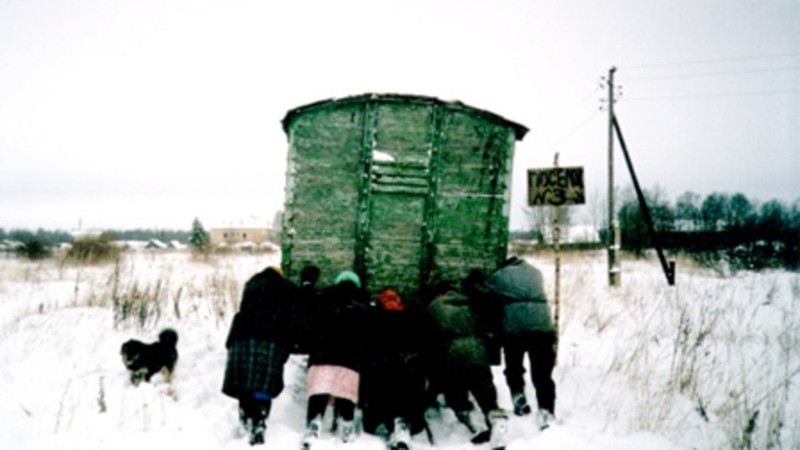
The old folks pushing the cart past the hamlet's name sign. With thick brush strokes, almost too much for the small rectangle, it reads TOWNSHIP NR. 3. DP: Alisher Khamidkhodzhaev.
Green: a building or structure*
Where the old folks' hands push the cart, the green's worn off. That doesn't change anything about its importance. A lifeline, bread, is delivered once a week and with delivered, it means that the carriage is left on the rails, several kilometers away from Zhikharevo, or Township Nr. 3, which in its turn is about 80 km away from Saint Petersburg. It takes the seniors about two hours to get the wagon to their hamlet. We get to witness ten minutes or so. It lasts a lifetime.
As of 2002, only three people lived in Zhikharevo. I wonder how the wain comes home now.
* the Bales 2025 Film Challenge for August is not date-related but lists, for the most part, the colours of the rainbow.