“There was a silence different from all other silences, an ashen light, and then darkness – total stillness. I thought that during an eclipse even our feelings stop. Out of this came part of the idea for L'eclisse.”L'eclisse [The Eclipse] (Michelangelo Antonioni, 1962)
Mar
20
natural phenomena

Vitti's blond hair shifts in front of Delon's dark coupe, quietly mimicking the eclipse. DP: Gianni Di Venanzo.
A natural phenomenon for this year's March equinox, three supermoons, and the March 25 solar eclipse.
– Michelangelo Antonioni talking about experiencing a solar eclipse, possibly the total eclipse of 1961 which showed up in the film Barabbas (1961).
During several moments in the film, the main characters' mannerisms foreshadow the looming solar eclipse.
romance
Un soir, un train [One Night, a Train] (André Delvaux, 1968)
Mar
18
André Delvaux
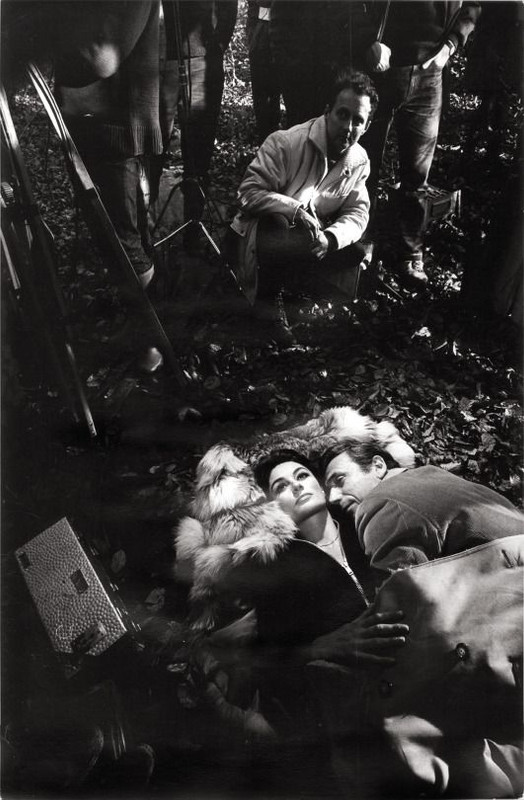
Anouk Aimée and Yves Montand in character on a leaf-strewn floor, his head resting on her chest, with director André Delvaux and others surrounding them. DP: Ghislain Cloquet.
A favourite film, director, or producer for Luc Besson's birthday (1959).
Having only seen three of Delvaux's films, I feel I can safely say his work is hypnotic, but not in the common sense. We see a world through both Delvaux's and his protagonists eyes, and experience their duality as one. This displacement is a recurring theme in Delvaux's work, the work of a man raised in one world and speaking the language of another, both worlds bearing the same name, Belgium.
This slow tear is also the theme is his best known film, De man die zijn haar kort liet knippen [The Man Who Had His Hair Cut Short] (1965), in which a schoolteacher loses himself after a pupil graduates. When we think we are firmly seated in Delvaux's universe, we fall back, like that moment just before sleep sets in. And again, in his tragically under-seen Belle from 1973. Now it's a poet who finds a woman living in a ramshackle hut in Belgium's peatland, her language an unknown. With only one main speaker, the duality forms in the poet's words, in his attempts to give her root.
And so do we, the viewers. We hang on to that root, Delvaux's, only to sink back into our own loss of words.
“He remembers those vanished years. As though looking through a dusty window pane, the past is something he could see, but not touch. And everything he sees is blurred and indistinct.”花樣年華 [Fa yeung nin wah / In the Mood for Love] (Wong Kar-Wai, 2000)
Mar
17
Irish-American Heritage Month
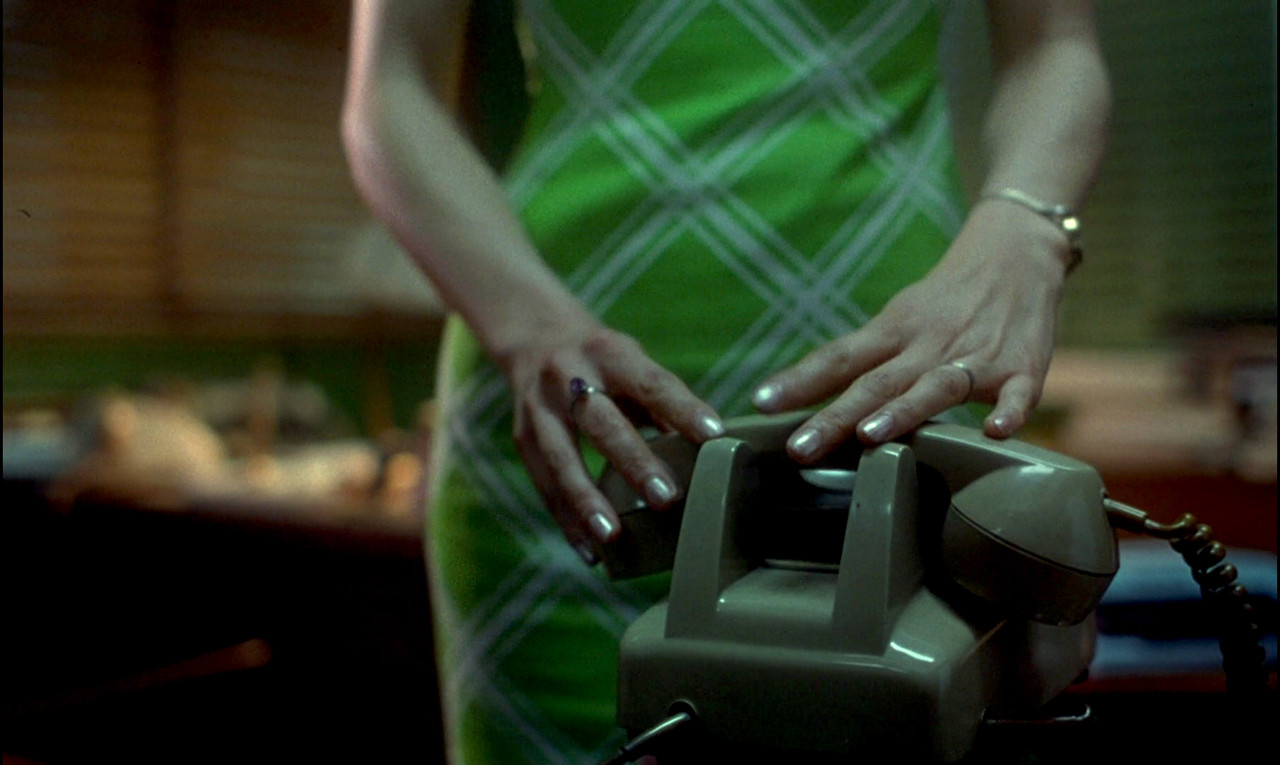
A close-up of a pea-green phone with Mrs. Chan's (Maggie Cheung) hands resting on the receiver. Her dress is a bright green, with an abstract graphic in white. DPs: Christopher Doyle, Pun Leung Kwan & Ping Bin Lee.
Green for Irish-American Heritage Month (USA)
– caption
“I'm sharing my husband with a cat. This is humiliating!”猫と庄造と二人のをんな [Neko to Shōzō to futari no onna / A Cat, Shozo, and Two Women] (Shirō Toyoda, 1956)
Feb
20
Love Your Pet Day
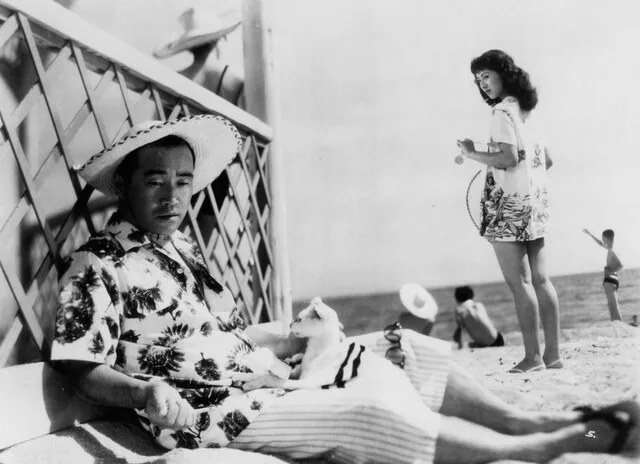
Shōzō (Hisaya Morishige) on the beach with his beloved cat Lily. DP: Mitsuo Miura.
Someone owns a pet on Love Your Pet Day (UK)
– Nakajima
Shōzō is torn between his ex-wife and his current spouse, but really just wants to spend time with Lily, his cat.
“Real diamonds! They must be worth their weight in gold!”Some Like It Hot (Billy Wilder, 1959)
Feb
14
St. Valentine's Day

Sugar, Josephine, Daphne, and Sweet Sue and Her Society Syncopators rehearse Runnin’ Wild on the sleeper train to sunny Florida. DP: Charles Lang.
A movie about romance, of the Mafia, for St. Valentine's Day.
Musicians Joe (Tony Curtis) and Jerry (Jack Lemmon) witness a killing by the Mob at the St. Valentine's Dance where they were hired to perform. In an attempt to escape the Chicagoan gangsters, they go overcover as Josephine and Daphne (“Well, I never did like the name Geraldine.”) in an all-gall jazz band, and fall head over heels for ukelele player Sugar Kane (Marilyn Monroe).
– Sugar Kane Kowalczyk
The opening shootout was directly inspired by the February 14 1929 Saint Valentine's Day Massacre (graphic), and shares an actor from one of its most famous adaptations, Scarface (1932); George Raft as the wonderfully named Spats Colombo.
“I used to spend afternoons reading in bed. Tommaso would call and find me there. He could have kissed me. I wouldn't have resisted, out of boredom. But he was satisfied to watch me as I read. All those purposeless books.”La notte [The Night] (Michelangelo Antonioni, 1961)
Feb
7
Falò delle vanità – 1497
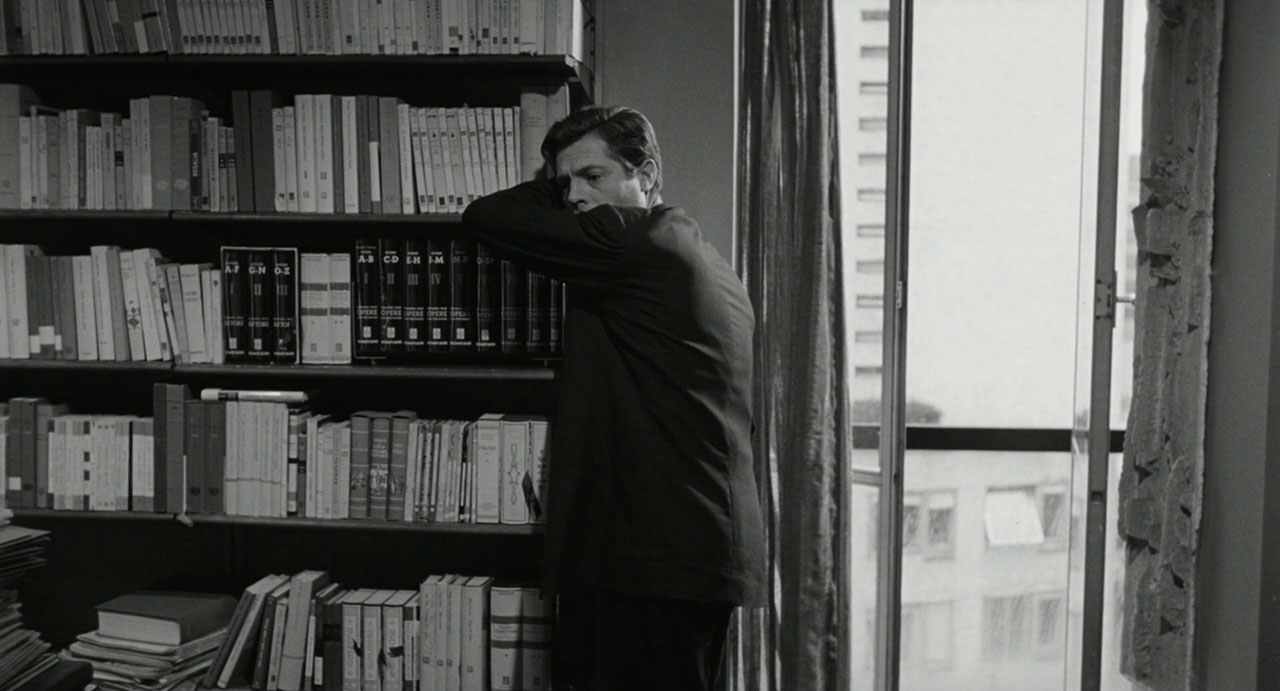
Author Giovanni Pontano (Marcello Mastroianni) pondering next to a full bookcase. DP: Gianni Di Venanzo.
Books, or art, in commemoration of Savonarola's 1497 Florentine falò delle vanità (bonfire of the vanities).
– Lidia
A lavish #CocktailParty in celebration of the launch of a novel is bookended by tragedy, in the loss of a befriended writer and the unraveling of another writer and his wife's marriage.
Тіні забутих предків [Shadows of Forgotten Ancestors] (Sergei Parajanov, 1965)
Feb
6
St. Dorothea of Caesarea
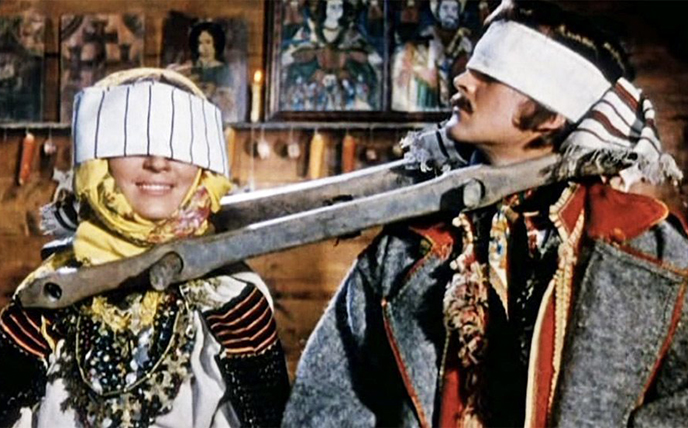
The childhood lovers to be newlyweds. During the wedding ceremony, the bride suddenly breaks out in smile. DPs: Yuri Ilyenko & Viktor Bestayev.
A wedding on the day of Dorothea of Caesarea, patron saint of horticulture, brewers, brides, florists, gardeners, midwives, newlyweds, and love.
“I don't want your husband. I want a parachute!”Madam Satan (Cecil B. DeMille, 1930)
Feb
4
Charles Lindbergh's born
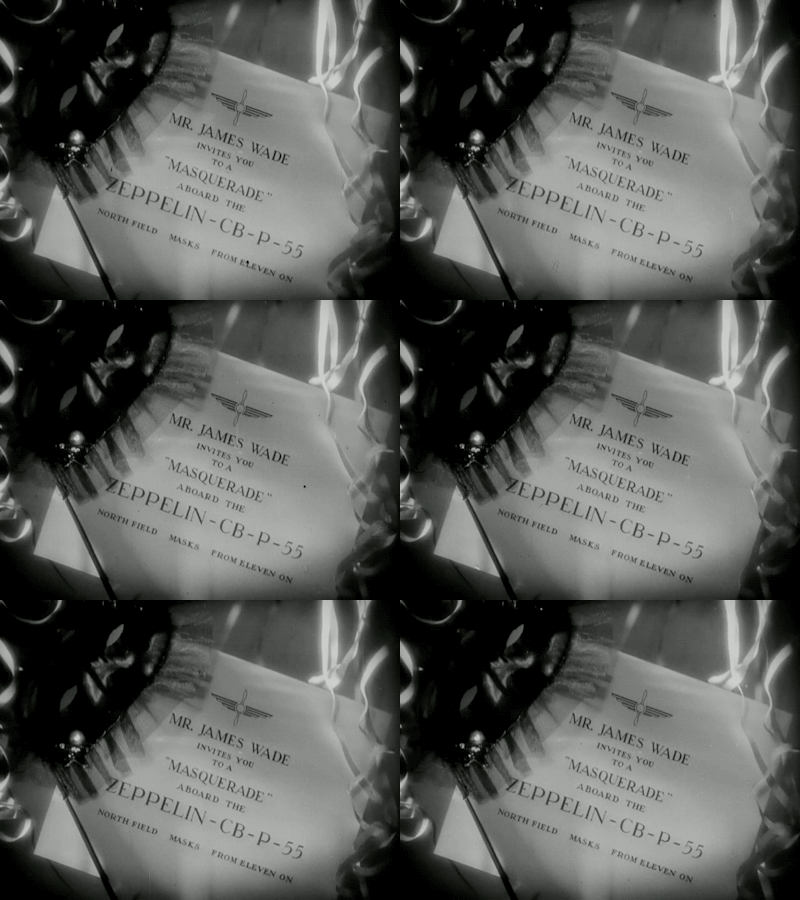
You're cordially invited to Mr. James Wade's “Masquerade”, aboard the Zeppelin – CB – P – 55. Do wear a mask. DP: Harold Rosson.
A movie about aviation for that eugenicist Charles Lindbergh's birthday.
– Trixie
“Feast your eyes. Glut your soul on my accursed ugliness.”The Phantom of the Opera (Rupert Julian, Lon Chaney, Ernst Laemmle + Edward Sedgwick, 1925)
Jan
28
Gaslights

An enormous gaslit chandelier dangles over the Paris Opéra audience's heads. DPs: Milton Bridenbecker, Virgil Miller & Charles Van Enger.
Gaslights for the first recorded public street lighting powered by gas, demonstrated in Pall Mall, London, on 28 January, 1807. The introduction of gaslight had a major influence on theatre and opera, including the new Paris Opera (1875), which was lit by no less than 960 gas jets. Thanks to the brilliant light, stage actors could tone down their mannerisms and stage makeup.
– The Phantom
However, in the dark dungeons under the Opéra lives a pitiful creature, doomed to dwell in darkness. His makeup, provided by The Man of a Thousand Faces, Lon Chaney, was both grotesque and eerily real .
– Now, see! You kill-a de monk!
– Pay him for that baboon… or I'll run you in!The Cameraman (Edward Sedgwick + Buster Keaton, 1928)
Jan
14
National Dress Up Your Pet Day
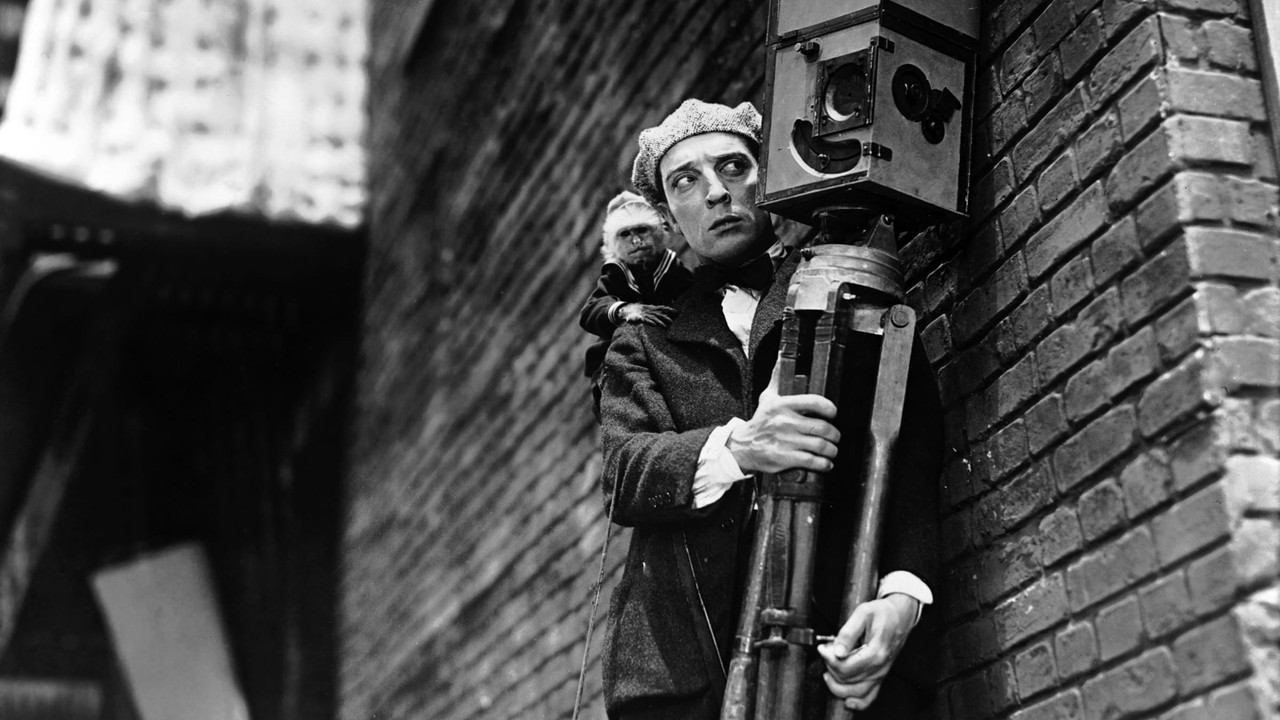
Buster (Buster Keaton) with Josephine the monkey on his shoulder. DPs: Reggie Lanning & Elgin Lessley.
A funnily dressed pet for National Dress Up Your Pet Day (USA) (please don't!).
After cameraman Buster accidentally knocks over a monkey, he has no choice but to take the sailor-suited simian along on his movie shoots.