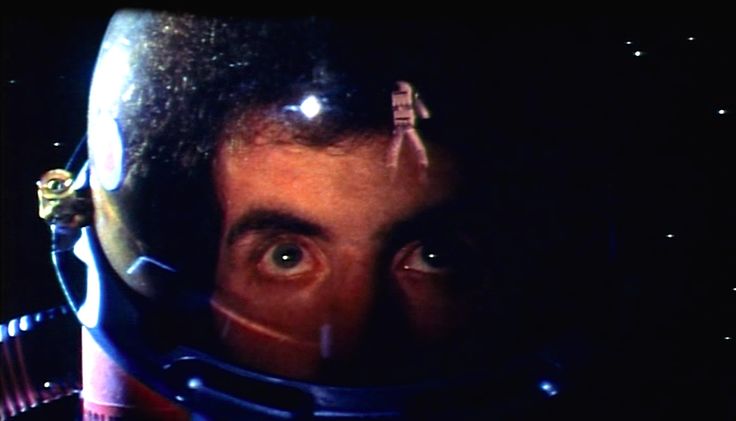
错位 [Cuo wei / Dislocation] (Huang Jianxin, 1986)
Jun
17
啤酒

The engineer (Zifeng Liu) drinking many many beers with his secretary (Hong Mu). DP: Xinsheng Wang.
@settima@zirk.us
错位 [Cuo wei / Dislocation] (Huang Jianxin, 1986)
Jun
17
啤酒

The engineer (Zifeng Liu) drinking many many beers with his secretary (Hong Mu). DP: Xinsheng Wang.
“No, Wagner! Stay in Hell where you belong!”Lisztomania (Ken Russell, 1975)
Jun
16
National Richard Day

The cover of November 1975's films and filming (NSFW). Richard Wagner (Paul Nicholas) appears as a vampire in a German sailor uniform to Franz Liszt (Roger Daltrey). DP: Peter Suschitzky.
– Franz Liszt
Könnyű testi sértés [Tight Quarters] (György Szomjas, 1983)
Jun
15
freebie: Flatmates Day

In a claustrophobically framed shot, two men and a woman – Csaba (Károly Eperjes), Miklós (Péter Andorai) and Éva (Mariann Erdőss) respectively – share a small kitchen. DP: Ferenc Grunwalsky.
“As I want it, so it will be!”The Man Who Could Work Miracles (Lothar Mendes + Alexander Korda, 1936)
Jun
15
fruit

George McWhirter Fotheringay (Roland Young) waking up to an abundance of tropical foods in a crystal bowl, plus multiple expensive watches. His ill-fitting pajamas miss a button. DP: Harold Rosson.
– George McWhirter Fotheringay
“I want to be good, but no one believes me. Is it any wonder I cry?”Körkarlen [The Phantom Carriage] (Victor Sjöström, 1921)
Jun
13
International Axe Throwing Day

David Holm (Victor Sjöström) attempts to break through a wooden door with the butt of an axe. This scene was the inspiration for the infamous door scene in Kubrick's The Shining (1980). DP: Julius Jaenzon.
– David Holm
“This isn’t playtime, kids, it’s work.” “Any star can be devoured by human adoration, sparkle by sparkle.”Kid 'N' Hollywood [Kid in Hollywood] (Charles Lamont, 1933)
Jun
12
Child Labor Day

A movie set on a movie set in Kid 'N' Hollywood. Shirley Temple can be seen on her knees scrubbing the floor as the character Morelegs Sweettrick. Standing next to her with a bullhorn and adult spats is Arthur J. Maskery as the tyrannical movie director Frightwig von Stumblebum. As in all the Baby Burlesk shorts, the kids are only half-dressed with their diapers showing.
Despite Shirley Temple's clear statements of what was going on on set during her child actress days, her output remains wildly popular. Who cannot resist her precocious lines, her cute dimples and baby doll innocence? And tapdancing with ánd befriending a Negro, during the segregation years? Miss Shirley truly was wise beyond her tender age.
Shirley Temple was “discovered” at the age of three by then-casting director Charles Lamont and promptly shot to stardom is his satirical Baby Burlesks: short talkies starring toddlers in diapers (a burlesque being a short, humorous skit). The gag was that the kids behaved and spoke like adults, seemingly unaware of being #children.
– Charles Lamont, Baby Burlesk director
In the Baby Burlesk Kid 'N' Hollywood, Temple plays a Hollywood hopeful called Morelegs Sweettrick, who gets her break when the star doesn't feel like showing up (kids, right? no discipline).
While Kid 'N' Hollywood is relatively innocent, others in the series are much more sexualised (War Babies (1932) stars Temple as prostitute Charmaine) or plain racist (Kid 'in' Africa (1933) with Temple as Madame Cradlebait, bringing civilisation to Black kids portraying fearsome cannibals).
I'm not the one to take events from the past out of context and apply modern-day sensibilities to them, and with the advent of #ChildLabor laws for #Hollywood child actors, many of the horrors recalled by Temple and her peers are history. School is mandatory, long hours restricted, and using twins to split the workload is definitely not unheard of.
And then I watched teevee, and saw chubby, precocious blondes with dental plates to hide their missing baby teeth, wearing lipstick and baby-dolls, grinding and crooning with no backup in sight. And I remember Miss Temple say:
– Shirley Temple

Suspense (Phillips Smalley & LoisWeber, 1913)
Now he's in the…
Suspense is not only the title of this short silent thriller, but also the state of mind the viewer is put into as soon as the film opens. Using POV (point-of-view) shots and breaking the fourth wall, the imminent threat – a vagrant trespassing and creeping up to a lone woman and her newborn child – creeps up on us. We know we're safe, on the other side of the screen, but the Tramp (a particularly haunting Sam Kaufman) looks us right in the eye. He passes us on the stairs, but he's going around us so he must be, hopefully, aware of our presence.
Meanwhile, we also see something that only cinema and books can give: multiple happenings at once. The Wife (Lois Weber) calls her Husband (Val Paul) on the phone. Suddenly the screen splits into three: in the middle, the Husband on call, listening to his Wife on the right who's begging him to hurry home. On the left, the Tramp. Unlike us, he cannot see the conversation promising a happy end. But instead that bringing some relief to the viewer, he cuts the phone cable. While we see that happen, we have no way to tell the Husband to make haste, or the Wife that the Tramp's getting closer.
What's striking too is the omnipresence of modernity: the couple's home and Husband's office have telephones and therefore electricity, and the Husband speeds off in an automobile. The cinematography for the telephone and car chase scenes are filmed and edited with great knowledge of the technical possibilities of the medium; split-screen (only gathering popularity much later, see Pillow Talk (1959), and the usage of the Entfesselte Kamera [unchained camera], the latter a mid 1920s German invention.
A similar, triangular split-screen scene from Michael Gordon's Pillow Talk (1959) with (LtR) Eileen (Valerie Allen), Jan Morrow (Doris Day), and Brad Allen (Rock Hudson) on the party line. With Ms Day's character centred, we know that she's the one to identify with in this particular scene. DP: Arthur E. Arling.
With that, Suspense not only preceded Italian futurist cinema, but also the usage of suspense as a cinematic technique. Now go and watch, and remember
it's only a movie it's only a movie it's only a movie
#Bales2023FilmChallenge #PhillipsSmalley #LoisWeber #SamKaufman #USA #ShortFilm #SilentFilm #drama #suspense #crime #thriller #HomeInvasion #1910s ★★★★☆
– All I can offer is pancakes? Will they do? – They'll do just fine.Gycklarnas afton [Sawdust and Tinsel] (Ingmar Bergman, 1953)
Jun
11
pancakes

Ringmaster Albert Johansson (Åke Grönberg) with Anne (Harriet Andersson) – holding a pot – standing over him. DPs: Hilding Bladh & Sven Nykvist.
“Now, until the break of day,
Through this house each fairy stray…”A Midsummer Night's Dream (William Dieterle + Max Reinhardt, 1935)
Jun
10
Superman Week

Oberon (Victor Jory) – King of the Fairies – on his horse with Puck (Mickey Rooney) – a trickster sprite. While they ride of, Oberon's cape flows behind them through the trees, supported by the fae. A lot of the other-worldly fairy sparkle was accomplished by generous amounts of DuPont® cellophane and cinematographer Hal Mohr's contribution of trimming the trees with aluminium paint, cobwebs, and small metal particles. DP: Hal Mohr.
Capes, cloaks, and mantles are everywhere in Dieterle and Reinhardt's lavishly outfitted A Midsummer Night's Dream. The dreamlike #CostumeDesign by Max Rée and the uncredited Milo Anderson is as much as a personality as #Shakespeare's characters are.
– Oberon, Act 5, Scene 1
Any reports of Kenneth Anger's presence as the Changeling Prince are greatly exaggerated.
“You film. Film helicopter.” Général Idi Amin Dada: Autoportrait [General Idi Amin Dada: A Self Portrait / No One Can Run Faster Than a Rifle Bullet] (Barbet Schroeder, 1974)
Jun
9
National Heroes Day Of Uganda

Schroeder in tuxedo interviewing General Idi Amin Dada Oumee. Even in the context of the scene, Schroeder just came from a gala event, the tuxedo is a statement of assumed superiority. DP: Néstor Almendros.
It's easy… no lazy to put this documentary away as a failed Idi Amin propaganda project. In 1974, German-Swiss Barbet Schroeder, privileged son of a diplomat, already knew more than enough about how to select framing and manipulate timing. The result, Général Idi Amin Dada: Autoportrait, is a prime example of the neo-colonialist gaze.
– The General explaining a director's one and only task
Amin, clearly not speaking his native language, tries to explain his plans for #Uganda. The camera (Spanish cinematographer) moves in on his gesturing hands, then a jump cut (French editor) to soldiers who – instructed in English – seem unsure of what is asked of them. When (in the copy I watched) people speak in Swahili, no translation is provided and the portrayed are little more than undeveloped, exotic backdrop. Everything seems to be a joke to Schroeder: the air force's MiGs, Amin and his higher-ups joining tribesmen in dance, even the President's children are used to exemplify the stereotype of the overly virile, primitive African male.
Amin was, as Schroeder is, a product of Europe's Scramble. With the difference that, although bloody and despicable, Amin's strategy was not to embolden the West's moribund empire.