view
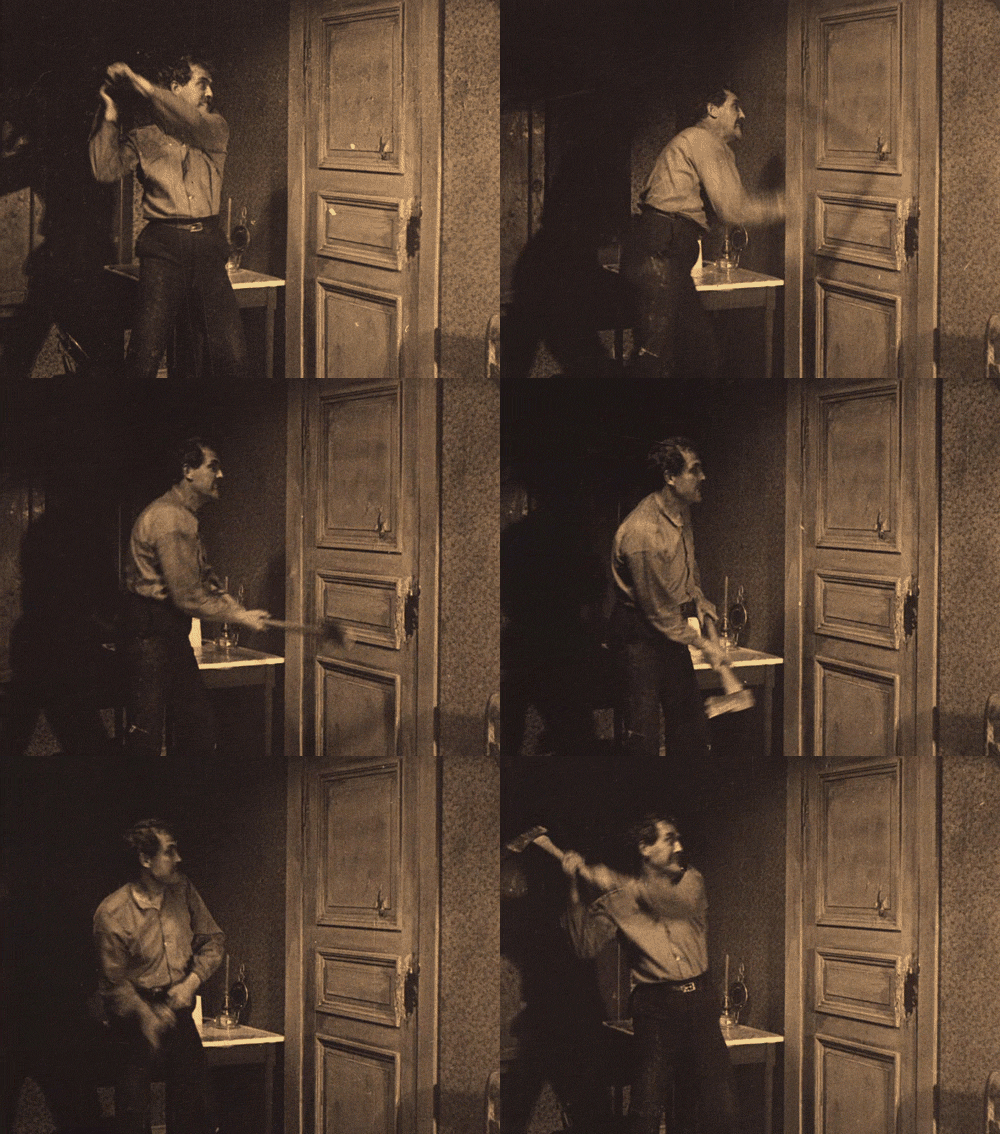
Körkarlen [The Phantom Carriage] (Victor Sjöström, 1921)
Jun
13
International Axe Throwing Day
David Holm (Victor Sjöström) attempts to break through a wooden door with the butt of an axe. This scene was the inspiration for the infamous door scene in Kubrick's The Shining (1980). DP: Julius Jaenzon.
“I want to be good, but no one believes me. Is it any wonder I cry?”
– David Holm
view
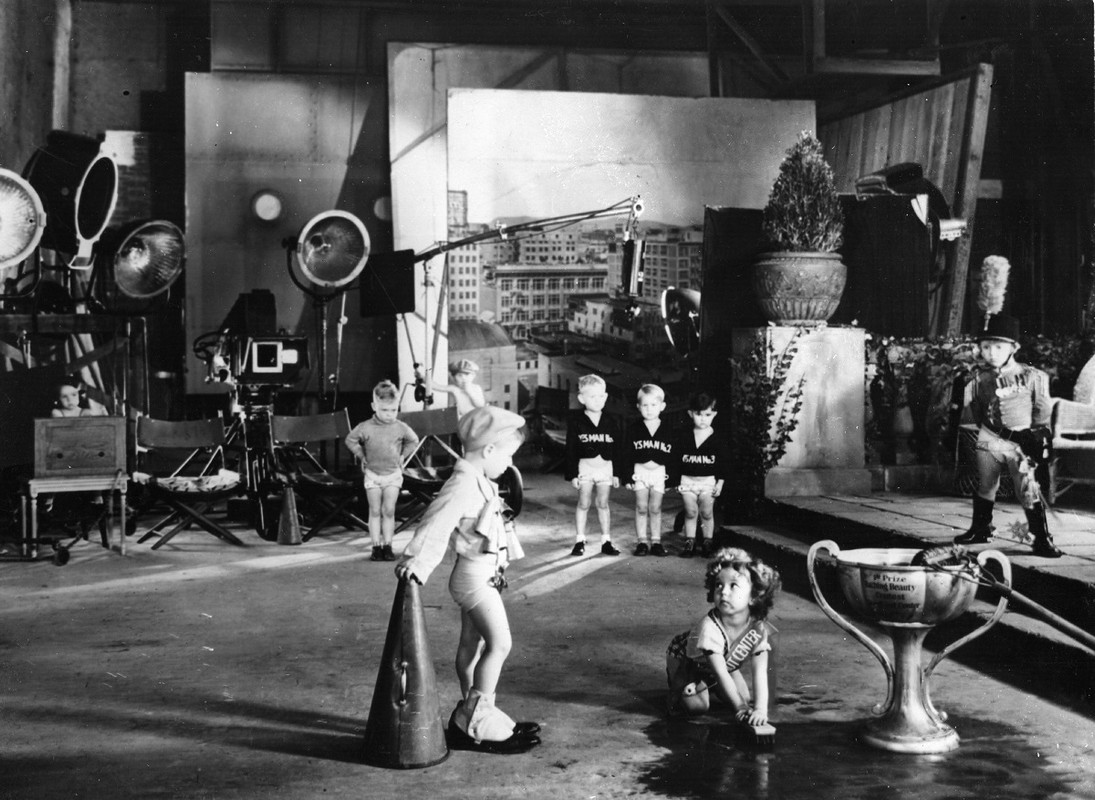
Kid 'N' Hollywood [Kid in Hollywood] (Charles Lamont, 1933)
Jun
12
Child Labor Day
A movie set on a movie set in Kid 'N' Hollywood. Shirley Temple can be seen on her knees scrubbing the floor as the character Morelegs Sweettrick. Standing next to her with a bullhorn and adult spats is Arthur J. Maskery as the tyrannical movie director Frightwig von Stumblebum. As in all the Baby Burlesk shorts, the kids are only half-dressed with their diapers showing.
Despite Shirley Temple's clear statements of what was going on on set during her child actress days, her output remains wildly popular. Who cannot resist her precocious lines, her cute dimples and baby doll innocence? And tapdancing with ánd befriending a Negro, during the segregation years? Miss Shirley truly was wise beyond her tender age.
“This isn’t playtime, kids, it’s work.”
– Charles Lamont, Baby Burlesk director
In the Baby Burlesk Kid 'N' Hollywood, Temple plays a Hollywood hopeful called Morelegs Sweettrick, who gets her break when the star doesn't feel like showing up (kids, right? no discipline).
While Kid 'N' Hollywood is relatively innocent, others in the series are much more sexualised (War Babies (1932) stars Temple as prostitute Charmaine) or plain racist (Kid 'in' Africa (1933) with Temple as Madame Cradlebait, bringing civilisation to Black kids portraying fearsome cannibals).
I'm not the one to take events from the past out of context and apply modern-day sensibilities to them, and with the advent of #ChildLabor laws for #Hollywood child actors, many of the horrors recalled by Temple and her peers are history. School is mandatory, long hours restricted, and using twins to split the workload is definitely not unheard of.
And then I watched teevee, and saw chubby, precocious blondes with dental plates to hide their missing baby teeth, wearing lipstick and baby-dolls, grinding and crooning with no backup in sight. And I remember Miss Temple say:
“Any star can be devoured by human adoration, sparkle by sparkle.”
– Shirley Temple
view
Gycklarnas afton [Sawdust and Tinsel] (Ingmar Bergman, 1953)
Jun
11
pancakes
Ringmaster Albert Johansson (Åke Grönberg) with Anne (Harriet Andersson) – holding a pot – standing over him. DPs: Hilding Bladh & Sven Nykvist.
– All I can offer is pancakes? Will they do?
– They'll do just fine.
view
A Midsummer Night's Dream (William Dieterle + Max Reinhardt, 1935)
Jun
10
Superman Week
Oberon (Victor Jory) – King of the Fairies – on his horse with Puck (Mickey Rooney) – a trickster sprite. While they ride of, Oberon's cape flows behind them through the trees, supported by the fae. A lot of the other-worldly fairy sparkle was accomplished by generous amounts of DuPont® cellophane and cinematographer Hal Mohr's contribution of trimming the trees with aluminium paint, cobwebs, and small metal particles. DP: Hal Mohr.
Capes, cloaks, and mantles are everywhere in Dieterle and Reinhardt's lavishly outfitted A Midsummer Night's Dream. The dreamlike #CostumeDesign by Max Rée and the uncredited Milo Anderson is as much as a personality as #Shakespeare's characters are.
“Now, until the break of day,
Through this house each fairy stray…”
Any reports of Kenneth Anger's presence as the Changeling Prince are greatly exaggerated.
view
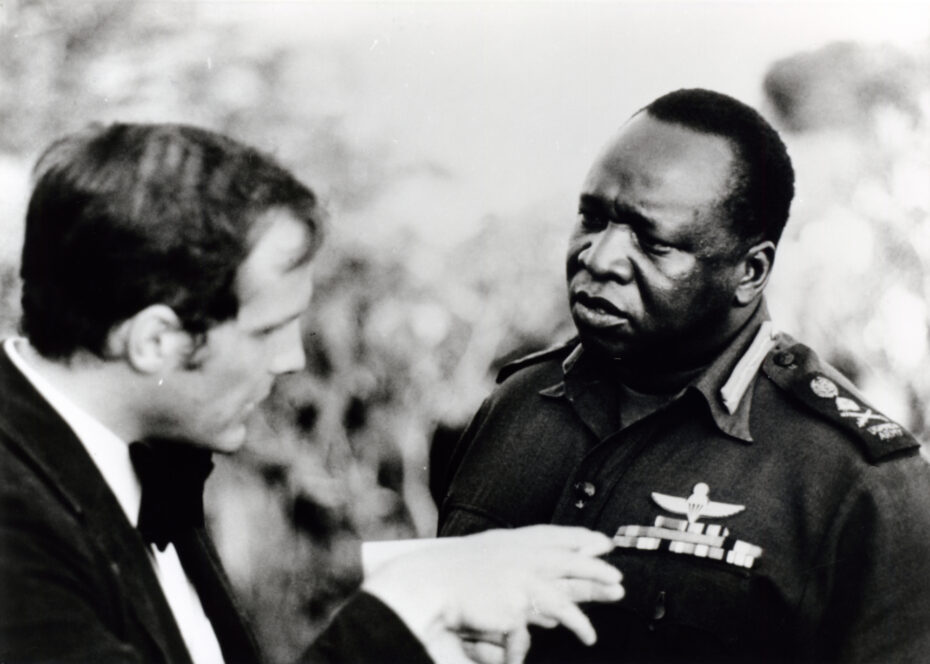
Général Idi Amin Dada: Autoportrait [General Idi Amin Dada: A Self Portrait / No One Can Run Faster Than a Rifle Bullet] (Barbet Schroeder, 1974)
Jun
9
National Heroes Day Of Uganda
Schroeder in tuxedo interviewing General Idi Amin Dada Oumee. Even in the context of the scene, Schroeder just came from a gala event, the tuxedo is a statement of assumed superiority. DP: Néstor Almendros.
It's easy… no lazy to put this documentary away as a failed Idi Amin propaganda project. In 1974, German-Swiss Barbet Schroeder, privileged son of a diplomat, already knew more than enough about how to select framing and manipulate timing. The result, Général Idi Amin Dada: Autoportrait, is a prime example of the neo-colonialist gaze.
“You film. Film helicopter.”
– The General explaining a director's one and only task
Amin, clearly not speaking his native language, tries to explain his plans for #Uganda. The camera (Spanish cinematographer) moves in on his gesturing hands, then a jump cut (French editor) to soldiers who – instructed in English – seem unsure of what is asked of them. When (in the copy I watched) people speak in Swahili, no translation is provided and the portrayed are little more than undeveloped, exotic backdrop. Everything seems to be a joke to Schroeder: the air force's MiGs, Amin and his higher-ups joining tribesmen in dance, even the President's children are used to exemplify the stereotype of the overly virile, primitive African male.
Amin was, as Schroeder is, a product of Europe's Scramble. With the difference that, although bloody and despicable, Amin's strategy was not to embolden the West's moribund empire.
view
Броненосец Потёмкин [Bronenosets Potyomkin / Battleship Potemkin] (Sergei Eisenstein, 1925)
Jun
8
Bounty Day
A closeup of a sailor. DPs: Eduard Tisse & Vladimir Popov.
“Shoulder to shoulder. The land is ours. Tomorrow is ours.”
– sailor
view
Planeta krawiec [The Planet ‘Tailor’] (Jerzy Domaradzki, 1983)
June
7
National Tailors Day
During the tense hours of a solar #eclipse, the locals spend their time in a bar. One litre of vodka is the wager for he who can correctly guess a woman's dress size. Of course, tailor Józef Romanek (Kazimierz Kaczor) doesn't need to guess and that one litre later, finds himself walking through space. When he comes round from his coma, Józef builds an observatory in his house, where the tailor with his home-made telescope dreams of finding an unknown planet, and discovers the world around him.
Polish tailor Adam Giedrys is not only the subject of Planeta krawiec, but also served as the film's consultant. For his passion for and devotion to astronomy, Giedrys was the first Pole to receive Lunar soil from #NASA's 1969 Apollo 11 Moon mission.
view
Grands soirs & petits matins [May Days] (William Klein, 1978)
Jun
6
National Higher Education Day
Students discussing at the Sorbonne. DPs: William Klein & Bernard Lutic.
A ripple went through France in the early months of 1968. It started when the Communist and socialist party joined forces in an attempt to remove President De Gaulle from office. A month later, students at Nanterre (a Parisian university) teamed up with poets, musicians and small leftist groups to discuss class discrimination and political bureaucracy on campus. The meeting was peacefully disassembled but tensions remained. In May, Sorbonne students stood up for Nanterre, by then shut down. Then, police invaded the university and 20 000 stood up against the police.
“Convert all Parisian universities into reception centres for the revolutionary youth of the whole world.”
– student proposal
Somewhere in that crowd were those whose interest went beyond the main spectacle: the toppling of the new ancien regime. A #JeanRouchian anthropologist of sorts, artist, photographer and filmmaker William Klein pushes the eye through the masses. But it's also his eye; each frame is a Klein. However, we see not a documentary. Sound is asynchronous. Suddenly, it's night and flames lick the black sky. When bricks fly, frames follow. And then… the end.
view
Les trois couronnes du matelot [Three Crowns of the Sailor] (Raúl Ruiz, 1983)
Jun
5