“In the ballroom circuit, it is so obvious that if you have captured the great white way of living, or looking, or dressing, or speaking – you is a marvel.”Paris Is Burning (Jennie Livingston, 1990)
Mar
6
National Dress Day
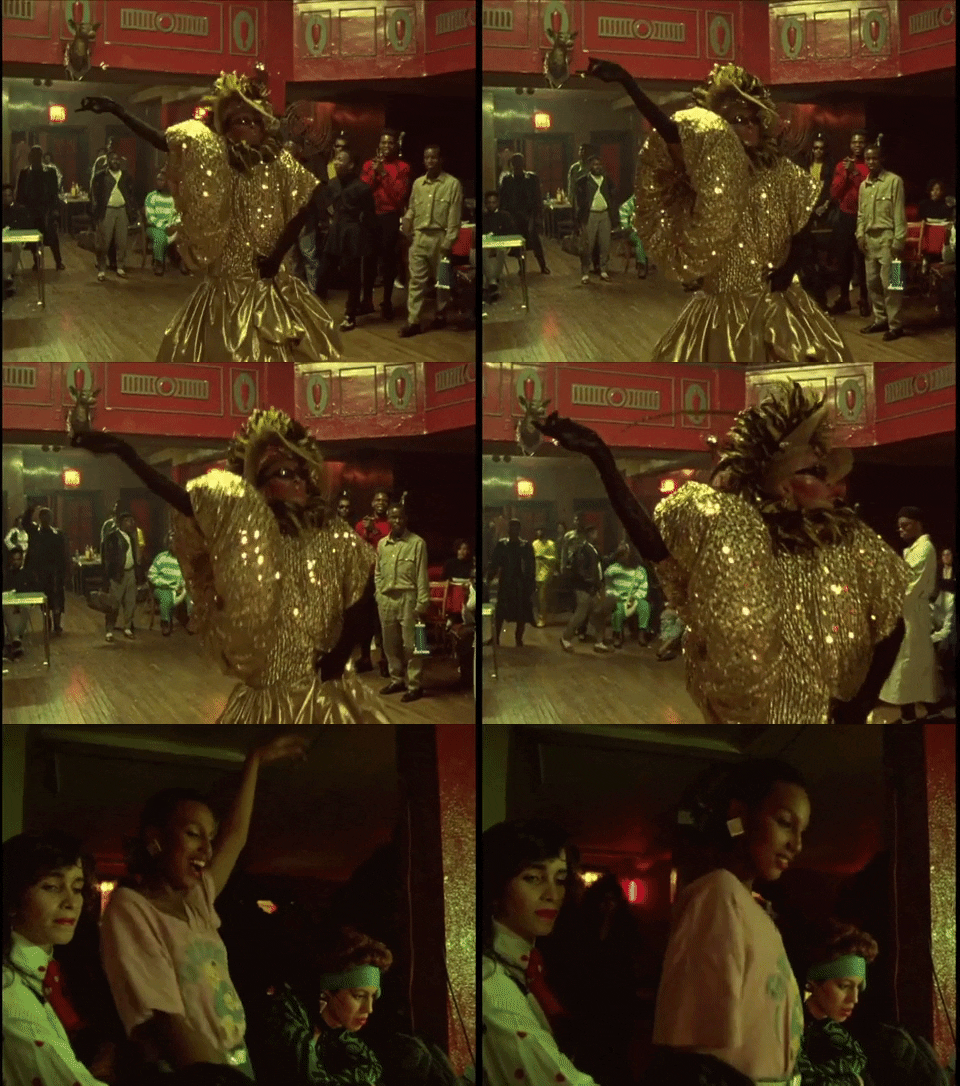
Pepper LaBeija is a stunningly extravagant gold-sequined dress. DP: Paul Gibson.
Paris Is Burning is probably best known for its fabulous #ballroom and #vogueㅤing scenes but in its heart, it tells the story of #family, of people who found their new ménage where they can live and love without fear and prejudice.
– Pepper LaBeija
While you may expect a fierce documentary about #TransRights, or maybe merely a glamorous parade, you will be confronted with the flagrant #racism that made the #BallroomScene so essential for the Black and #Latinx LGBT+ community who founded it. And the tragedy of its demise in the name of pop culture even more heartbreaking.
“A strange calm possessed me. I thought more clearly than I had ever thought before – as if my mind were bathed in a brilliant light.”The Incredible Shrinking Man (Jack Arnold, 1957)
Mar
5
National Scott Day

Scott Carey (Grant Williams) standing in a palm of someone's hand, his arms outstretched as if pleading. DP: Ellis W. Carter.
Despite its sensationalist pulpy title and #ColdWar premise, Jack Arnold's adaptation of the Richard Matheson's The Shrinking Man (1956) is an existentialist treatise.
– Scott Carey
The Incredible Shrinking Man plays with the understanding of what it means to be acknowledged as a human, and one's place in the world. The story is told through the eyes of the titular Shrinking Man – Scott Carey – who after being exposed to strange fog, finds himself increasingly lost in this world.
“The other day I got caught in some fishermen's net. Of course, I had to drown them. I couldn't allow them to touch me, could I?”Malá morská víla [The Little Mermaid] (Karel Kachyňa, 1976)
Mar
3
National Dress In Blue Day

The little mermaid (Miroslava Safránková) in her wonderful sea-blue dress, puts a coral-red rose in her blue hair. DP: Jaroslav Kučera.
Miroslava Safránková plays Hans Christian Andersen's doomed little mermaid – Malá morská víla in Czech – who falls in love with a mortal and gives up her beautiful voice to be with him. Sadly, the mortal, a prince, doesn't recognize his mute saviour and doesn't return his love.
– the little mermaid
The wonderful soundtrack is by Zdeněk Liška who also composed music for Ikarie XB 1 (Jindřich Polák, 1963) and Spalovač mrtvol (Juraj Herz, 1969).
“Aaaaap”
“Nooot”
“Miiieees”Het Leesplankje [The Reading Lesson] (Johan van der Keuken, 1973)
Mar
2
National Read Across America Day

Reading board tiles laid out on a newspaper. Half a headline – 7.000 ARRESTANTEN (“7000 DETAINEES”) – can be read. A photograph of a shellshocked, very young soldier in front of a fleeing crowd illustrates the article. DP: Johan van der Keuken.
Amsterdam schoolchildren recite the words from a reading board while the traditional teaching method's pictures are interspersed with news photos of then-current events and children's drawings.
This short, and life, is haunting and violent; schools should be safe for all. Even if only to escape in a book.
Desperate Living (1977)
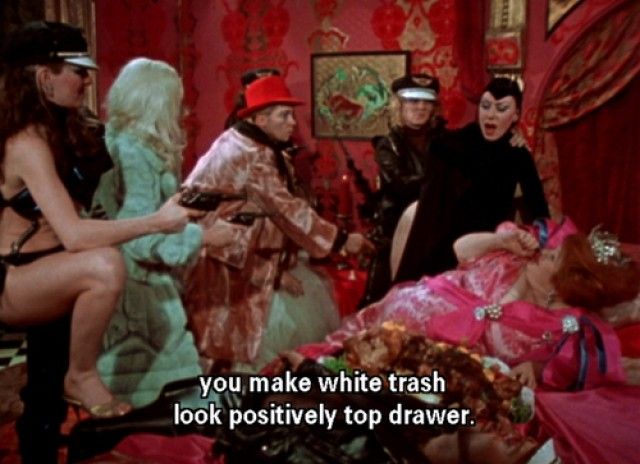
March 1: someone pays a compliment on #WorldComplimentDay
Desperate Living (John Waters, 1977)
Peggy Gravel: Peggy is about to die from being shot up the ass by Mole. You're so low you make white trash look positively top drawer! Mole McHenry: Oh, blow it out your ass!
#Bales2023FilmChallenge #JohnWaters #LizRenay #MinkStole #SusanLowe #EdithMassey #crime #comedy #USA #1970s ★★★½
Transition de phase dans les cristaux liquides [Liquid Crystals] (Jean Painlevé, 1978)
Feb
28
National Science Day – India

A scene that foreshadows computer-generated imagery. DP: Jean Painlevé.
Filmmaker, photographer and honorary surrealist Jean Painlevé made science films that verge on experimental art cinema. With custom-built camera setups, he explored the world above and below the water surface, and with that exposed human traits.
It's almost impossible to select one film from a filmography as vast as #Painlevé's. In honour of C.V. #Raman, lets go with his Transition de phase dans les cristaux liquides.
It's on Ubu, in case you wonder.
– All right, Billy. All right. You still haven't answered my question. What do you want to do? – Nothin'.Dirty Little Billy (Stan Dragoti, 1972)
Feb
25
National Billy Day

Michael J. Pollard as Billy the Kid. He looks rather unwashed. DP: Ralph Woolsey.
A mucky, nihilistic #punk adaptation of the Billy the Kid saga foreshadowing Alex Cox's Straight to Hell by 15 years.
American Dreams: Lost and Found (James Benning, 1984)
Feb
24
National Trading Card Day

A Hank Aaron trading card from director James Benning's personal collection. Below it a scrolling text quoting from Arthur Bremer's diary.
“Now this is a real good one Loyd, you want me to get in a business I can't even pronounce the name of? Poly-whatcha-doodle-all-day?”The Whole Shootin' Match (Eagle Pennell, 1978)
Feb
23
Diesel Engine Day
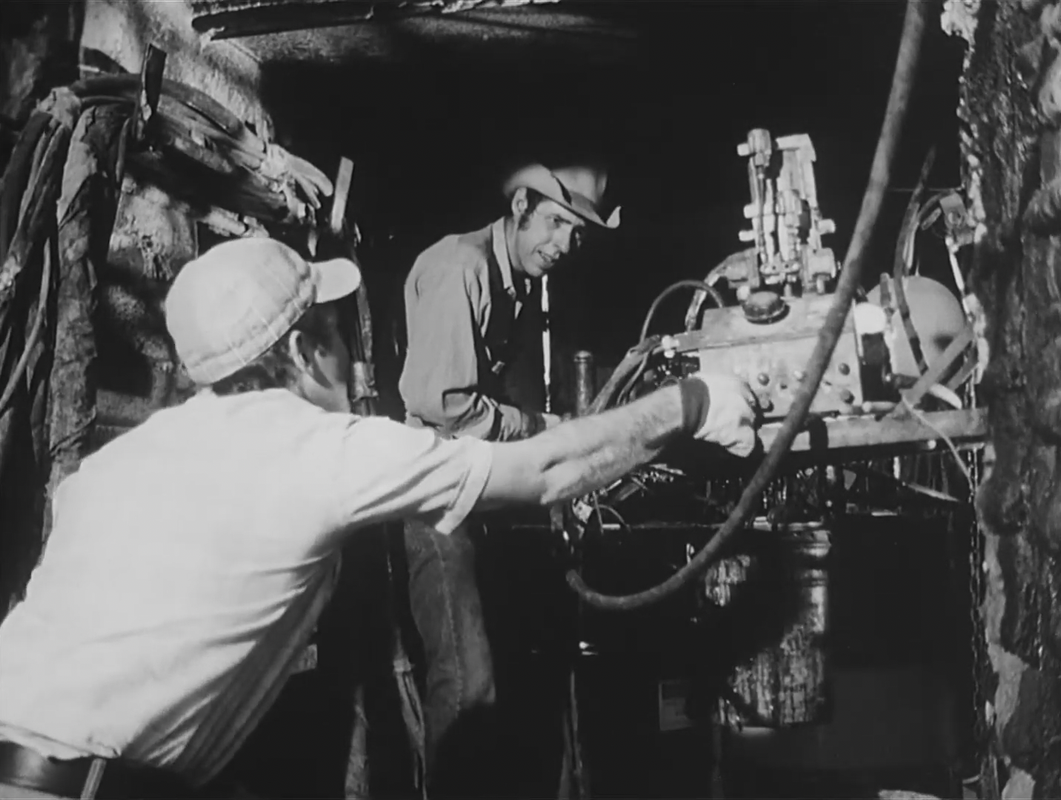
Frank (Sonny Carl Davis) and Loyd (Lou Perryman) attempt to fix the diesel motor that keeps their polyurethane business afloat. DP: Eagle Pennell.
– Frank
