view
X2000 (François Ozon, 1998)
Jan
1
2000
A young, naked man holding a drink observes two men asleep in a sleeping bag on the floor. On the wall behind them the text “2000” spelled out with tinsel garlands. DP: Pierre Stoeber.
view
The Book of Life (Hal Hartley, 1998)
Dec
31
1999
The “New York News” of December 31, 1999. The headline reads LAST DAY OF CENTURY BELIEVERS PRAY FOR END. DP: Jim Denault.
“It was the morning of December 31, 1999 when I returned, at last, to judge the living and the dead. Though still, and perhaps always, I had my doubts.”
view
The Last Broadcast (Stefan Avalos + Lance Weiler, 1998)
Dec
15
1995
An anxious looking camera man in the woods on grainy VHS stock. DP: Lance Weiler.
“At 10 PM, in what will be the last broadcast, Fact or Fiction goes live.”
– David Leigh, the filmmaker
view
The Baby of Mâcon (Peter Greenaway, 1993)
Dec
12
Dīpāvalī
The miraculous child (Nils Dorando) surrounded by candles. DP: Sacha Vierny.
When an old crone gives birth to a beautiful baby, a young virgin claims the child as hers. With the Immaculately Conceived wonder put on display – to the child's contemporaries, the court of Cosimo de' Medici attending a reenactment of the events, and us film viewers – He protects the false Virgin from losing her chastity and blurs the walls between staging and gospel.
view
Outer Space (Peter Tscherkassky, 1999)
Oct
26
Barbara Hershey as Carla Moran. DP of The Entity: Stephen H. Burum.
[Favourite] psychological horror*
“A premonition of a horror film”
– tagline
* the Bales 2025 Film Challenge for October is horror-themed as opposed to date-based, and is all about favourites. Expect non-horror and films I believe to be relevant instead.
view
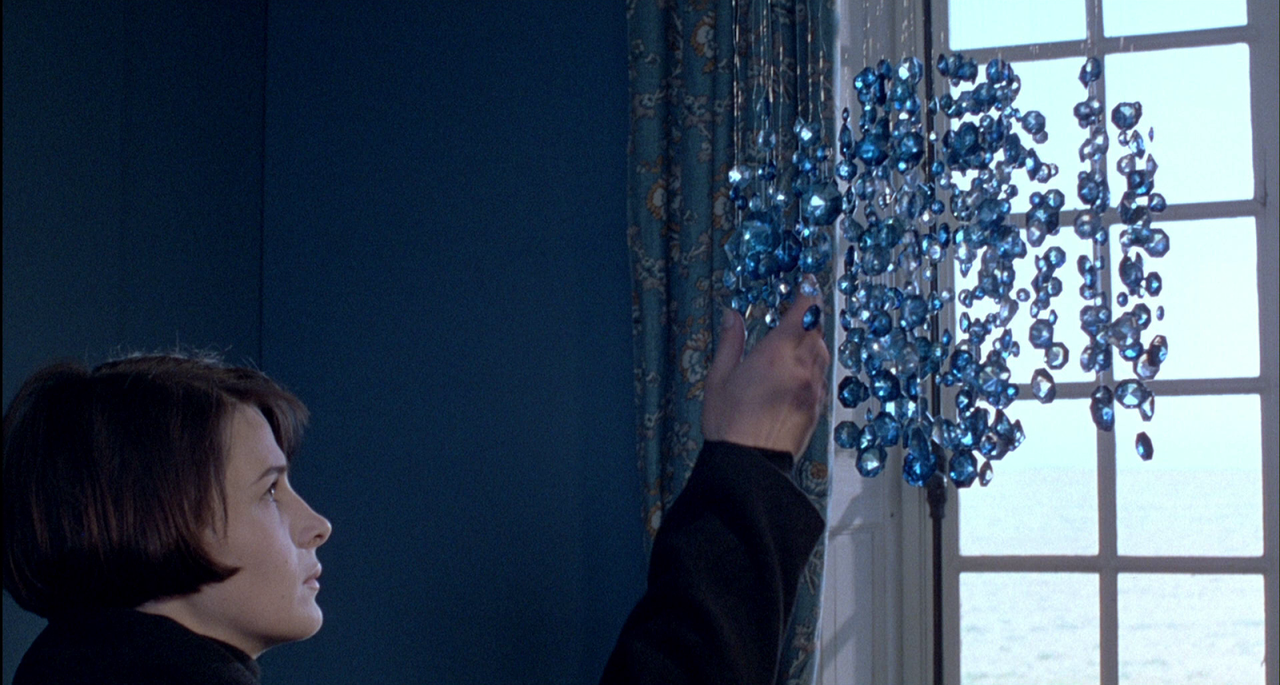
Trois couleurs: Bleu [Three Colors: Blue] (Krzysztof Kieślowski, 1993)
Aug
15
cerulean
Julie (Juliette Binoche) in a blue wallpapered room, observes blue beads suspended in front of a window with a cerulean sky and ocean behind it. Throughout the story, her clothing changes from white, to black, to the darkest charcoal blue, to Prussian blue. DP: Slawomir Idziak.
Cerulean, or blue: in food or fashion*
“I'm just fine. I have everything here. I have the TV. You can see the whole world”
– the mother
How could I not pick at least one instalment of Kieślowski's Trois couleurs trilogy. Here's blue, the liberté of the tricolor. Blue occurs as the sky to fall through, the room without life, and the cloth that binds.
view
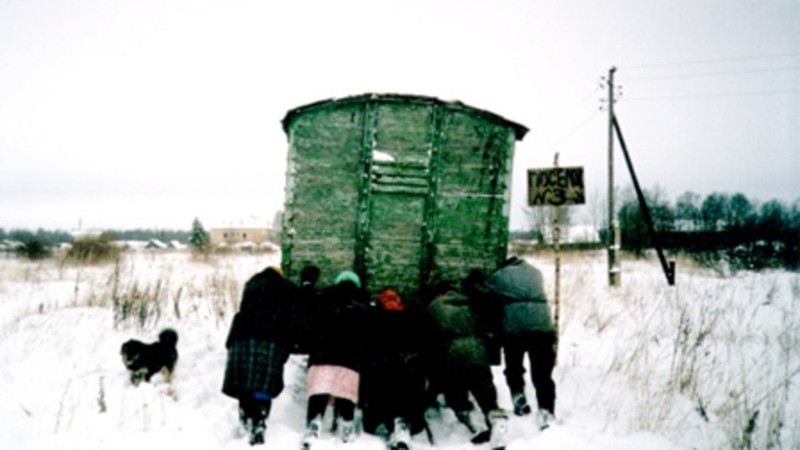
Хлебный день [Khlebnyy den / Bread Day] (Sergei Dvortsevoy, 1998)
Aug
10
green
The old folks pushing the cart past the hamlet's name sign. With thick brush strokes, almost too much for the small rectangle, it reads TOWNSHIP NR. 3. DP: Alisher Khamidkhodzhaev.
Green: a building or structure*
“That's all the people we've got now. We'll get there somehow.”
As of 2002, only three people lived in Zhikharevo. I wonder how the wain comes home now.
view
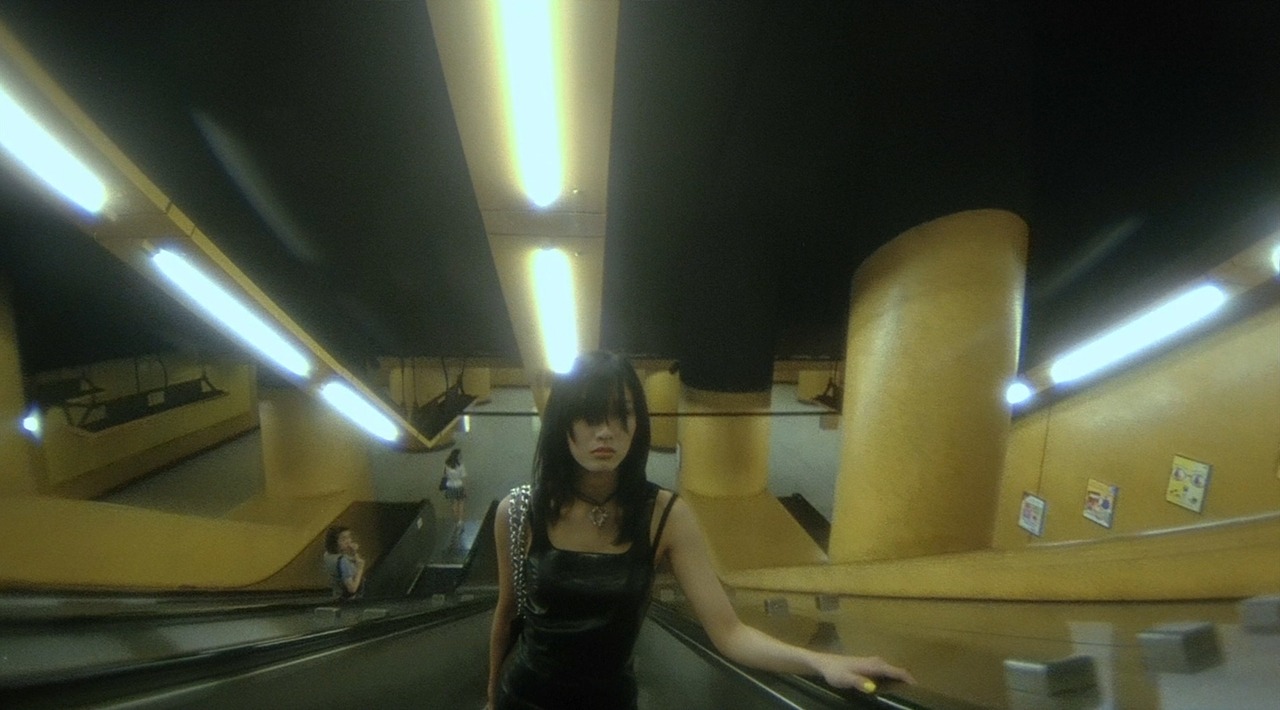
墮落天使 [Do lok tin si / Fallen Angels] (Wong Kar-Wai, 1995)
Aug
7
yellow
The killer's agent (Michelle Reis) rides an escalator in a yellow and black underground station. She wears an all-black outfit and yellow nail polish (via). DP: Christopher Doyle.
Yellow: a building or structure*
“Just when I really needed a raincoat, he returned to my side. It would be so great if it could rain forever.”
– Punkie
view
Sombre (Philippe Grandrieux, 1998)
Jun
3
World Bicycle Day
Cycling fans along the route. DPs: Philippe Grandrieux & Sabine Lancelin.
Jean (Marc Barbé) follows the route of the Tour de France. He sees women, picks them up, takes them out. Claire, infatuated with him, is taken in by his darkness. At night, the cyclists continue the course.


.jpg)
.png)