“There was a silence different from all other silences, an ashen light, and then darkness – total stillness. I thought that during an eclipse even our feelings stop. Out of this came part of the idea for L'eclisse.”L'eclisse [The Eclipse] (Michelangelo Antonioni, 1962)
Mar
20
natural phenomena

Vitti's blond hair shifts in front of Delon's dark coupe, quietly mimicking the eclipse. DP: Gianni Di Venanzo.
A natural phenomenon for this year's March equinox, three supermoons, and the March 25 solar eclipse.
– Michelangelo Antonioni talking about experiencing a solar eclipse, possibly the total eclipse of 1961 which showed up in the film Barabbas (1961).
During several moments in the film, the main characters' mannerisms foreshadow the looming solar eclipse.
drama
“One must confront vague ideas with clear images” La Chinoise, ou plutôt à la Chinoise: un film en train de se faire [La chinoise] (Jean-Luc Godard, 1967)
Mar
19
Howard University Protest

Yvonne (Juliet Berto) holed up behind piles of Mao's Little Red Book, wielding a machine gun. DP: Raoul Coutard.
Student activism to commemorate the March 19 1968 Howard University Protest
– slogan on a wall
Five Maoist students theorise, then practice a radical overthrow via terrorism.
Loosely based on Dostoyevsky's Бѣсы [The Possessed] (1871–72).
Un soir, un train [One Night, a Train] (André Delvaux, 1968)
Mar
18
André Delvaux
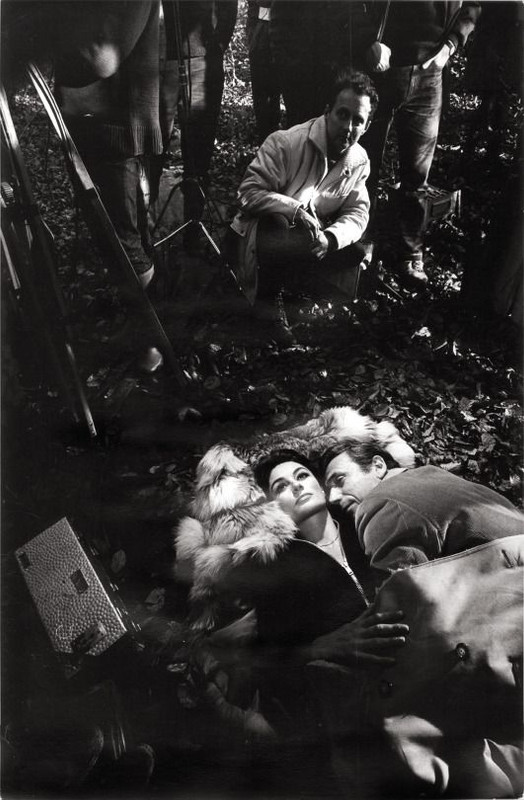
Anouk Aimée and Yves Montand in character on a leaf-strewn floor, his head resting on her chest, with director André Delvaux and others surrounding them. DP: Ghislain Cloquet.
A favourite film, director, or producer for Luc Besson's birthday (1959).
Having only seen three of Delvaux's films, I feel I can safely say his work is hypnotic, but not in the common sense. We see a world through both Delvaux's and his protagonists eyes, and experience their duality as one. This displacement is a recurring theme in Delvaux's work, the work of a man raised in one world and speaking the language of another, both worlds bearing the same name, Belgium.
This slow tear is also the theme is his best known film, De man die zijn haar kort liet knippen [The Man Who Had His Hair Cut Short] (1965), in which a schoolteacher loses himself after a pupil graduates. When we think we are firmly seated in Delvaux's universe, we fall back, like that moment just before sleep sets in. And again, in his tragically under-seen Belle from 1973. Now it's a poet who finds a woman living in a ramshackle hut in Belgium's peatland, her language an unknown. With only one main speaker, the duality forms in the poet's words, in his attempts to give her root.
And so do we, the viewers. We hang on to that root, Delvaux's, only to sink back into our own loss of words.
“He remembers those vanished years. As though looking through a dusty window pane, the past is something he could see, but not touch. And everything he sees is blurred and indistinct.”花樣年華 [Fa yeung nin wah / In the Mood for Love] (Wong Kar-Wai, 2000)
Mar
17
Irish-American Heritage Month

A close-up of a pea-green phone with Mrs. Chan's (Maggie Cheung) hands resting on the receiver. Her dress is a bright green, with an abstract graphic in white. DPs: Christopher Doyle, Pun Leung Kwan & Ping Bin Lee.
Green for Irish-American Heritage Month (USA)
– caption
“With these shots from the back and the neck, we hope to confront the spectator with a mystery, the impossibility of knowing and seeing. The face and the eyes should not try to express a situation that already sufficiently stirs up the spectator’s interests. This expression would direct, limit or even prevent expectations, whereas the back and the neck allow the spectator to go deeper, like a car driving into the night.”Le fils [The Son] (Jean-Pierre Dardenne + Luc Dardenne, 2002)
Mar
15
Idus Martiae
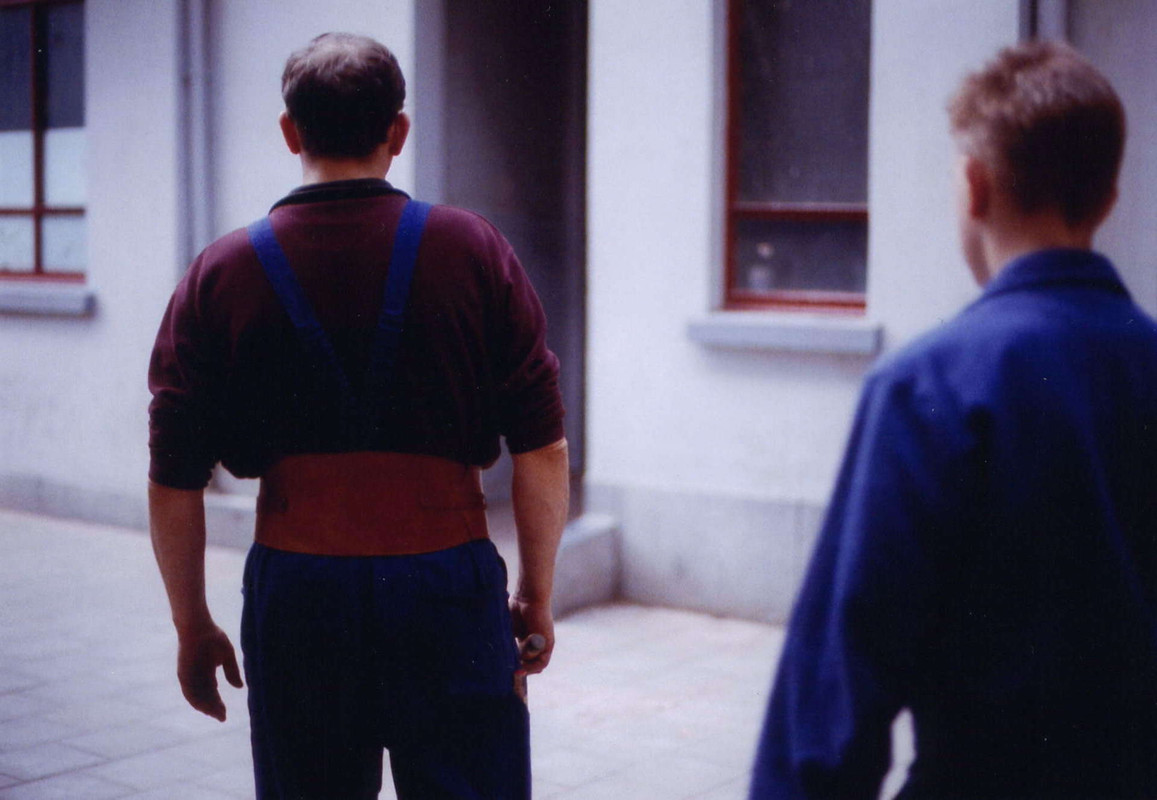
Olivier (Olivier Gourmet) and Francis (Morgan Marinne) both seen from the back, with the pupil following the teacher. DP: Alain Marcoen.
For Idus Martiae, the Ides of March, a scene showing the main character's back.
Olivier, a carpentry teacher at a youth rehabilitation center, has a new apprentice, 16 year old Francis. Fascinated by the boy and his unspoken backstory, he starts following him around.
– Luc Dardenne, via [spoilers]
“The Dardennes' brothers’ camera follows Olivier in his enigmatic, ominous obsession with the boy and almost constantly films him up close and from behind. In the absence of a true gaze, the back turns into a face that speaks but doesn’t explain anything, “a body that becomes a vibrating membrane”, as Jean-Pierre Dardenne so beautifully put it.” (via).
“You're a foreigner and you're lost.”L'immortelle (Alain Robbe-Grillet, 1963)
Mar
12
National Hitchcock Day

A woman in silhouette (Françoise Brion) enters a building. The setup is perfectly symmetrical except a beam of light passing through the opened doors that highlight's the woman's presence, adding a sense of wrong to the scene. DP: Maurice Barry.
A favourite non-Hitchcock mystery for National Hitchcock Day (USA)
L'homme à la valise [The Man with the Suitcase] (Chantal Akerman, 1983)
Mar
11
close quarters

Henri (Jeffrey Kime) and the woman (Chantal Akerman) at a claustrophobically small table, each eating their breakfast. The woman has a baguette, a bowl of coffee, and a cigarette. Henri takes up most of the table with a serving tray holding a whole box of Pelletier toast, a plastic milk bottle, and a coffee pot. He's also manspreading. DP: Maurice Perrimond.
Close quarters: US premiere of 10 Cloverfield Lane (2016).
A filmmaker (Akerman) reluctantly hosts a guest (the always imposing Jeffrey Kime) in her already cramped quarters. His increasingly expanding presence in volume, sight and sound are insufferable for the quiet cineast.
Invasión [Invasion] (Hugo Santiago, 1969)
Mar
9
Bobby Fischer – 1943
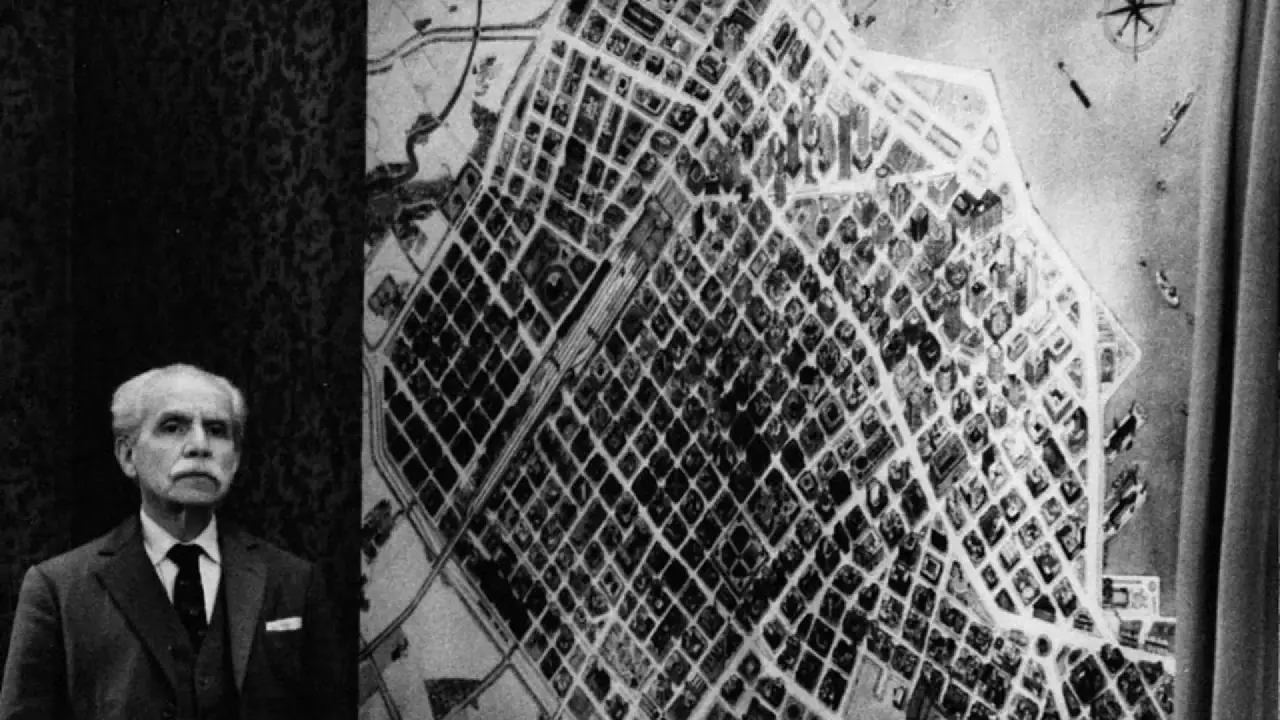
Don Porfirio (Juan Carlos Paz) in front of a map of Aquileia. DP: Ricardo Aronovich.
Strategy for Bobby Fischer's birthday (1943).
People meticulously plan, move, and countermove in response to an invasion.
Nattlek [Night Games] (Mai Zetterling, 1966)
Mar
8
International Women's Day

Jan (Jörgen Lindström) and his mother (Ingrid Thulin) share a bed while she reads him a bedtime story. DP: Rune Ericson.
A mother for International Women's Day
When returning home to the castle he grew up in, Jan attempts to free himself from the suffocating clutches of his neurotic mother.
This film was the final straw for Shirley Temple; she resigned from the board of the San Francisco Film Festival calling Zetterling's film “pornography for profit”.
– Dont raise your voice! I'll kill you if you make a sound. – Would you please? 聖母観音大菩薩 [Seibo Kannon daibosatsu / Eros Eterna] (Kōji Wakamatsu, 1977)
Mar
7
immortality

The yao bikuni (Eiko Matsuda) rises from the ocean. DP: Hideo Itō.
An immortal character on the date Highlander (1986) was released.
When a woman eats the flesh of a 人魚 (ningyo, litt. “human fish” but in Western context commenly translated as “mermaid”), she may become a 八百比丘尼 [yao bikuni], an 800 year* old Buddhist nun granted youth and longevity.
*The number 8 symbolises growth and prosperity. Larger numbers starting with 8 indicate that the amount is endless, comparable to saying “hundreds/thousands/millions of […]” in English. Therefore, 800 years can be understood as immortal.