view
Слънцето и сянката [Slantzeto i syankata / Sun and Shadow] (Rangel Vulchanov, 1962)
Sep
18
National First Love Day
The two young lovers (Georgi Naumov and Anna Prucnal). DP: Dimo Kolarov.
First love for National First Love Day (USA).
A boy and a girl fall in love at a resort at the Black Sea. He's the son of an architect, an optimist who sees creation where possible. She's the daughter of a nuclear scientist, the future an inevitable apocalypse.
view
Un matrimonio interplanetario [A Marriage in the Moon] (Enrico Novelli, 1910)
Sep
12
Луна 2 – 1959
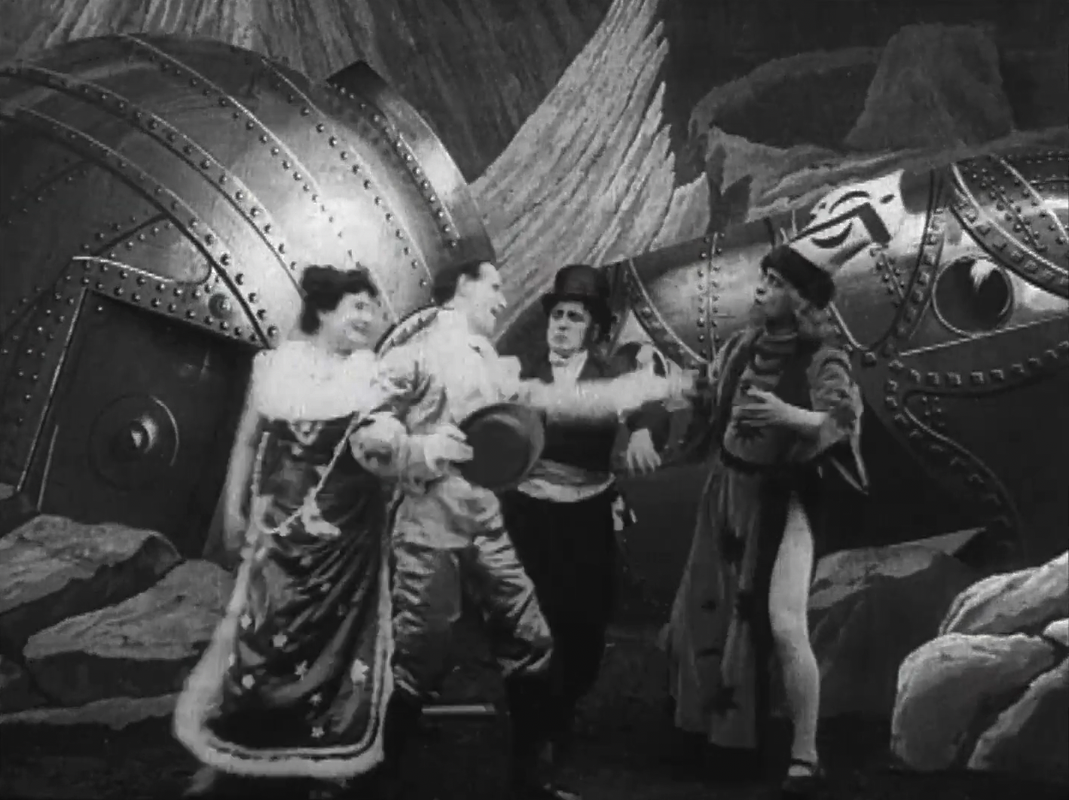
Aldovin (director and author of La Colonia Lunare (1908) meets his lovely Martian fiancée halfway, on the Moon.
To commemorate the launch (not landing) of the Луна 2 aka the Second Soviet Cosmic Rocket on September 12, 1959, we present The Moon.
According to Wikipedia, Luna 2 was the first spacecraft to touch the surface of the Moon, and the first human-made object to make contact with another celestial body. Well, Enrico Novelli went there first…
“Mars Daughter, You are fine. I am loving you and I should like very much to marry you.”
– Aldovin, Terrestrial Astronomer (Aldovin's radiotelegraph to Mars), via
view
海底から来た女 [Kaitei kara kita onna / Woman from the Sea] (Koreyoshi Kurahara, 1959)
Sep
4
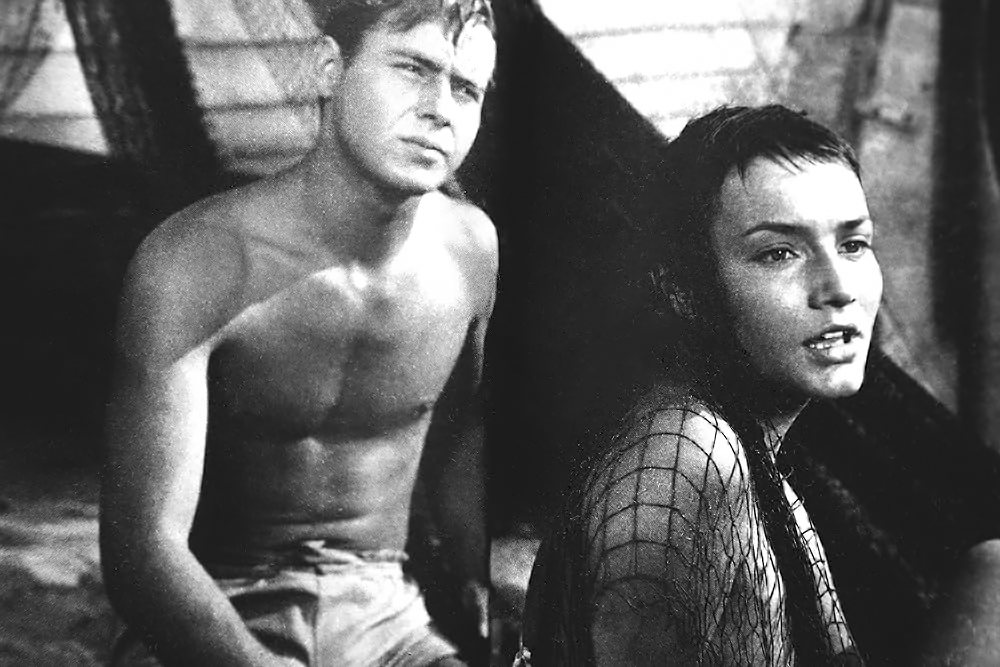
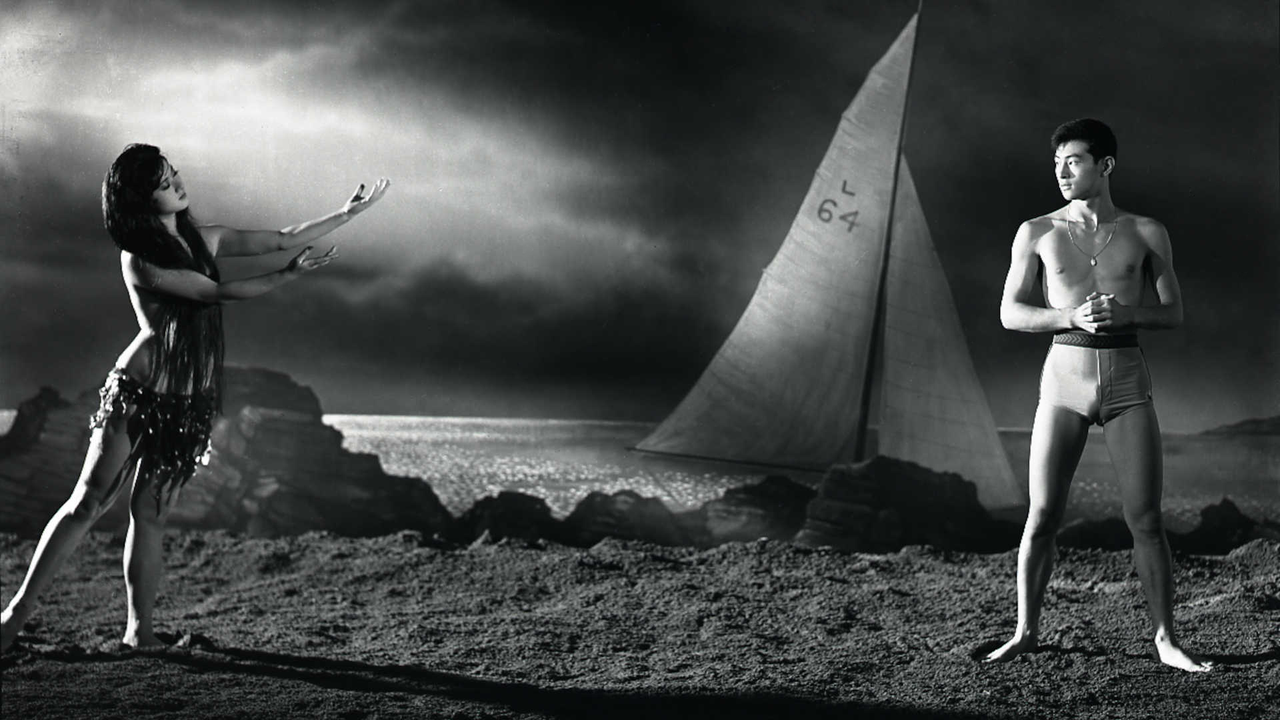
The mysterious sea woman (Hisako Tsukuba, who under the name Chako van Leeuwen went on to produce the Jawsploitation franchise Piranha) and a bewitched Toshio (Tamio Kawachi). Note how the boat's sail resembles a shark's dorsal fin. DP: Yoshihiro Yamazaki.
A strange woman appears in the life of a young man. He falls in love with her, but the fishermen know. She's the wife of a shark killed years ago. And she's out for revenge.
Doing Hooptober parallel to Bales. Expect some contamination of the September/October posts.
view
Taxi zum Klo (Frank Ripploh, 1980)
Sep
2
Christa McAuliffe 1948 – 1986
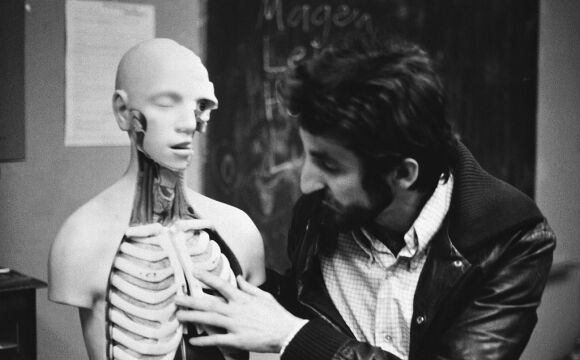
Frank (Frank Ripploh) teaching kids about the human body on an anatomy dummy. DP: Horst Schier.
A teacher for what would have been Christa McAuliffe's birthday.
“Ich mag Männer, bin 30 Jahre alt, von Beruf Lehrer.”
– Frank Ripploh
Frank Ripploh is a sexual ethics and biology teacher by day, and hedonistic gay man and aspiring pornographer by night. When Frank Ripploh, the man, publicly came out in 1978 in the tabloid Stern, he lost his teaching job and did become that filmmaker. Taxi zum Klo – litt. taxi to the john/loo – is his story. A frank pre-AIDS pre-Internet pre-victimhood depiction of male gay culture in West Germany. Maybe raw, possibly misogynist, definitely true to life.
view
Guide [The Guide] (Vijay Anand, 1965)
Aug
20
fasting
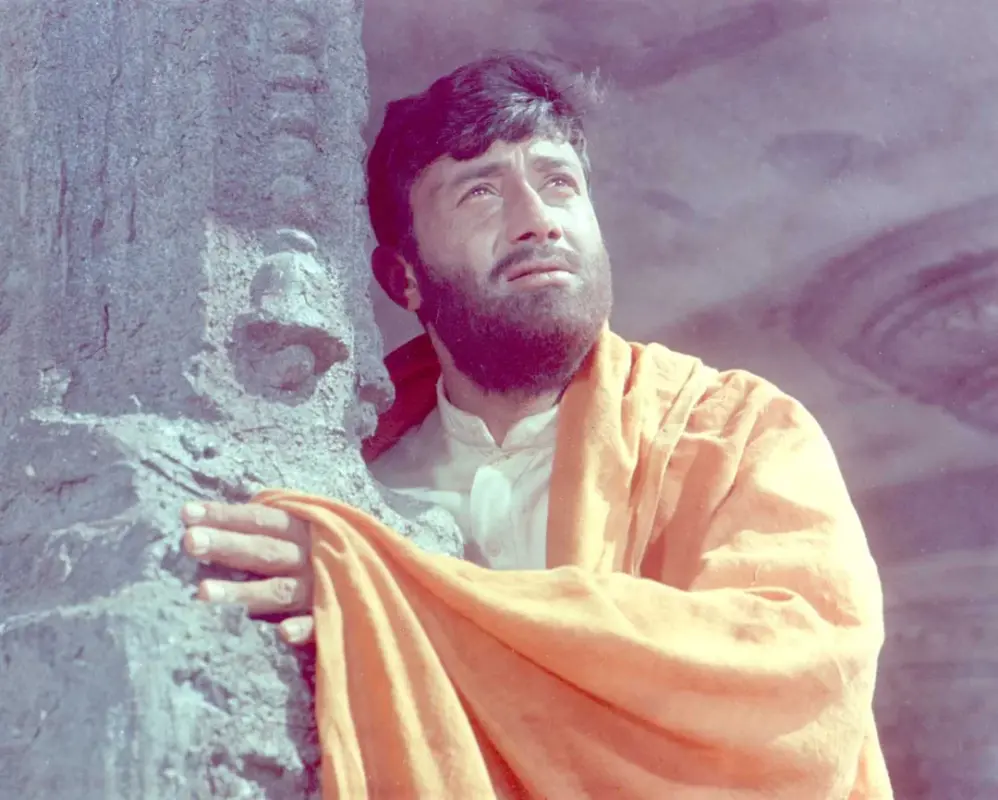
A scruffy looking Raju (Dev Anand) wearing the orange shawl of a holy man. DP: Fali Mistry.
Ramadan [on the ninth month of the Islamic calendar, not mid-August]: someone atones or fasts*
“These people have faith in me, and I have faith in their faith.”
– Swami Ji
view
Trois couleurs: Bleu [Three Colors: Blue] (Krzysztof Kieślowski, 1993)
Aug
15
cerulean
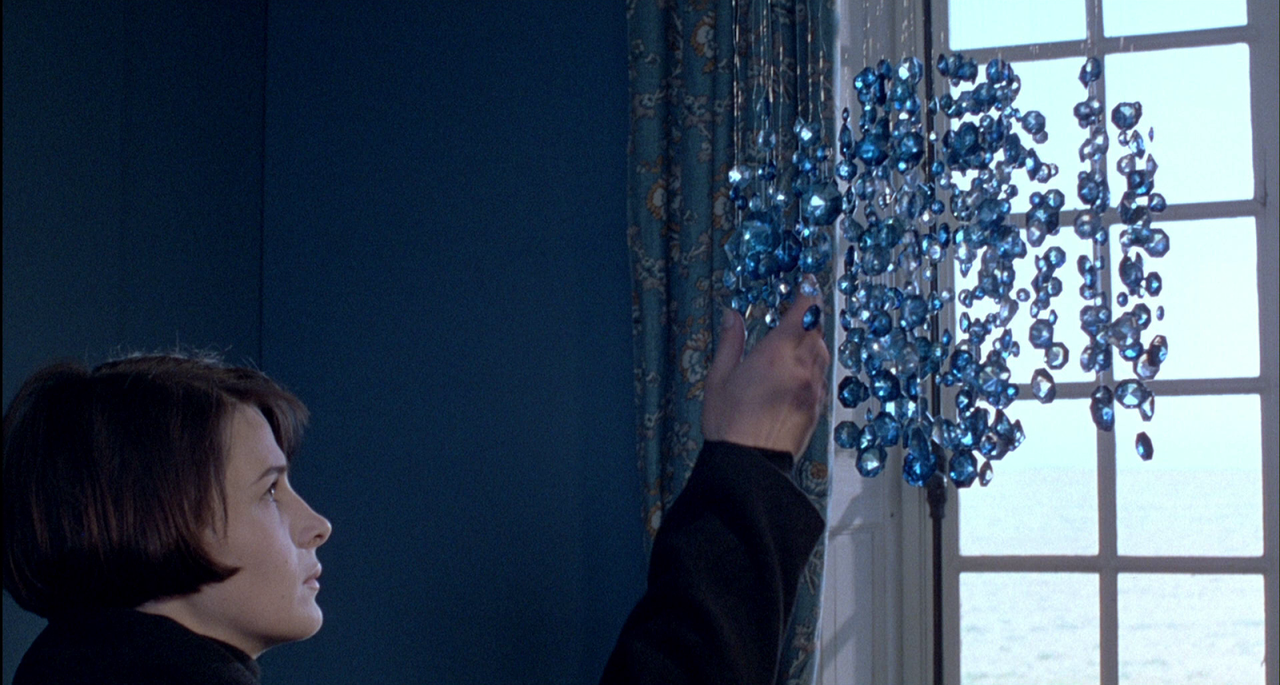
Julie (Juliette Binoche) in a blue wallpapered room, observes blue beads suspended in front of a window with a cerulean sky and ocean behind it. Throughout the story, her clothing changes from white, to black, to the darkest charcoal blue, to Prussian blue. DP: Slawomir Idziak.
Cerulean, or blue: in food or fashion*
“I'm just fine. I have everything here. I have the TV. You can see the whole world”
– the mother
How could I not pick at least one instalment of Kieślowski's Trois couleurs trilogy. Here's blue, the liberté of the tricolor. Blue occurs as the sky to fall through, the room without life, and the cloth that binds.
view
Lola Montès (Max Ophüls, 1955)
Aug
14
Bavaria
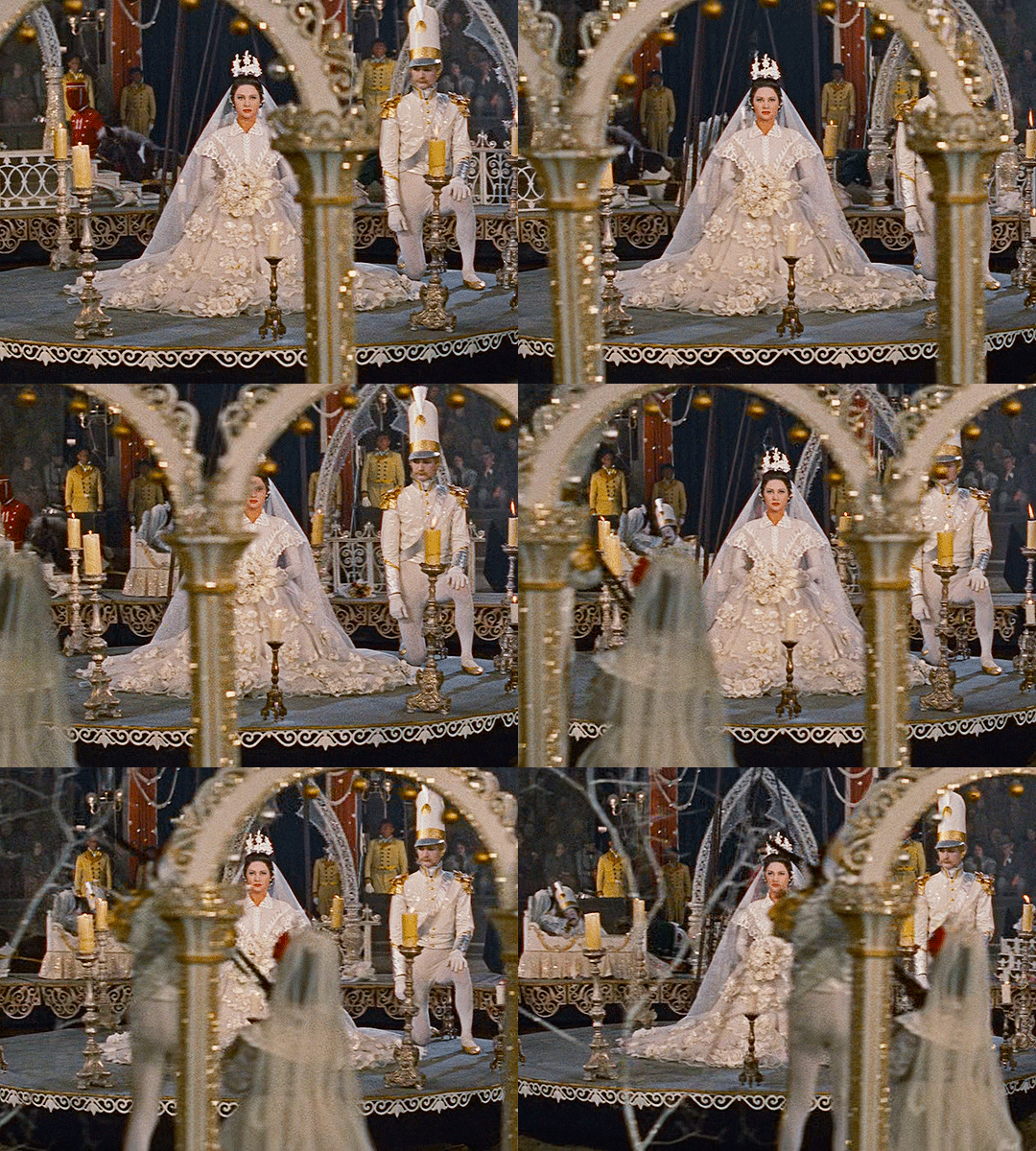
Celebrating Oktoberfest [in September/October] and the Bavarian royals [rip]: a royal character or family*
“The painter takes his time. He doesn't like her dress. He doesn't like her gloves. One day he asks her if she dares pose for him – all in pink. She dares! And the king, enraptured by her pose, offers her a palace!”
– circus master
Maria Dolores Porriz y Montez, Countess von Landsfeld, Lola Montès for short, now a circus attraction, once the mistress to Ludwig I, King of Bavaria. While her fellow circus performers play Lola's former lovers, the ringmaster tells her story.
view
La carrière de Suzanne [Suzanne's Career] (Éric Rohmer, 1963)
Aug
13
thé
A woman reaches for a silver teapot. We only see her hand. DP: Daniel Lacambre.
“I know. I know you. I know you very well.”
– Suzanne
view
地獄門 [Jigokumon / Gate of Hell] (Teinosuke Kinugasa, 1953)
Aug
4
orange
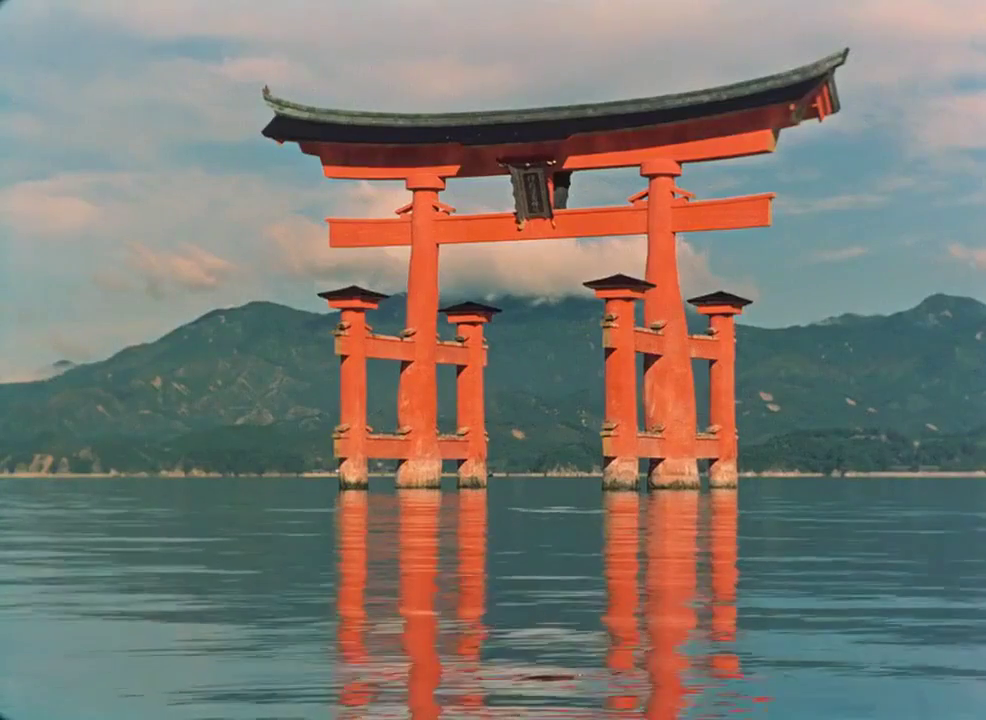
The shrine's torii as seen in the film. Vermilion contains mercury, which not only acts as a preservative but is also believed to ward off evil. DP: Kōhei Sugiyama.
Orange: a building or structure*
“Today is the first day of a life of sacrifice.”
– Moritoo Endō
Shot on Eastmancolor, relatively cheap and globally available, and influenced by Hollywood colour melodramas of the time, in particularly Rudolph Maté's Mississippi Gambler (1953) (source), and in its turn greatly influenced the implementation of colour in global cinema to come.
Jigokumon won two Academy Awards in 1955, for Best Costume Design and Best Foreign Language Film.
view
The Red Shoes (Michael Powell + Emeric Pressburger, 1948)
Aug
3
red
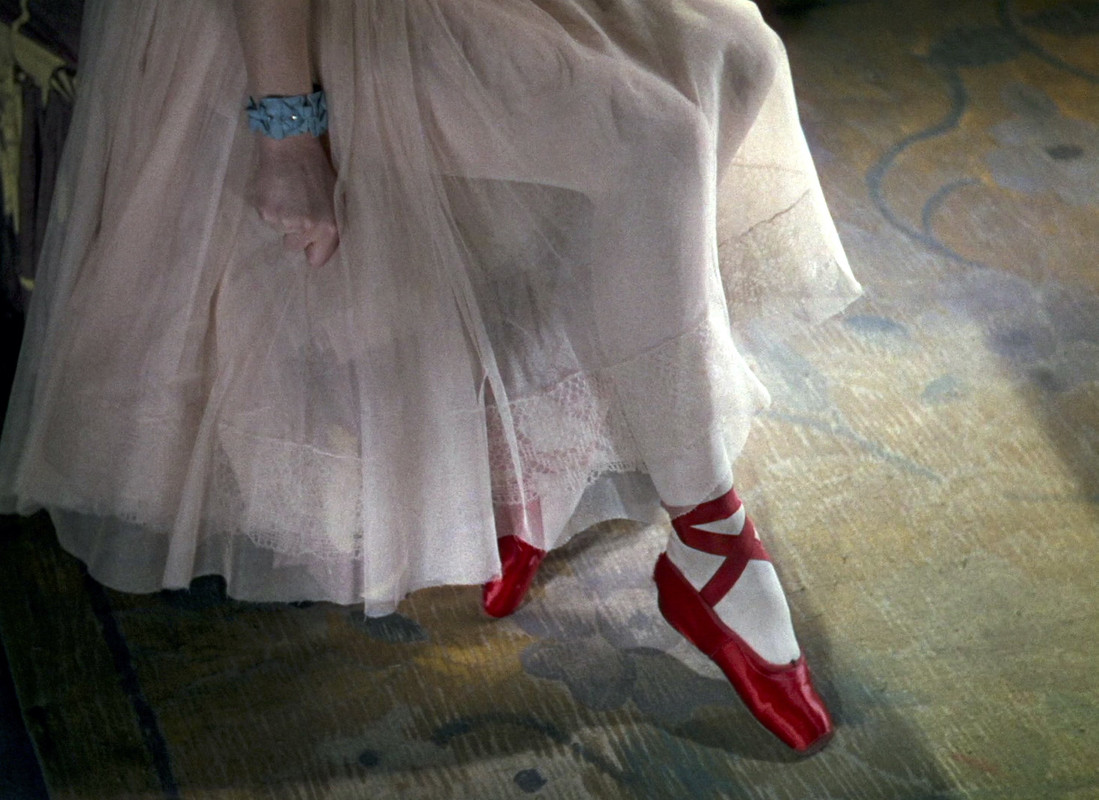
A ballerina's lower body in focus. She wears a long tulle off-white dress, slightly sheer, with her white stockings showing through slightly. Part of her right lower arm is visible, the hand clutched, a turquoise bracelet on the wrist. What stands out most are her ruby red ballet shoes that appear to move away from her. The backdrop is a dull, washed out carpet. DP: Jack Cardiff.
Red: best use of red in food or fashion*
“She looked at the red shoes, for she thought there was no harm in looking. She put them on, for she thought there was no harm in that either. But then she went to the ball and began dancing. When she tried to turn to the right, the shoes turned to the left. When she wanted to dance up the ballroom, her shoes danced down. They danced down the stairs, into the street, and out through the gate of the town. Dance she did, and dance she must, straight into the dark woods.”
– Hans Christian Andersen, De røde Skoe (1845, tranl. Jean Hersholt, 1949), via
Another one of The Archers' #Technicolor extravaganzas. This time, not to wow the worn-down post-war black-and-white audience, but as an an active storytelling instrument.
Built around Hans Christian Andersen's haunting tale De røde Skoe (1845).
.png)