view
Sevmek Zamanı [Time to Love] (Metin Erksan, 1965)
Jan
6
Muslim-American Heritage Month
The man, the woman, and her portrait. DP: Mengü Yeğin.
“Study me as much as you like, you will not know me, for I differ in a hundred ways from what you see me to be. Put yourself behind my eyes and see me as I see myself, for I have chosen to dwell in a place you cannot see.”
view
Space Is the Place (John Coney, 1974)
Jan
5
Space Shuttle
Ra's arrival. DP: Seth Hill.
“I came from a dream that the Black man dreamed long ago. I’m actually a presence sent to you by your ancestors.”
view
Sevmek Zamanı [Time to Love] (Metin Erksan, 1965)
Jan
4
fruit
In a modernist room under renovation, two man idle through their lunch. The elder, a Sufi, plays his tanbur, the younger looks out of a window. There's a sense of melancholy. DP: Mengü Yeğin.
view
Escrime [Fencing] (Étienne-Jules Marey, 1890)
Jan
4
revolvers
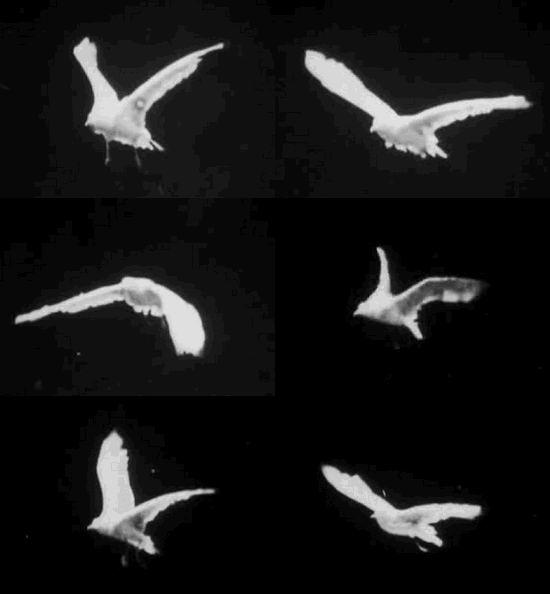
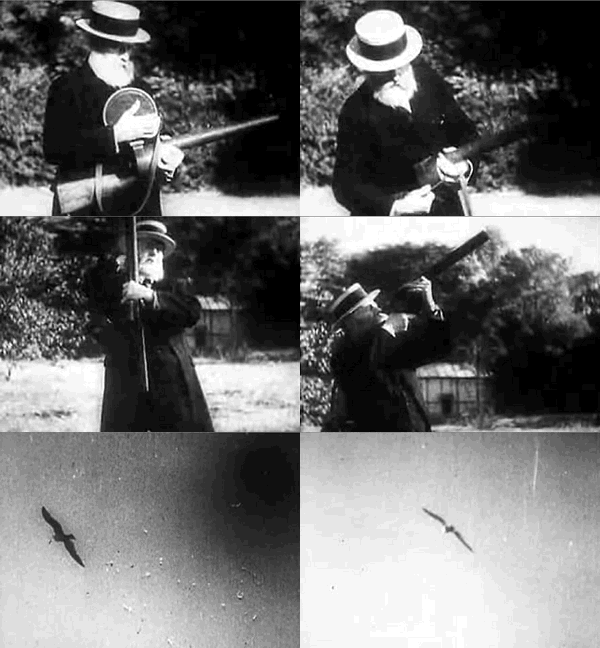
A revolver to commemorate Samuel Colt's sale of 1 000 revolvers to butcher Captain Samuel Walker in 1847.
“Art and science encounter each other when they seek exactitude.”
– Étienne-Jules Marey
view
他人の顔 [Tanin no kao / The Face of Another] (Hiroshi Teshigahara, 1966)
Jan
3
Tutankhamun's tomb
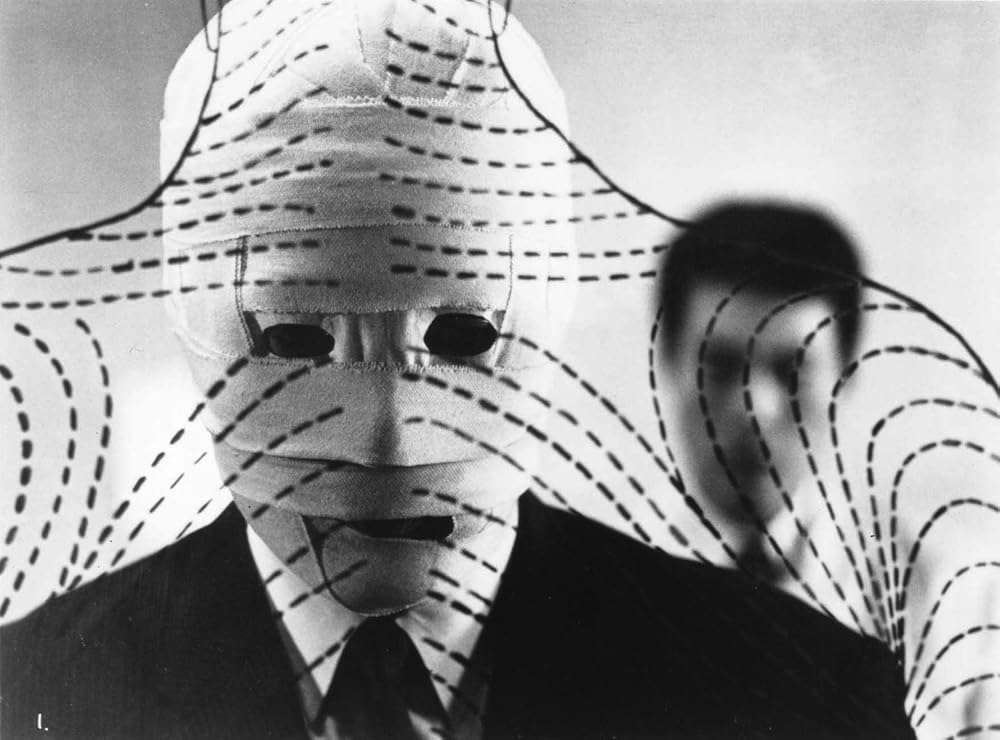
Mr. Okuyama (Tatsuya Nakadai). DP: Hiroshi Segawa.
Bandages for that day in 1924 when Howard Carter came across Tutankhamun's sarcophagus.
“You'll feel better soon. Once you're used to the mask, you'll be a new man — one with no records, no past. A mind invisible to the world.”
– psychiatrist
view
Die Nibelungen: Siegfried (Fritz Lang, 1924)
Jan
2
dragons
Siegfried (Paul Richter), seen from the back, bathing in the blood of the slain dragon. On his left shoulder blade, a linden leaf. DPs: Carl Hoffmann, Günther Rittau & Walter Ruttmann.
view
À propos de Nice – point de vue documenté [À propos de Nice] (Boris Kaufman + Jean Vigo, 1930)
Jan
1
New Year's Day
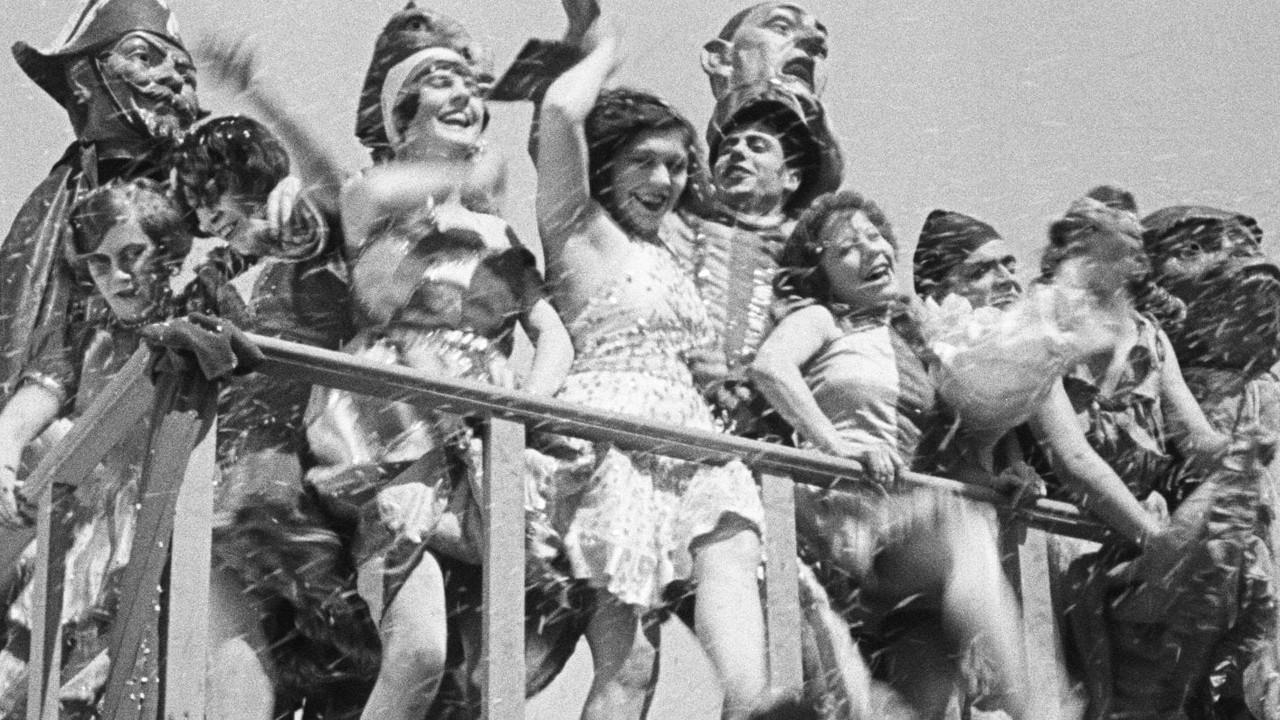
Exuberant prostitutes, Jean Vigo (5th from the left), and some who appear to be men in drag, dance on a landing with confetti all around them. In the moving footage they can be seen high-kicking with increased vulgarity, the camera posed below them. DP: Boris Kaufman.
Confetti for New Year's Day.
“In this film, by showing certain basic aspects of a city, a way of life is put on trial… the last gasps of a society so lost in its escapism that it sickens you and makes you sympathetic to a revolutionary solution.”
view
The Clock (Christian Marclay, 2010)
Dec
31
Hogmanay
Prof. Charles Rankin (Orson Welles) during the climax in The Stranger (1946). The clocktower strikes midnight. DP: Russell Metty.
Midnight: it's Hogmanay in Scotland.
“There's no clue to the identify of Franz Kindler; except one little thing. He has a hobby that almost amounts to a mania: clocks.”
– Mr. Wilson
The Clock takes place over – and lasts – 24 hours, with each moment either being shown in a film still or mentioned by characters during a scene. In total, there are over 12 000 scenes edited into Marclay's tour de force.
view
Auch Zwerge haben klein angefangen [Even Dwarfs Started Small] (Werner Herzog, 1970)
Dec
30
National Short Person Day
Some of the main cast members, with three women in focus. They're outdoors and several animals, including a kneeling dromedary, can be spotted in the background. DP: Thomas Mauch.
A short main character for National Short Person Day (USA).
“When we behave nobody cares. But when we are bad nobody forgets.”
– Hombré
view
Teorema [Theorem] (Pier Paolo Pasolini, 1968)
Dec
29
Independence Day of Mongolia
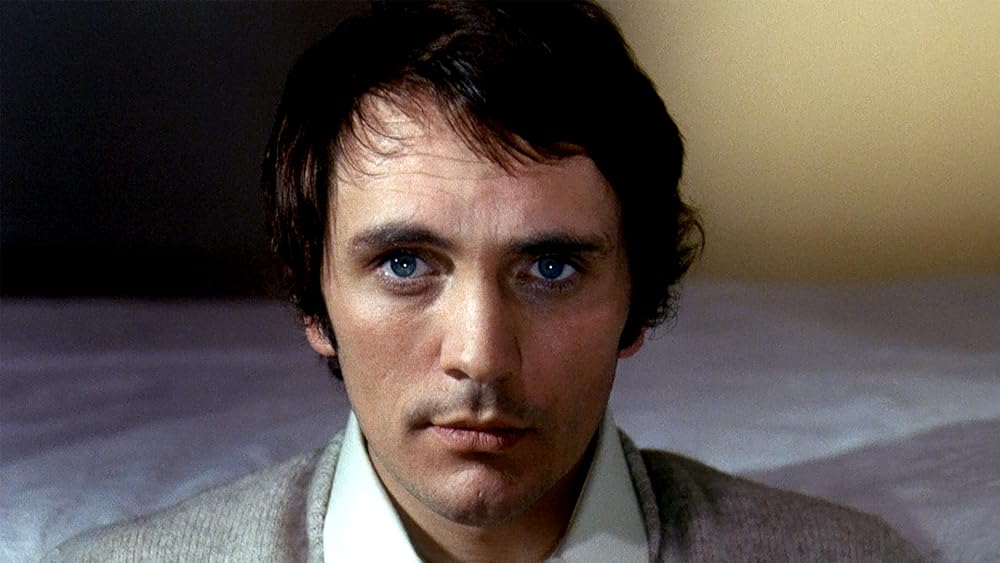
The visitor (Terence Stamp) in intimate closeup. DP: Giuseppe Ruzzolini.
Someone finds their independence: Independence Day of Mongolia (Үндэсний эрх чөлөө, тусгаар тогтнолоо сэргээсний баярын өдөр).
“I no longer even recognize myself. What made me like the others has been destroyed. I was like everyone else, with many faults, perhaps, mine and those of the world around me. You made me different by taking me out of the natural order of things.”
– Pietro, the son


.png)