view
Äppelkriget [The Apple War] (Tage Danielsson, 1971)
Sep
17
National Apple Dumpling Day
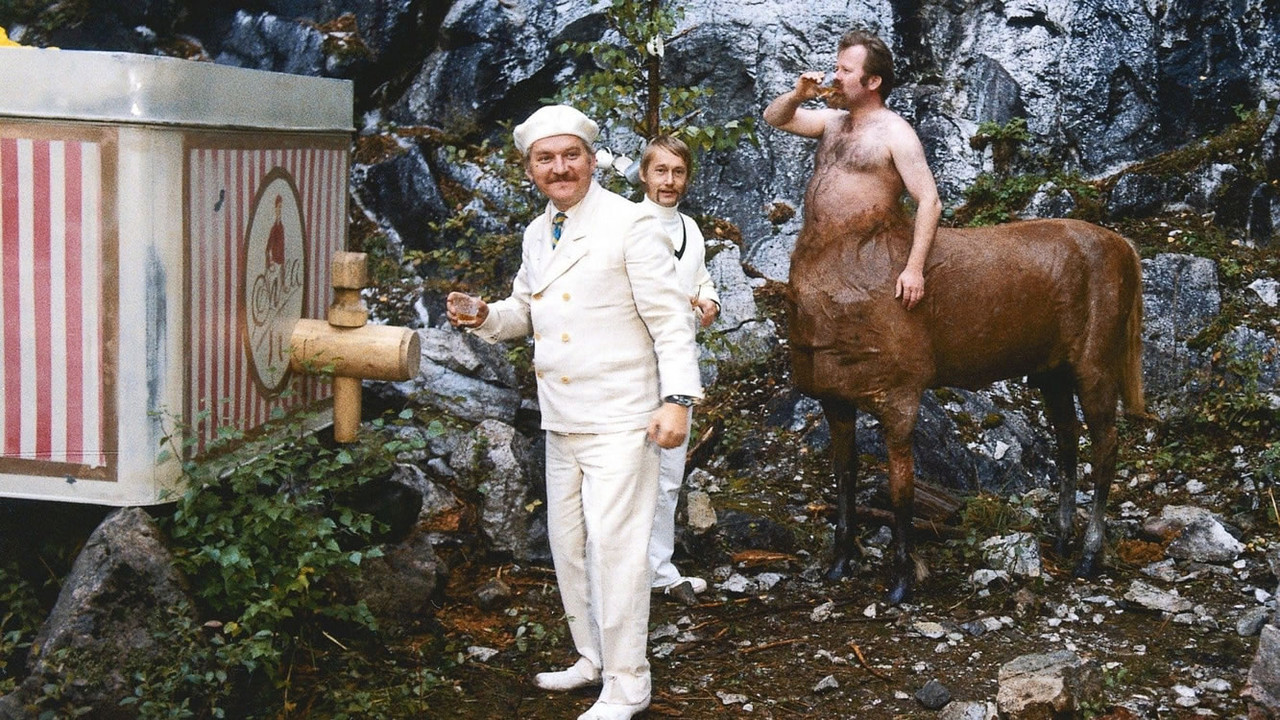
Locals and a centaur – half man, half papier-mâché – enjoy a drink. DP: Lars Swanberg.
– What are you gonna do with tons of apples? They can't be sold! Ask any apple farmer! They just pile up and rot!
– The apple farmers?
– No. The apples!
A beautiful, picturesque part of Sweden will become… Deutschneyland! At least, that's the brilliant business plan Herr Volkswagner has. But the local apple farmers – a large family that's half human, half mythological creatures – have no need for an amusement park on their grounds.
view
Sweet Movie (Dušan Makavejev, 1974)
Sep
13
International Chocolate Day
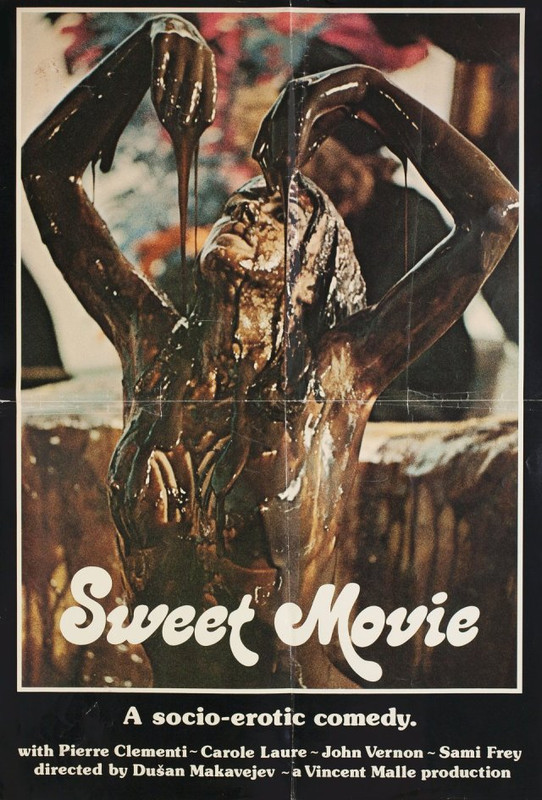
The most virgin, Miss 1984 (Carole Laure), bathing in chocolate. DP: Pierre Lhomme.
“In all my years of practice, I've never seen anything so sweet. A rosebud.”
– Dr. Mittelfinger
Miss Canada, winner of the “most virgin” contest, escapes her rich, milk tycoon husband into a world of anarchy, lust, and sugar.
view
Jaider, der einsame Jäger [Jaider, the Lonely Hunter] (Volker Vogeler, 1971)
Sep
5
Mother Teresa
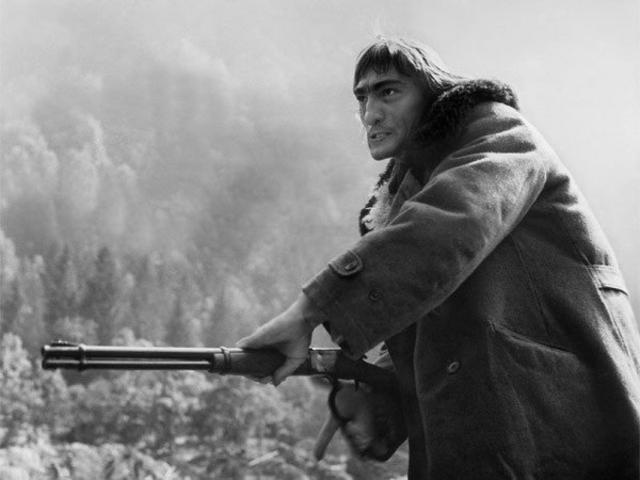
Gottfried John as Jaider (via). DP: Gérard Vandenberg.
“Denn auf den Bergen, ja da ist die Freiheit,
denn auf den Bergen ist es doch so schön,
dort wo auf grauenhafte Weise
der Jennerwein zugrund mußt gehn.”
Jennerwein-Lied, 19th c.
Jaider, just returned home from the Franco-Prussian War and incapable to find work, turns to poaching to feed himself and his impoverished town. Soon he leads a gang of poachers, who in their turn are hunted by Bavarian soldiers and state-sanctioned hunters. Loosely based on legendary “Jaider” (“hunter”) and poacher Georg Jennerwein.
view
Endişe [Anxiety] (Yılmaz Güney + Şerif Gören, 1974)
Sep
1
Labor Day
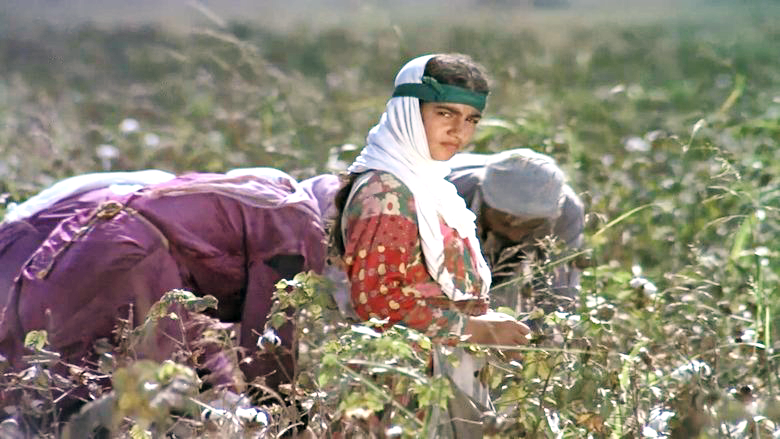
A Kurdish worker in the cotton fields. She looks straight into the camera while two others continue their work. DP: Kenan Ormanlar.
The Industrial Revolution, or unions, for Labor Day (USA)
Kurdish seasonal cotton pickers fear losing their job when mechanisation is preferred by their overseers. While unionising, Cevher, one of the workers – tries to stay out of the hands of his enemies, who want him because of a blood feud.
view
Månen är en grön ost [The Moon Is a Green Cheese] (Mai Zetterling, 1977)
Aug
21
violet
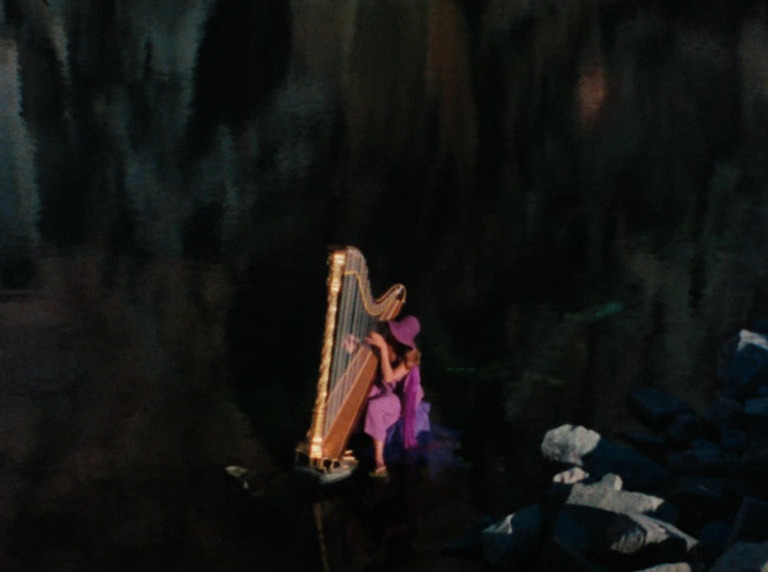
A woman in a violet dress and sunhat, plays a harp in the middle of a lake (via). DP: John Bulmer.
Violet in food or fashion. If in doubt, pick a title with ALL the colours of the rainbow!*
During their stay in the family summer house, two sisters imagine themselves as adults, once for every colour of the rainbow.
view
Le camion [The Lorry] (Marguerite Duras, 1977)
Aug
16
indigo
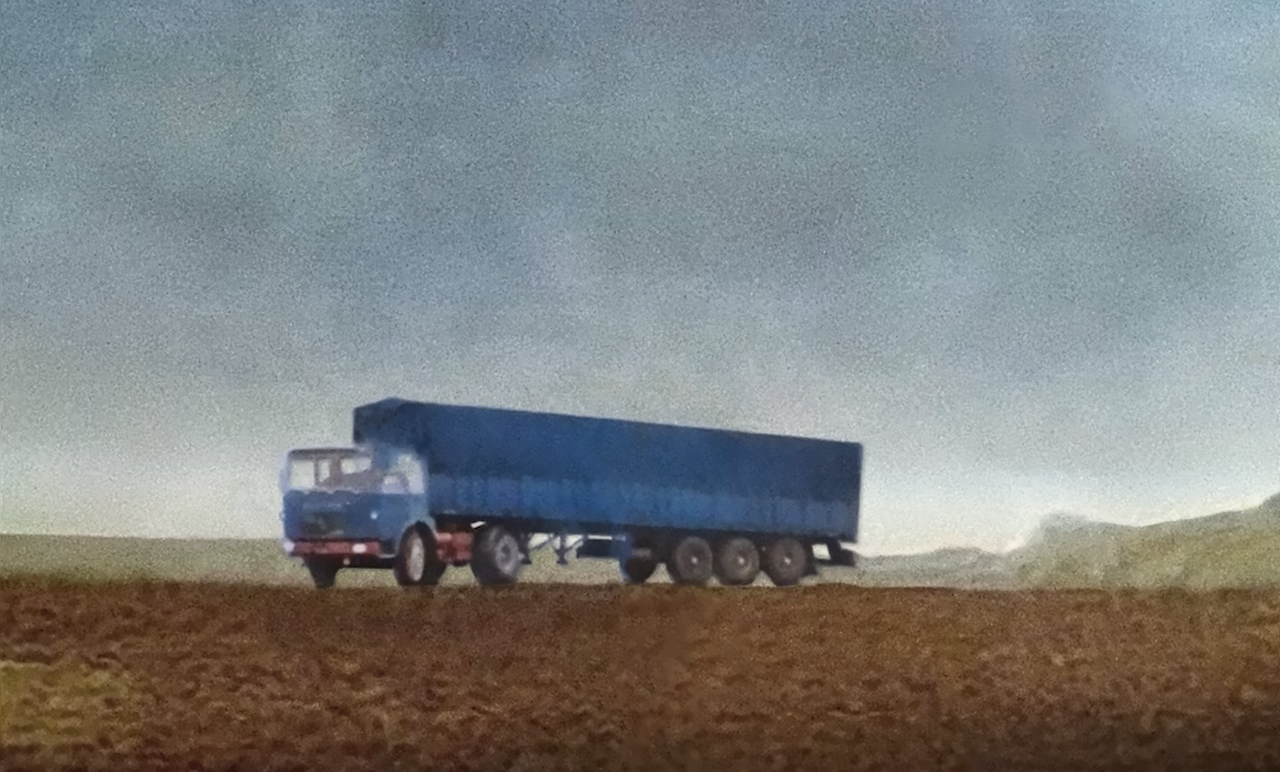
Indigo: a building or structure*
Him: It’s a film?
Her: It would have been a film.
A truck, both the narrative structure and his (Depardieu's character) material representation. She – the director – and he – the lead actor – do a read-though while discussing her script. A communist truck driver picks up a female hitchhiker. They discuss the landscape, the cosmos, pointlessness, communism of course. All the while, the indigo truck plods on.
view
Il fiore delle mille e una notte [Arabian Nights] (Pier Paolo Pasolini, 1974)
Aug
13
cerulean
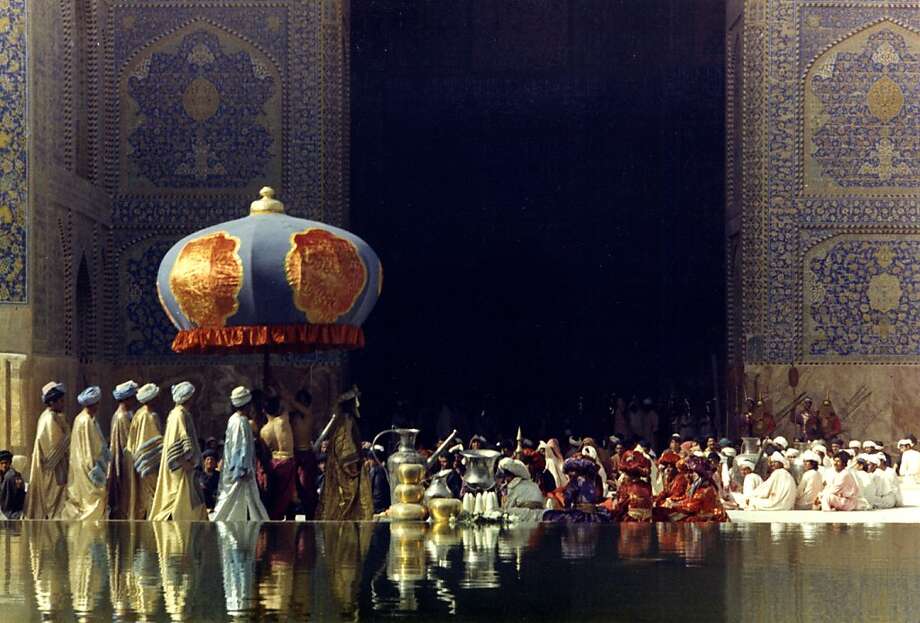
Cerulean, or blue: a building or structure*
“Eh, i sogni a volte insegnano male, Dùnya, perché la verità intera non è mai in un solo sogno, la verità intera è in molti sogni.”
One of the many exotic locations is the مسجد شاه, [Masjed-e Shah, or Shah Mosque] in Iran with its otherworldly blue and blue-adjacent tiles.
view
Ovoce stromů rajských jíme [We Eat the Fruit of the Trees of Paradise] (Věra Chytilová, 1970)
Aug
6
orange
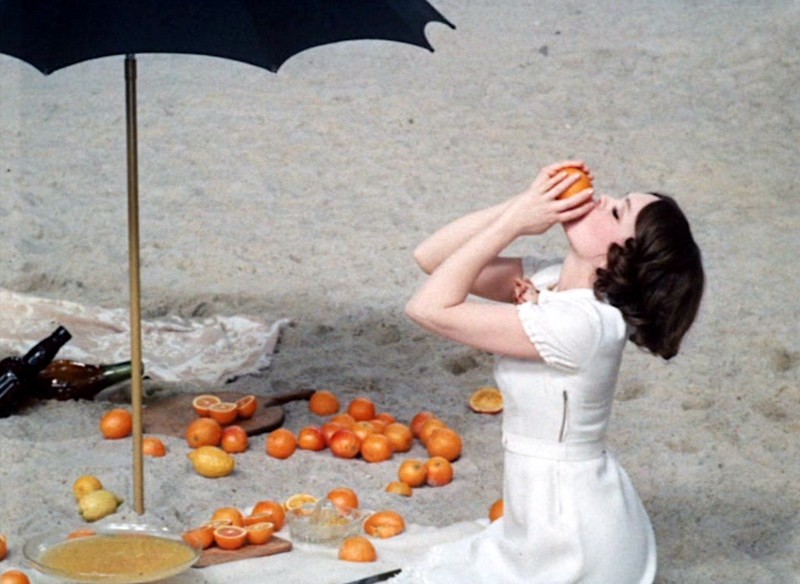
Eva (Jitka Novákova) devouring oranges under a black umbrella (via). DP: Jaroslav Kučera.
Orange, food or fashion*
“Tell me the truth!”
– choir
view
Viskningar och rop [Cries and Whispers] (Ingmar Bergman, 1972)
Aug
1
red
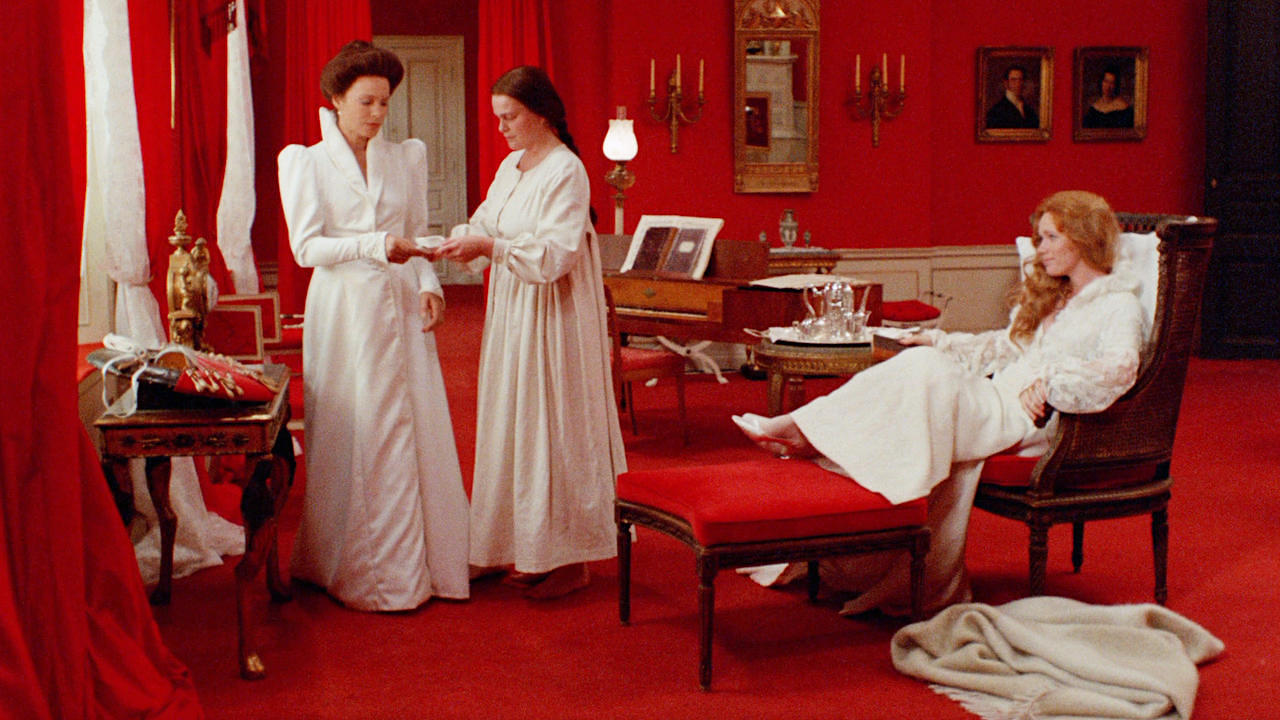
The three sisters in the red room (via). DP: Sven Nykvist.
Red: a building or structure*
“It's just a dream, Agnes.”
– Anna
Red as an expression of inner and outer worlds. Even the scene transitions are red.
view
The Tempest (Derek Jarman, 1979)
Jul
28
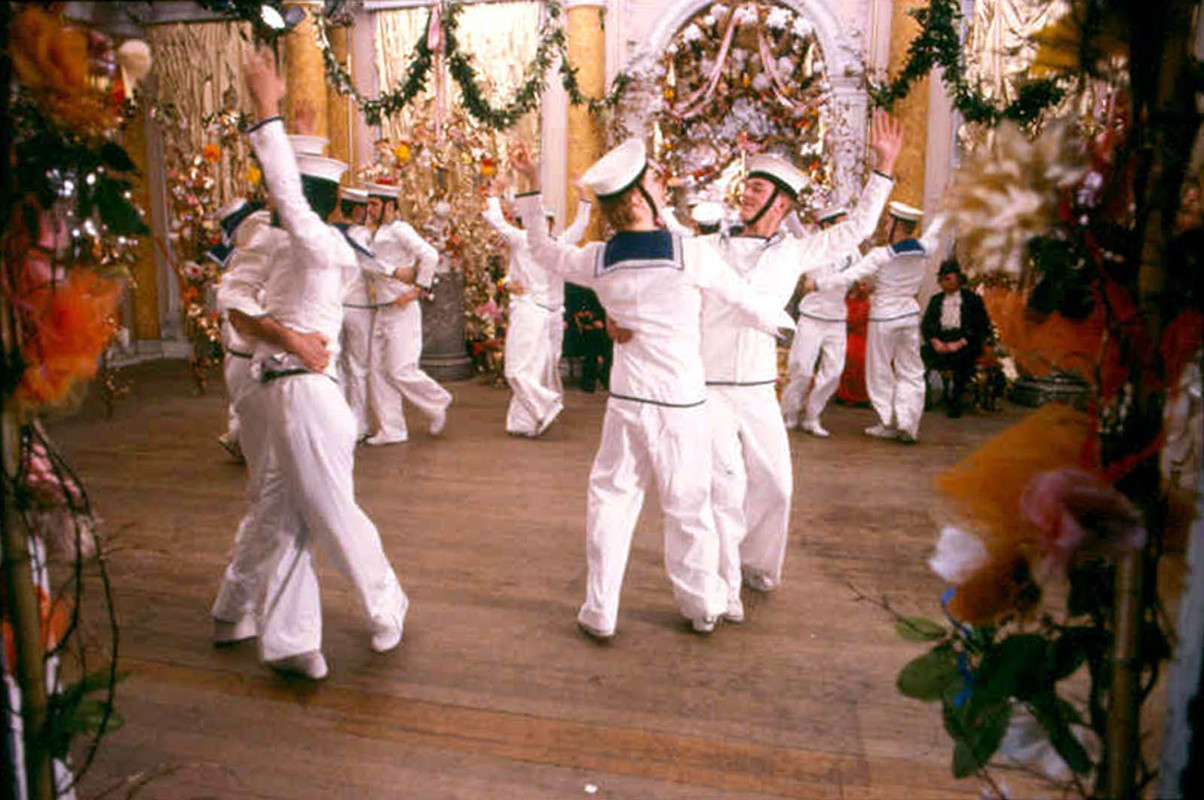
Local nightlife: people dancing or at a show*
“Don't know why
There's no sun up in the sky
Stormy weather
Since my man and I ain't together
Keeps raining all of the time
Oh, yeah
Life is bad
Gloom and misery everywhere
Stormy weather, stormy weather
And I just can get my poor self together
Oh, I'm weary all of the time
The time, so weary all of the time
When he went away
The blues walked in and met me
Oh, yeah if he stays away
Old rocking chair's gonna get me
All I do is pray
The Lord will let me
Walk in the sun once more
Oh, I can't go on, can't go on, can't go on
Everything I have is gone
Stormy weather, stormy weather
Since my man and I, me and my daddy ain't together
Keeps raining all of the time
Oh, oh, keeps raining all of the time
Oh, yeah, yeah, yeah raining all of the time
Stormy stormy
Stormy weather
Yeah”
– Elisabeth Welch, Stormy Weather (Harold Arlen & Ted Koehler, 1933)