view
Canon City (Crane Wilbur, 1948)
Jul
31
grub
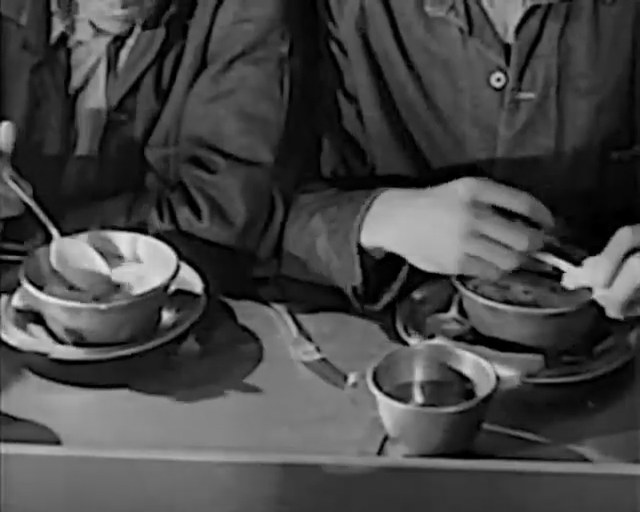
A close-up of two prisoners' hands. One is handling grub with a spoon from a stainless steel soup bowl. DP: John Alton.
view
Serpico (Sidney Lumet, 1973)
Jul
30
National Whistleblower Day
The cover of the Austrian film magazine “Neues Filmprogramm”. A red-filtered lobby card of Frank Serpico (Al Pacino) and his partner (F. Murray Abraham, uncredited) during police proceedings. DP: Arthur J. Ornitz.
In the late 1960s, Frank Serpico worked as a plainclothes cop for the #NYPD. He spoke out when he uncovered systematic, widespread #corruption within the force, but his findings were ignored. In 1970, Serpico cowrote a page 1 article for the New York Times about the problem, which led to the instalment of the Commission to Investigate Alleged Police Corruption aka the Knapp Commission.
“The reality is that we do not wash our own laundry; it just gets dirtier.”
– Frank Serpico
view
Black Narcissus (Michael Powell + Emeric Pressburger, 1947)
Jul
29
National Lipstick Day
spoiler warning: click to toggle image
spoiler warning: click to toggle caption
“Do you think it's a good thing to let her feel important?”
– Sister Clodagh
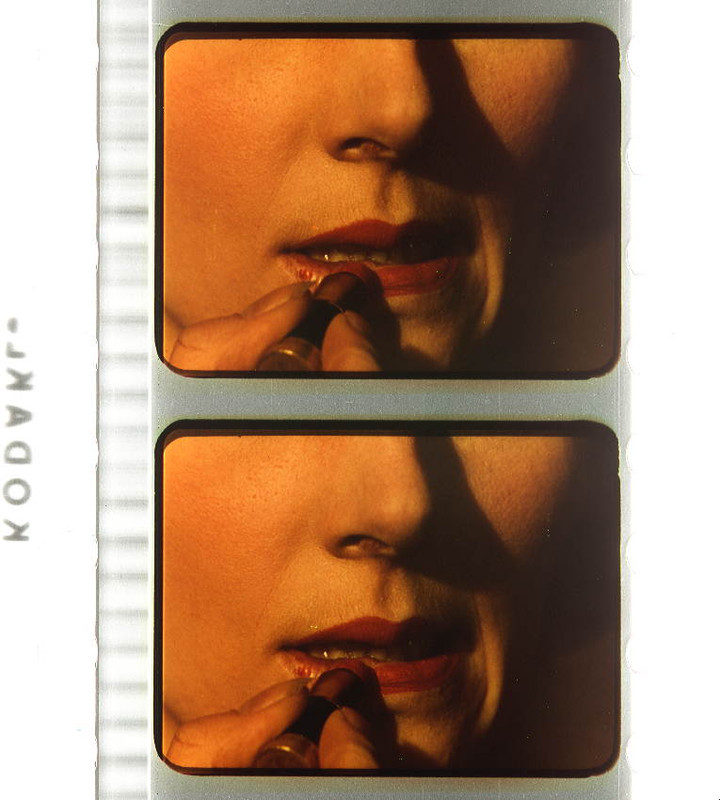
With Jack Cardiff's sweeping cinematography and #Technicolor splendour, Black Narcissus establishes a stark contrast between the Sisters dour piety, the luminance of the Himalayan landscape, and the spellbinding pull of worldly desire. The bewitching #lipstick scene, set in a dimly lit space, works as well as it does precisely because of the scene's photography. That red smear, like blood pulsating from a fresh wound, becomes a deeply unsettling, vulgar gesture.
view
La ragazza con la pistola [The Girl with a Pistol] (Mario Monicelli, 1968)
Jul
28
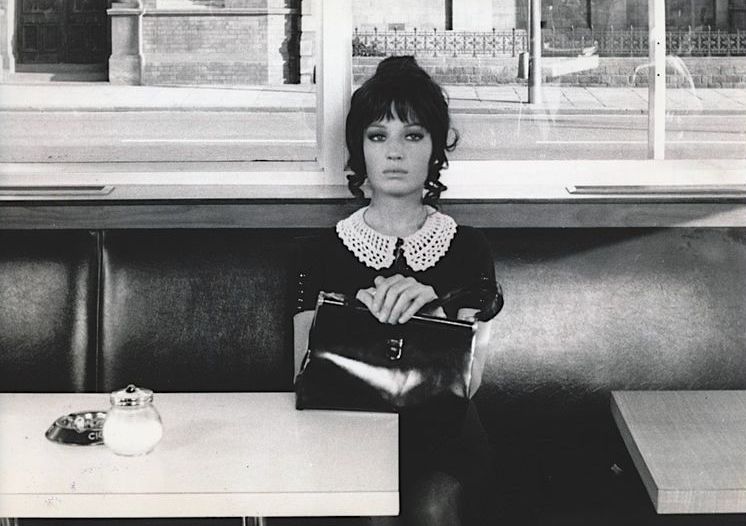
Assunta Patanè (Monica Vitti) seated between two dinner tables on a long, padded bench. She's clutching her purse and appears to be waiting for something. On the table to her right a sugar bowl and a branded ashtray. DP: Carlo Di Palma.
“Ah, well, if you love somebody, shoot!”
– Dr. Tom Osborne
view
Die Angst des Tormanns beim Elfmeter [The Goalie's Anxiety at the Penalty Kick] (Wim Wenders, 1972)
Jul
28
National Soccer Day
Trainer, reserve players and goalkeeper Bloch on the bench after the latter has been removed from the match. Bloch (Arthur Brauss) has his upper body turned away from the others' and sits with only half of his backside on the bench. DP: Robby Müller.
A lot of #soccer there's not, in Wim Wenders' Die Angst des Tormanns beim Elfmeter. What we do have happens almost right at the start. After a foul, the titular goalkeeper Bloch (Arthur Brauss) is removed from the match. Frustrated he leaves and finds himself roaming the streets of #Vienna where he picks up boxoffice girl Gloria (Erika Pluhar). In the morning he kills her and travels to the countryside, waiting for the police to arrest him.
“Ich werde mich entschlossen verirren.”
– Peter Handke
A very slow burning road movie, a Taxi Driver in reverse if you will, that does without the neurotic showmanship of its Hollywood counterpart.
view
Culloden [The Battle of Culloden] (Peter Watkins, 1964)
Jul
27
Bagpipe Appreciation Day
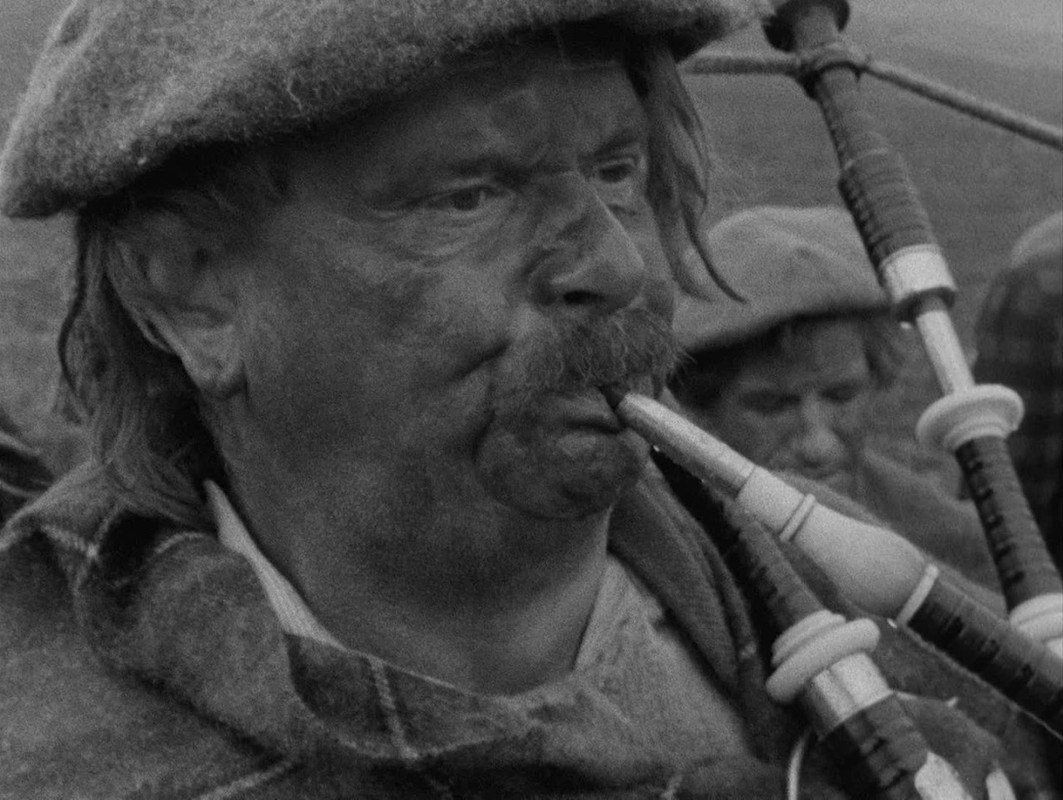
John Hunt Leigh in Culloden, pìobaireachd “ceòl mór” (litt. piping “great music”). DP: Dick Bush.
Great Highland #bagpipes, or a' phìob mhòr as they're called in Scottish Gaelic, are traditionally played on the battlefield. Peter Watkins' Culloden moves the senseless bloodshed from 1960s Vietnam to the Scottish Highlands of 1746.
“And wherever he went, he took with him his music, his poetry, his language and his children… thus within a century of Culloden, the English and the Scottish lowlanders had made secure forever their religion, their commerce, their culture, their ruling dynasty.”
– narrator
view
Festival panafricain d'Alger [The Panafrican Festival in Algiers] (William Klein, 1969)
Jul
26
One Voice Day
Black hands holding each other. In translation the caption reads “Down with colonialism! Down with imperialism!”. DP: William Klein et al.
In typical Western fashion the credits for William Klein's Festival panafricain d'Alger focusses on the French and American participants. After Algeria regained its independence in 1962, it became Africa's – and the #AfricanDiaspora's – centre for postcolonial and liberation moments.
“À bas le colonialisme ! À bas l'imperialisme !”
The 12-day Festival panafricain attracted 5000 people from all over the African continent, as well as liberation fighters from the United States.
view
Moć [Power] (Vlatko Gilić, 1973)
Jul
25
Threading The Needle Day
One of the men, threading the needle. He's young, bearded, and shirtless and in what appears to be a cave or cellar. DP: Ljubomir Ivković.
Strangely homoerotic and determinately violent, Moć feels deeply rooted in the #Serbian psyche. There's beauty and an unflinching élan-vital under the skin, a tenderness that comes with great, unmentionable #pain, love and death.
view
L'homme qui ment [The Man Who Lies] (Alain Robbe-Grillet, 1968)
Jul
25
soup
The titular man (Jean-Louis Trintignant) at a dinner table, observed by Sylvia (Sylvia Turbová) and Maria (Sylvie Bréal). The room is white and sparsely furnished. DP: Igor Luther.