view
Les abysses [The Depths] (Nikos Papatakis, 1963)
Feb
18
pancakes
Michèle and Marie-Louise (real-life sisters Francine and Colette Bergé) as the real-life Papin sisters prepare crêpes for Monsieur. DP: Jean-Michel Boussaguet.
– Why are we making pancakes?
– Monsieur likes them. Besides, what else is there?
view
Le charme discret de la bourgeoisie [The Discreet Charm of the Bourgeoisie] (Luis Buñuel, 1972)
Feb
16
No One Eats Alone Day
The diners at a long table. DP: Edmond Richard.
“My God. What am I doing in this place?”
– Henri Sénéchal
The bourgeoisie meet for dinner in various settings, but never consume.
* this event takes place on the Friday of the second full week in February, which makes the 2025 date February 14.
view
Adieu Philippine [Farewell, Philippine] (Jacques Rozier, 1962)
Feb
11
friendship
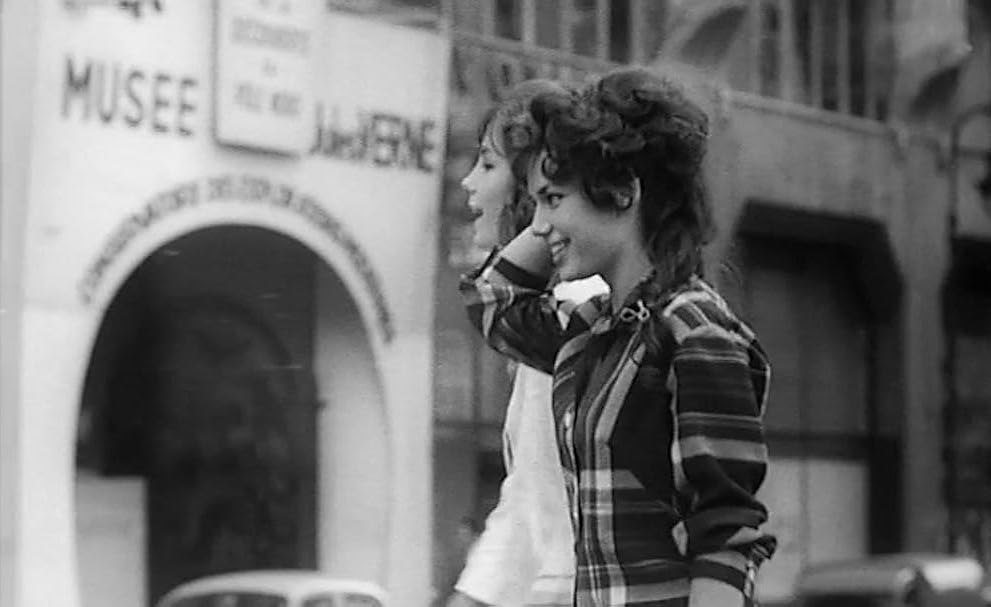
Juliette and Liliane (Stefania Sabatini and Yveline Céry) walk along a promenade in a beautiful, vérité tracking shot. DP: René Mathelin.
A film about friendship for Jennifer Anniston's birthday (1969).
1960. Michel is due to leave for Algeria to serve in the Algerian War. Juliette and Liliane are best friends as inseparable as “Filipino almonds”(?). When they meet, the girls decide to join Michel on his final vacation, on Corsica.
view
La notte [The Night] (Michelangelo Antonioni, 1961)
Feb
7
Falò delle vanità – 1497
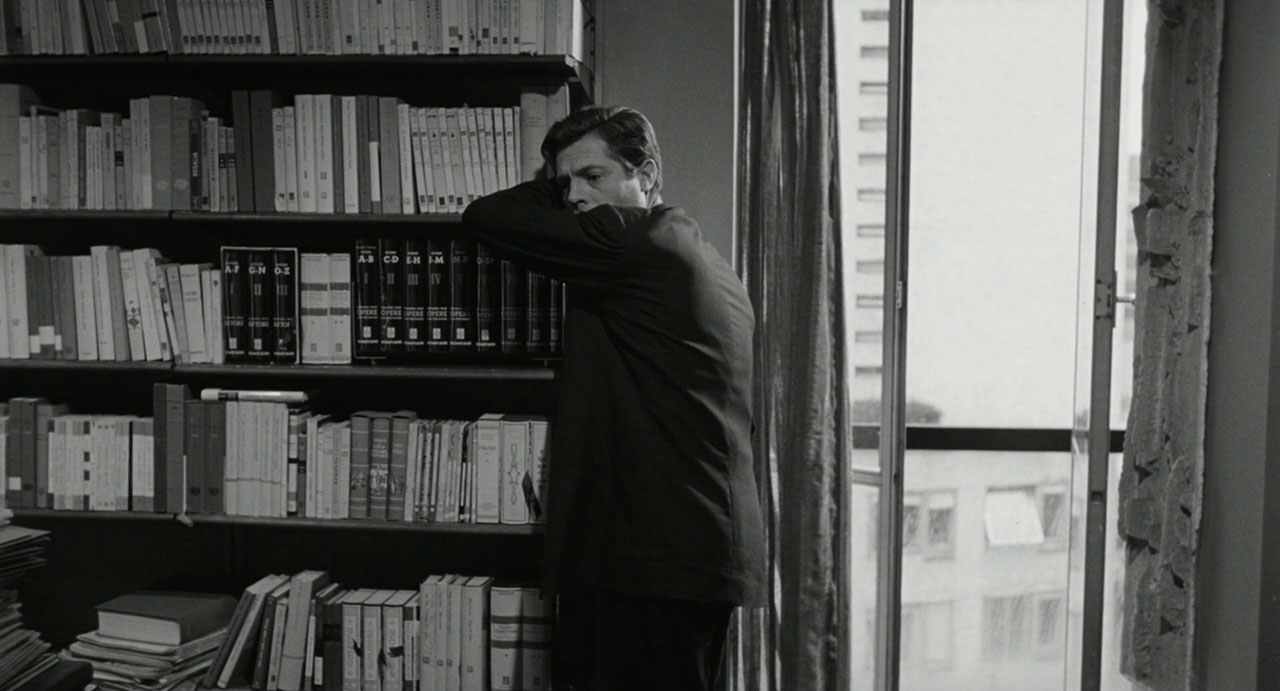
Author Giovanni Pontano (Marcello Mastroianni) pondering next to a full bookcase. DP: Gianni Di Venanzo.
“I used to spend afternoons reading in bed. Tommaso would call and find me there. He could have kissed me. I wouldn't have resisted, out of boredom. But he was satisfied to watch me as I read. All those purposeless books.”
– Lidia
A lavish #CocktailParty in celebration of the launch of a novel is bookended by tragedy, in the loss of a befriended writer and the unraveling of another writer and his wife's marriage.
view
Orlando (Sally Potter, 1992)
Jan
24
Billy Zane's birthday
Orlando (Tilda Swinton) and Shelmerdine (Billy Zane) in intimate embrace. DPs: Aleksey Rodionov & Andrew Speller.
A [favourite] Billy Zane film for his birthday (1966).
“This future of yours Shelmerdine, when it's gonna begin? Today? Or, is it always tomorrow?”
– Orlando
As ordered by Queen Elizabeth I (Quentin Crisp), nobleman Orlando remains young and traverses exotic scenery, civilisations, time, and gender.
view
La baie des anges [Bay of Angels] (Jacques Demy, 1963)
Jan
9
Wheel of Fortune
Jean (Claude Mann) and Jackie (Jeanne Moreau) at a casino table. The tension is palpable. DP: Jean Rabier.
Good, or bad, fortune on the day Wheel of Fortune premiered in 1975.
– How much did you win?
– 500,000 in less than an hour. It's immoral, but no more than anything else. No more than poverty or ugliness.
view
Mauvais sang [Bad Blood / The Night Is Young] (Leos Carax, 1986)
Jan
8
David Bowie – 1947
(Alex) Denis Lavant in a scene set to David Bowie's Modern Love. DP: Jean-Yves Escoffier.
A [favourite] scene featuring a Bowie song for David Bowie's birthday (1947).
“They pulled in just behind the fridge
He lays her down, he frowns
“Gee, my life's a funny thing
Am I still too young?”
He kissed her then and there
She took his ring, took his babies
It took him minutes, took her nowhere
Heaven knows, she'd have taken anything”
– David Bowie, Modern Love (from Let's Dance, 1983)
view
Escrime [Fencing] (Étienne-Jules Marey, 1890)
Jan
4
revolvers
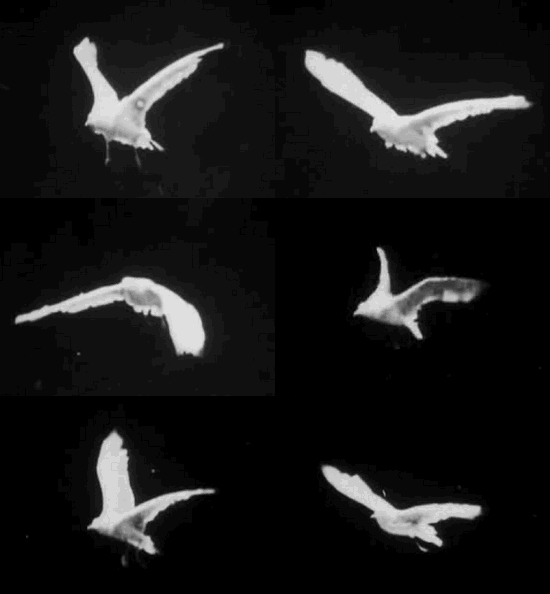
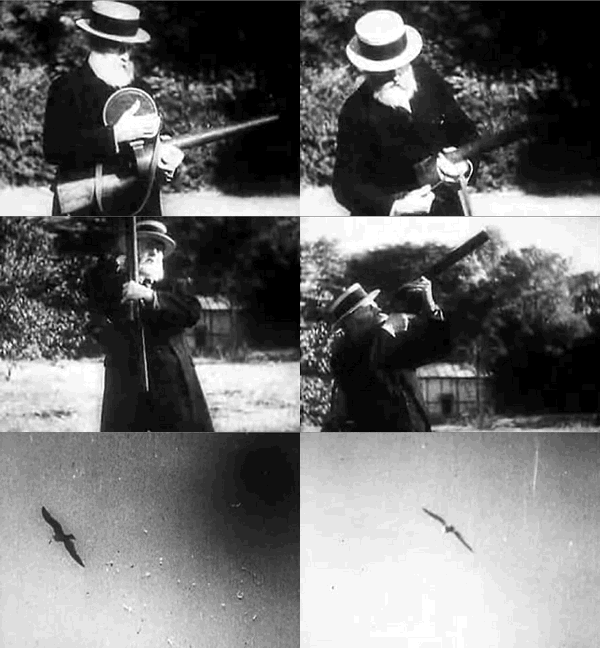
A revolver to commemorate Samuel Colt's sale of 1 000 revolvers to butcher Captain Samuel Walker in 1847.
“Art and science encounter each other when they seek exactitude.”
– Étienne-Jules Marey
view
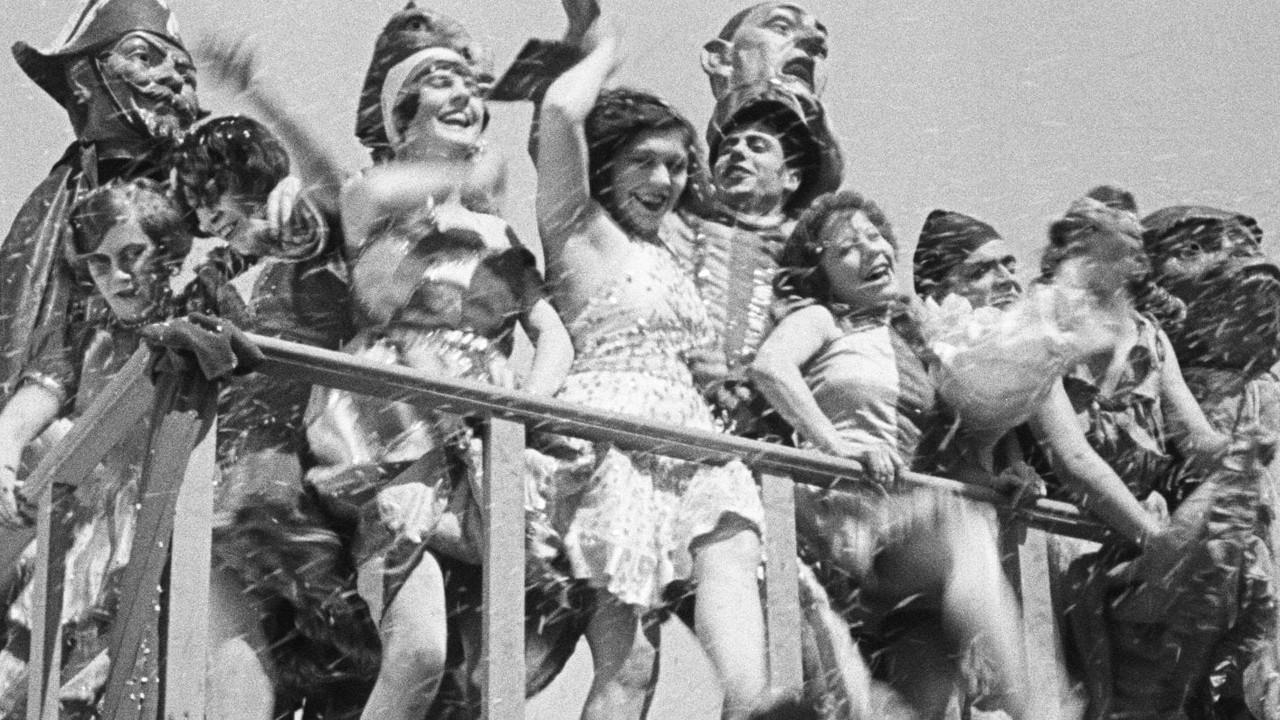
À propos de Nice – point de vue documenté [À propos de Nice] (Boris Kaufman + Jean Vigo, 1930)
Jan
1
New Year's Day
Exuberant prostitutes, Jean Vigo (5th from the left), and some who appear to be men in drag, dance on a landing with confetti all around them. In the moving footage they can be seen high-kicking with increased vulgarity, the camera posed below them. DP: Boris Kaufman.
Confetti for New Year's Day.
“In this film, by showing certain basic aspects of a city, a way of life is put on trial… the last gasps of a society so lost in its escapism that it sickens you and makes you sympathetic to a revolutionary solution.”
view
Les abysses [The Depths] (Nikos Papatakis, 1963)
Dec
2
sister's birthday
Michèle and Marie-Louise (real-life sisters Francine and Colette Bergé) as the real-life Papin sisters in their shared bedroom. DP: Jean-Michel Boussaguet.
Sisters for [OP's] sister's birthday.