view
Hexen bis aufs Blut gequält [Mark of the Devil] (Michael Armstrong + Adrian Hoven, 1970)
Nov
28
cheese
A very young, very pretty Udo Kier seated at a dinner table. There are various fruits on a platter and Udo's eating cheese. His outfit suggests the 18th century. DP: Ernst W. Kalinke.
“I accuse you of having trampled on the cross, of having ridden to the Sabbath, of throwing the Holy Cross of our Saviour into manure so that the skies grew dark, and the rain fell upon the earth!”
– Albino
view
Belle (André Delvaux, 1973)
Nov
28
Belle (Adriana Bogdan) in front of her cabin on the moors. DPs: Ghislain Cloquet & Charles Van Damme.
view
Un comisar acuză [A Police Inspector Calls] (Sergiu Nicolaescu, 1974)
Nov
26
1940
DP: Alexandru David.
Takes place on the night of November 26-27, 1940.
“Mister Moldovan, this is not for the first time that a criminal case is entrusted to you. It is precisely your political objectivity that made us choose you.”
– Alexandru Dincă
view
Mix-Up ou Meli-melo (Françoise Romand, 1986)
Nov
21
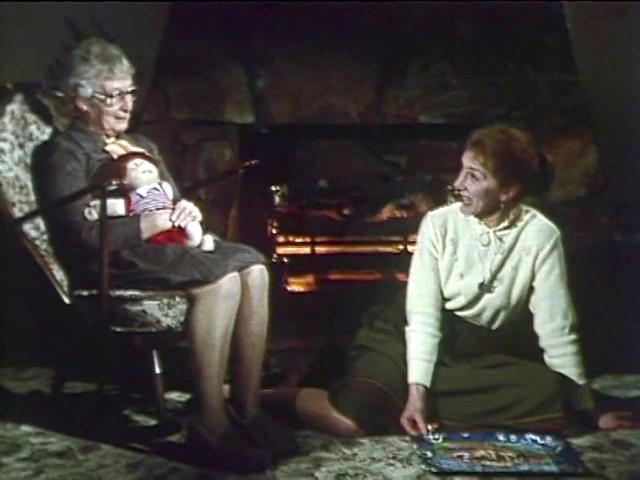
One of the daughters, here as a child, with one of their mothers. DP: Emile Navarro.
A heartfelt reunion scene*
“Oh, it's you.”
– Margaret Wheeler, welcoming the viewers to this curious retelling of her life's events
Through an unexplained muddle, the Wheeler and the Rylatt girls were mixed up at the maternity ward. One of the mothers, Mrs Wheeler, had a hunch something was off. Her girl was suspiciously long and skinny, unlike the one that was entrusted to her. Over the years and to Mrs Rylatt's increasing chagrin, Mrs Wheeler kept in touch with that woman from the maternity ward. And was proven to be correct. This film is one breezy yet tense reunion scene. Heartwarming, awkward, and – like all that's nostalgia – slightly surreal.
* the Bales 2025 Film Challenge for November is, again, not date-based, but follows a sloppy schmaltzy all-American Thanksgiving-y narrative. Trying to make it work my way.
view
The Criminal [The Concrete Jungle] (Joseph Losey, 1960)
Nov
21
chow time
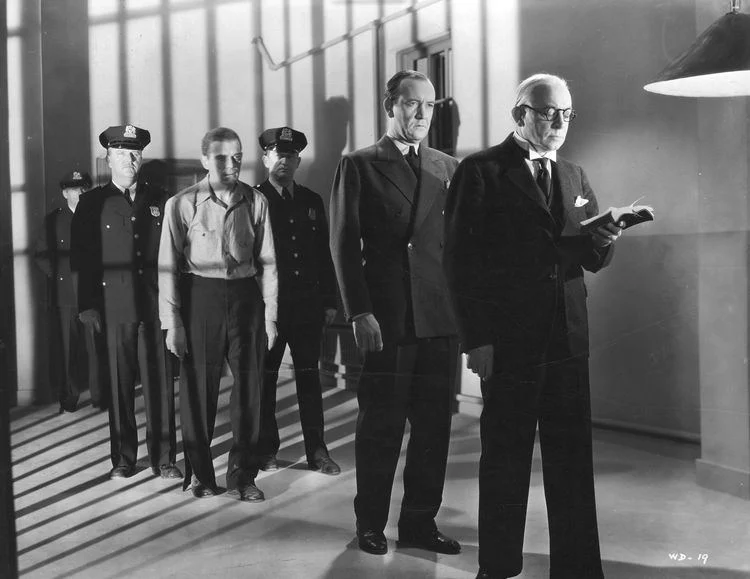
A prison space. Two tough looking guys in dark clothing appear to savour their meals. One of them is holding a book. DP: Robert Krasker.
view
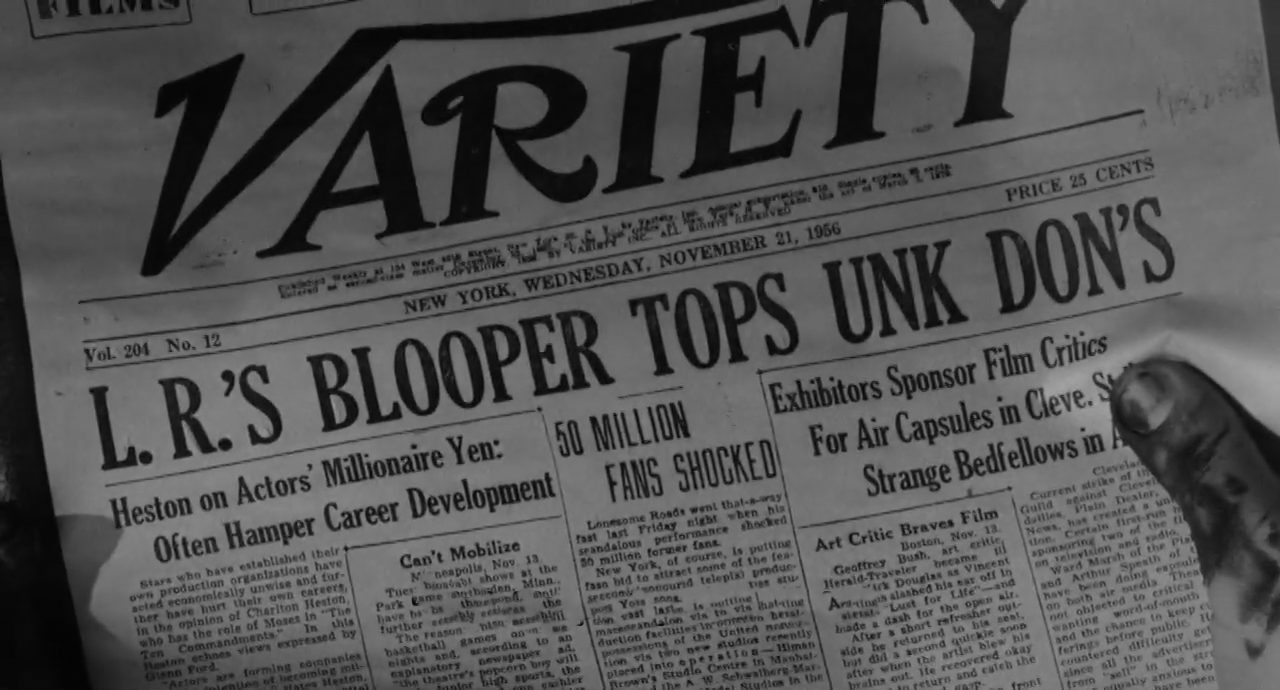
A Face in the Crowd (Elia Kazan, 1957)
Nov
21
1956
Variety blares L. R.'S BLOOPER TOPS UNK DON'S. It's Wednesday, November 21, 1956. DPs: Gayne Rescher & Harry Stradling Sr..
“I'm not just an entertainer. I'm an influence, a wielder of opinion, a force… a force!”
– Lonesome Rhodes
view
Ciao Manhattan (John Palmer + David Weisman, 1972)
Nov
21
1971
spoiler warning: click to toggle image
spoiler warning: click to read
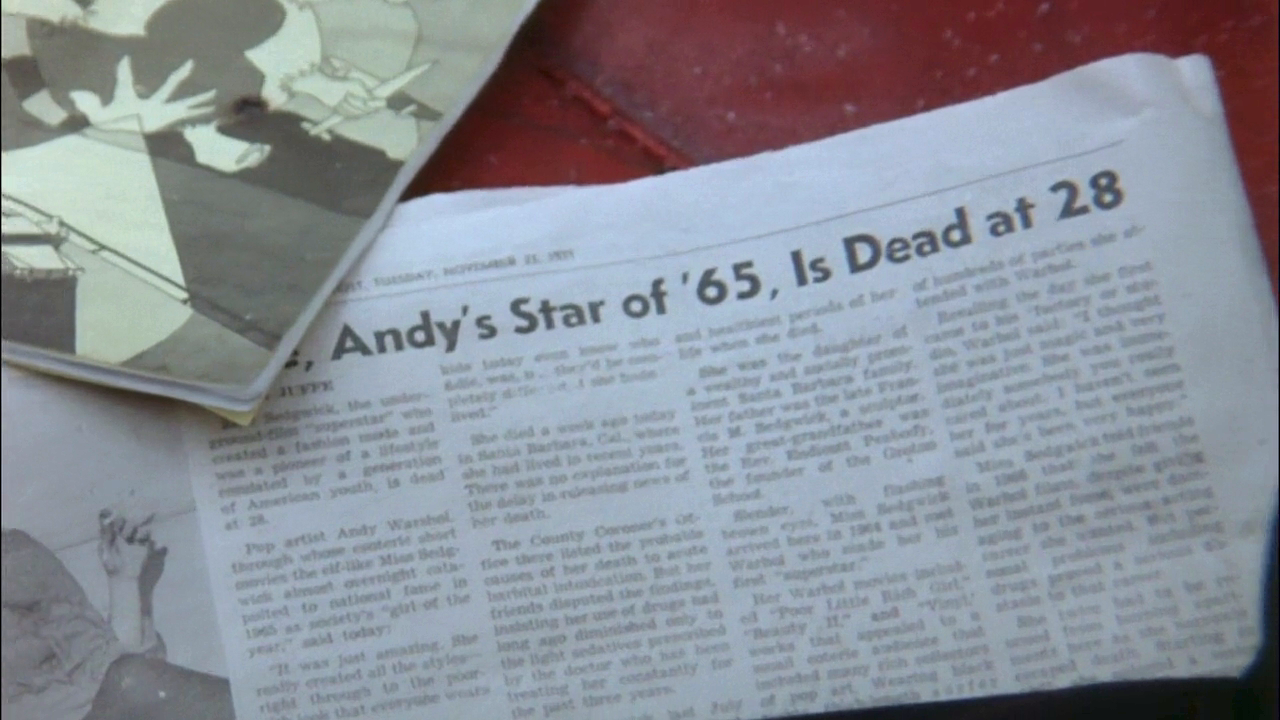
A newspaper, partially obscured blares “[…], Andy's Star of '65, Is Dead at 28”. The article mentions she (Edie/Susan) died “a week ago today”, making the newspaper's date November 21. DPs: John Palmer & Kjell Rostad.
“It's sort of like a mockery, in a way, of reality, because they think everything is smiles and sweetness and flowers, when there is something bitter to taste. And to pretend there isn't is foolish.”
– Susan
view
Women in Love (Ken Russell, 1969)
Nov
18
Bates and Reed in post-jostle bliss, bathing in the fireplace's glow (via). DP: Billy Williams.
A memorable fire or fireplace scene*
“Oh, my God, Gerald! Shall I die?”
– Gudrun Brangwen
Oddly, one barely remembers the fireplace.
* the Bales 2025 Film Challenge for November is, again, not date-based, but follows a sloppy schmaltzy all-American Thanksgiving-y narrative. Trying to make it work my way.
view
Mix-Up ou Meli-melo (Françoise Romand, 1986)
Nov
18
1936
Mother and daughter in one of the surreal reenactment scenes. DP: Emile Navarro.
A bit – occasionally a lot – Greenaway without the room for interpretation. Lovely though and impossible to make in this overly self-aware selfie universe.
view
The Walking Dead (Michael Curtiz, 1936)
Nov
16
John Ellman (Karloff), dead man walking. DP: Hal Mohr.
“You take away my life and offer me a favor in return. That's what I call a 'bargain'.”
– John Ellman
.png)

.png)
.png)
.webp)