view
The Big Combo (Joseph H. Lewis, 1955)
Nov
15
1946
A man's hand holds up a photo negative of a black-and-white picture, showing two men and a woman, and the date 11-15-46 underneath. DP: John Alton.
“I'm trying to run an impersonal business. Killing is very personal. Once it gets started, it's hard to stop.”
– Mr. Brown
view
Le pacha [Pasha / Showdown] (Georges Lautner, 1968)
Nov
14
Dany Carrel and Jean Gabin gloomily share a small dinner table. DP: Maurice Fellous.
“The day they put jerks into orbit, you won't stop rotating soon!”
– Comissaire Joss, le Pacha
view
Requiem for a Village (David Gladwell, 1975)
Nov
14
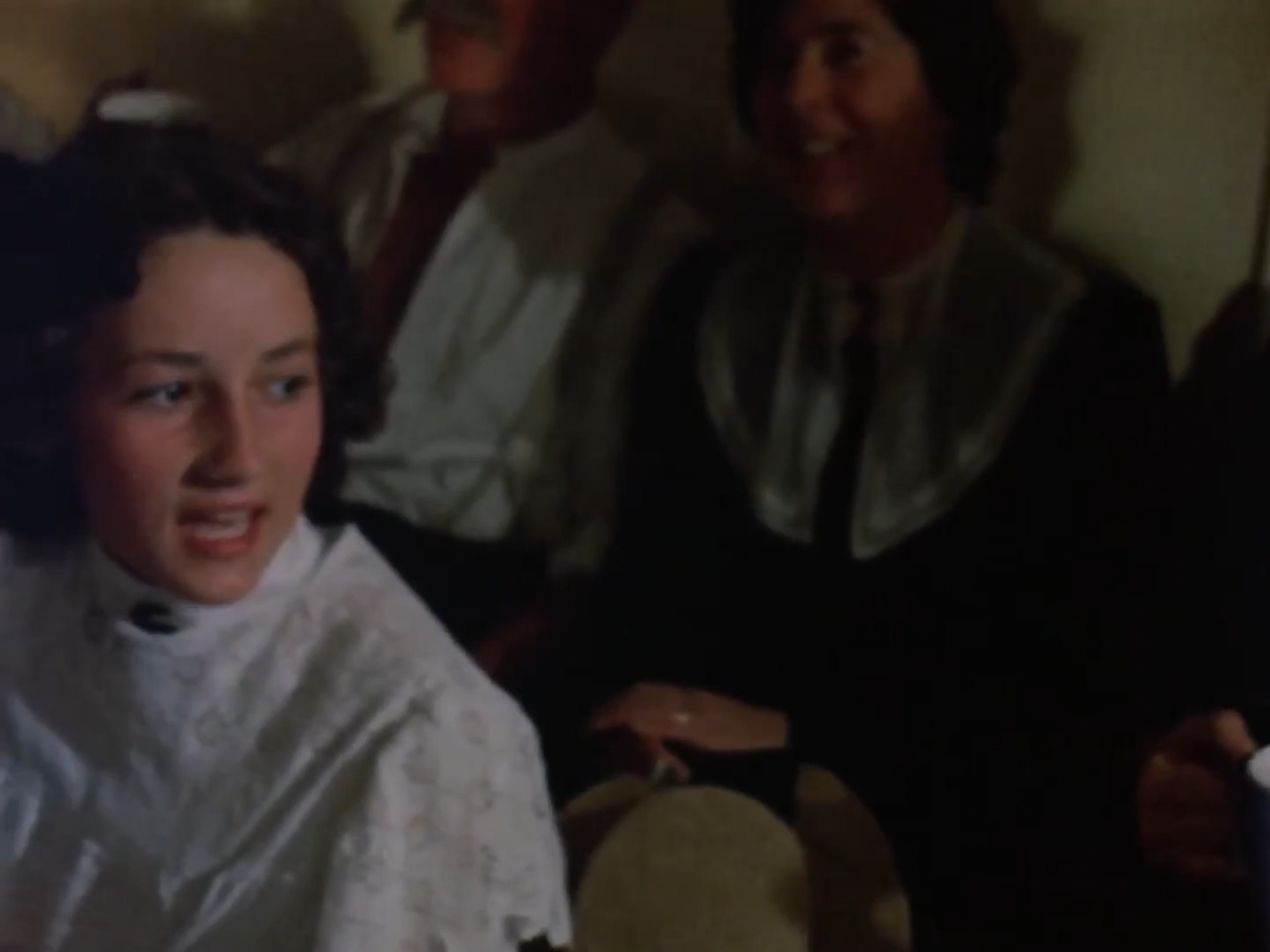
The wedding party revellers sing. DP: Bruce Parsons.
“Early one morning, just as the sun was rising,
I heard a maid sing in the valley below;
‘O don’t deceive me, O never leave me!
How could you use a poor maiden so?”
– Early one morning, via
A sort of Wicker Man visits Mon oncle, this painting of an old England is. Painter filmmaker David Gladwell's impressionist work takes us to a small Suffolk community that, like all other communities, is both frozen in time and unable to escape its progression. The churchyard's caretaker, amongst the living and the dead, watches, works, and knows.
* the Bales 2025 Film Challenge for November is, again, not date-based, but follows a sloppy schmaltzy all-American Thanksgiving-y narrative. Trying to make it work my way.
view
하녀 [Hanyeo / The Housemaid] (Kim Ki-young, 1960)
Nov
13
Adding one more ingredient. DP: Deok-jin Kim.
A memorable kitchen or cooking scene*
“Look at us. We're almost totally dependent on our maid. She cooks and washes for us, and is the first person to greet me when I come home from work. She is entirely at our service.”
– Dong-sik Kim
A housemaid works her way into a middle-class household and takes over the wife's tasks – cleaning, cooking, child rearing.
* the Bales 2025 Film Challenge for November is, again, not date-based, but follows a sloppy schmaltzy all-American Thanksgiving-y narrative. Trying to make it work my way.
view
Götter der Pest [Gods of the Plague] (Rainer Werner Fassbinder, 1970)
Nov
12
1943
Pornography peddler Carla Aulaulu's (Carla Egerer) criminal record. She's born on November 12, 1943 in Kronstadt. DP: Dietrich Lohmann.
During one scene a perpetual calendar is visible. It's a 26th.
– Why do they call you The Gorilla?
– Because I'm big and strong… and everyone has to have a name.
view
Bröllopsbesvär [Wedding: Swedish Style] (Åke Falck, 1964)
Nov
11
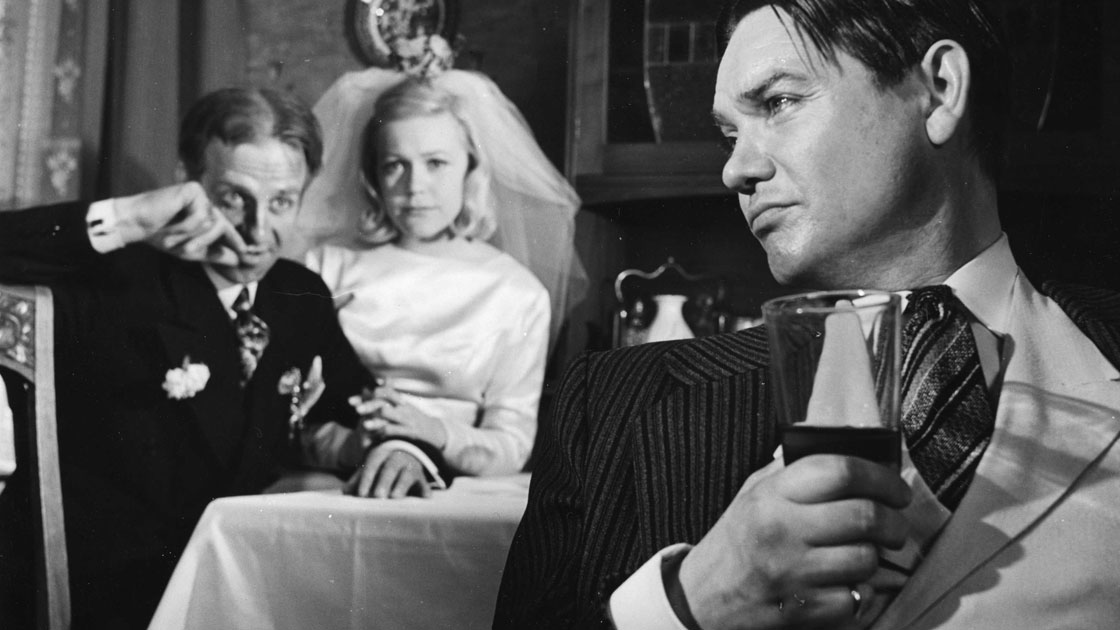
Bride and groom, and resentfulness at front. DP: Rune Ericson.
A dysfunctional family*
On a wedding day, and night, a family's dirty secrets are laid bare.
* the Bales 2025 Film Challenge for November is, again, not date-based, but follows a sloppy schmaltzy all-American Thanksgiving-y narrative. Trying to make it work my way.
view
Panique [Panic] (Julien Duvivier, 1946)
Nov
7
A child probes her dinner with a fork larger than her head while another one is all neat and proper. In the midst of them, as serious table settings require, a large man. His napkin tucked in at the neck, he leans over the first child with something to say. DP: Nicolas Hayer.
“Dead meat always attracts flies.”
– Monsieur Hire
view
有りがたうさん [Arigatō-san / Mr. Thank You] (Hiroshi Shimizu, 1936)
Nov
6
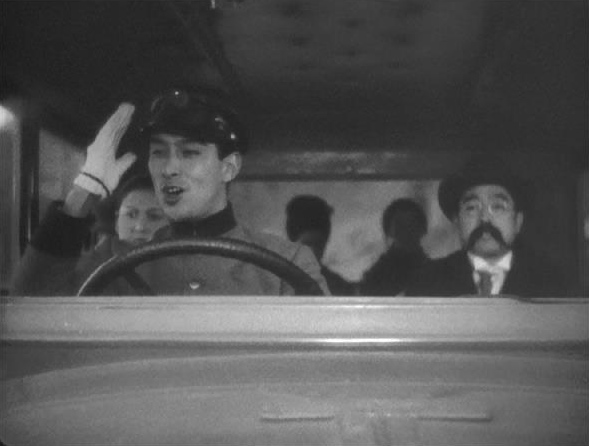
Arigatō-san (Ken Uehara) courteously thanks someone who shares the road for giving way. DP: Isamu Aoki.
A movie that makes you want to travel*
“Arigatō! [Thank you!]”
– Mr Thank You to everyone – poultry included – he passes on his bus
Friendly and helpful, Arigatō-san (Ken Uehara) is there for his passengers and non-bus travellers alike. A sweet roadmovie from a Japan now lost to time.
* the Bales 2025 Film Challenge for November is, again, not date-based, but follows a sloppy schmaltzy all-American Thanksgiving-y narrative. Trying to make it work my way.
view
Jules et Jim (François Truffaut, 1962)
Nov
4
sweaters
Catherine (Jeanne Moreau) in a raggedy, moth-eaten sweater and oversized newsboy cap, wears a moustache and smokes a cigar (via). DP: Raoul Coutard.
A movie with gorgeous sweater fashion*
“She's a strange breed.”
– Jim
Throwing in a little Movember for good measure.
* the Bales 2025 Film Challenge for November is, again, not date-based, but follows a sloppy schmaltzy all-American Thanksgiving-y narrative. Trying to make it work my way.
view
Na wylot [Through and Through] (Grzegorz Królikiewicz, 1972)
Nov
4
1933
Maria (Anna Nieborowska) and Jan (Franciszek Trzeciak) in court. The film is based on the 1933 Jan and Maria Malisz’s Case. DP: Bogdan Dziworski.

.png)


.png)