view
Invasión [Invasion] (Hugo Santiago, 1969)
Mar
9
Bobby Fischer – 1943
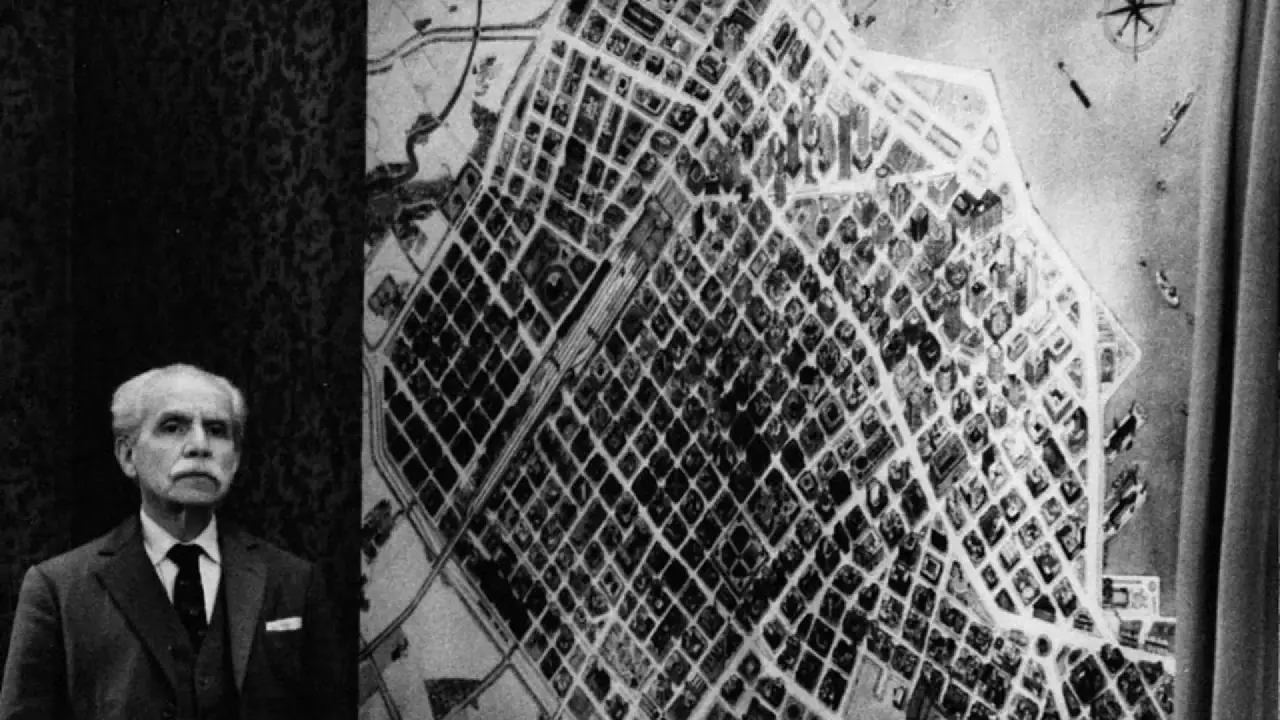
Don Porfirio (Juan Carlos Paz) in front of a map of Aquileia. DP: Ricardo Aronovich.
Strategy for Bobby Fischer's birthday (1943).
People meticulously plan, move, and countermove in response to an invasion.
view
Nattlek [Night Games] (Mai Zetterling, 1966)
Mar
8
International Women's Day
Jan (Jörgen Lindström) and his mother (Ingrid Thulin) share a bed while she reads him a bedtime story. DP: Rune Ericson.
When returning home to the castle he grew up in, Jan attempts to free himself from the suffocating clutches of his neurotic mother.
This film was the final straw for Shirley Temple; she resigned from the board of the San Francisco Film Festival calling Zetterling's film “pornography for profit”.
view
Io la conoscevo bene [I Knew Her Well] (Antonio Pietrangeli, 1965)
Mar
5
Crispus Attucks – 1770
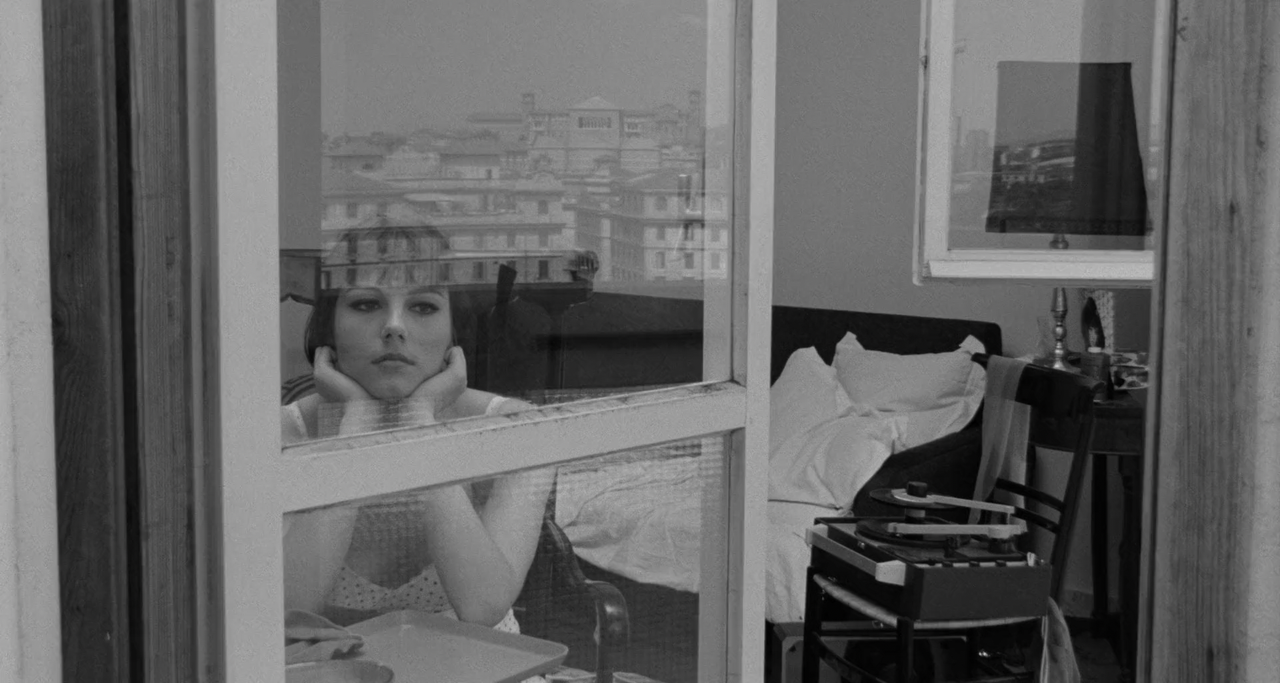
Adriana (Stefania Sandrelli) seen through her apartment window. Rome is reflected in her face. DP: Armando Nannuzzi.
A wasteful act: Crispus Attucks, (arguably) the first American victim in the American Revolution, dies on March 5th, 1770.
“She's always happy. She desires nothing, envies no one, is curious about nothing. You can't surprise her. She doesn't notice the humiliations, though they happen to her every day. It all rolls off her back like some waterproof material. Zero ambition. No moral code. Not even a whore's love of money.”
– The Writer
An ambitious but aimless girl – she wants to be loved, and to be a model, a proto-Edie – mills about her day.
Sublimely shot, we see Adriana through glass panes, in reflections, in an off-focal plane, in other people's words.
view
Unsere Afrikareise [Our Trip to Africa] (Peter Kubelka, 1966)
Feb
22
National Wildlife Day
Wild animals for this year's first National Wildlife Day (USA). A second one is on September 4.
“For me, Afrikareise is, in its own genre, the most intense sound film that exists. Sound and images are in synch like in nature (even if it isn’t about the natural sound of something). The sound becomes the acoustic portrait of the visual action.”
– Peter Kubelka, via
Commissioned to film a rich Austrian couple's hunting trip, Kubelka sat on the material for several years before editing it in something more than the sum of its parts.
view
Les abysses [The Depths] (Nikos Papatakis, 1963)
Feb
18
pancakes
Michèle and Marie-Louise (real-life sisters Francine and Colette Bergé) as the real-life Papin sisters prepare crêpes for Monsieur. DP: Jean-Michel Boussaguet.
– Why are we making pancakes?
– Monsieur likes them. Besides, what else is there?
view
Assalto ao Trem Pagador [Assault on the Pay Train] (Roberto Farias, 1962)
Feb
17
WH helicopter incident – 1974
The favelados-turned-train-robbers. DP: Amleto Daissé.
view
The Party's Over (Guy Hamilton, 1965)
Feb
13
party
The party crowd staggers its way home at dawn across Albert Bridge. DP: Mike Pratt.
– Let's keep this party going till Sunday.
– Why Sunday?
– The Hindus say the world comes to an end on Sunday.
– But, how will we know when it happens?
– Graves will gape and the shrouded dead will run gibbering and shrieking in the streets.
– Sounds like any other Sunday.
*which isn't until March 4 this year.
view
Adieu Philippine [Farewell, Philippine] (Jacques Rozier, 1962)
Feb
11
friendship
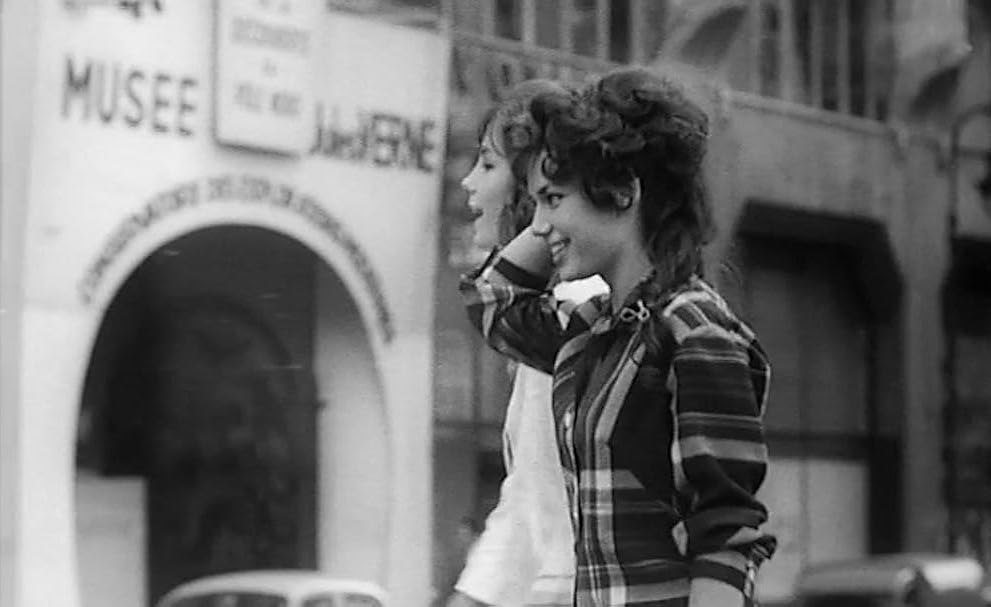
Juliette and Liliane (Stefania Sabatini and Yveline Céry) walk along a promenade in a beautiful, vérité tracking shot. DP: René Mathelin.
A film about friendship for Jennifer Anniston's birthday (1969).
1960. Michel is due to leave for Algeria to serve in the Algerian War. Juliette and Liliane are best friends as inseparable as “Filipino almonds”(?). When they meet, the girls decide to join Michel on his final vacation, on Corsica.
view
Ole dole doff [Eeny Meeny Miny Moe / Who Saw Him Die?] (Jan Troell, 1968)
Feb
10
Scholastica
A reaction shot shows the pupils' faces. While the girls show some sort of remorse, the boys are deadpan. DP: Jan Troell .
A film about teaching on the day of Saint Scholastica, patron saint of Benedictine nuns, education, and convulsive children.
Companion piece to Vilgot Sjöman's 491 (1964). An anti-authoritarian teacher who is plagued by nightmares, slowly unravels.
view
Lord of the Flies (Peter Brook, 1963)
Feb
8
Boy Scouts of America
Using Piggy's glasses, the boys light their first signal fire. DP: Tom Hollyman.
Someone prepares something for the founding of the Boy Scouts of America on February 8, 1910.
“His specs — use them as burning glasses!”
William Golding, Lord of the Flies (1954)
The boys collectively gather firewood to light a beacon, then come up with the idea to light the fire with the help of one of the kid's glasses.