“Now I may die content, for I have seen great love.”Michael [Mikaël / Chained: The Story of the Third Sex / Heart's Desire] (Carl Theodor Dreyer, 1924)
Aug
3
National Michael Day

Art critic Switt (Robert Garrison) with muse Michael (Walter Slezak). DPs: Karl Freund & Rudolph Maté.
Considered one of the earliest positive cinematic depictions of (male) homosexuality, Carl Theodor Dreyer's Michael tells the story of lonely artist Zoret (director Benjamin Christensen), his bright young muse and model Michael (Walter Slezak), and the more mature art critic Switt (Robert Garrison). Though it's mostly suggested – there's a female temptress (Nora Gregor) assuming a heterosexual perspective – its motif of the spoken and unspoken relationship between the men is definitely one of love, much in the same way Charles Vidor's Gilda (1946) is.
– opening title card
Michael is the second book adaption of Herman Bang's Mikaël (1902) after Vingarne [The Wings] (Mauritz Stiller, 1916).
drama
Os Fuzis [The Guns] (Ruy Guerra, 1964)
Aug
2

A bearded man in white eats from a simple, hand-carved wooden bowl using his hand. In his tangled up hair are small, silver devotional medals. DP: Ricardo Aronovich.
“Nice guys.” Canon City (Crane Wilbur, 1948)
Aug
1
Colorado Day
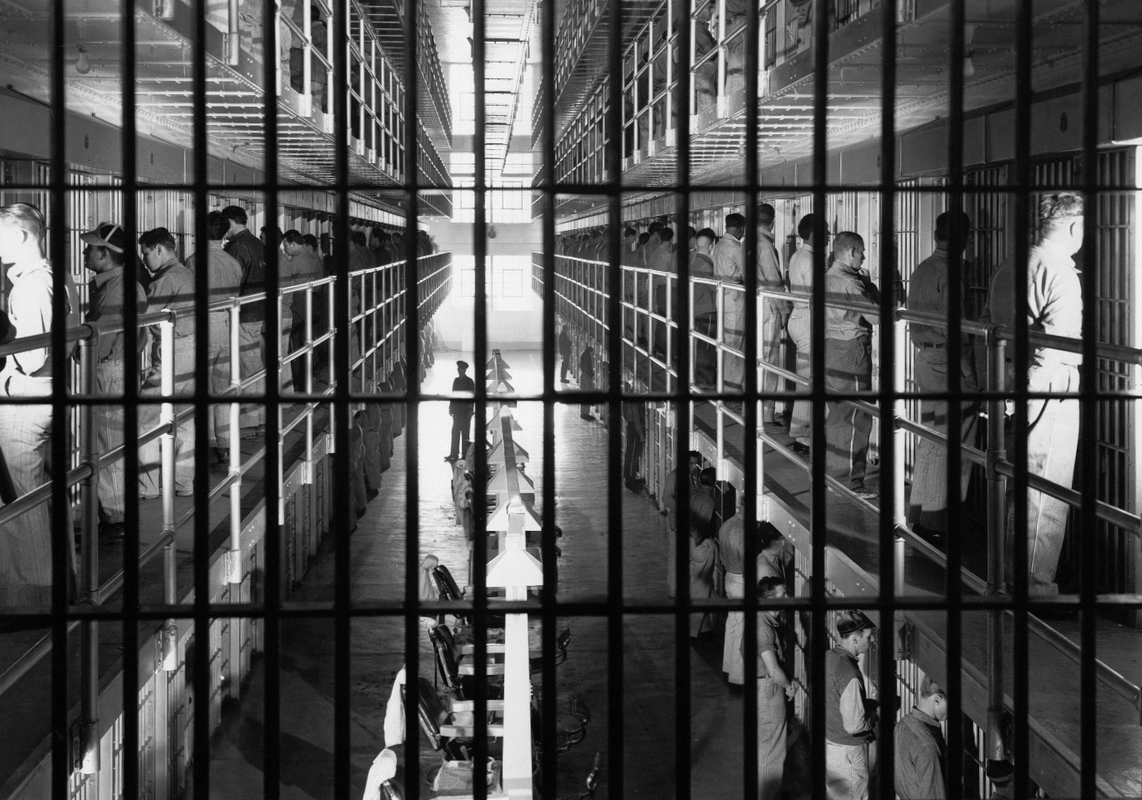
Counting the inmates. DP: John Alton.
They've been planning this for months, Canon City's Colorado Territorial Correctional Facility's toughest inmates. It's going to happen on December 30, and all men are ready to go.
Fascinating about Canon City is the usage of some of the actual locations, ánd people, involved in the 1947 #prison break.
Also striking, unfortunately, is the unevenness of the affair. John Alton's cinematography, while wonderful, wanders between noir and stuck camera shutter. And that voice-over… well, lets not mention that at all.
Canon City (Crane Wilbur, 1948)
Jul
31
grub
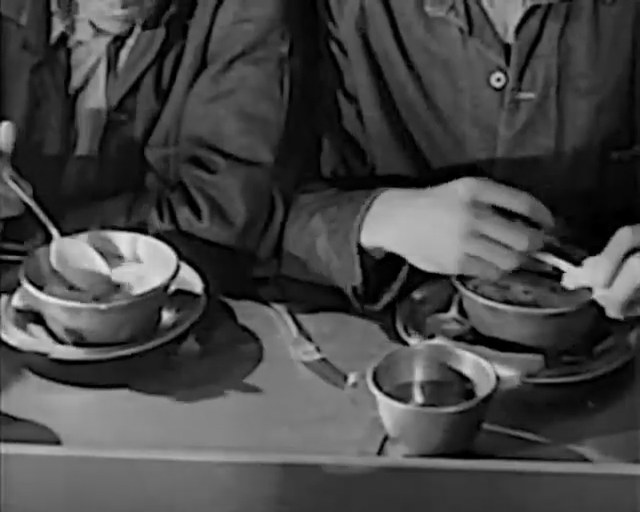
A close-up of two prisoners' hands. One is handling grub with a spoon from a stainless steel soup bowl. DP: John Alton.
Dillinger è morto (1969)
Glauco (Michel Piccoli) finishing his copious dinner with half a watermelon. In his right hand the copy of the July 25, 1934 Chicago Daily Tribune with the headline CLEAR UP DILLINGER MYSTERY. DP: Mario Vulpiani.

July 31: watermelon on #NationalWatermelonDay
Dillinger è morto [Dillinger Is Dead] (Marco Ferreri, 1969)
Pow!
Industrial designer Glauco (Michel Piccoli) arrives home after a long long, tedious day. His wife Ginette (Anita Pallenberg) – in bed high on painkillers – cooked dinner but the dish is bland and long cold, and the maid (Annie Girardot) is already sleeping. Glauco decides to cook himself a gourmet meal. Looking for ingredients he finds a 1934 newspaper reporting the dead of Chicago gangster John Dillinger with inside of it a rusty 1930s revolver. Fascinated, he meticulously restores the handgun while preparing his meal.
Dillinger è morto is a story of food and alienation. Piccoli's Glauco, bored of his successful career, bored of his beautiful wife, bored of his beautiful house, finds sudden vigour in the act of preparing food and restoring an item that shouldn't be where it is and with that, essentially recreates John Dillinger's escape from Crown Point.
John Dillinger posing with a Tommy gun and the hand-carved wooden gun that he used to escape inescapable Crown Point jail on March 3, 1934. Crudely carved into the dupe's barrel are the words COLT 38.
#Bales2023FilmChallenge #MarcoFerreri #MichelPiccoli #AnitaPallenberg #AnnieGirardot #TeoUsuelli #MarioVulpiani #Italy #drama #crime #satire #food #1960s ★★★★☆

“The reality is that we do not wash our own laundry; it just gets dirtier.”Serpico (Sidney Lumet, 1973)
Jul
30
National Whistleblower Day

The cover of the Austrian film magazine “Neues Filmprogramm”. A red-filtered lobby card of Frank Serpico (Al Pacino) and his partner (F. Murray Abraham, uncredited) during police proceedings. DP: Arthur J. Ornitz.
In the late 1960s, Frank Serpico worked as a plainclothes cop for the #NYPD. He spoke out when he uncovered systematic, widespread #corruption within the force, but his findings were ignored. In 1970, Serpico cowrote a page 1 article for the New York Times about the problem, which led to the instalment of the Commission to Investigate Alleged Police Corruption aka the Knapp Commission.
– Frank Serpico
The following year during a drug-related arrest attempt, he was shot in the face under shady circumstances. This is where Sidney Lumet's Serpico, based on Peter Maas and Frank Serpico's book of the same name, starts.
“Do you think it's a good thing to let her feel important?”Black Narcissus (Michael Powell + Emeric Pressburger, 1947)
Jul
29
National Lipstick Day
spoiler warning: click to toggle image

spoiler warning: click to toggle caption
In one of the film's most haunting scenes, Sister Clodagh (Deborah Kerr) transforms herself using lipstick (via). DP: Jack Cardiff.
High up in the Himalayas, Christian nuns attempt to found a school and hospital in a Raja's former palace. The palace, decorated with ancient erotic murals and run by the attractive Englishman Mr Dean, becomes an increasingly impossible to resist source of secular lust for the chaste Sisters.
– Sister Clodagh
With Jack Cardiff's sweeping cinematography and #Technicolor splendour, Black Narcissus establishes a stark contrast between the Sisters dour piety, the luminance of the Himalayan landscape, and the spellbinding pull of worldly desire. The bewitching #lipstick scene, set in a dimly lit space, works as well as it does precisely because of the scene's photography. That red smear, like blood pulsating from a fresh wound, becomes a deeply unsettling, vulgar gesture.
“Ich werde mich entschlossen verirren.” Die Angst des Tormanns beim Elfmeter [The Goalie's Anxiety at the Penalty Kick] (Wim Wenders, 1972)
Jul
28
National Soccer Day

Trainer, reserve players and goalkeeper Bloch on the bench after the latter has been removed from the match. Bloch (Arthur Brauss) has his upper body turned away from the others' and sits with only half of his backside on the bench. DP: Robby Müller.
A lot of #soccer there's not, in Wim Wenders' Die Angst des Tormanns beim Elfmeter. What we do have happens almost right at the start. After a foul, the titular goalkeeper Bloch (Arthur Brauss) is removed from the match. Frustrated he leaves and finds himself roaming the streets of #Vienna where he picks up boxoffice girl Gloria (Erika Pluhar). In the morning he kills her and travels to the countryside, waiting for the police to arrest him.
– Peter Handke
Die Angst is an early, perfect example of Junger Deutscher Film (”New German Cinema”). Its cinematic thanks to Robby Müller's observant eye and Peter Handke's precise language, both describing scenes and performers as if observed through a fourth wall.
A very slow burning road movie, a Taxi Driver in reverse if you will, that does without the neurotic showmanship of its Hollywood counterpart.
“And wherever he went, he took with him his music, his poetry, his language and his children… thus within a century of Culloden, the English and the Scottish lowlanders had made secure forever their religion, their commerce, their culture, their ruling dynasty.”Culloden [The Battle of Culloden] (Peter Watkins, 1964)
Jul
27
Bagpipe Appreciation Day
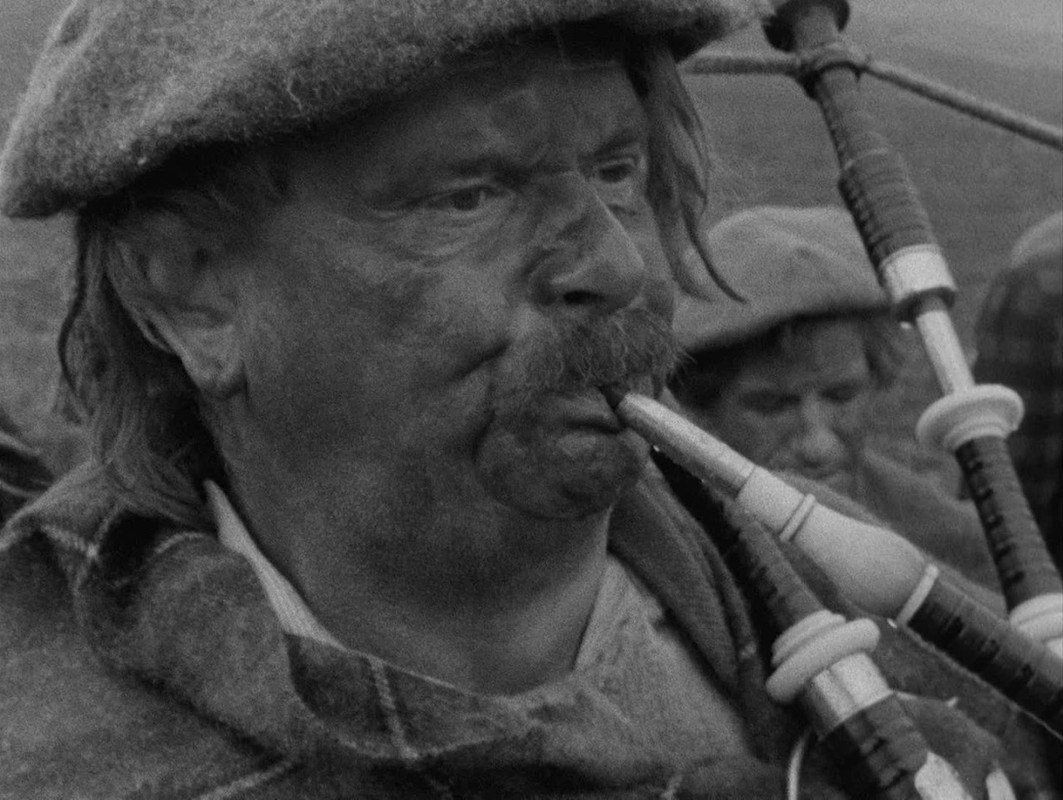
John Hunt Leigh in Culloden, pìobaireachd “ceòl mór” (litt. piping “great music”). DP: Dick Bush.
Great Highland #bagpipes, or a' phìob mhòr as they're called in Scottish Gaelic, are traditionally played on the battlefield. Peter Watkins' Culloden moves the senseless bloodshed from 1960s Vietnam to the Scottish Highlands of 1746.
– narrator
The most clearly it's seen in the men's eyes. That stare we recognise all too well from the many images that reached the west in the 60s, ever before and after.
L'homme qui ment [The Man Who Lies] (Alain Robbe-Grillet, 1968)
Jul
25
soup

The titular man (Jean-Louis Trintignant) at a dinner table, observed by Sylvia (Sylvia Turbová) and Maria (Sylvie Bréal). The room is white and sparsely furnished. DP: Igor Luther.