view
Salón México (Emilio Fernández, 1949)
Aug
13
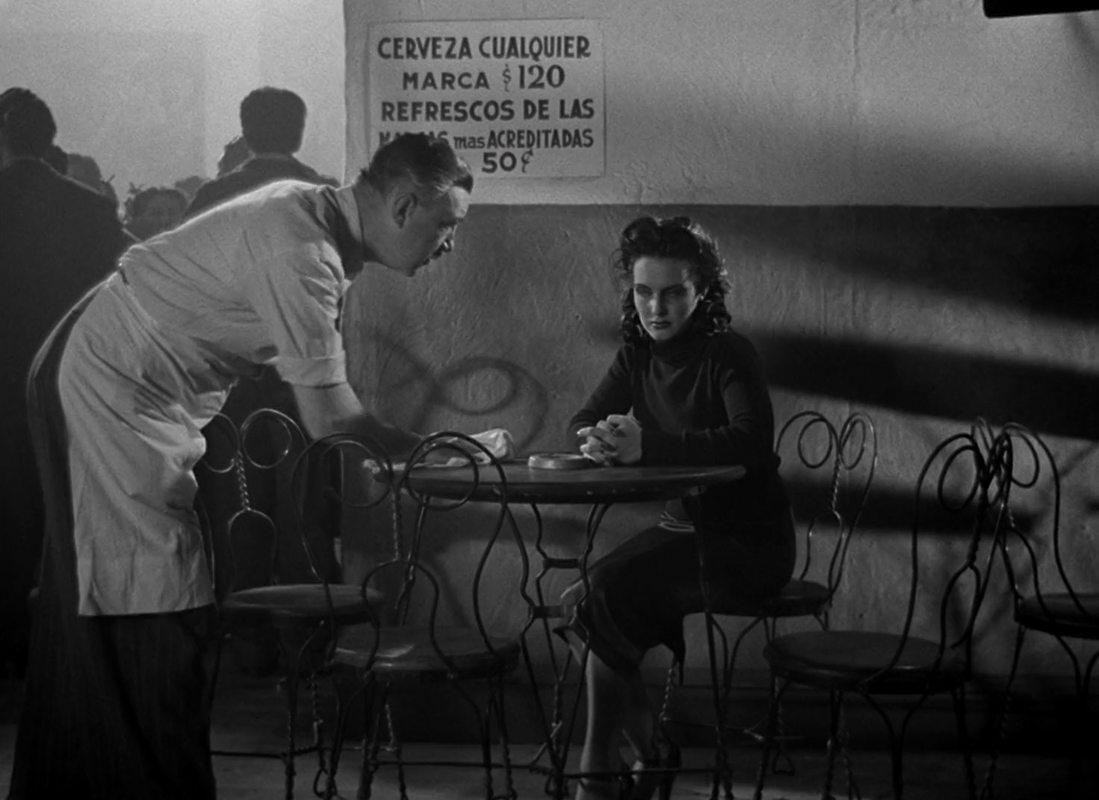
$120 cerveza
Mercedes (Marga López) sitting at a small round table at the salón. A waiter just came over to take her order. In the other room, meticulously dressed couples dance to live music. DP: Gabriel Figueroa.
view
El lugar sin límites [The Place Without Limits] (Arturo Ripstein, 1978)
Aug
13
Gay Uncles Day
Pancho (Gonzalo Vega) watches La Manuela (Roberto Cobo) dance flamenco for him. DP: Miguel Garzón.
Cabaretera, a sub-genre from the Epoca de Oro (the golden epoch of Mexican filmmaking, 1930s—1950s), combines film noir with melodrama and musical numbers. Often set in cabarets (brothels), these films talk about the plight of the prostitute who – not without their pride and dignity – are forced to being the breadwinner in a poverty-stricken community.
The return of Pancho, a hyper-macho trucker, disrupts the family regime. The trucker's attraction to the #flamenco dancing fichera is at odds with his machismo. Him being outed as a maricón (a Mexican slur for homosexual) would be the end of his world.
El lugar remains a groundbreaking film, not only in how it handles taboos like #gender roles and trans- and homosexuality, but also because it highlights how (self) destructive #machismo is in Mexican society.
*Roberto Cobo's La Manuela is transsexual. The term “transvestite” is what's used in the film and typical for its time.
view
Sedmi kontinent [Sedmý kontinent / The Seventh Continent] (Dušan Vukotić, 1966)
Aug
12
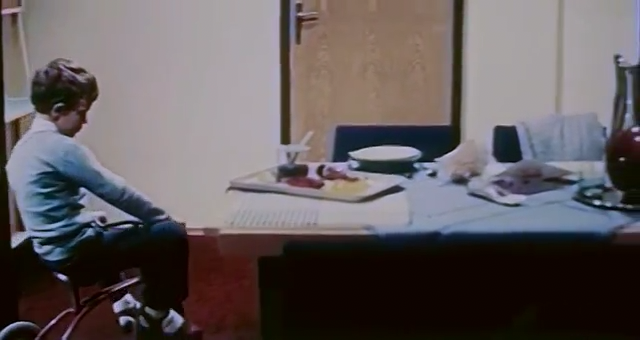
teevee dinner
A little blond boy on a red tricycle driving past his TV-ish dinner in an empty house. DP: Karol Krška.
view
Alice Doesn't Live Here Anymore (Martin Scorsese, 1974)
Aug
12
National Garage Sale Day
Tommy (Alfred Lutter III), Harold (Jefferson Burstyn), Alice (Ellen Burstyn) and Bea (Lelia Goldoni) counting out Alice's yard sale earnings. DP: Kent L. Wakeford.
After her husband is gone, Alice (Ellen Burstyn) sells her stuff and the house, picks up her son Tommy (Alfred Lutter III) and embarks on fulfilling her childhood dream of becoming a singer just like Alice Faye.
Tommy: Life is short.
Alice: Yeah, well, so are you.
view
Drak sa vracia [Dragon's Return / The Return of Dragon] (Eduard Grečner, 1968)
Aug
9
Smokey Bear Day
Drak (Radovan Lukavský), a Caucasian man with a rough looking face and an eyepatch over his left eye. The landscape behind him is mere blurs. DP: Vincent Rosinec.
Drak [“dragon” or “devil”] returns to his village. No one understands why he came back, or where he has been. The villagers postulate smugglers and there's other drunk nefarious thoughts, but for sure they know that with the potter, the draught returned. In an unspoken ritual sung in old tongues, the grey women summon the rain. The forest, dry as tinder, has taken the cattle, all there is. Drak knows where the animals went and a deal is struck.
“Don't you recognise me?”
– Drak
Drak sa vracia speaks in mere whispers and smoky greys. The main characters – the #fire, smoke, pottery, and composer Ilja Zeljenka's often silent motif – weave their wordless presence throughout the ancient landscape; that same landscape that carved itself into the locals' being.
view
L'œil du malin [The Eye of Evil / The Third Lover] (Claude Chabrol, 1962)
Aug
8
A table covered with a neatly ironed table cloth and on it, several stacks of flat and soup plates, plus silverware and nesting aluminium pans. DP: Jean Rabier.
view
Drak sa vracia [Dragon's Return] (Eduard Grečner, 1968)
Aug
6
Eva (Emília Vášáryová) stares into the fire on which a small anthropomorphic cooking vessel is mounted. DP: Vincent Rosinec.
view
Days of Heaven (Terrence Malick, 1978)
Aug
7
Alberta Heritage Day
Bill (Richard Gere) and Abby (Brooke Adams) walking through golden fields towards a small pavilion. DP: Néstor Almendros.
Quintessential Americana. Filmed in Canada.
“The sun looks ghostly when there's a mist on a river and everything's quiet. I never knowed it before.”
– Linda
view
The Blue Gardenia (Fritz Lang, 1953)
Aug
5
International Hangover Day
After a horrible birthday alone followed by a lovely night out, Norah wakes up with a terrible hangover and a hunch of being a murderess.
“How about you slip into something more comfortable, like a few drinks and some Chinese food?”
– Harry
The Blue Gardenia is Lang's hard-bitten take on the gruesome Black Dahlia murder case and part of his newspaper noir trilogy together with While the City Sleeps and Beyond a Reasonable Doubt, both from 1956.
view
A Queda [The Fall] (Ruy Guerra + Nelson Xavier, 1978)
Aug
3
Salatiel (Lima Duarte), a middle-aged balding man, in his undershirt at a dinner table. Working class poverty all around. DP: Edgar Moura.
“We were soldiers together. A long time ago. We were young, you know? Free from everything. We've been through a lot together, we were… friends.”