“I don’t have the inhibitions that a practicing Catholic would in that I’m not paralysed by the sacredness of the text, nor do I have the inhibitions of a lapsed Catholic who would view approaching the story of Jesus as compromising his Marxist beliefs, of sinking back into conformity.” Il vangelo secondo Matteo [The Gospel According to Matthew] (Pier Paolo Pasolini, 1964)
Jun
22
National Kissing Day
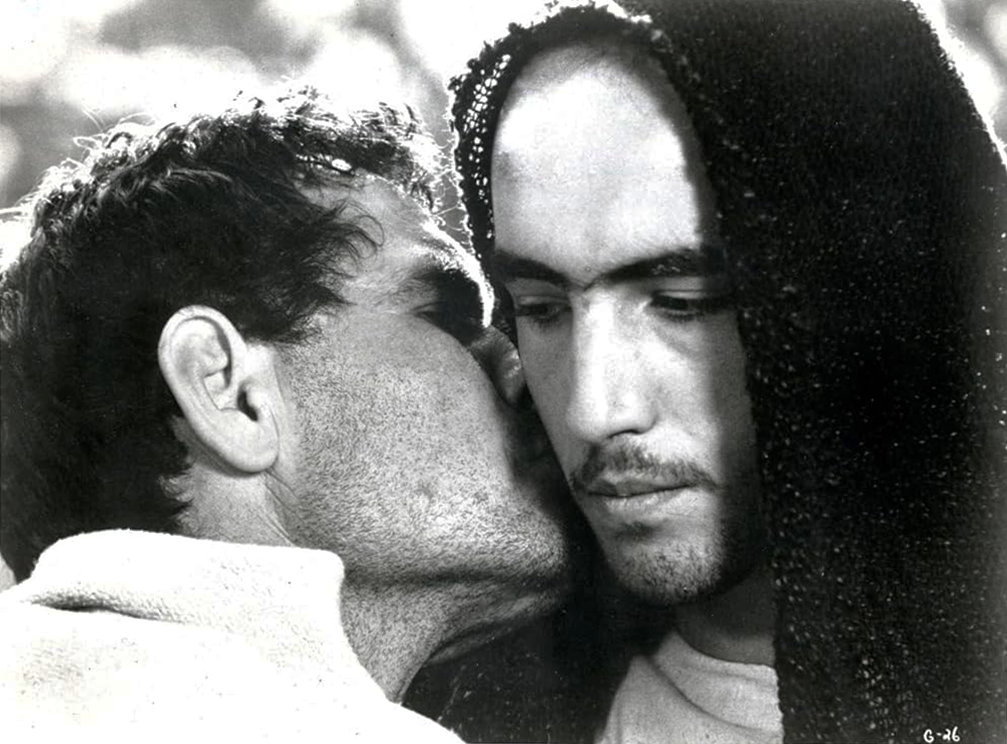
Judas (Otello Sestili) kisses Jesus (Enrique Irazoqui) in intimate closeup. DP: Tonino Delli Colli.
A [favourite] movie kiss for National Kissing Day (USA*), not to be confused with International Kissing Day aka World Kiss Day which falls on July 6.
– PPP, via
An neorealist, straightforward adaptation of the Gospel of Matthew, populated by non-actors (“Jesus” is a 19-year Catalan trade unionist picked for his resemblance to El Greco's Christ), intellectuals, and anachronistic characters based on biblical art through the ages.
According to said Gospel, apostle Judas kissed prophet Jesus to signal to the police who of the 13 men present was the one to arrest.
Interestingly, the word Matthew chose to describe the kiss is καταφιλέω, the same word used by philosopher Plutarch to describe the kiss between Alexander the Great and his eunuch Bagoas
* no one wants to kiss you anymore, America
Bookadaptation
“Have you seen Mr Tavernier tonight?”Ascenseur pour l'échafaud [Elevator to the Gallows] (Louis Malle, 1958)
Jun
18
International Panic Day
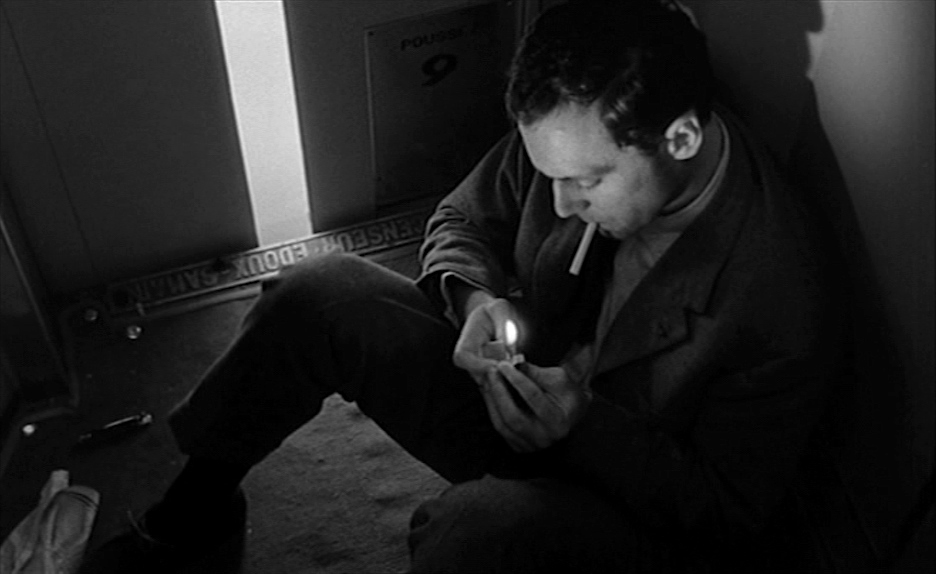
M Tavernier (Maurice Ronet) seated in an elevator, calmly smoking. Around him several items speak of less calm moments. DP: Henri Decaë.
A character in panic mode on International Panic Day
Julien Tavernier has a plan about how to run off with his boss' wife. There's just this one snag. No time to panic, c'est cool c'est cool.
Morte a Venezia [Death in Venice] (Luchino Visconti, 1971)
Jun
11
Say HI Day

Von Aschenbach (Dirk Bogarde) and Tadzio (Björn Andrésen). DP: Pasqualino De Santis.
Characters say or wave hello on Say HI Day
A sickly composer meets and becomes infatuated with a boy during his stay in Venice.
“I'm going with this one.”O Menino e o Vento [The Boy and the Wind] (Carlos Hugo Christensen, 1967)
Jun
8
National Best Friends Day
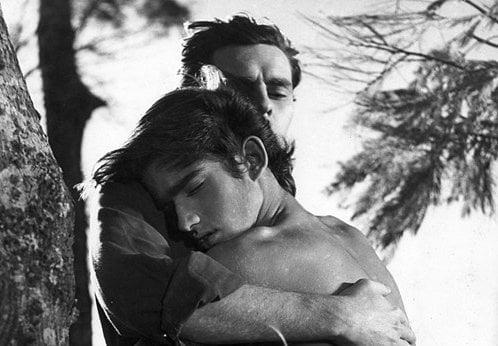
The two friends in intimate embrace. DP: Antônio Gonçalves.
[Favourite] best friends in film for National Best Friends Day (USA)
– Zeca de Curva, running into the storm
The close friendship between two young men raises suspicion when the younger of them disappears..
Лісова пісня. Мавка [Lisova pisnya. Mavka / A Story of the Forest: Mavka] (Yuri Ilyenko, 1981)
Jun
7
National Trails Day

Mavka (Lyudmila Efimenko) and the Spirit of the Forest (Boris Khmelnitskiy). DP: Yuri Ilyenko.
A movie that takes place in nature for National Trails Day (USA)
Mavka, a forest nymph, falls in love with mortal Lukash, who in his turn is punished by the Spirit of the Forest for marrying another mortal instead. Curse upon curse, Lukash is turned into a wolf, and Mavka into a weeping willow.
The colours, mood and impact of the four seasons on mortal and sprite alike is there, not only made visible by Ilyenko's ethereal, spiralling camera, but somewhere blooming deep inside us, observing.
ビリィ★ザ★キッドの新しい夜明け [Birī za kiddo no atarashii yoake / The New Morning of Billy the Kid] (Naoto Yamakawa, 1986)
May
31
National Utah Day
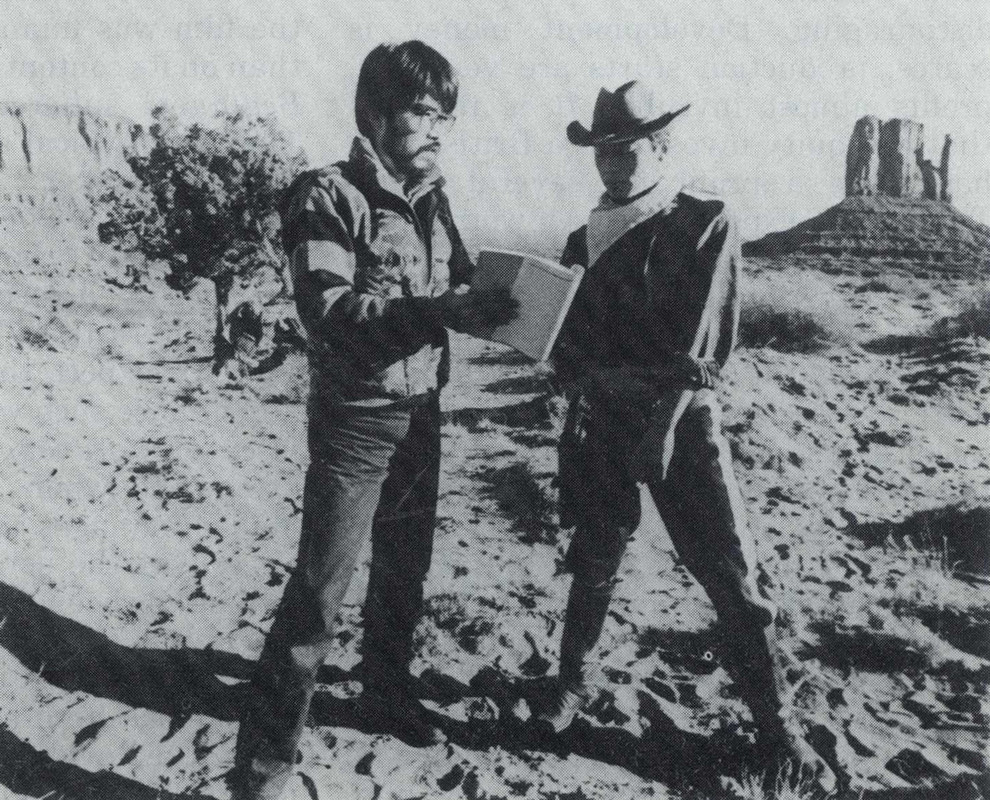
Director Naoto Yamakawa directing Billy the Kid (Hiroshi Mikami) on site in Utah (via) DP: Kenji Takama.
An actor, director or character from Utah – National Utah Day (USA)
Billy the Kid steps out of a huge poster of Monument Valley right into a Tokyo bar and becomes its bar keeper. Together with a samurai, a WW2 G.I, Marx-Engels (not a typo), the Japanese weather service number 177 and others, he keeps the tavern safe from various thugs roaming the streets.
“Had I the time to keep a diary, I’d use that time to better effect; sleeping on the veranda” 吾輩は猫である [Wagahai wa neko de aru / I Am a Cat] (Kon Ichikawa, 1975)
May
30
Hug Your Cat Day

The cat and his master, teacher Sneaze. DP: Kōzō Okazaki.
A pet for National Hug Your Cat Day (USA) *
– The cat
A school teacher's house cat observes and comments his household's going-ons as a microcosm of Japan's paradoxical Meiji period. The second adaptation of Sōseki Natsume's 1900s satirical novel.
* The event falls on June 4
Jonathan (Hans W. Geissendörfer, 1970)
May
26
World Dracula Day
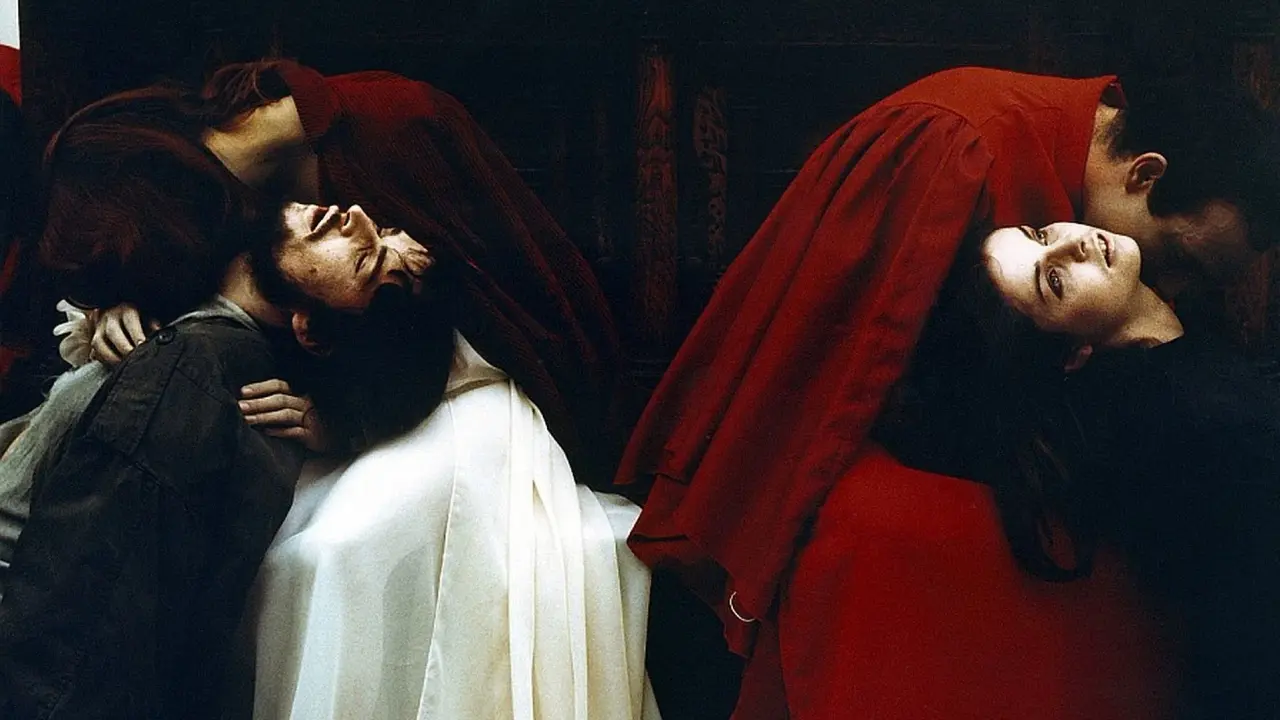
Siring the mortals. DP: Robby Müller.
A vampire for World Dracula Day
This deeply political, unpleasant interpretation of Stoker's Dracula can not not be seen against the backdrop of political movements like the #RAF and West-Germany's youth revolting against the failed #Denazification that the country underwent under supervision of the Allied occupying forces.
Note the usage of colour and grouping of people; Klaus Mann's Mephisto (1981) borrowed quite a few visuals from Jonathan.
Anayurt Oteli [Motherland Hotel] (Ömer Kavur, 1987)
May
14
Receptionist Day
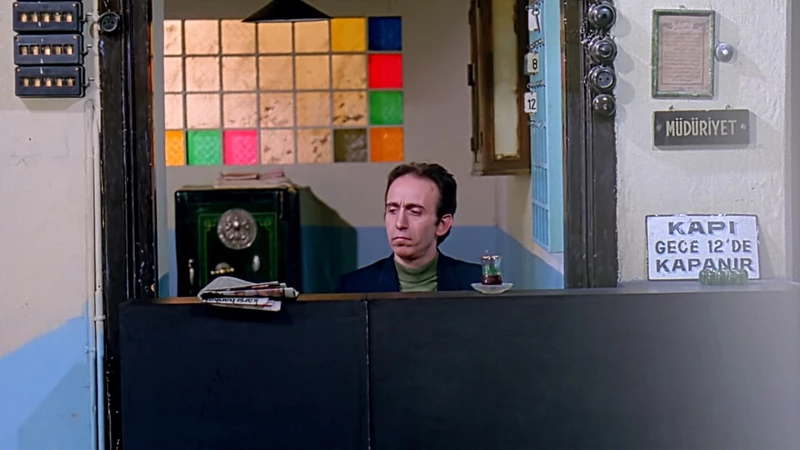
Receptionist Zebercet. DP: Orhan Oğuz.
A receptionist or secretary for Receptionist Day
The proprietor and receptionist of a small hotel welcomes a new guest. The woman, her name she doesn't tell, stays for only one night with the promise to return the following week. The receptionist waits.
Yngsjömordet [Woman of Darkness] (Arne Mattsson, 1966)
May
11
Mother's Day
spoiler warning: click to toggle image

Anna Månsdotter (Gunnel Lindblom). DP: Lasse Björne.
A good or bad mother for Mother's Day.
Arranged by his widowed mother, Per Nilsson marries the wealthy judge's daughter Hanna. The wedlock remains unfulfilled as son and mother find satisfaction in each other. Hanna suspects something.
Based on the Yngsjö murder case, which at the time was considered more noteworthy for the mother/son relationship than the resulting tragedy.