view
L'udienza [The Audience] (Marco Ferreri, 1972)
Feb
2
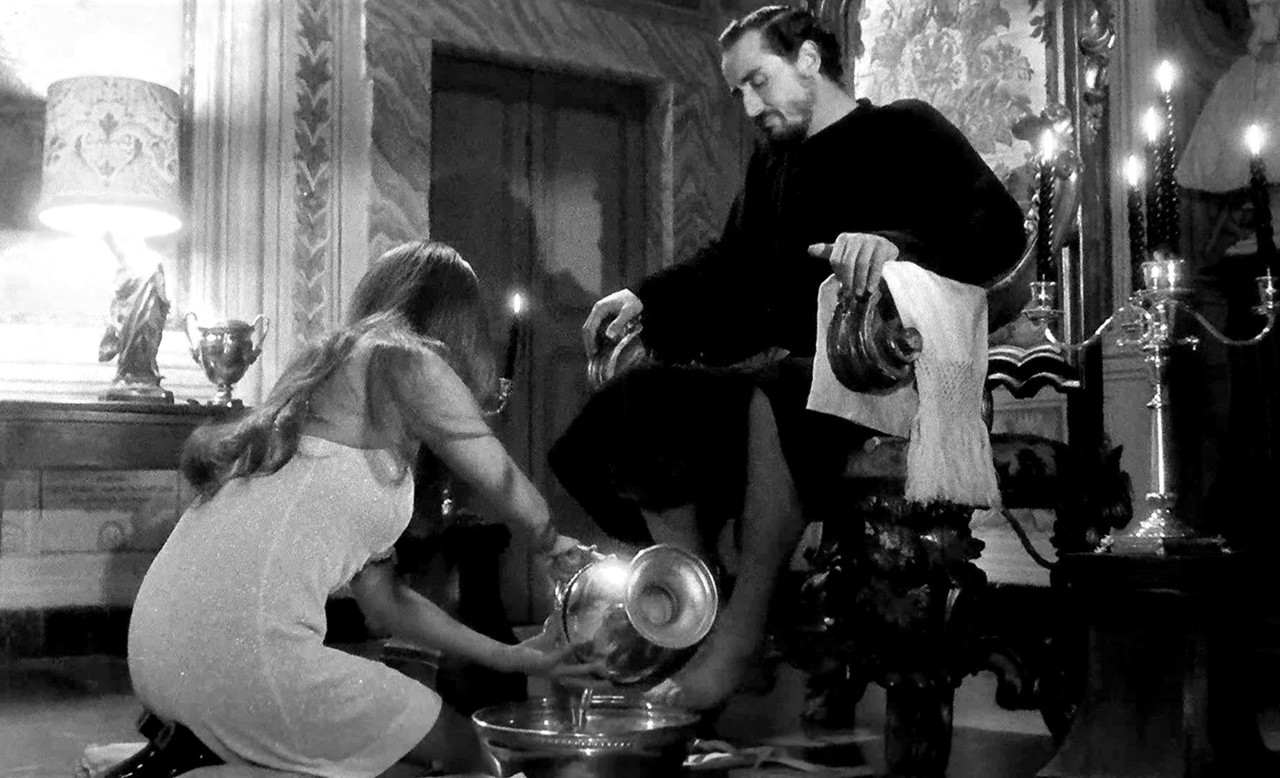
Aiche (Claudia Cardinale) washing Principe Donati's (Vittorio Gassman) feet. DP: Mario Vulpiani.
view
燃えつきた地図 [Moetsukita chizu / The Man Without a Map / The Ruined Map] (Hiroshi Teshigahara, 1968)
Feb
2
Shintarō Katsu and Etsuko Ichihara as the detective and the missing man's wife, their faces and gestures warped by a paned window. DP: Akira Uehara.
view
Beaubourg, centre d'art et de culture Georges Pompidou [Beaubourg] (Roberto Rossellini, 1977)
Jan
31
1977
Rossellini on site. DPs: Néstor Almendros, Jean Chiabaut & Emmanuel Machuel.
view
The Man Who Laughs (Paul Leni, 1928)
Jan
29
1690
A hand-painted carnival banner reading “URSUS ye Philosopher presents THE LAUGHING MAN. Don't fail to see GWYNPLAINE who was deserted at ye age of ten on ye night of ye 29th of January 1690 by ye Villainous Comprachicos on ye coast of Cornwall. This little boy has grown up and is now known as THE LAUGHING MAN”. DP: Gilbert Warrenton.
“What a lucky clown you are! You don't have to wipe off your laugh.”
view
Shaft (Gordon Parks, 1971)
Jan
27
John Shaft (Richard Roundtree). Can you dig it, baby? DP: Urs Furrer.
“Play straight, baby.”
– John Shaft
view
کلوزآپ ، نمای نزدیک [Klūzāp, nemā-ye nazdīk / Close-Up] (Abbas Kiarostami, 1990)
Jan
19
Hossain Sabzian on the back of a motorcycle on a busy tree-lined, four lane street. He's holding a large potted rose-red dahlia. DP: Ali Reza Zarrindast.
– Is there anything I can do for you?
– You could make a film about my suffering.
view
黒の試走車 [Kuro no tesuto kā / Black Test Car] (Yasuzō Masumura, 1962)
Jan
18
We watch over a man's shoulder. He's behind a table, wearing a pinstripe suit. In front of him drinks and chopsticks on a chopstick rest. He's signing the top leaf of a chequebook. DP: Yoshihisa Nakagawa.
view
The Sleeping Tiger (Joseph Losey, 1954)
Jan
14
spoiler warning: click to toggle image
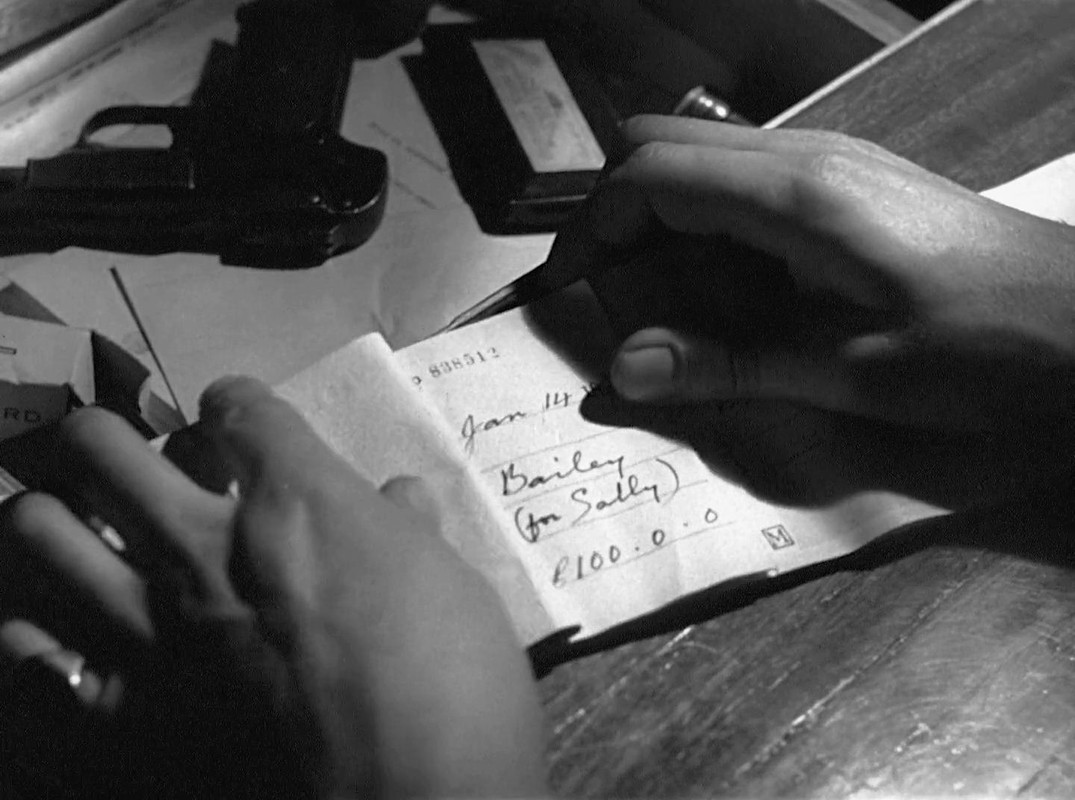
A cheque dated January 14. DP: Harry Waxman .
“If the halo fits, put it on. And don't pretend you don't love winding people up like little toys.”
– Glenda Esmond
view
Street of Dreams – Musical Mirror Maze [Tiny Tim's Street of Dreams] (Martin Sharp, 1988)
Jan
12
1979
.png)
Oz artist and Tiny Tim aficionado Martin Sharp explores Tiny's 1979 world record singing attempt at Sydney Luna Park and the devastating Ghost Train Fire a few months later on June 9. Sadly, Sharp never managed to complete his vision. The sole reason Street of Dreams is out there as a rough VHS bootleg is thanks to Tiny's custodian spirit. “I know Mr Sharp believes in me so much — and I praise the Lord for that — and maybe he's made a cult movie which at the very least will survive as a museum piece.”, he said, insisting that Sharp would release a rough cut for the Brighton Festival.
“I'm right here to stay,
When I'm old and gray,
I'll be right in my prime,
Living in the sunlight,
Loving in the moonlight,
Having a wonderful time!”
– Tiny Tim, Livin' In The Sunlight, Lovin' In The Moonlight (God Bless Tiny Tim, 1968)
Very much like Mr Tim and a carnival ride ablaze, Street of Dreams is its own beast. Growling, off, unpolished, a blaze – ablaze – out of control. Satanic panic that for once feels truthful, cheery almost. Hallelujah, and God bless Tiny Tim!
view
The Professionals (Richard Brooks, 1966)
Jan
12
1812
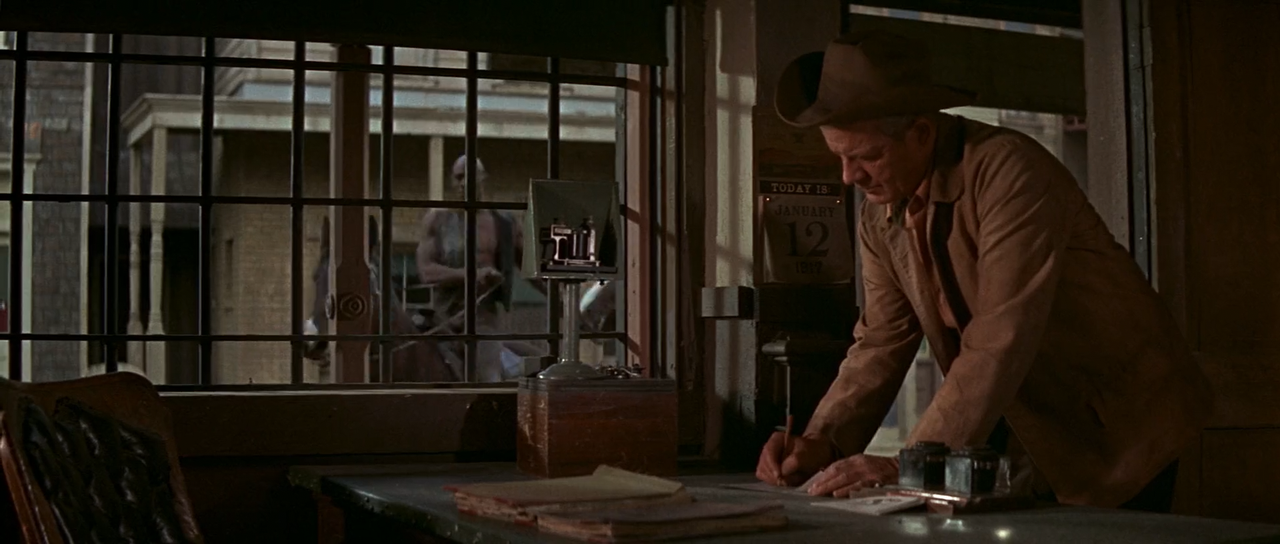
The sheriff jolts something down next to a wall calendar that reads January 12, 1812. Just visible through a window, Jake (Woody Strode) approaches. DP: Conrad L. Hall.
“Right now, I don't know if it's me or the dynamite that doin' all that sweatin'.”
– Jake Sharp



.png)